















With the arrival of spring, Hoi An not only dons the vibrant colors of festive celebration, but also opens a space for visitors to touch the original essence of Vietnamese New Year — where heritage is not preserved behind glass, but lives vividly in community life, rituals, sounds and the everyday rhythm of the ancient town.
The Lunar New Year Festival of the Year of the Horse 2026 takes place from mid-Twelfth Lunar Month through the end of the First Lunar Month, featuring a series of annual cultural, artistic and spiritual events that reflect the identity of Hoi An as a Creative Heritage City — where tradition is sustained through the very experiences of local people and visitors within the ancient urban landscape.
When Tết lives within the heritage space
In Hoi An, Tết is not “staged” as a performance festival, but felt through the authentic rhythm of a living heritage town: from riverside craft villages, kumquat gardens and spring flower markets, to communal houses, pagodas, ancient homes and shared community spaces.
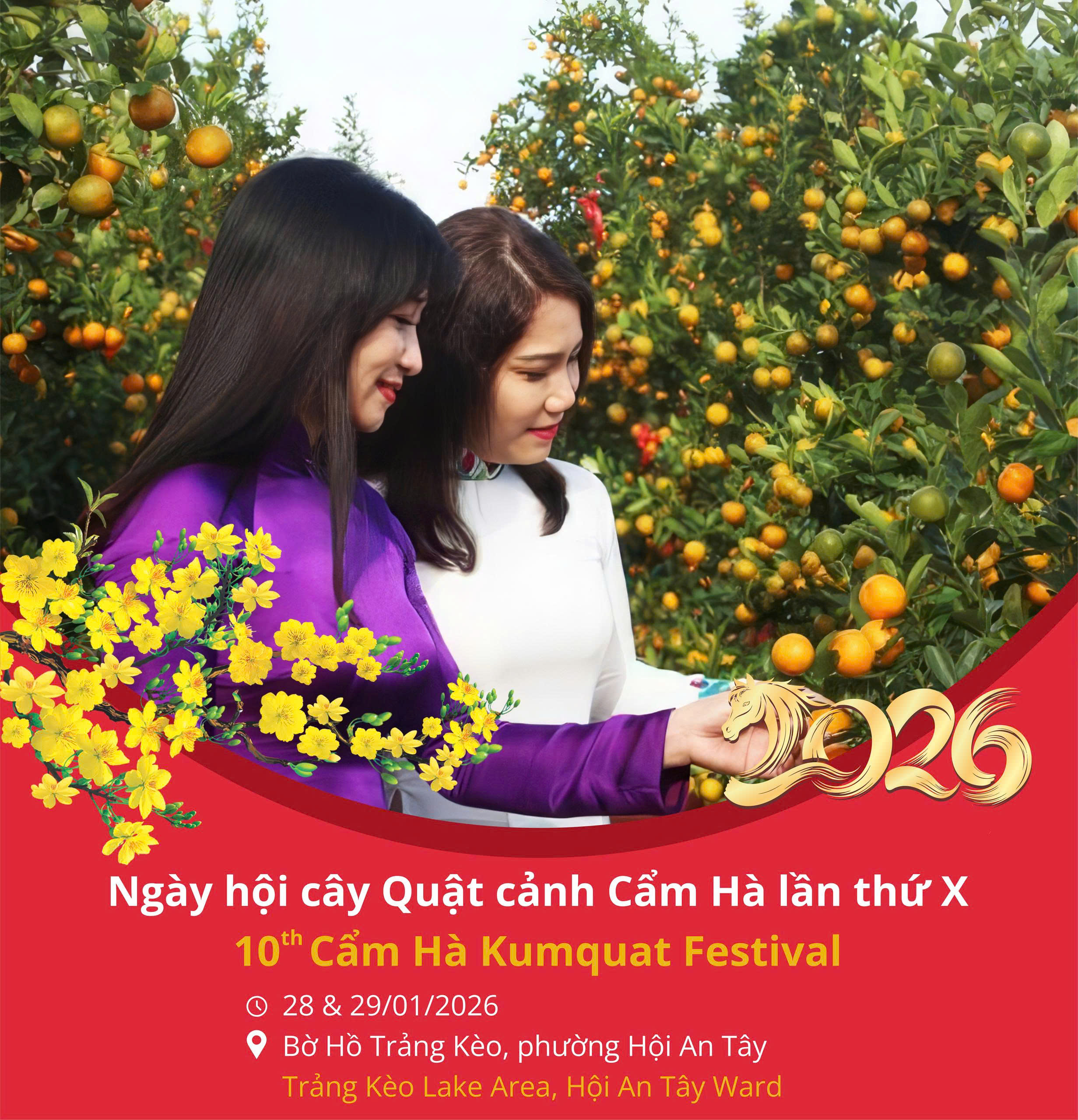
The festive season begins with the 10th Cam Ha Kumquat Festival (28–29 January 2026), where the long-established craft of kumquat growing is celebrated through golden fruit-laden trees, the “Flavors of Spring” food fair and displays of local agricultural products. This gentle starting point invites visitors to step away from the urban pace and enter a Tết atmosphere connected to soil, plants and the enduring hands of local farmers.
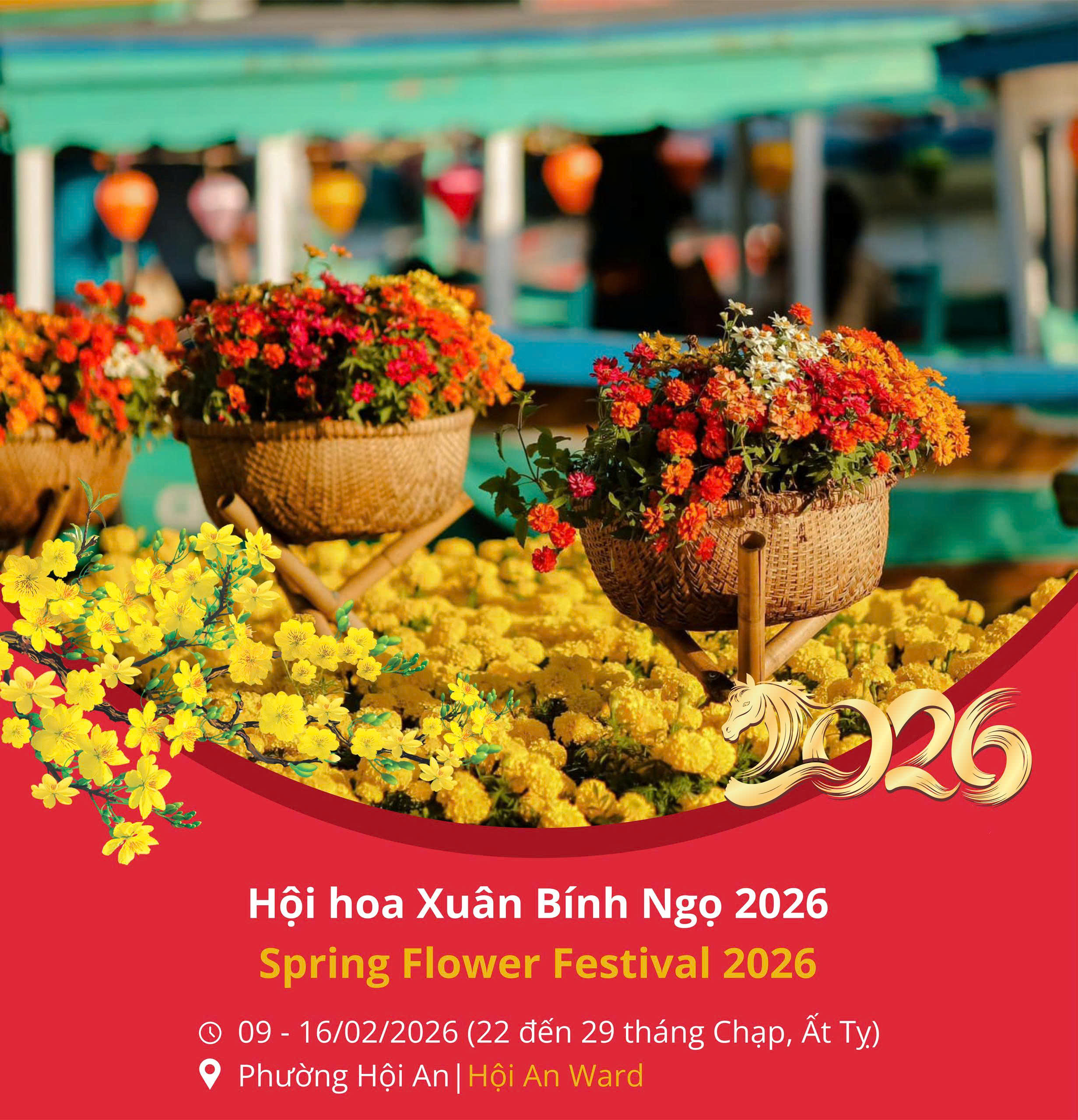
Next, the Spring Flower Festival of the Year of the Horse 2026 (9–16 February 2026) transforms the town into an emotionally rich spring destination, where flowers, ornamental trees and bonsai create an ideal setting for sightseeing and capturing those distinctly “Hoi An” moments of the new year.
Touching identity through Vietnamese New Year customs
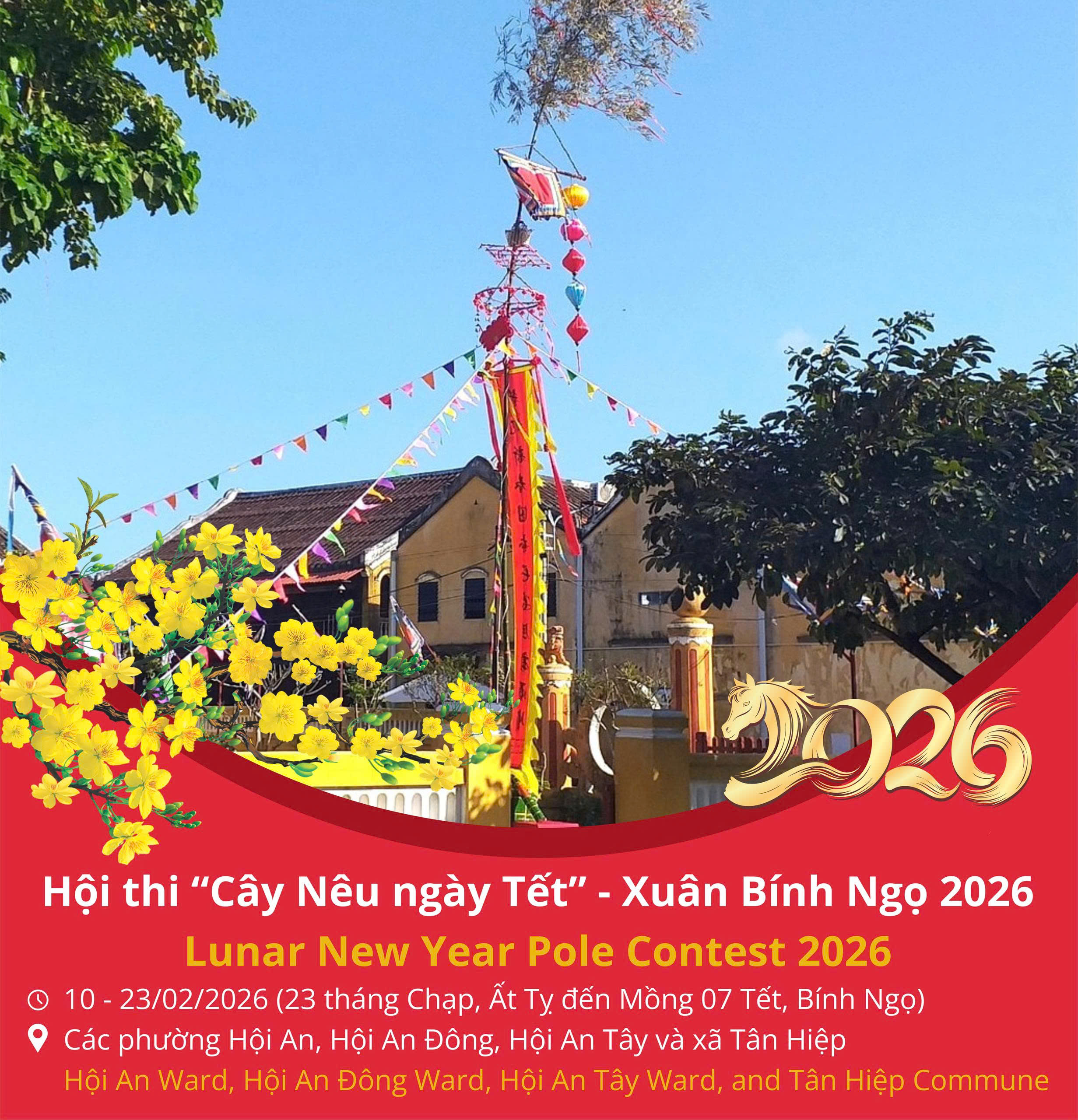
One of the most distinctive highlights of the festival is the “New Year’s Neu Pole” competition, held from the 23rd day of the Twelfth Lunar Month to the 7th day of Tết across heritage sites, communal houses, temples and residential areas. More than a spiritual symbol, the Neu Pole revives collective memories of Vietnamese Tết within today’s living community spaces.
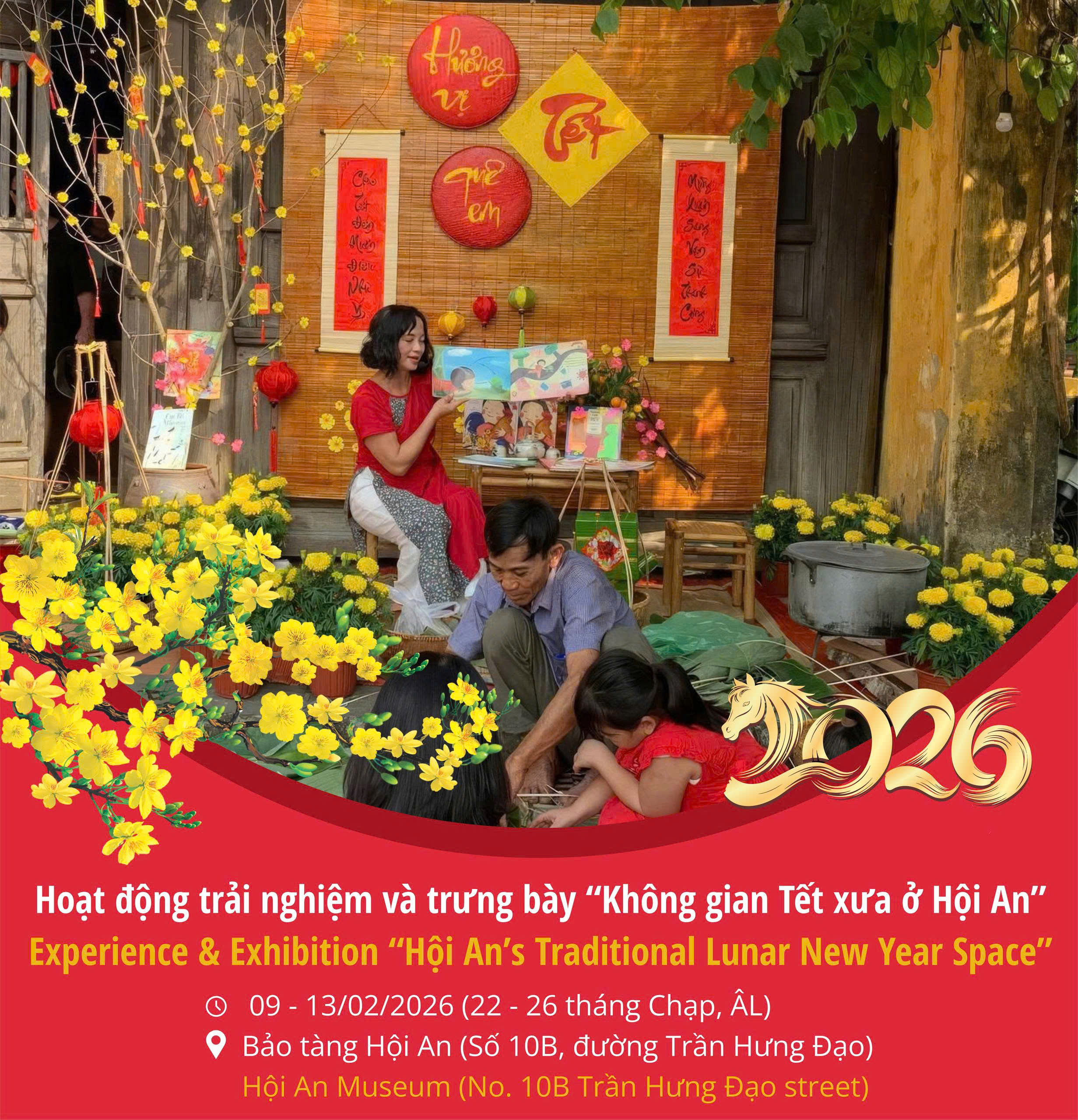
Alongside this, the experiential program “Traditional Tết in Hoi An” at the Hoi An Museum recreates a classic New Year market with activities such as making traditional cakes and candied fruits, tea tasting, calligraphy writing, lantern making, mask painting and folk games. Visitors do not merely “watch” Tết — they step directly into the rhythm of old Hoi An through all their senses.
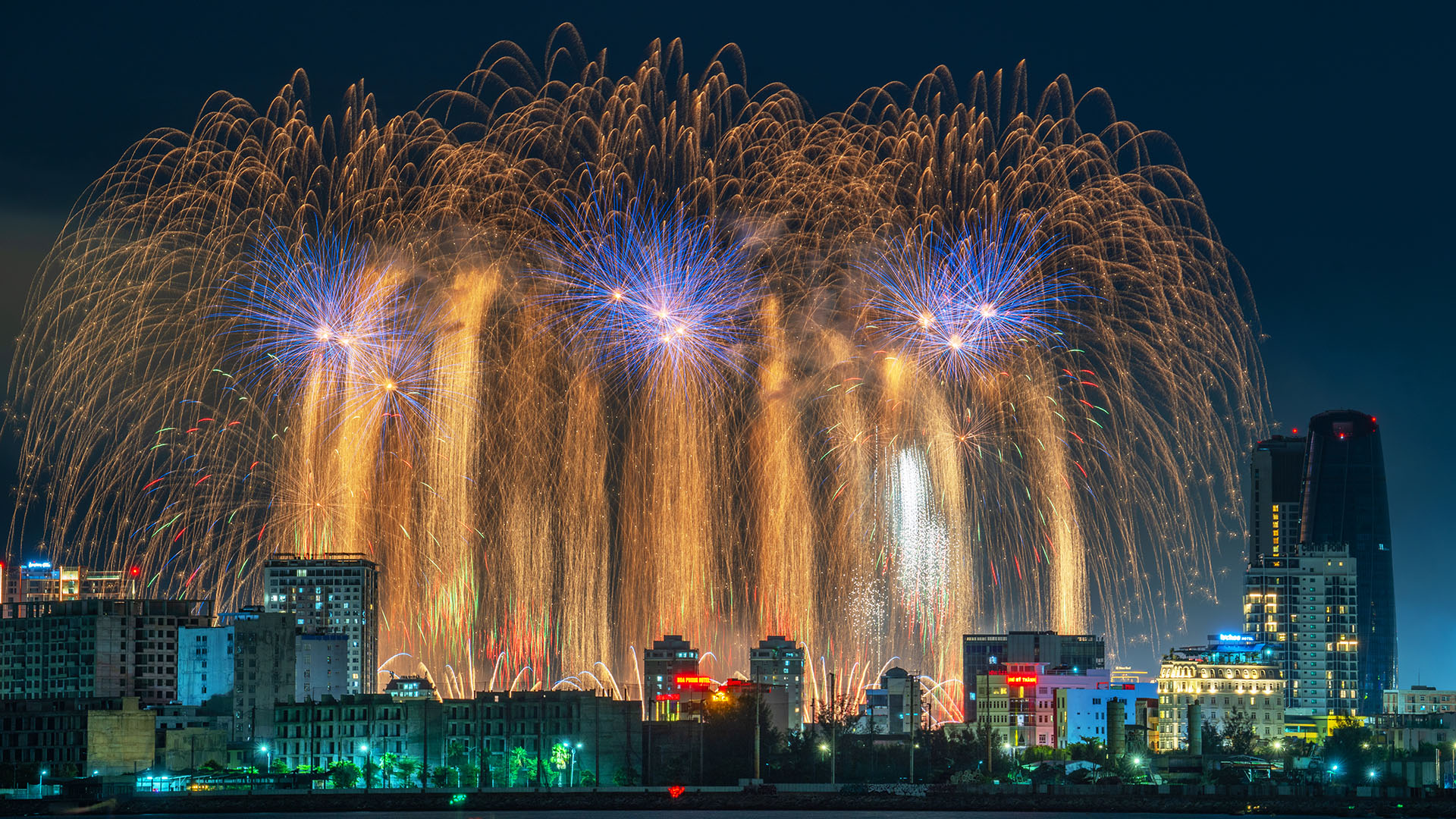
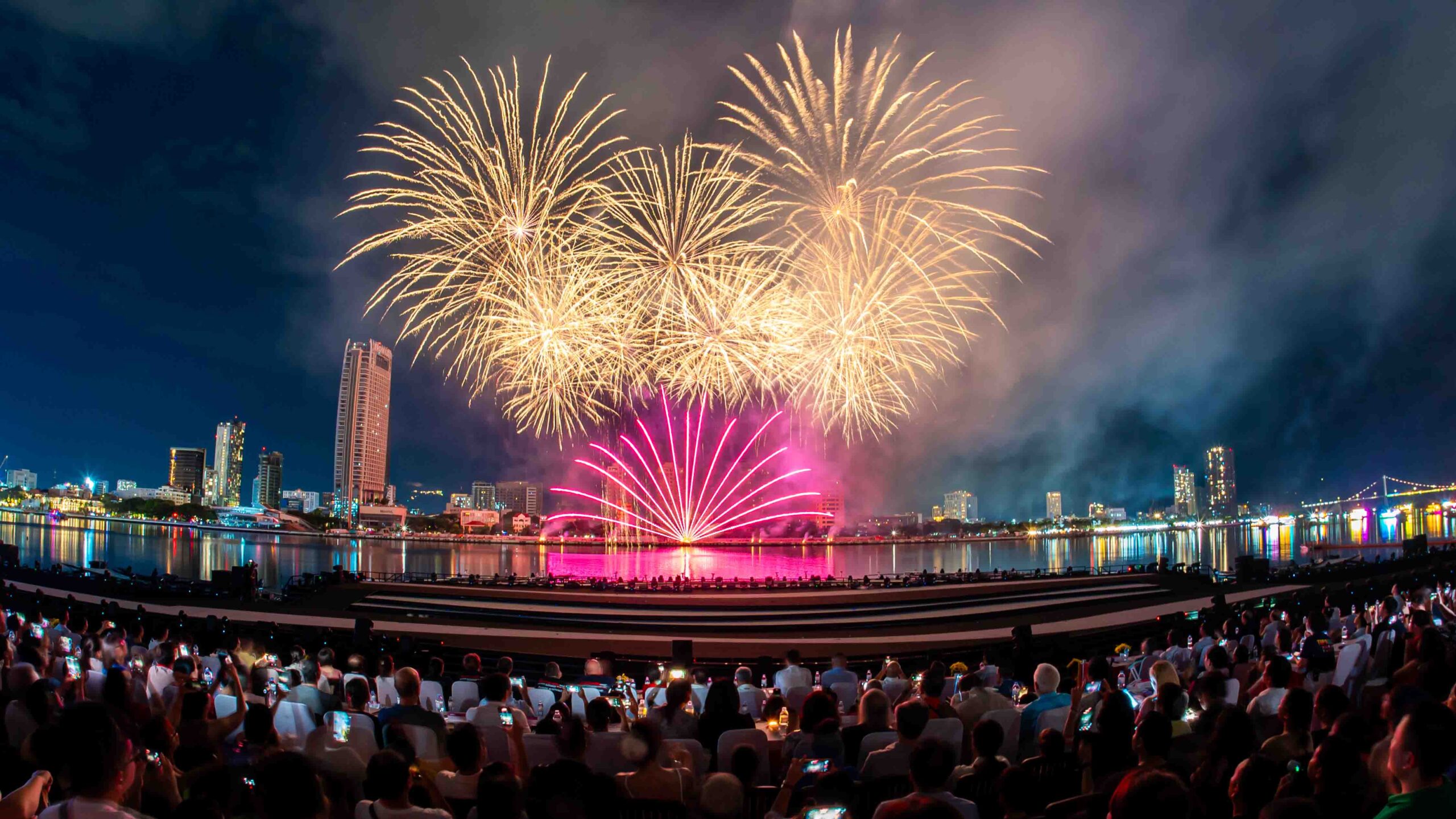
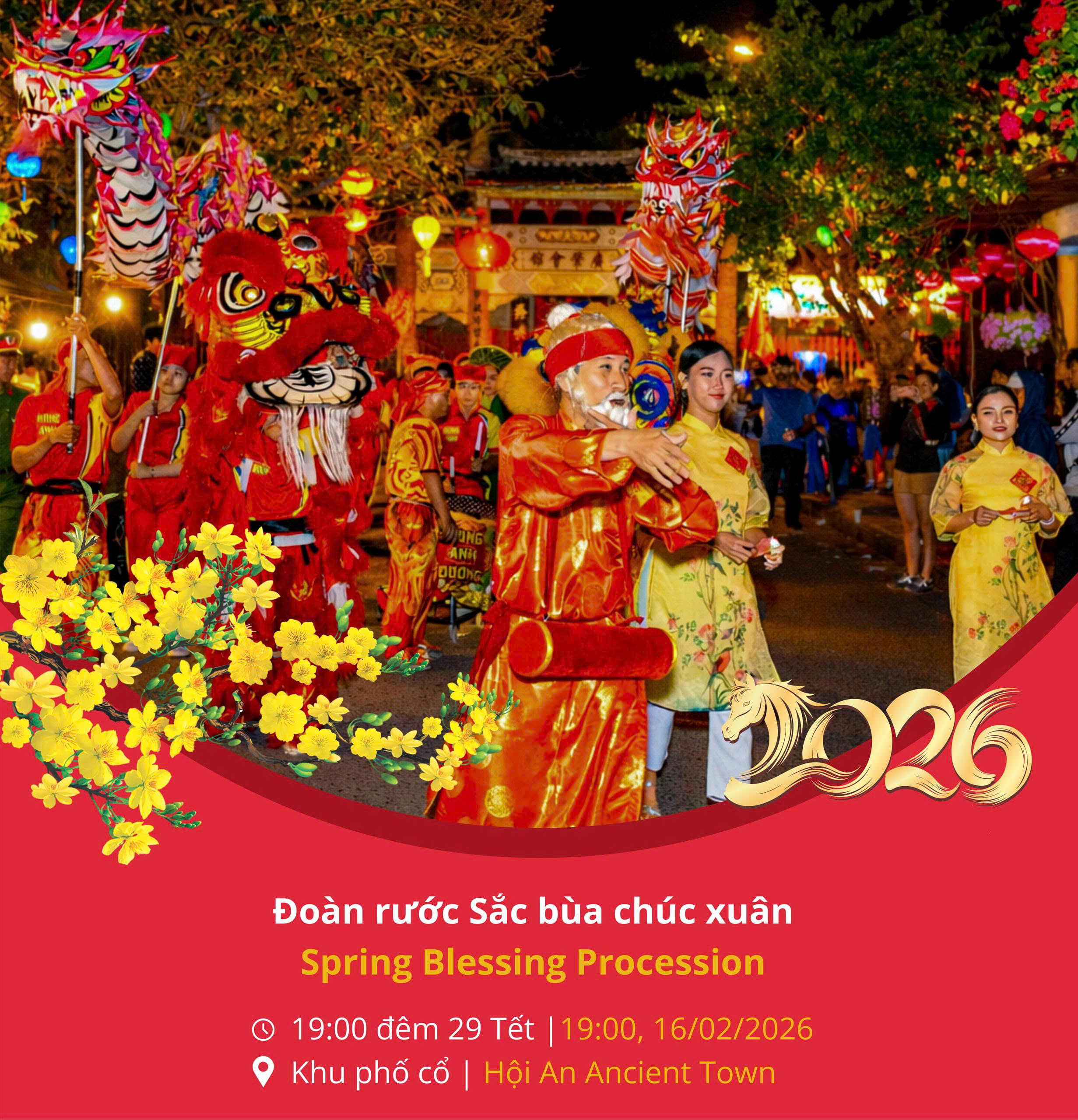
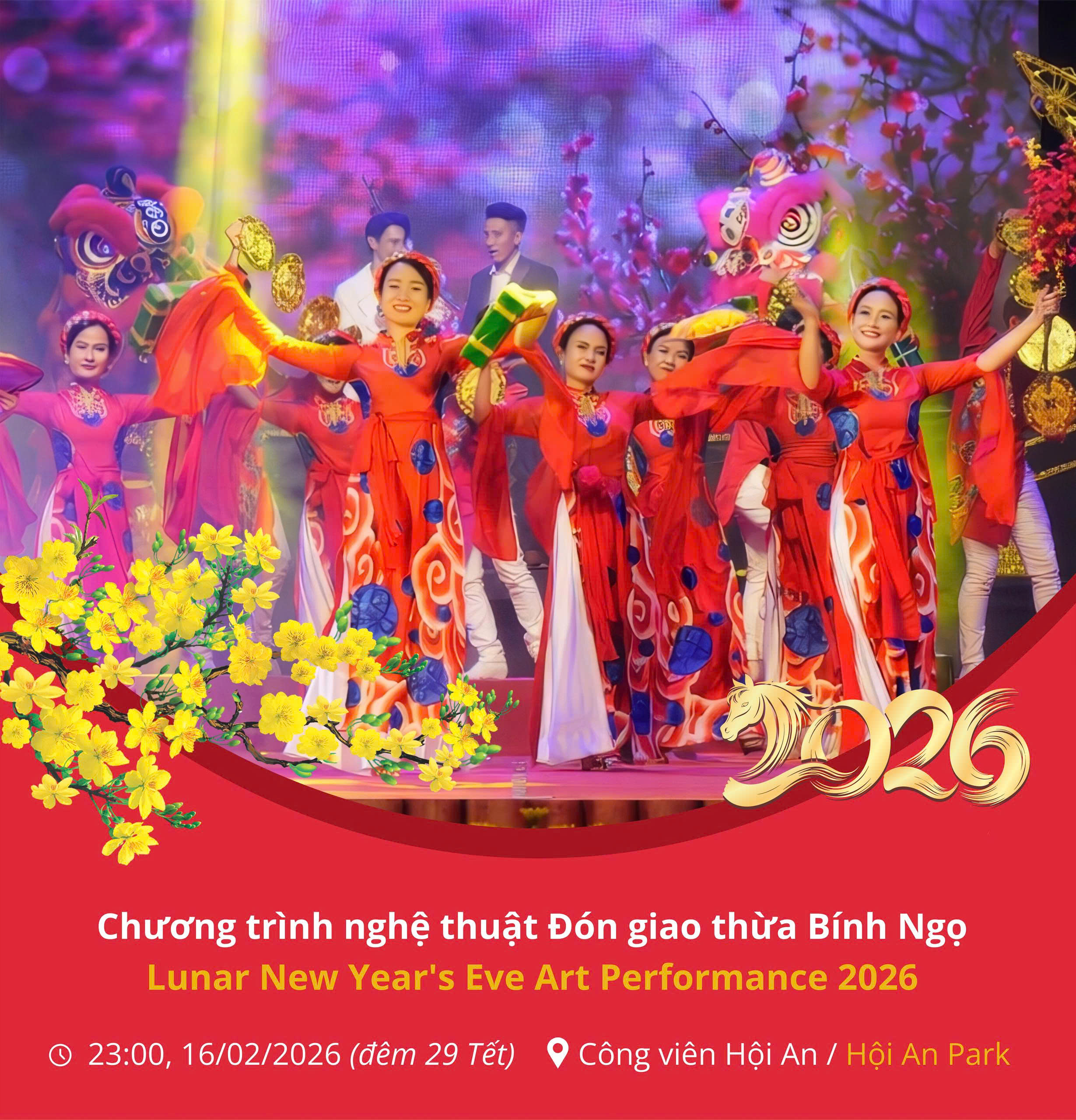
New Year’s Eve in Hoi An is always one of the most anticipated moments of the year. The spring blessing procession parades through the ancient town, carrying wishes of peace and prosperity to every street and household. This is followed by the New Year’s Eve art performance and high-altitude fireworks, marking the transition between the old and new year within the heritage space, where shared emotions and community spirit come together in a truly memorable moment.
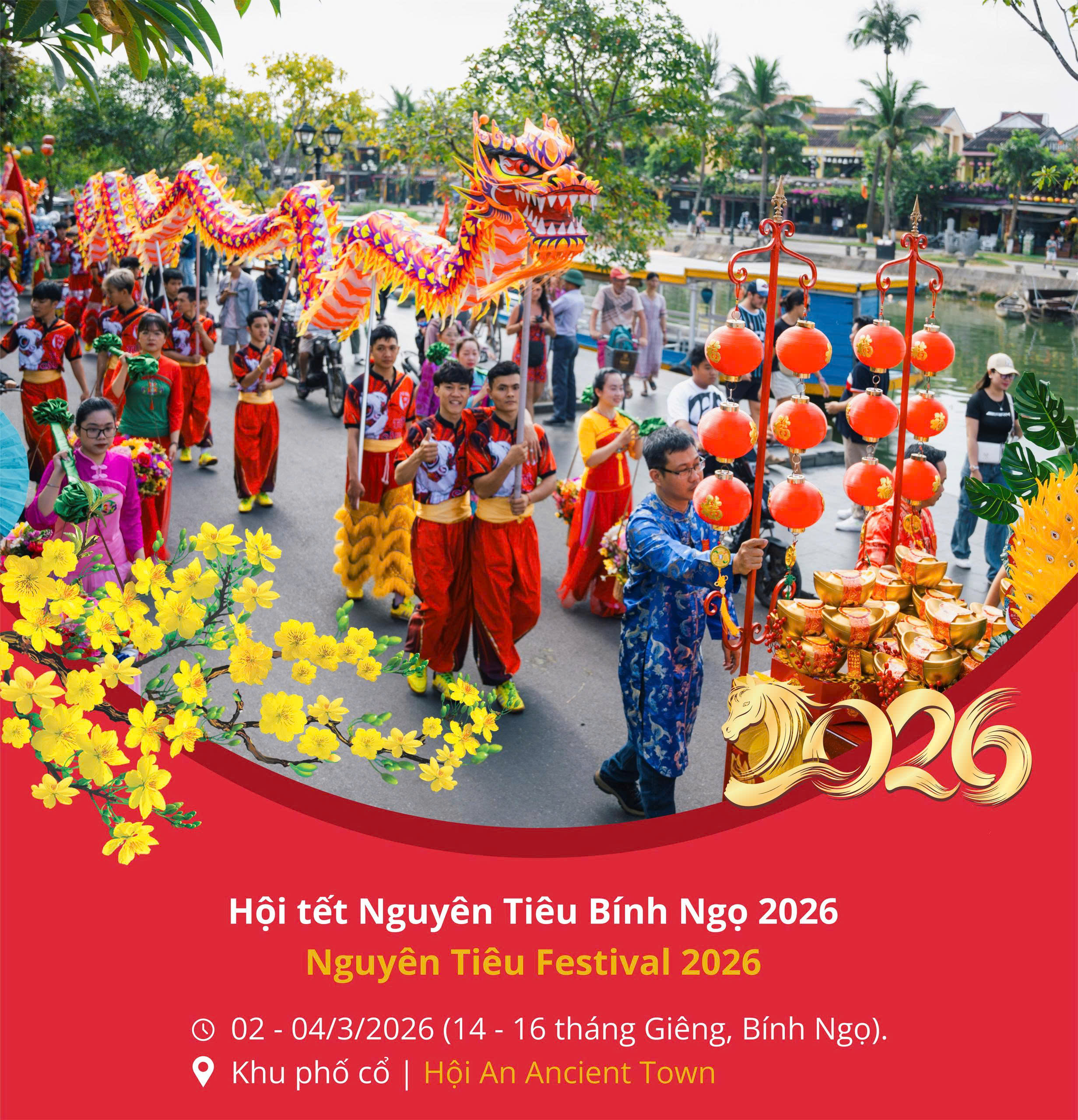
The Full Moon Festival of the First Lunar Month (Tet Nguyen Tieu) — recognized as a National Intangible Cultural Heritage and one of the most important customs of the Hoi An community — carries the meaning of praying for peace, health and prosperity for the year ahead. In the Year of the Horse 2026, Tet Nguyen Tieu takes place from 2 to 4 March 2026, opening a spiritually profound festival space in the heart of the heritage town. During this time, residents and visitors join familiar rituals: praying at pagodas, communal houses and temples; offering incense for family and loved ones; releasing lanterns on the Hoai River. As night falls, shimmering lights reflect on the water, and the ancient town settles into a more tranquil and sacred rhythm — turning every moment into a peaceful point of connection on the spring journey.
Festive journeys to traditional craft villages
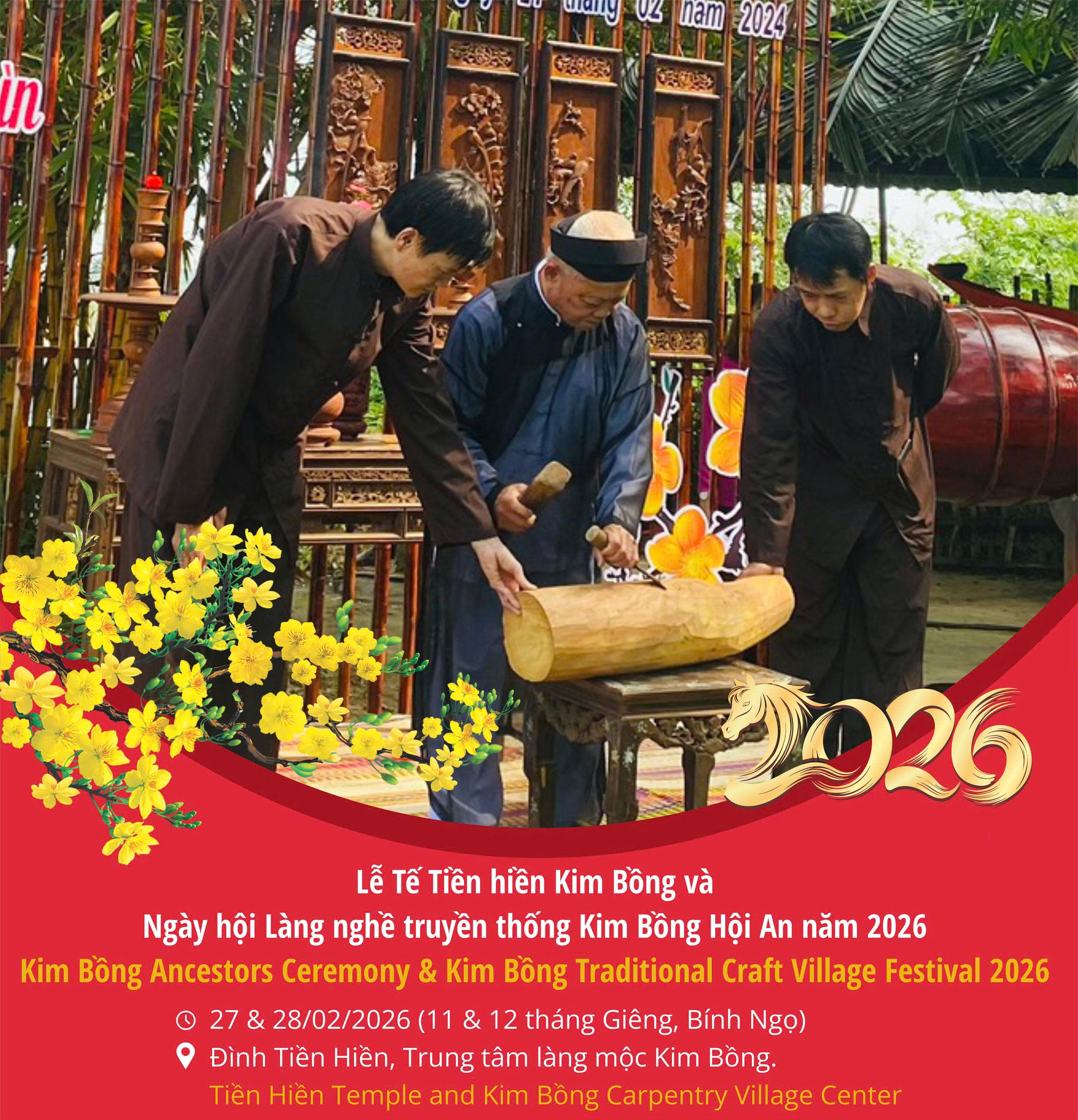
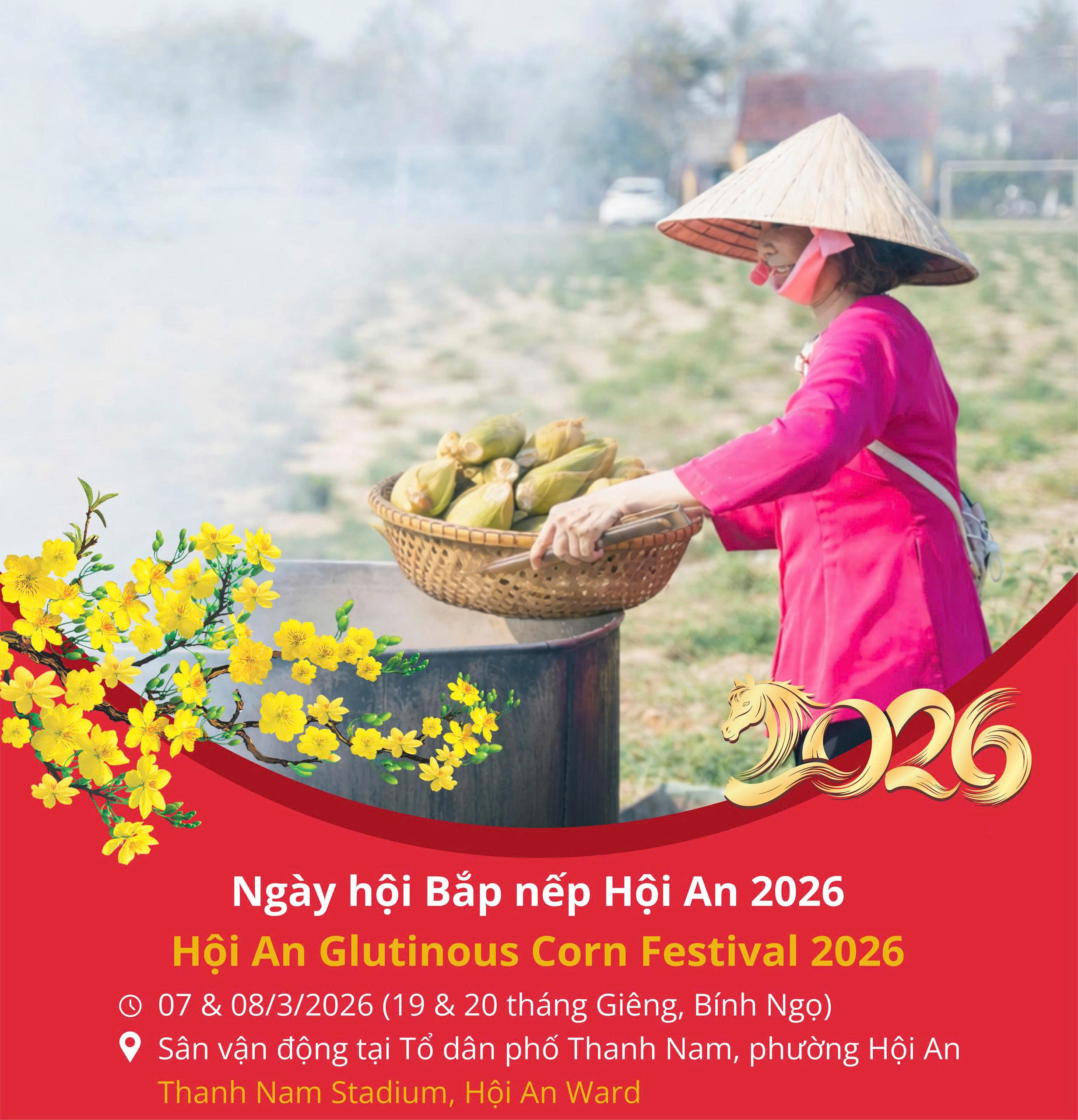
From the ancient town, the Tết atmosphere continues to spread to surrounding craft villages, where visitors can immerse themselves in the everyday early-year activities of local communities. During this period, the Tra Que “Cau Bong” Festival (7th day of the First Lunar Month), Kim Bong Carpentry Village Festival (7–8 February 2026) and Cam Nam Sticky Corn Festival (7–8 March 2026) open festive spaces linked to fields, handicrafts and community celebrations. Here, visitors not only attend festivals, but stroll through villages, taste local produce and feel the living rhythm of craft communities during a Tết that is intimate, warm and unmistakably Hoi An.
Youthful and vibrant with contemporary experiences
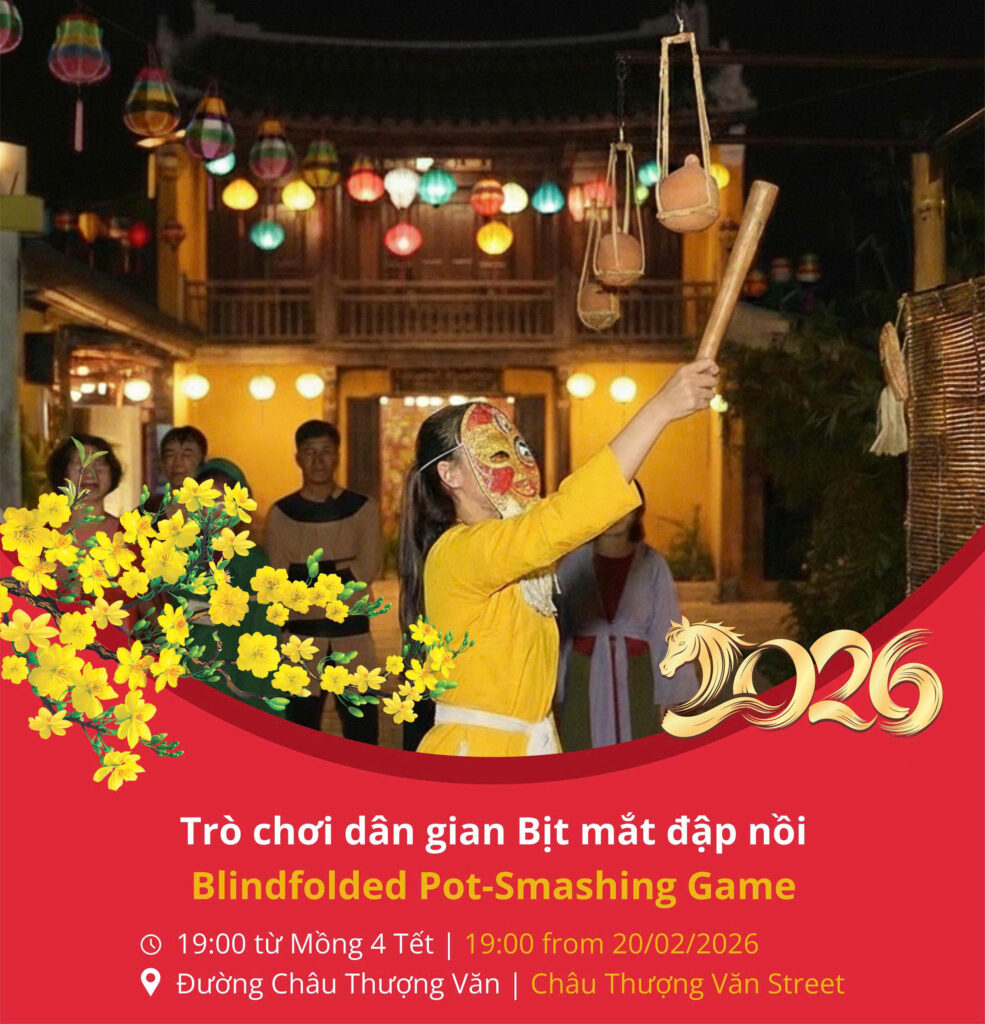
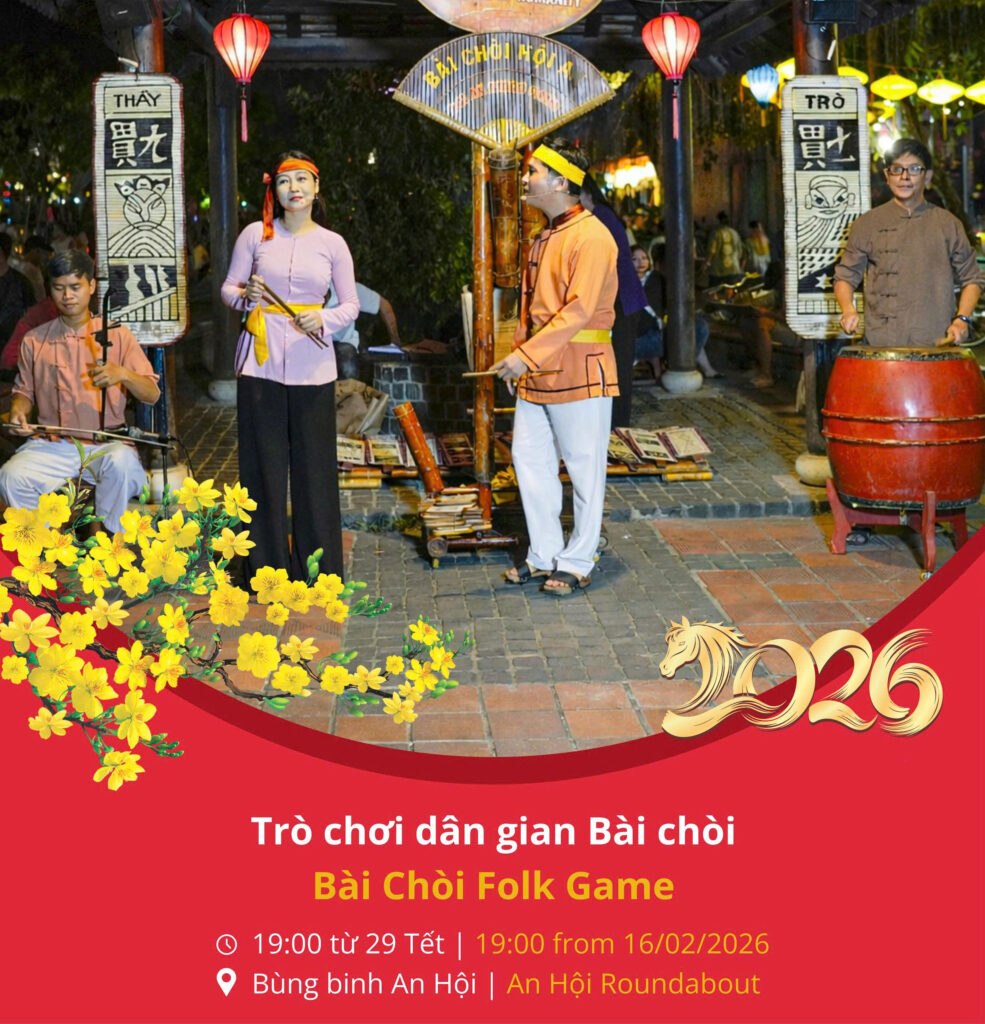
Bên cạnh các nghi lễ truyền thống, Hội Tết Nguyên Đán Bính Ngọ 2026 còn mang đến không khí trẻ trung với chuỗi hoạt động biểu diễn nghệ thuật, trò chơi dân gian, bài chòi, hát bội, giao lưu âm nhạc tại các không gian công cộng.
Alongside traditional rituals, the Lunar New Year Festival of the Year of the Horse 2026 brings a youthful energy through a series of art performances, folk games, Bai Choi singing, classical opera and music exchanges in public spaces.
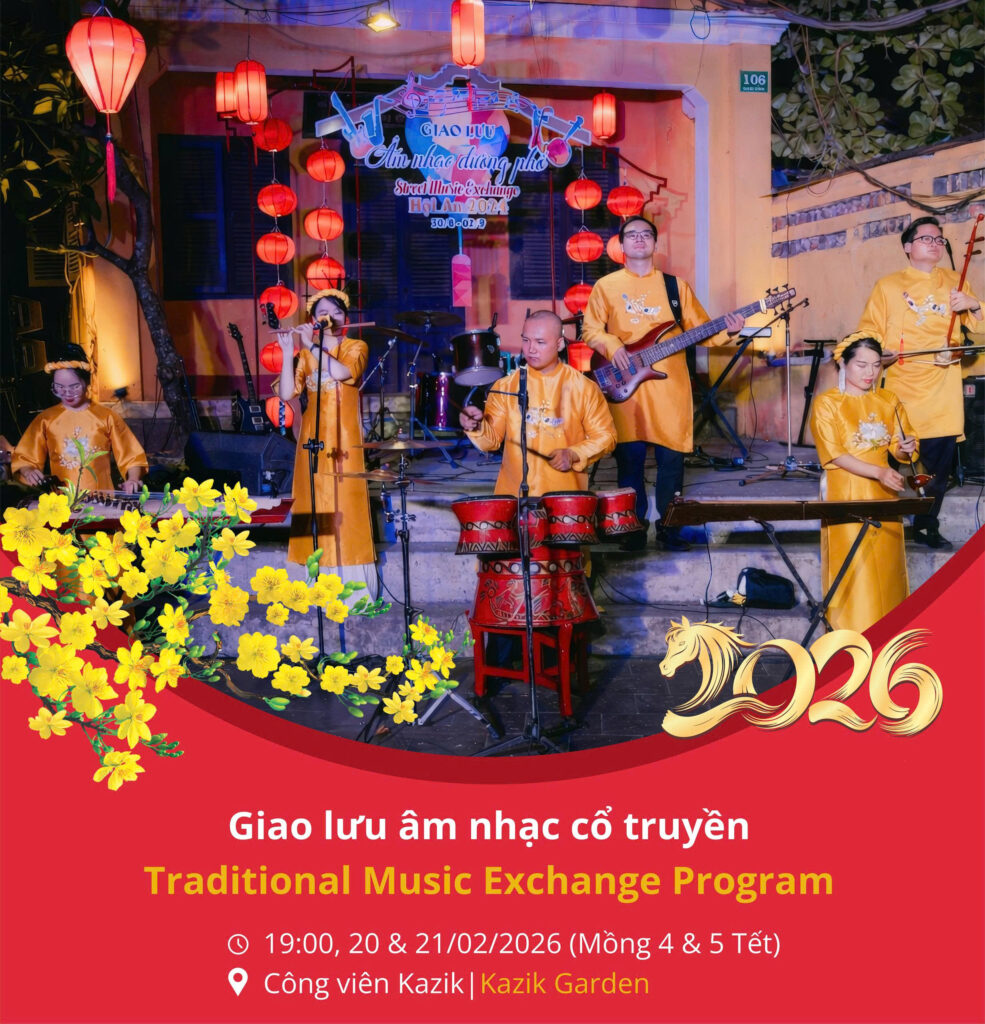
Community- and business-led events such as the “Local Market – Joyful Countryside Tết” at Tan Thanh Beach and the Light and Heritage Festival at Hoi An Memories Island contribute to shaping an image of Hoi An that both preserves tradition and embraces new forms of experience — where heritage continues through contemporary creativity.
The Lunar New Year Festival of the Year of the Horse 2026 is not merely a spring celebration, but a journey for visitors to touch the original essence of Vietnamese Tết within a living heritage space. Here, tradition does not stand still, but is preserved through community life; heritage does not separate from the present, but meets a youthful, modern and emotionally rich spirit.
Coming to Hoi An during Tết, you do more than check in at a heritage town — you live fully within the authentic New Year atmosphere of the ancient streets. Every moment is close enough to touch, gentle enough to feel, and beautiful enough to remember — a Hoi An that is different, deeply festive, and truly worth experiencing.
DA NANG TOURISM PROMOTION CENTER