















In the journey of “Touching the Original Essence,” Tet is the moment to most vividly sense the presence of Vietnamese New Year traditions in the everyday life of the people of Da Nang – where rituals, customs, and traditional ways of living are preserved in a natural, simple manner, without staging or display.
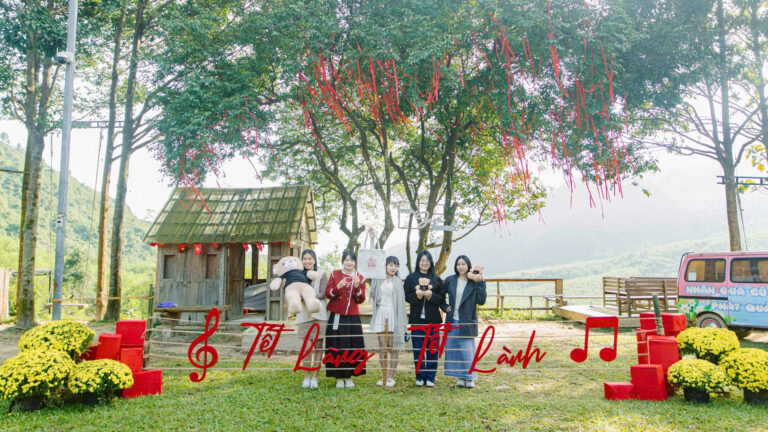
Arriving in Da Nang during the Lunar New Year, visitors not only welcome spring in a modern seaside city, but also have the chance to touch the very heart of Vietnamese Tet traditions – simple, warm, and rich with the spirit of reunion.
The Tet culture of Da Nang is part of the vibrant mosaic of Vietnamese New Year celebrations, where core values such as family togetherness, gratitude to ancestors, and hopes for a new beginning are carefully preserved through every ritual and familiar custom. Even as urban life grows ever more modern, Tet remains a precious pause – a moment for each family to return to what is most sacred, enduring, and meaningful.
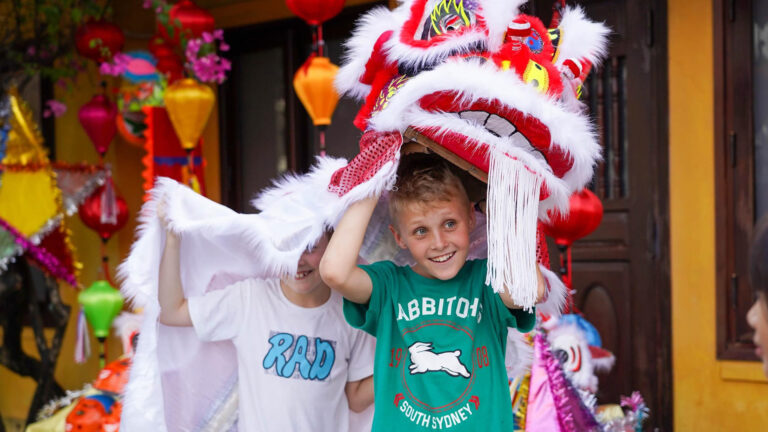
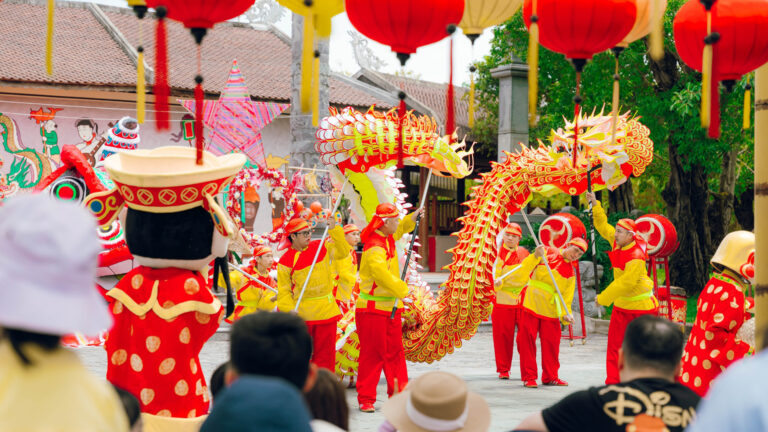
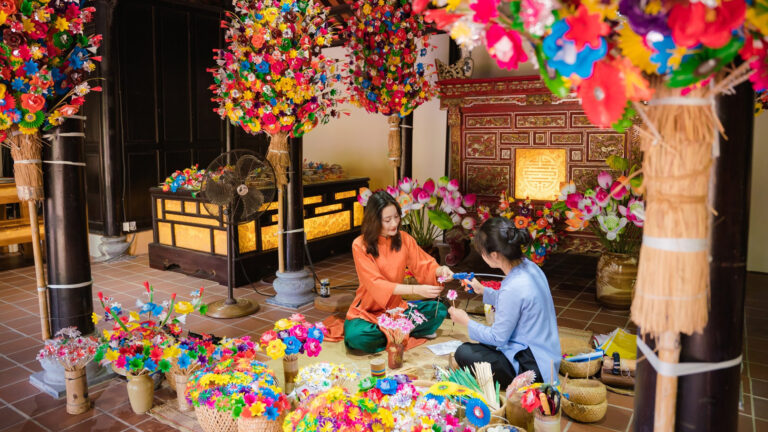
One City, Many Shades of Spring
For visitors, experiencing Tet in Da Nang is also a journey of touching cultural identity across different spaces – each carrying its own rhythm of spring, yet all meeting in the shared spirit of reunion and community connection.
In the first days of the New Year, the atmosphere of Tet can be felt throughout every corner of Da Nang – from the city center to heritage towns, rural villages, craft villages, coastal areas, and mountainous regions.
In the central districts, Tet reveals a vibrant face with streets glowing in spring blossoms, gently decorated public spaces, and roads that slow down from their usual rush. The city becomes more unhurried, allowing people to fully sense the gentle breath of spring.
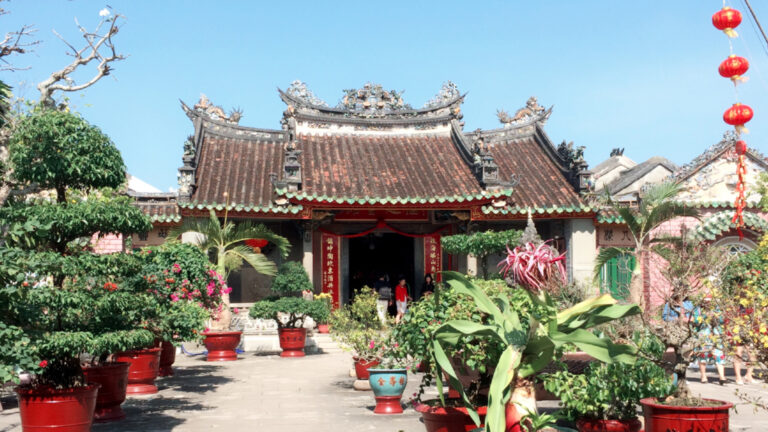
In the heritage town of Hoi An, Tet arrives in a tranquil rhythm. The ancient town dons a calm spring attire, where traditional values are preserved in every house and daily ritual. By wooden doorways, red couplets brighten the season; ancient “eyes of the doors” quietly adorn the festive space; beyond the alleys, at communal yards or familiar street corners, bamboo New Year poles sway softly in the breeze – all coming together to create a Tet atmosphere that is simple, profound, and uniquely Hoi An.
In the southern part of the city, Tet unfolds with a youthful, fresh, and energetic character. The festive atmosphere blends with the dynamic pace of life, open spaces, new residential areas, and lively community activities. Tet here is not overly tranquil, but carries a sense of openness, freedom, and friendliness – reflecting the spirit of a land that is transforming day by day.
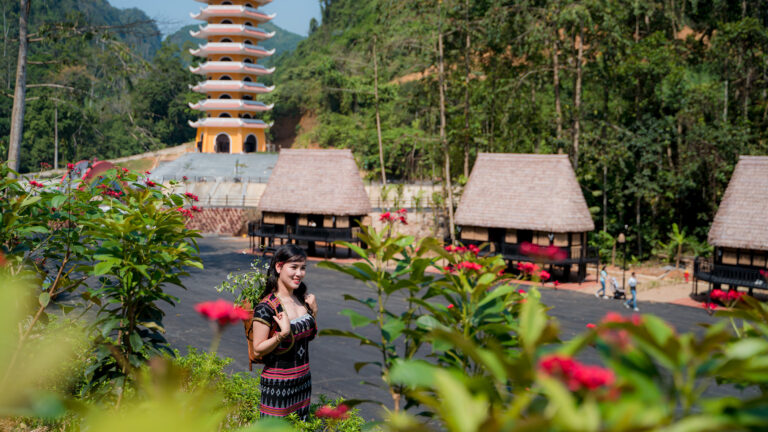
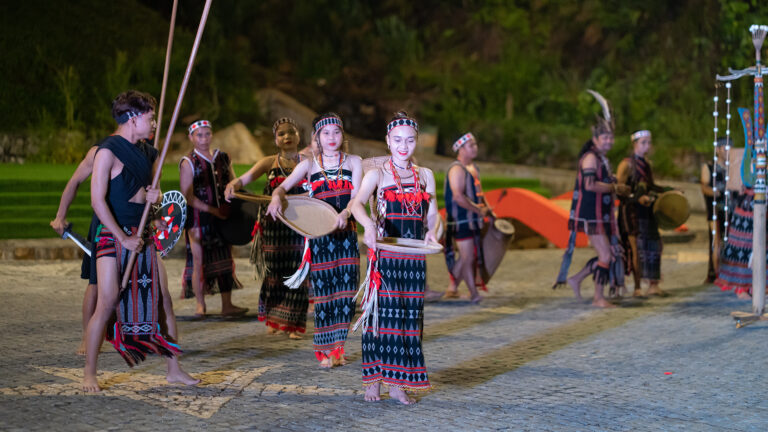
Along the coast, Tet mingles with the sound of waves, the gentle salty spring breeze, and the peaceful rhythm of fishing villages. In the countryside, rural hamlets, and mountainous areas, spring reveals itself most clearly in the warmth of community gatherings and in the unique cultural identities of the Co Tu, Xe Dang, Bhnoong, and Cor ethnic groups. Wherever one may be, Tet remains a season of reunion – a time when people turn their hearts toward family and community.

How People in Da Nang Welcome Tet
The Days Leading Up to Tet
Tet in Da Nang begins quite early – not with grand festivals, but with familiar movements in every home and every small alley, where visitors can clearly sense the local rhythm of life slowing down in preparation for the arrival of spring.
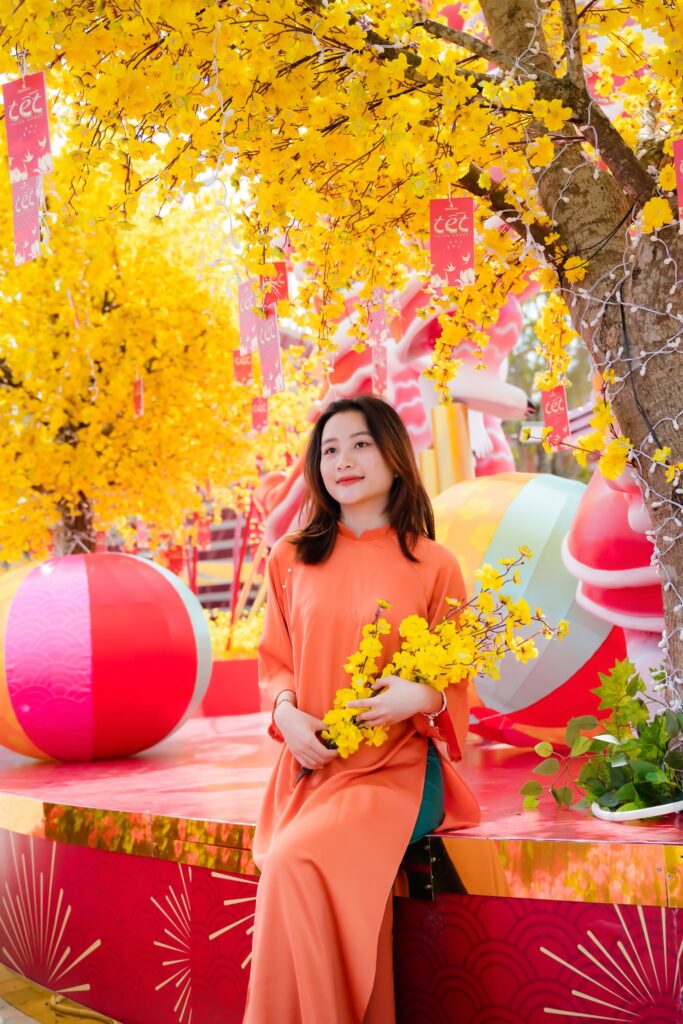
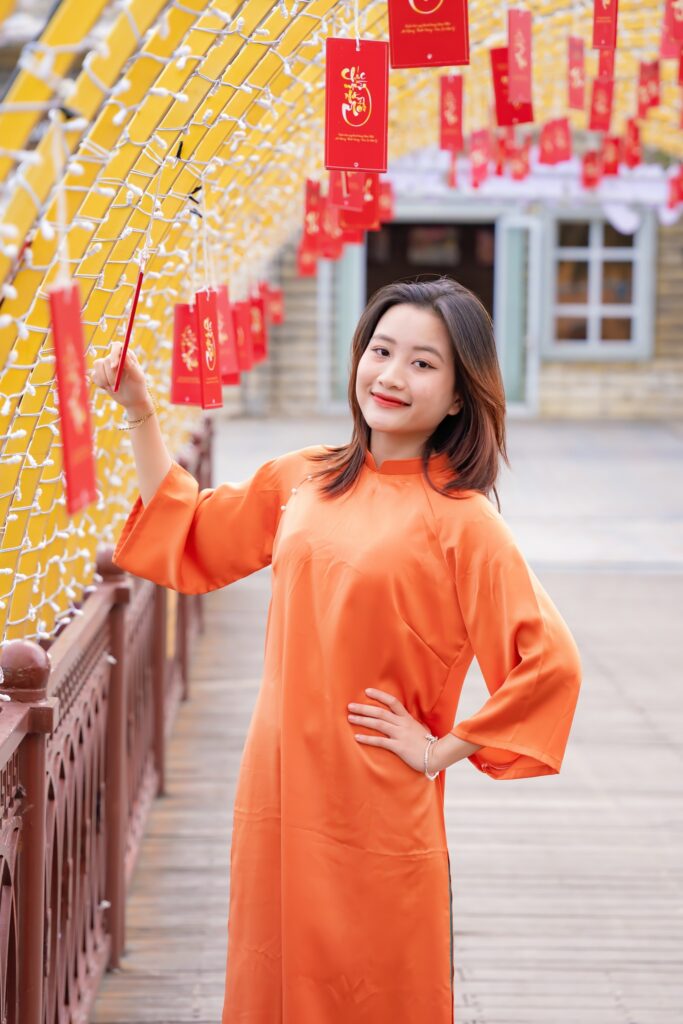
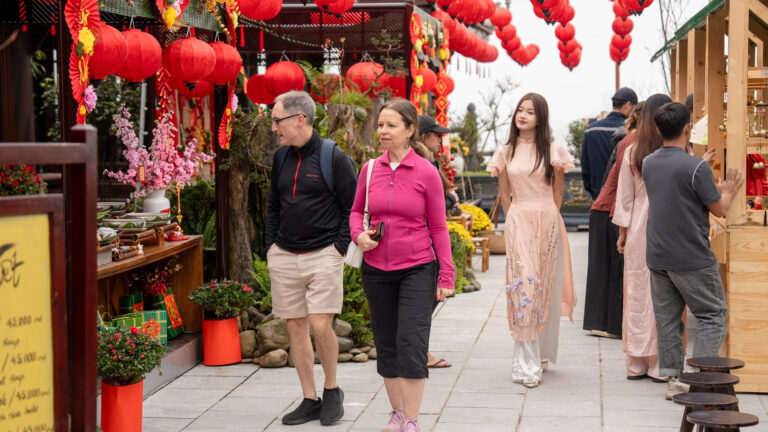
Tet begins in the final days of the year, when every household busily prepares to welcome spring. People in Da Nang clean and decorate their homes, buy new household items, and arrange Tet flowers to invite fresh energy for the coming year. In front of many houses, pots of marigolds, yellow chrysanthemums, hollyhocks, apricot blossoms, or kumquat trees are carefully placed by the main entrance – like gentle wishes for prosperity, abundance, and a year filled with blessings.
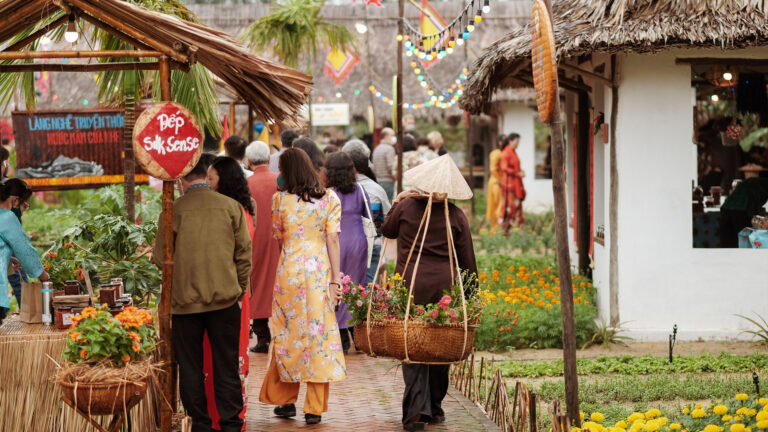
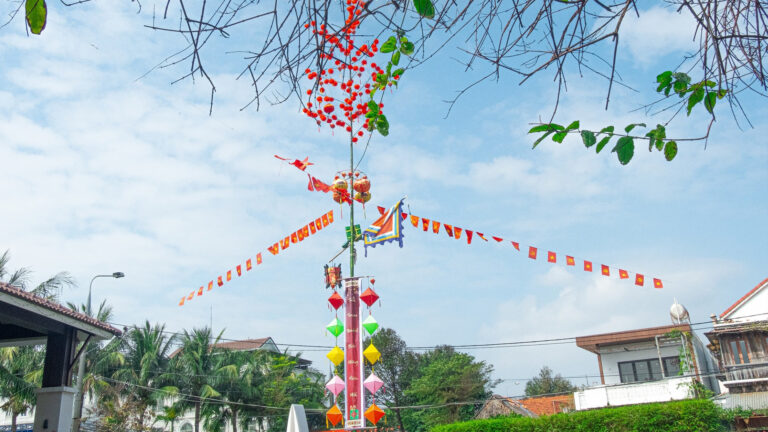
On the 23rd day of the twelfth lunar month, the ritual of worshipping the Kitchen Gods is solemnly observed, sending them off to Heaven to report the family’s affairs of the past year. In the days that follow, many families visit ancestral graves to clean and tend them, offering incense and inviting their ancestors to return home to celebrate Tet with their descendants.
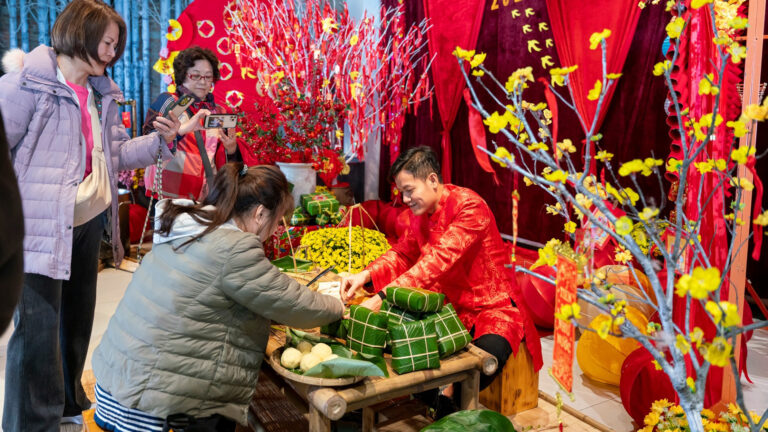
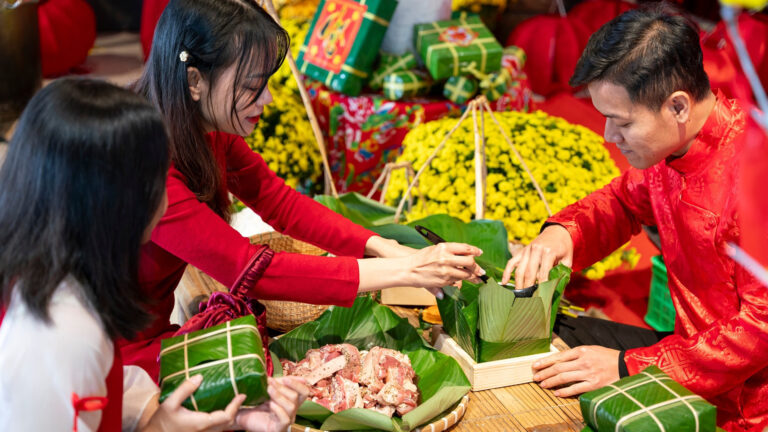
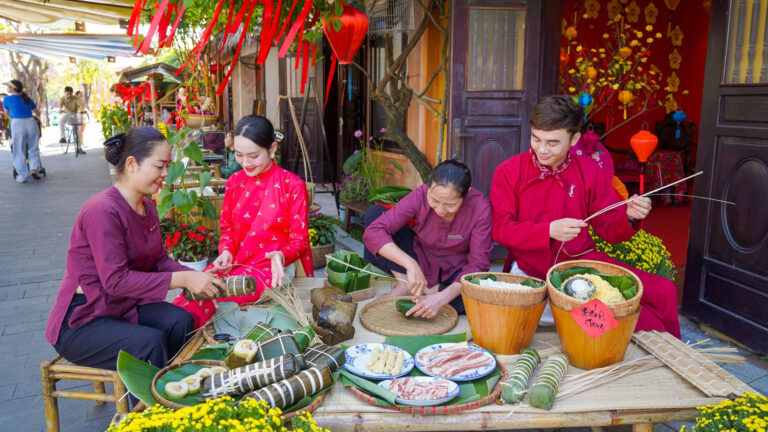
In the days leading up to Tet, one image is indispensable: families gathering together to make banh chung and banh tet – an activity that carries spiritual meaning while also bonding generations. Alongside this is the lively atmosphere of Tet markets, where people buy flowers, prepare food, and get ready for the reunion meals of the New Year.
New Year’s Eve and the First Day of Tet
The moment of New Year’s Eve is a deeply emotional point of connection for visitors – when the spirit of Tet is no longer something to be merely observed, but fully felt through the warmth, solemnity, and intimacy within each family.
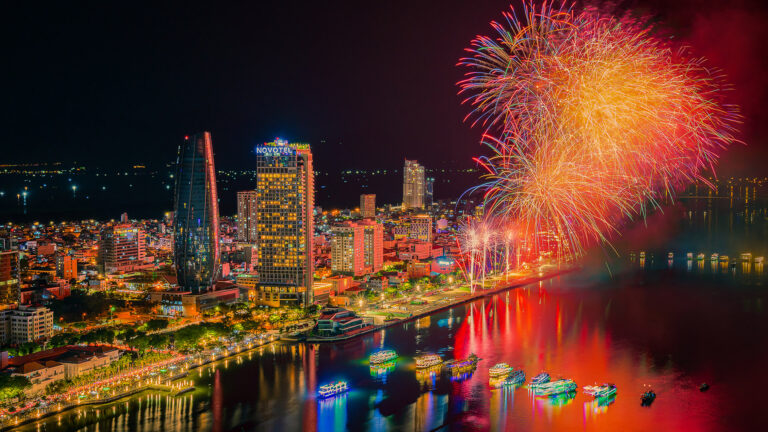
New Year’s Eve is the most sacred moment of Tet. The year-end family meal gently closes the old year in an atmosphere of reunion, followed by the New Year’s Eve offering ritual to welcome the new year and pray for peace and good fortune.
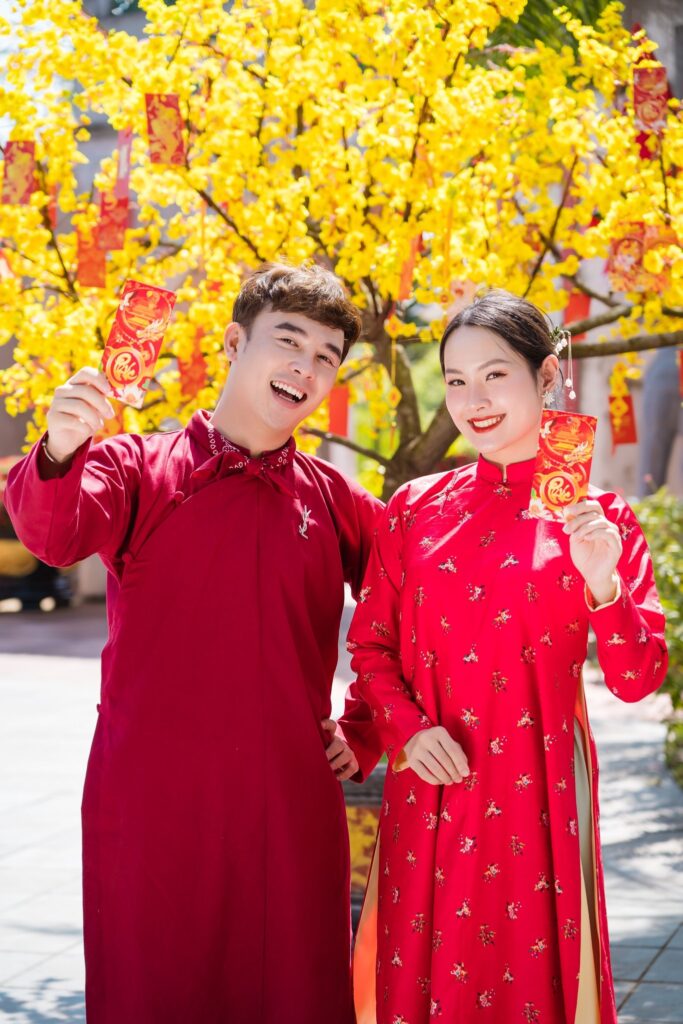
On the morning of the first day of Tet, the custom of xong dat (first footing) is highly valued, with the belief that the first person to enter the house will bring good fortune for the entire year. Early New Year greetings and bright red li xi envelopes given to children and loved ones become a way to pass on blessings, joy, and hopes for the year ahead.
The Days After Tet
After the first days of the New Year, Tet in Da Nang continues to gently unfold in a slower rhythm – where visitors can leisurely immerse themselves in spiritual life, community activities, and the traditional cultural practices that are steadfastly preserved over time.
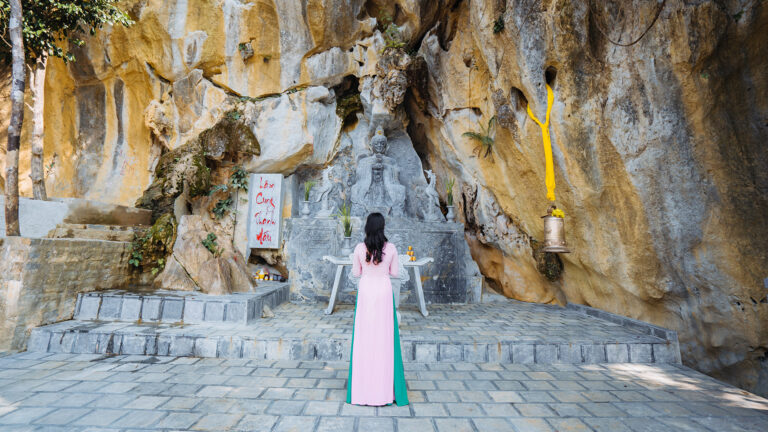
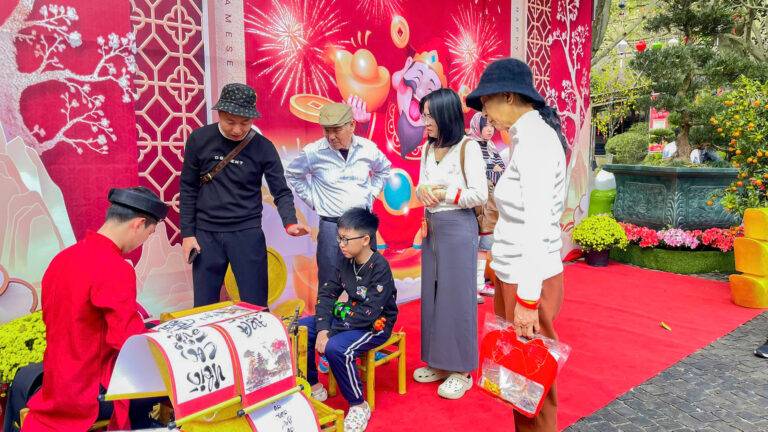
After the first day of Tet, people in Da Nang often visit pagodas and temples at the beginning of the year to pray for peace, good health, and smooth fortune. Asking for calligraphy or spring couplets is a cherished custom, symbolizing wishes for learning, success, and good luck.
Tet is also a time to visit and exchange New Year greetings with relatives, friends, and neighbors, strengthening bonds within the community. Many people choose to write their first lines of the year (khai but) as a hopeful beginning for study and work. Early spring festivals, especially the Lantern Festival (Tet Nguyen Tieu), bring a lively atmosphere that extends through the first days of the new year.
Spring Festivities and Tet Activities
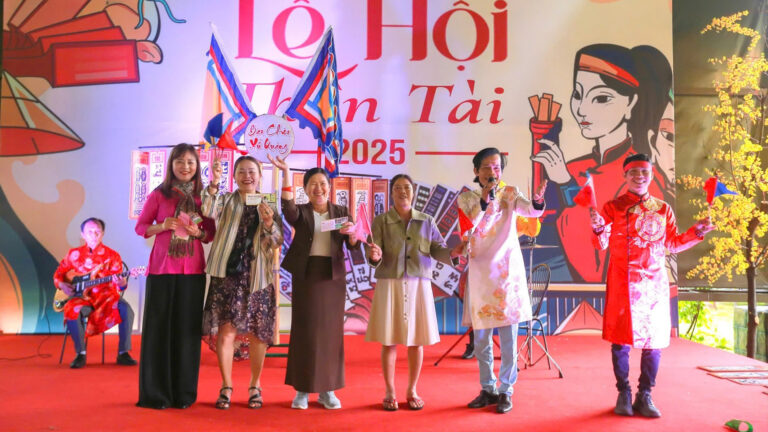
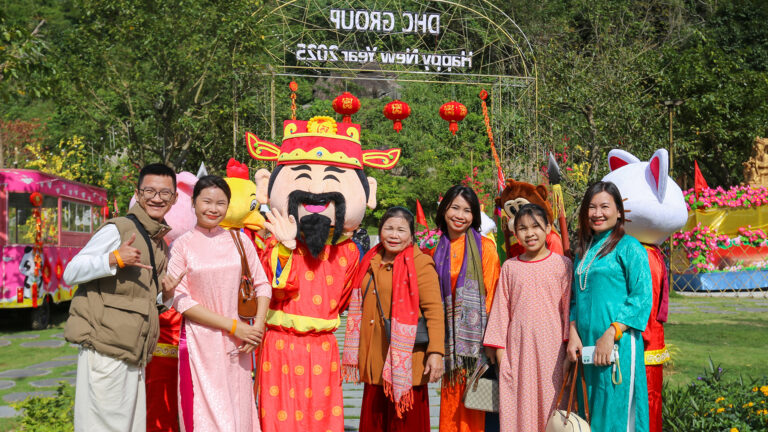
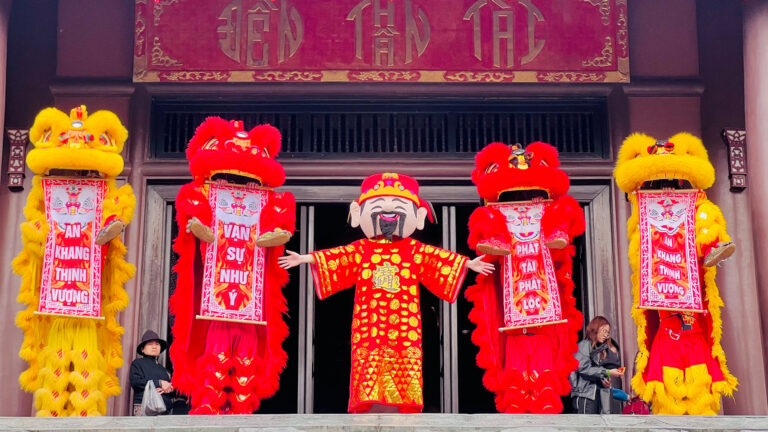
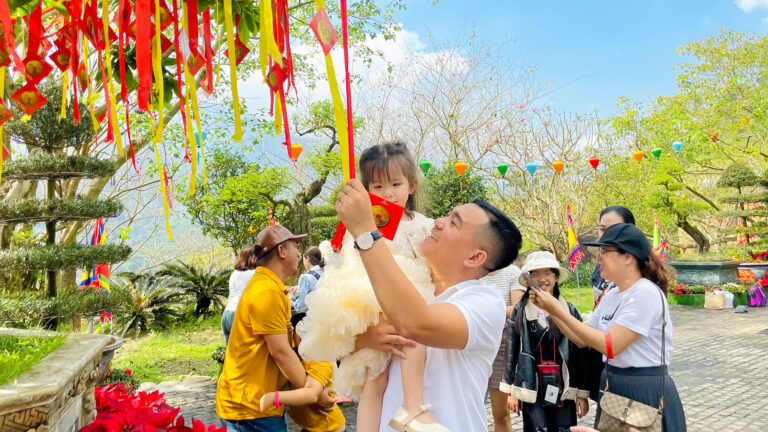
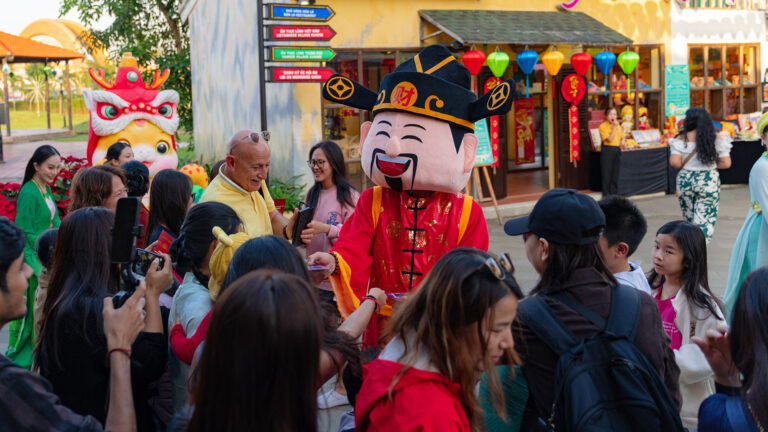
Springtime activities in Da Nang open up the most genuine moments of Tet – where joy does not come from grand stages or elaborate arrangements, but from simple encounters, warm interactions, and laughter shared between the community and visitors. These are moments to pause, blend into the spring atmosphere, and quietly keep emotions in a very natural way.
Amid the lively rhythm of spring, Bai Choi at the beginning of the year becomes a familiar meeting point. Visitors can sit down, listen to spontaneous chants, enjoy rustic singing and witty exchanges, and share in the joy through applause and laughter. Winning or losing no longer matters; what lingers is the feeling of being part of a Tet moment that is intimate, authentic, and deeply human.
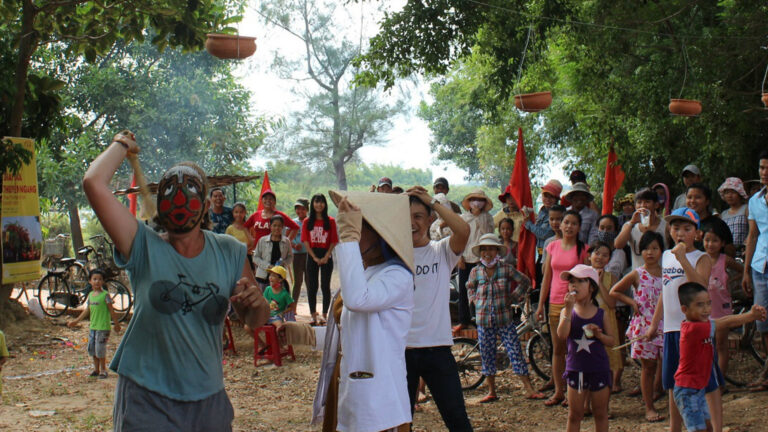
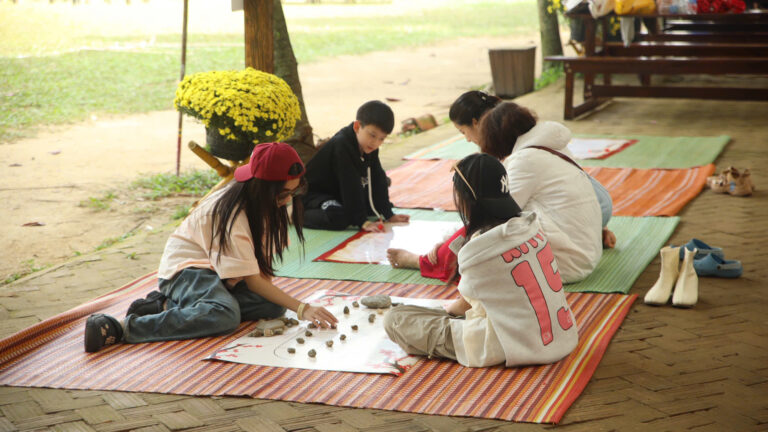
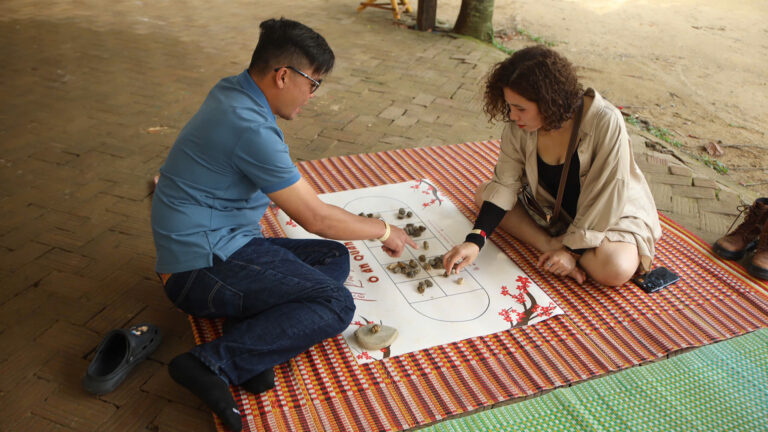
Alongside this, traditional folk games such as blindfolded pot smashing, hat sac bua, Chinese chess, and lo to create lively snapshots of springtime. Each game is only a brief moment, yet enough to bring people closer together, allowing visitors not merely to watch, but to truly become part of the Tet atmosphere. It is these simple moments that shape a memorable spring – where Tet is felt through shared joy and the memories that linger long after each step away.
The Flavors of Tet
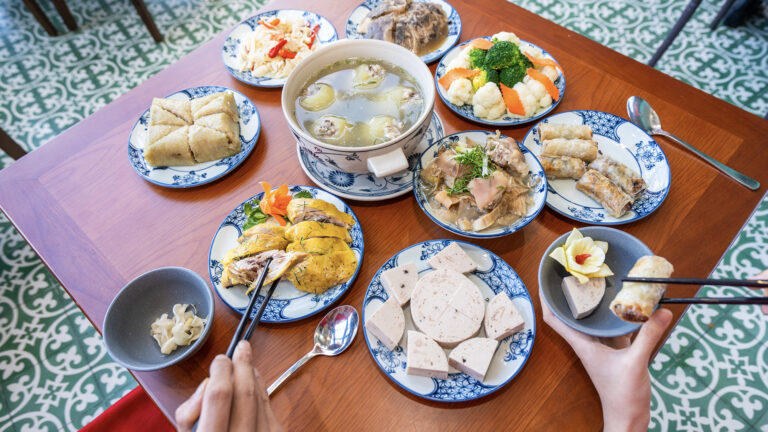
Tet cuisine is a natural way to touch the sense of taste and awaken the other senses on the journey through Da Nang. Each dish is not only meant to be savored, but also evokes memories of family, reunion meals, and the many springs that have left their mark on local life.
In the Tet feast of the people of Da Nang, abundance lies not in extravagance, but in warmth and togetherness. It is the harmonious colors of the five-fruit tray, the fragrant steam rising from freshly unwrapped banh chung and banh tet, the gentle sweetness of banh to, banh in, and banh thuan, and the subtle tang of pickled onions paired with tender boiled chicken. These familiar flavors blend together, awakening not only the taste buds, but also the senses of smell, sight, and emotion.
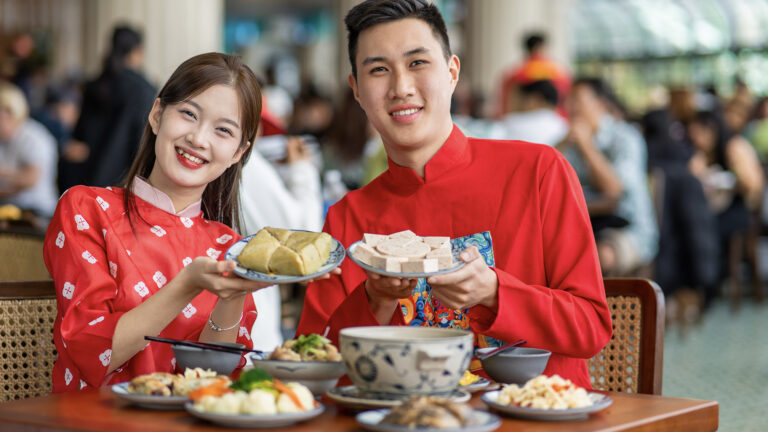
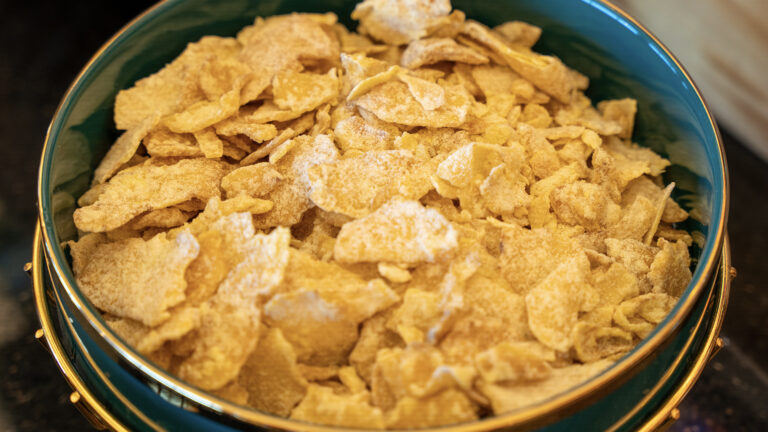
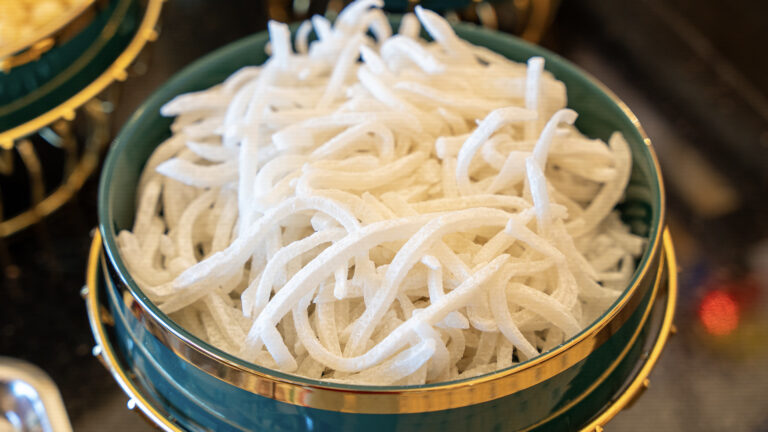
For visitors, savoring Tet cuisine in Da Nang is an intimate experience – where each dish guides the emotions, allowing Tet not only to be seen, but fully felt through all the senses. It is also the moment when memories of a spring that is genuine and deeply human slowly settle after every reunion meal.
For the people of Da Nang, Tet is a clear point of cultural connection – where tradition does not reside in museums, but lives vividly in every family and every community. In the heart of a dynamic and modern city, Tet continues to serve as a bridge between past and present, helping each person rediscover balance, serenity, and a meaningful beginning to the new year through enduring values.
Touching the original essence, sometimes, is simply like that.
DANANG TOURISM PROMOTION CENTER