














In Cham culture, traditional attire is not only a symbol of identity, spirituality, and collective memory preserved through generations, but also a reflection of the profound spiritual life of an ancient civilization. Every colour, pattern, and silhouette is deeply connected to beliefs about nature, divinity, and harmony in life, creating a beauty that feels both mysterious and culturally profound.
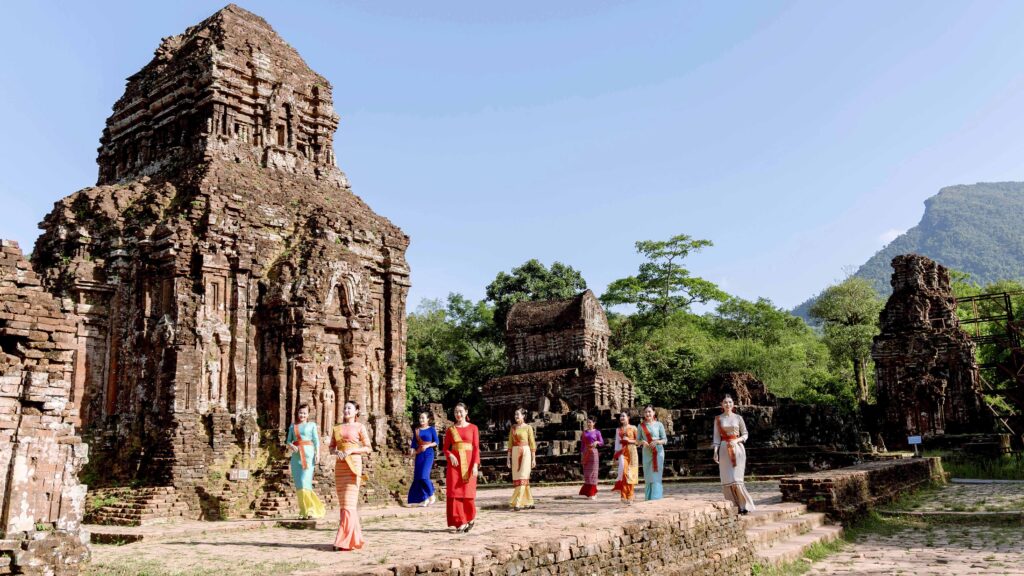
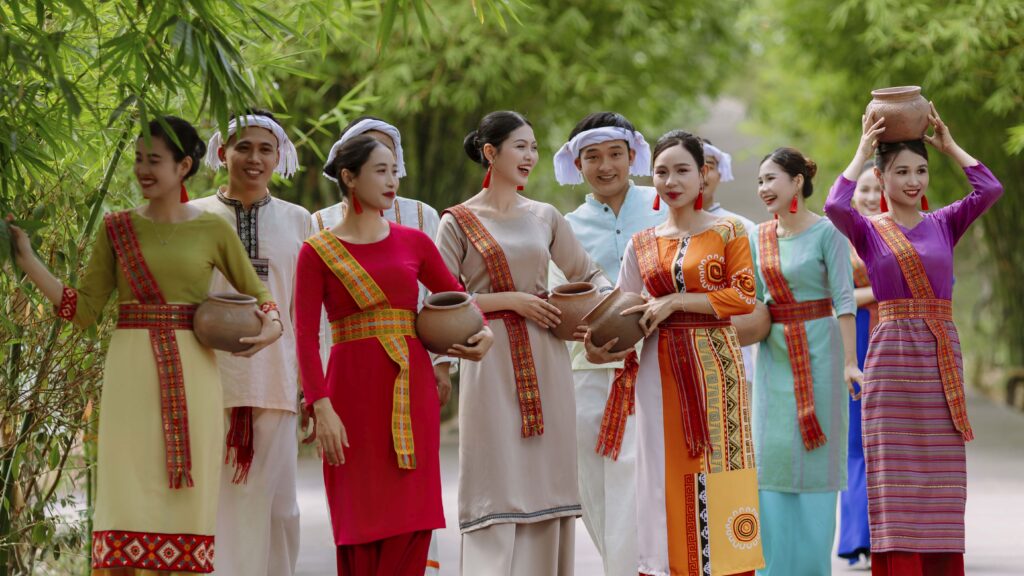
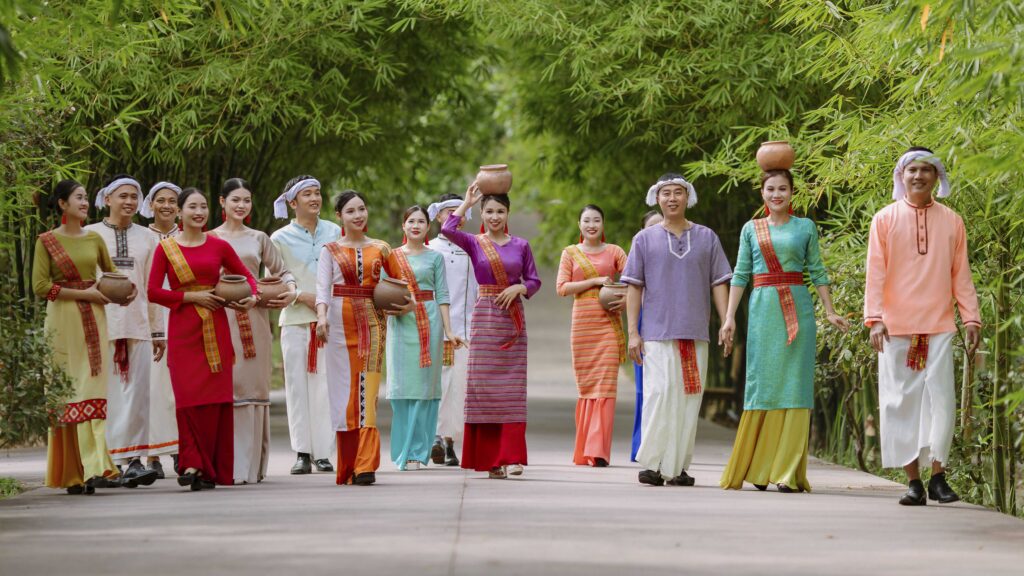
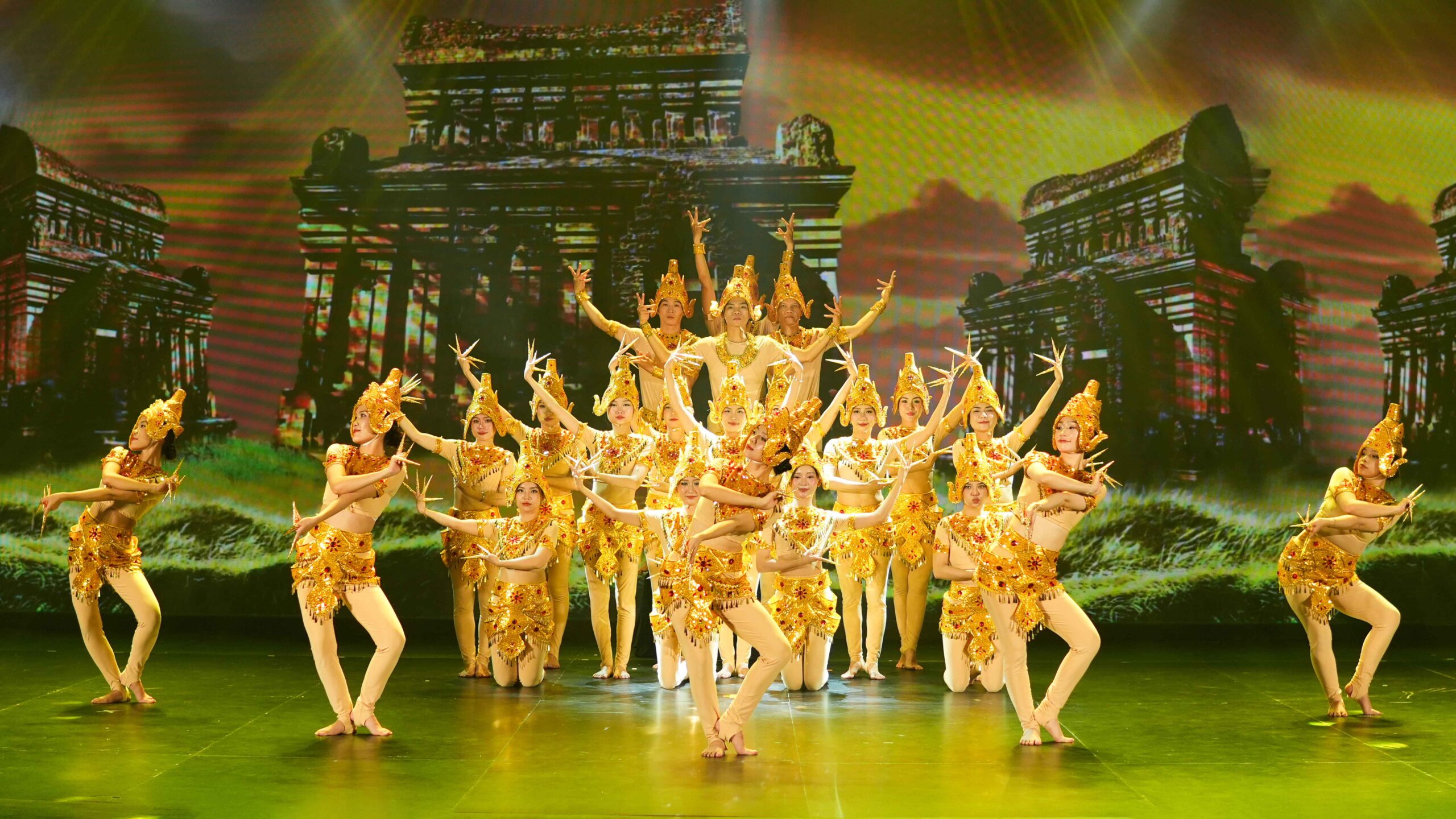
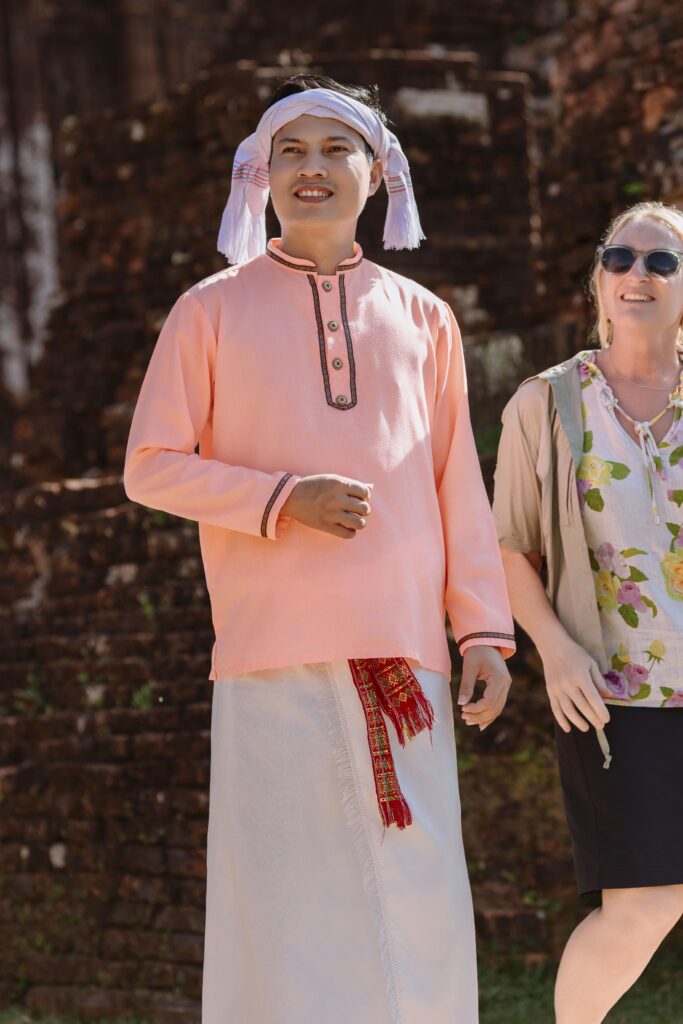
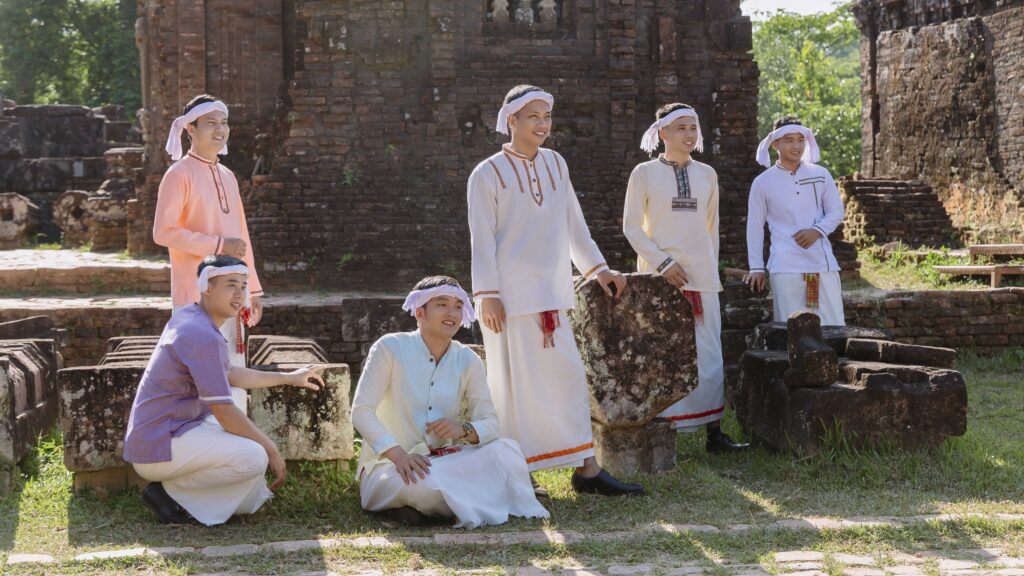
To fully discover these vibrant cultural expressions, travellers can visit My Son Sanctuary — where the elegance of Cham traditional costumes blends seamlessly with ancient architecture and the sacred atmosphere of this World Heritage site. Amid brick towers marked by time, the image of young men and women dressed in traditional attire brings My Son vividly to life, as if reviving the spirit of a civilization that once flourished for centuries.
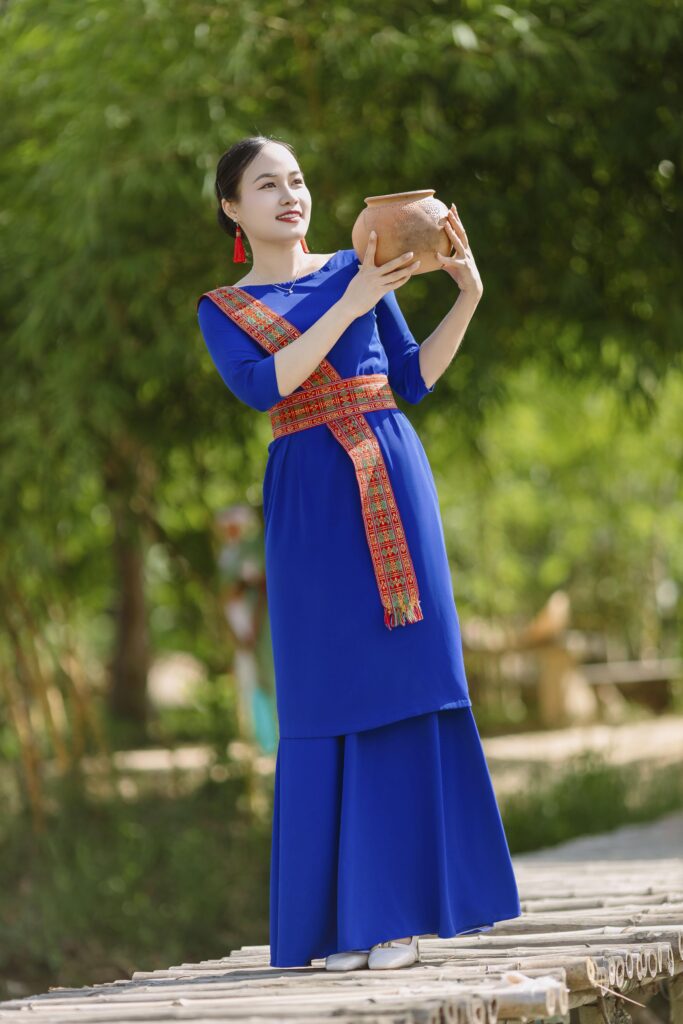
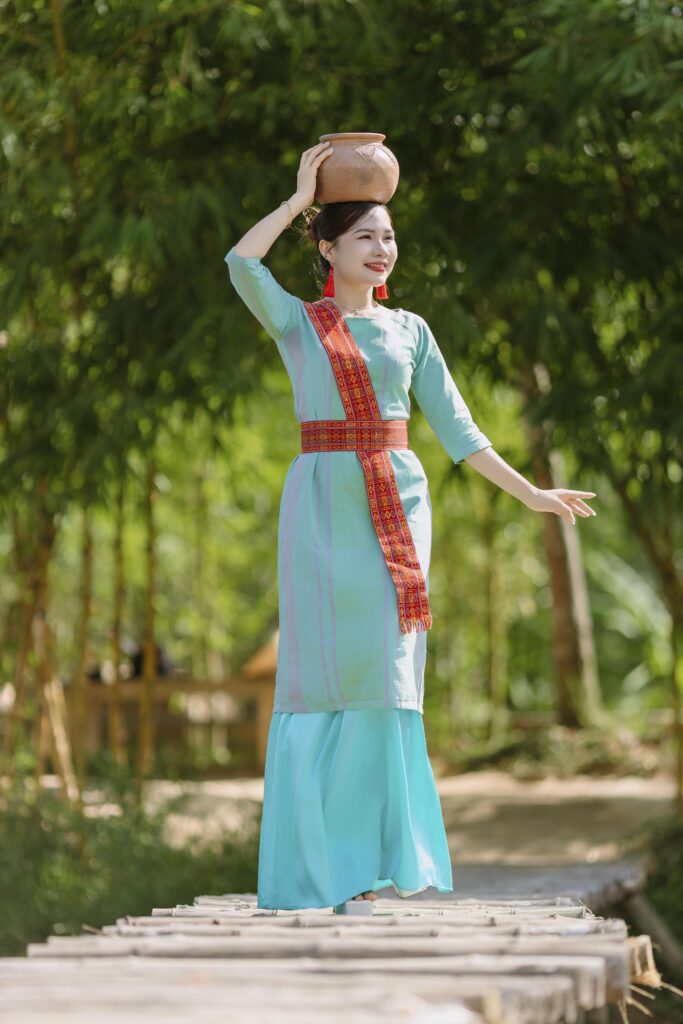
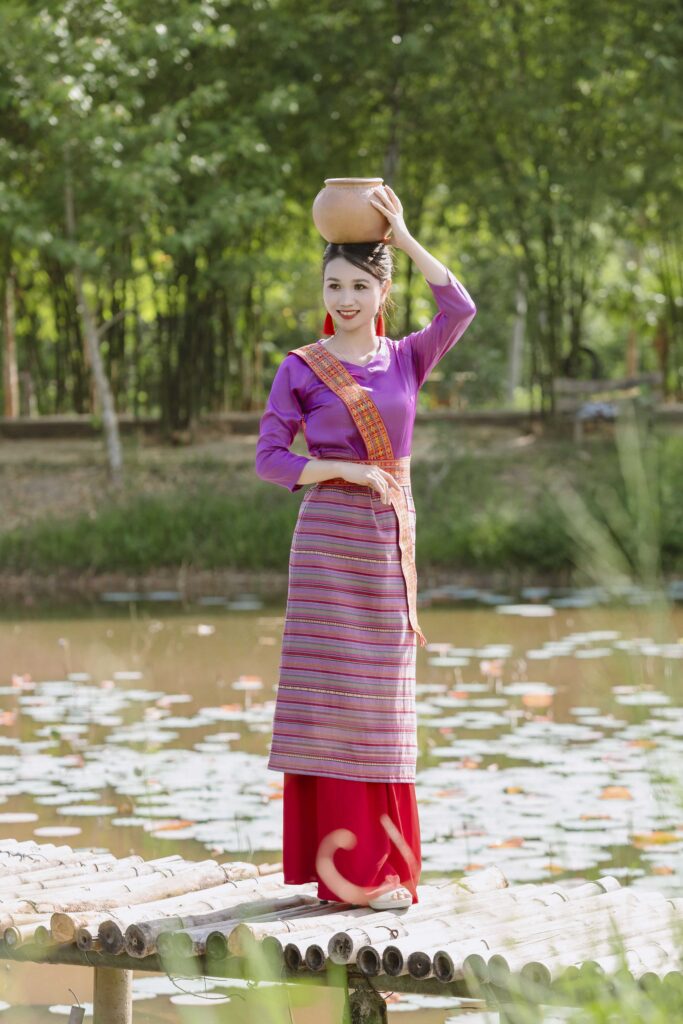
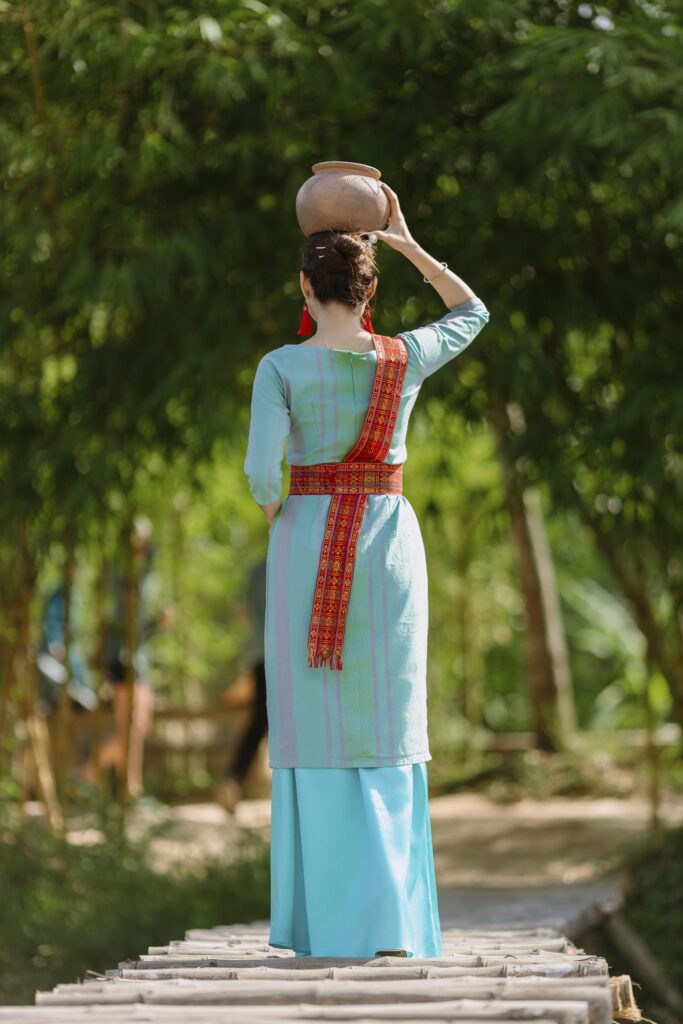
Cultural Imprints Woven Into Cham Attire
Cham art is a harmonious fusion of music, dance, spirituality, architecture, and community life. Within this cultural tapestry, traditional costumes hold a special place as a visual language expressing social status, aesthetic values, and spiritual beliefs passed down through generations. More than garments of beauty, each costume is closely tied to rituals, festivals, and the spiritual life of the Cham community.
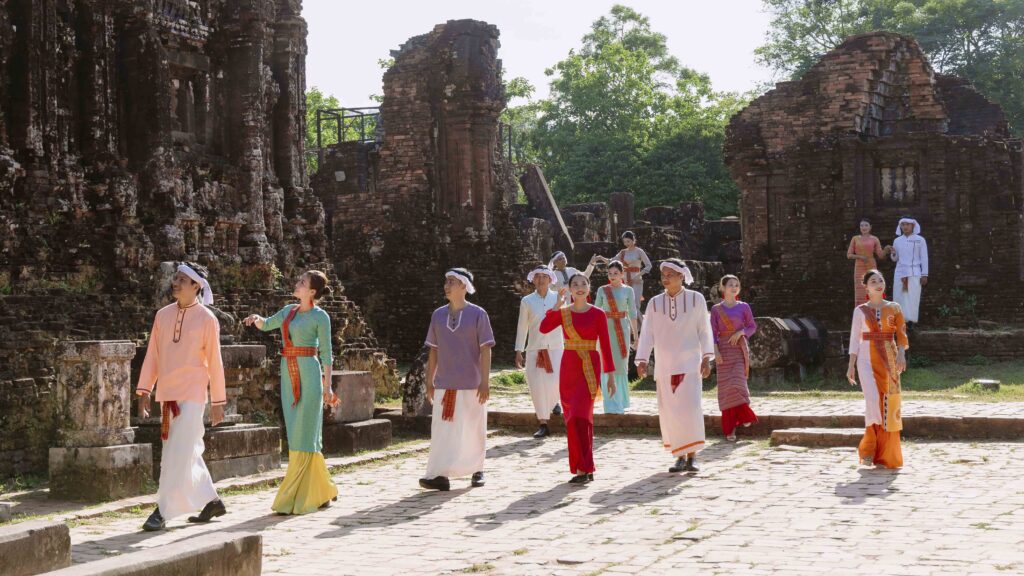
During traditional celebrations such as Katê — one of the most sacred and important festivals of the Cham people — costumes become an essential part of ceremonial processions, community dances, and offerings at ancient temple towers. Amid the resonating sounds of Paranưng drums and the melodic notes of the Saranai flute, vibrant traditional costumes appear throughout the festival space, creating a mesmerizing cultural tableau where people, deities, and collective memories seem to become one.
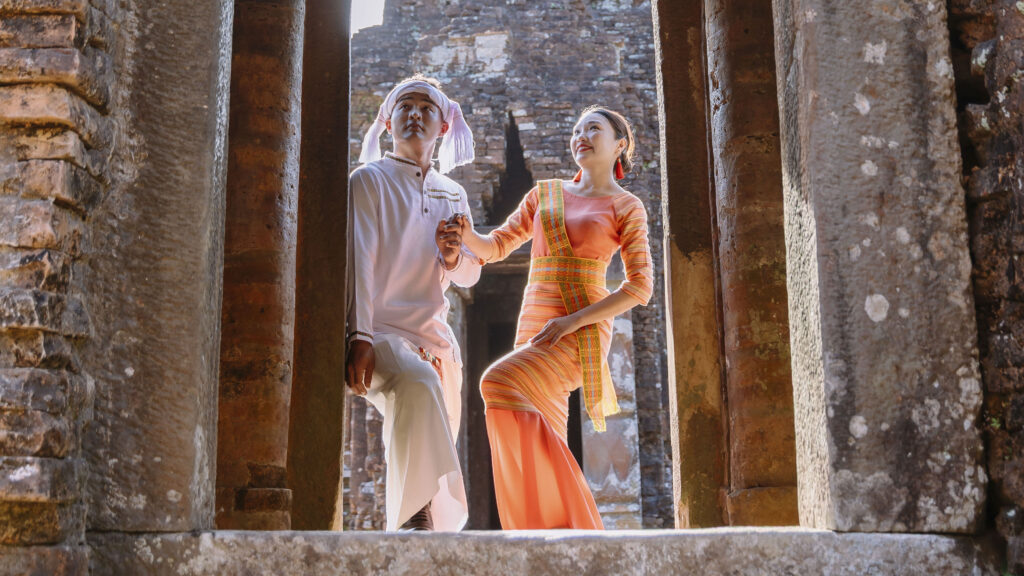
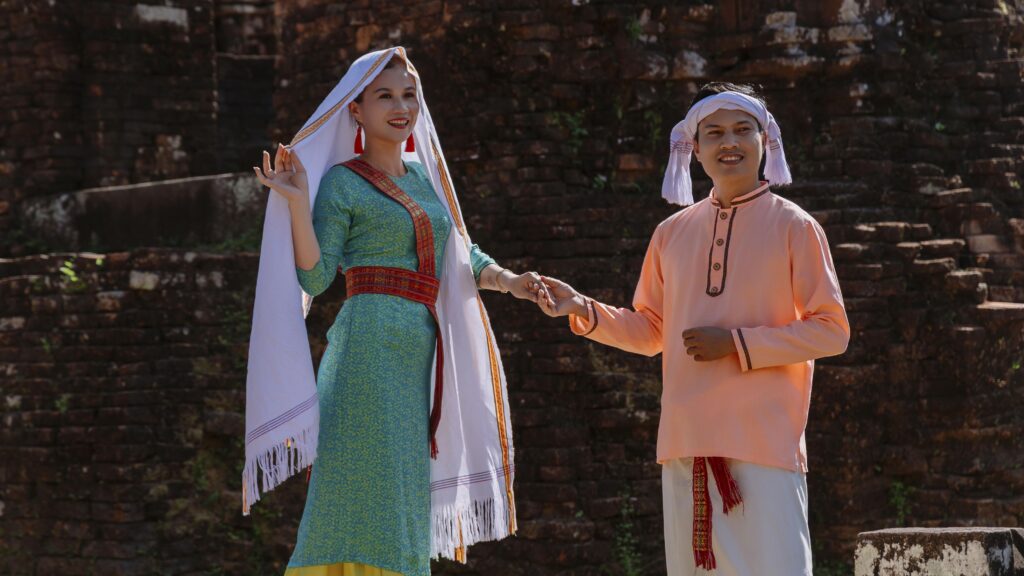
Colours in Cham attire also carry symbolic meanings. Red represents vitality and good fortune, white symbolizes purity and grace, while black reflects maturity and inner depth. Floral, animal, and geometric motifs handwoven into the fabric are not only decorative elements but also expressions of wishes for prosperity, harmony, and the enduring connection between humans and nature.
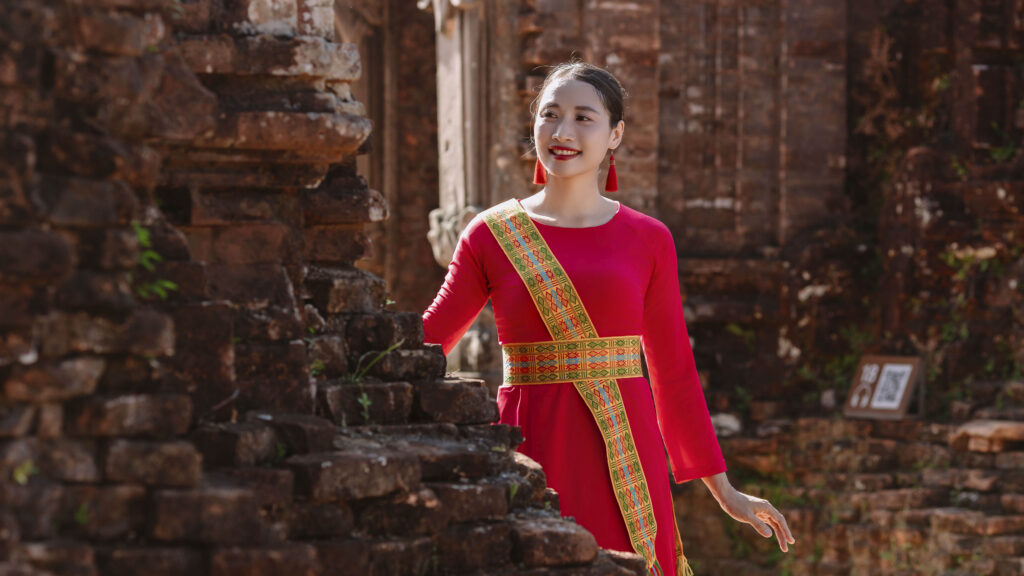
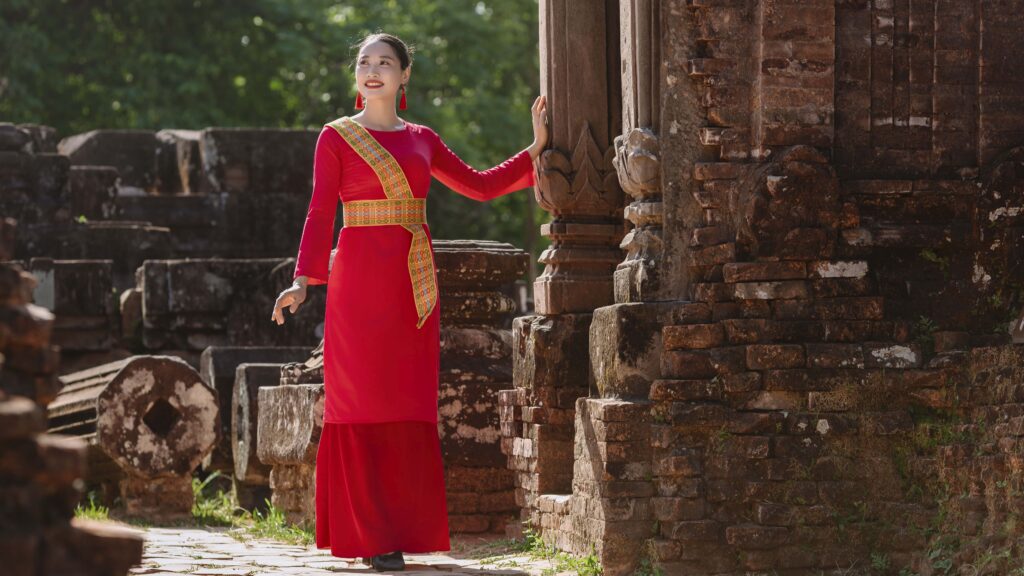
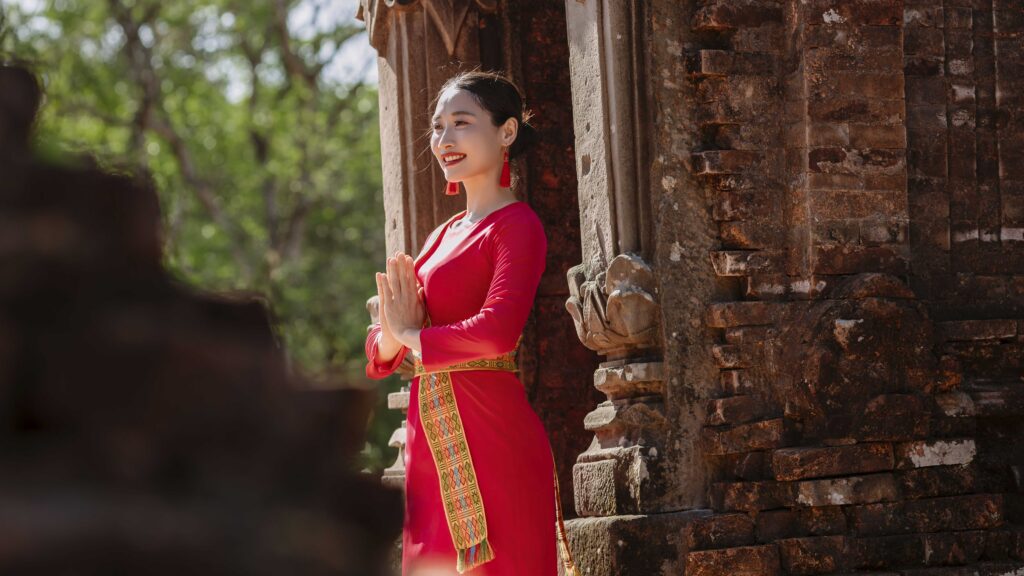
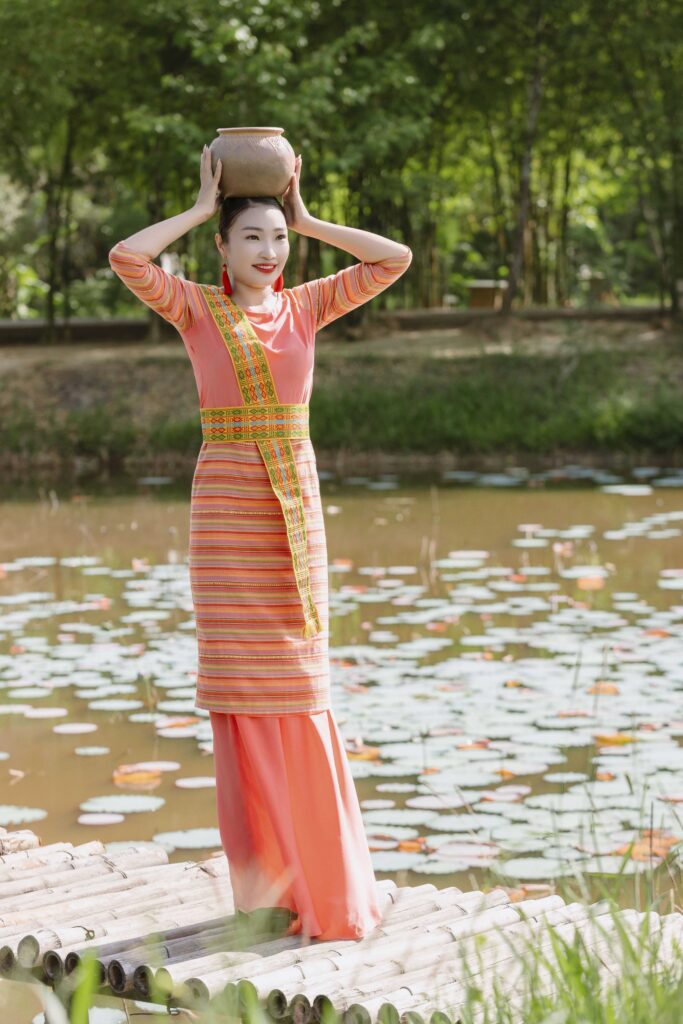
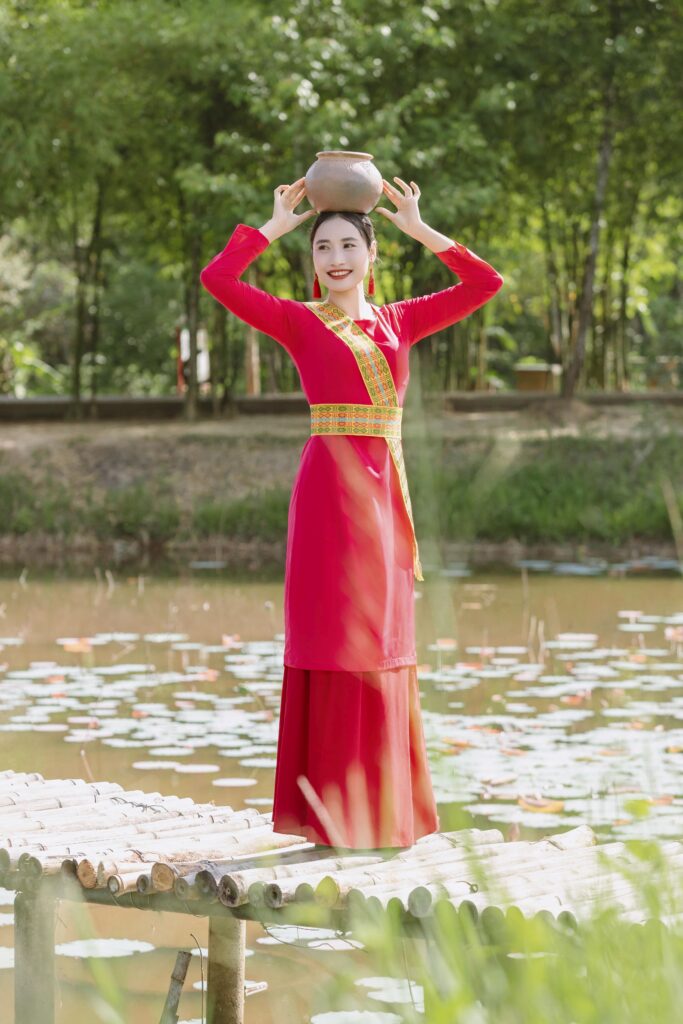
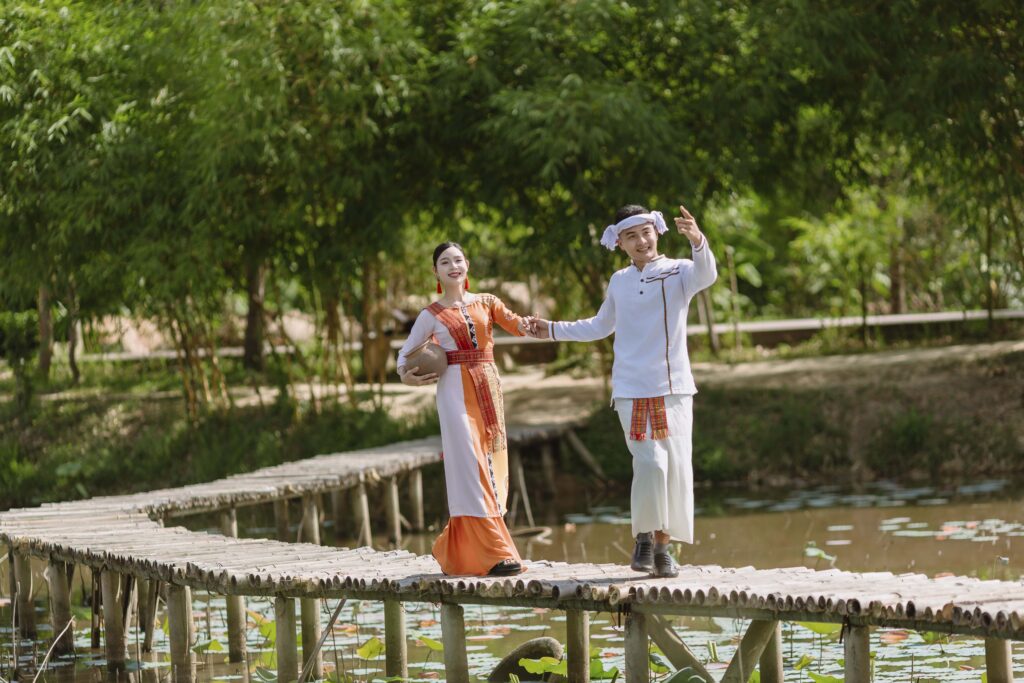
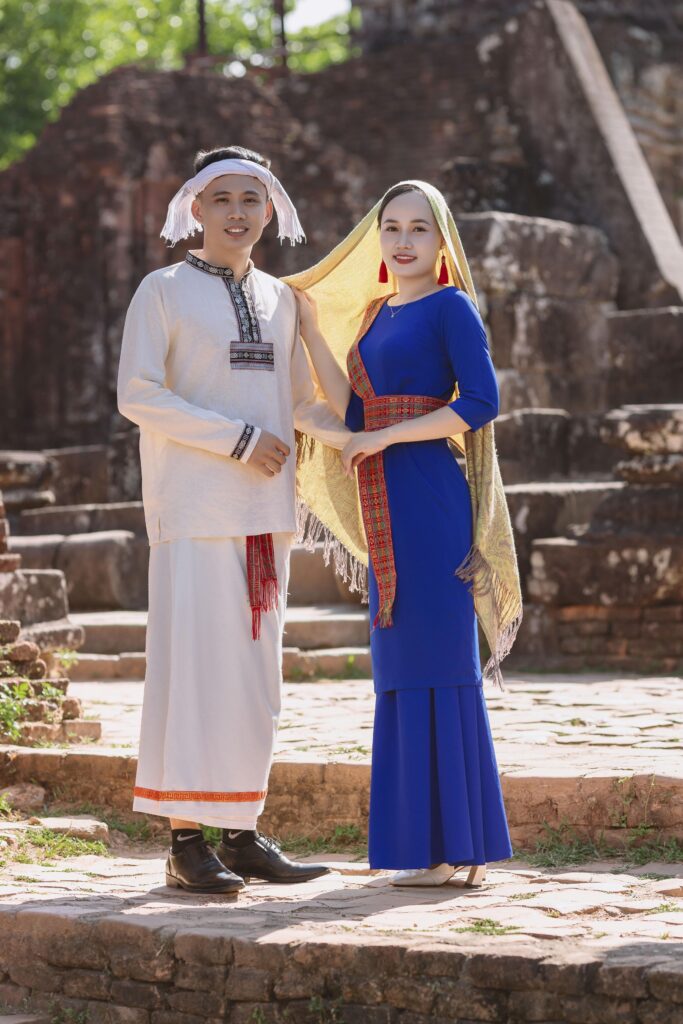
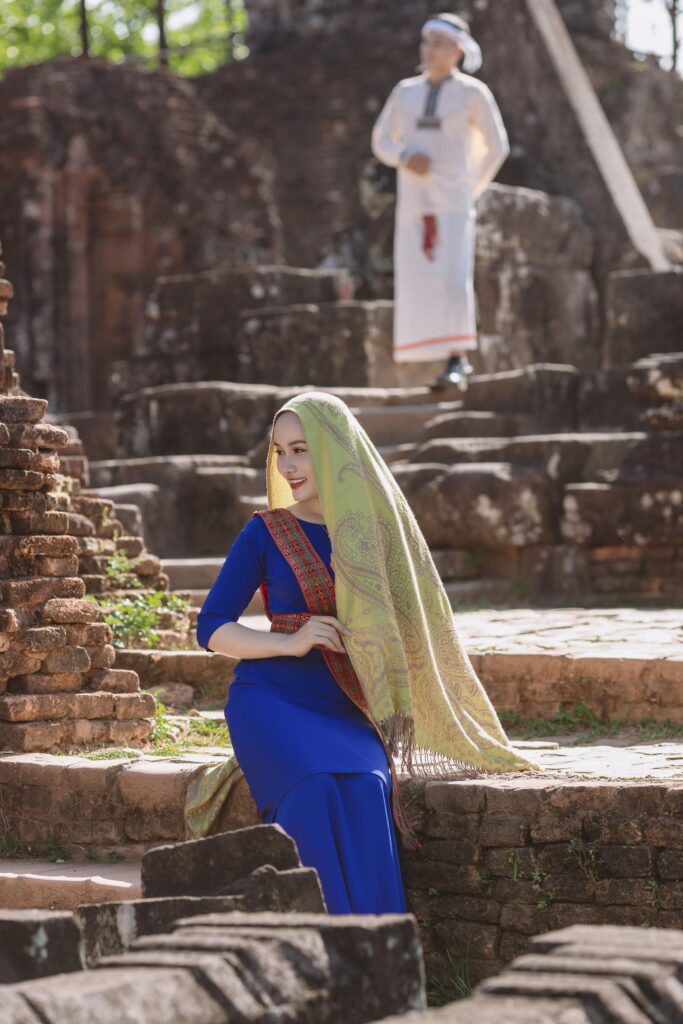
Traditional Cham women’s attire is distinguished by elegant long-sleeved dresses paired with flowing skirts and the intricately handwoven talei sash. Headscarves, shawls, necklaces, earrings, and silver jewellery further enhance the graceful yet regal beauty of Cham women during festivals and ceremonies. Today, while modern adaptations introduce more diverse colour palettes, the essence and signature lines of traditional Cham attire remain beautifully preserved.
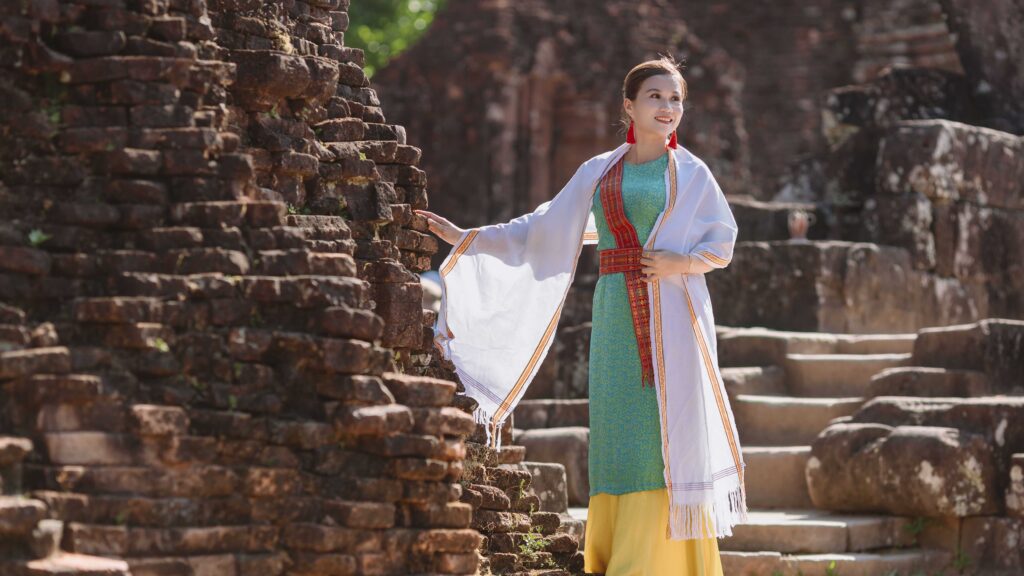
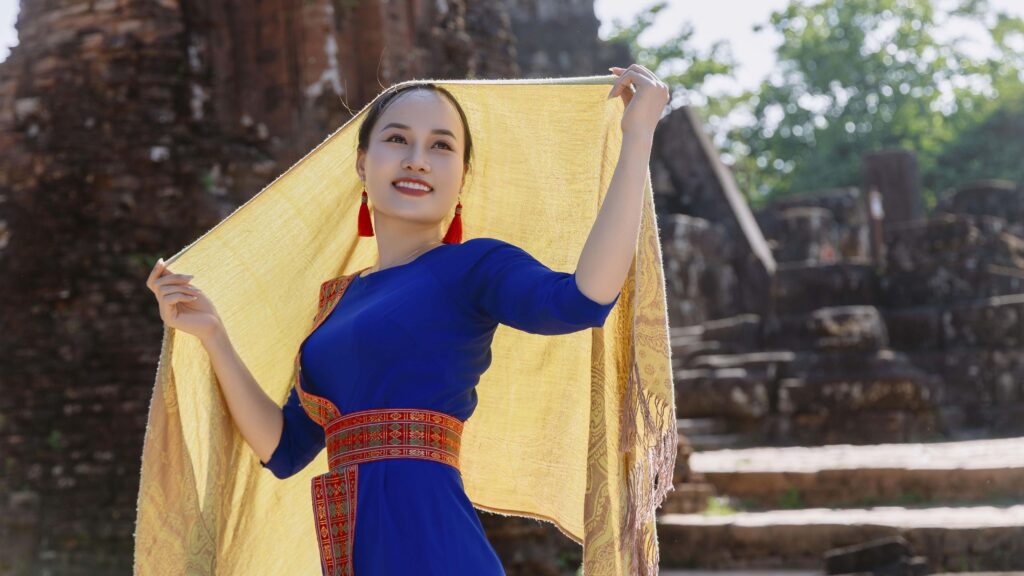
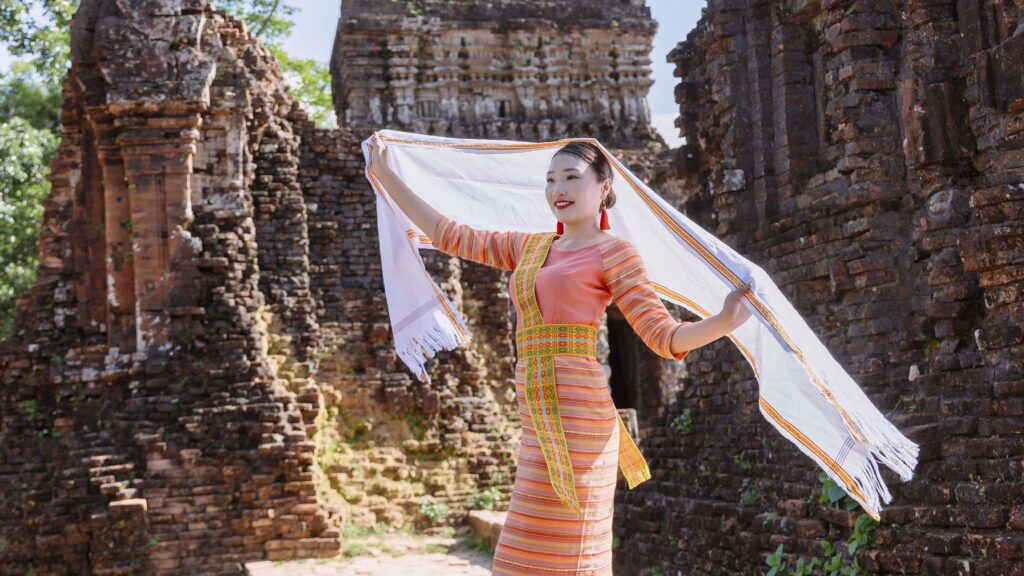
Meanwhile, Cham men’s attire embodies strength and dignity. Men traditionally wear a sarong combined with the aw lah or aw tah shirt. These garments are crafted by joining multiple pieces of fabric together, creating distinctive seam lines running along the body of the shirt — a fascinating hallmark of traditional Cham tailoring techniques. Headscarves also carry deep cultural significance. For elders or during important ceremonies, the traditionally wrapped headcloth is not merely for protection from the sun, but a symbol of solemnity, status, and pride in their cultural roots.
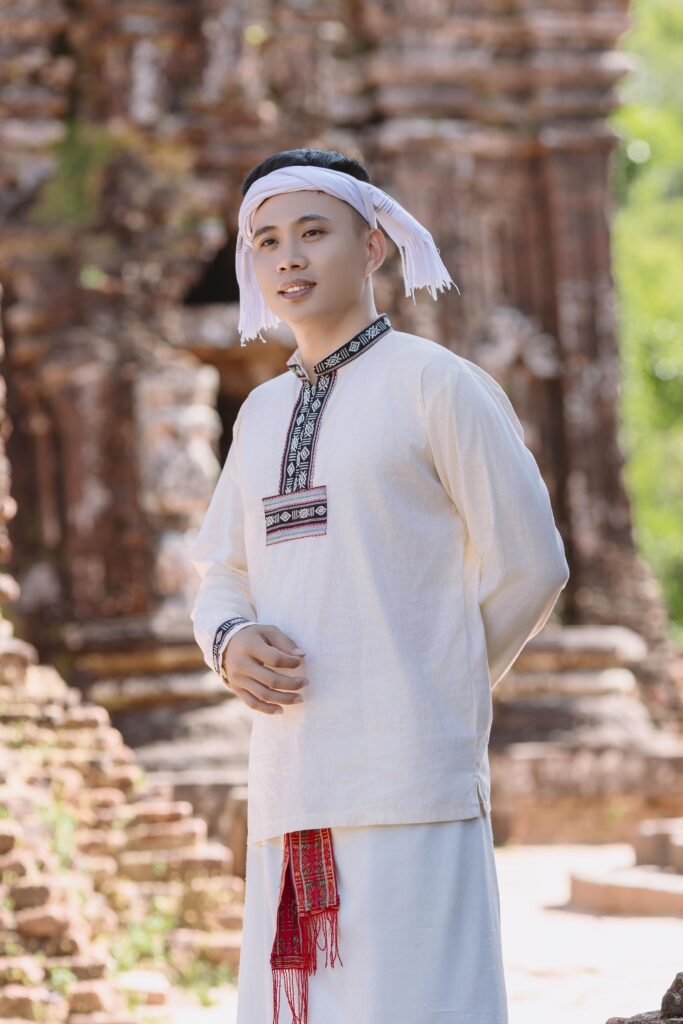
Over time, Cham traditional attire has become more than an intangible cultural heritage — it serves as a “thread of memory” connecting the past with the present. It preserves the spirit of the Cham community, reflects pride in their history, and allows today’s generations to continue telling the story of a civilization that has never truly disappeared from the heritage lands of Central Viet Nam.
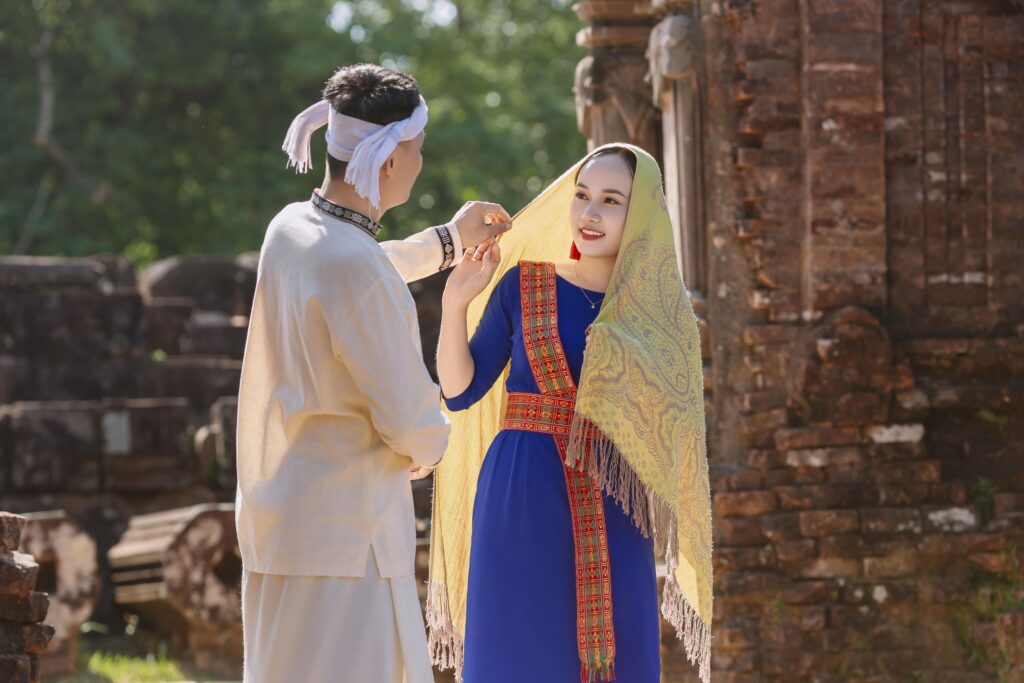
Experiencing Cham Costume Photography at My Son
At My Son Sanctuary, the beauty of Cham traditional costumes is vividly brought to life among thousand-year-old ancient towers. Flowing skirts, traditional headscarves, handcrafted jewellery, and vibrant colours stand out against weathered brick structures, creating an enchanting setting where culture, art, and history intertwine in every moment.
Wearing traditional Cham attire within the sacred atmosphere of My Son is not simply an opportunity to capture beautiful photographs, but also a chance to connect more deeply with the cultural richness of this heritage land. It feels like stepping into a fragment of history, where the spirit of ancient Champa still lingers through music, dance, colours, and cultural values carefully preserved to this day.
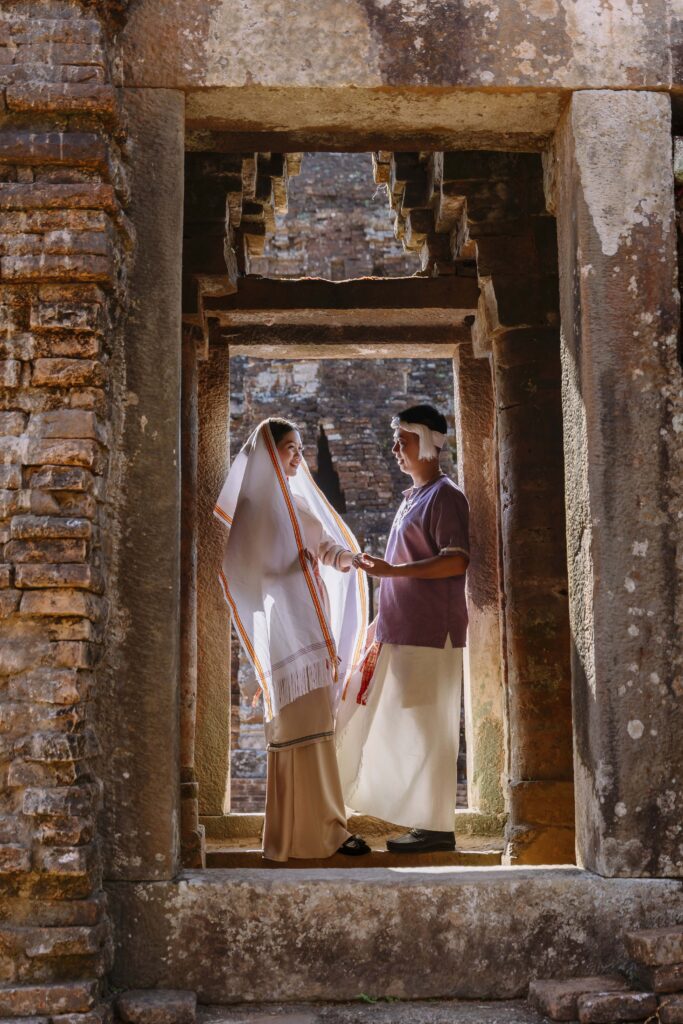
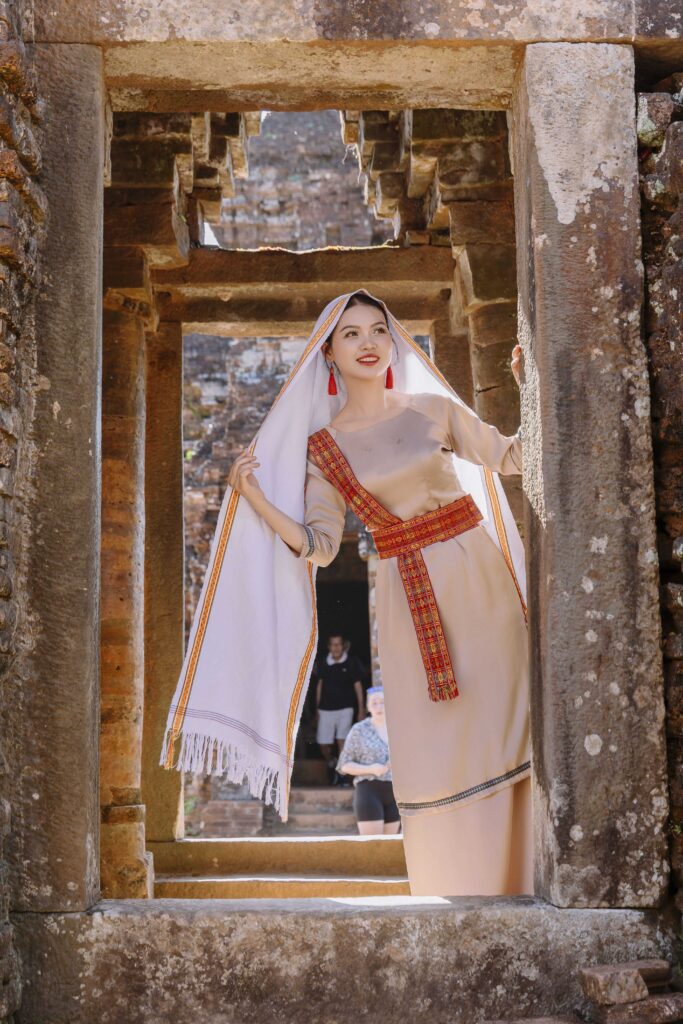
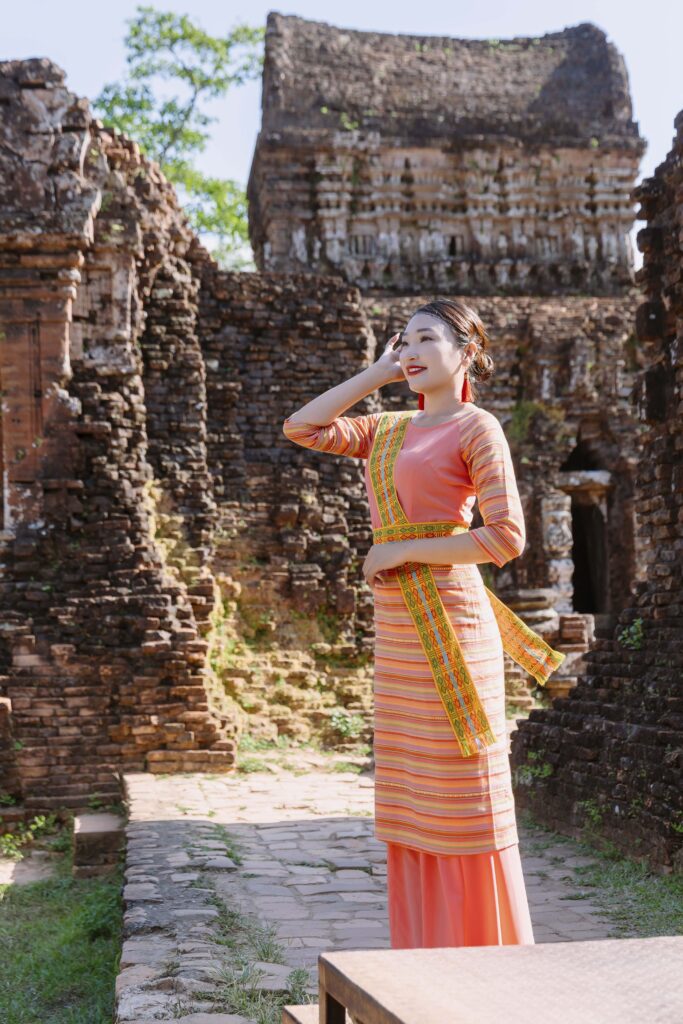
Moments spent immersed in this atmosphere — interacting with local artisans and performers or slowly wandering among the ancient temple towers — become deeply personal memories within the journey of exploring My Son. It is an experience not only of admiring heritage, but of truly “Return to Origins” — touching the beauty, memory, and enduring spirit of a civilization that continues to live through time.
DA NANG TOURISM PROMOTION CENTER