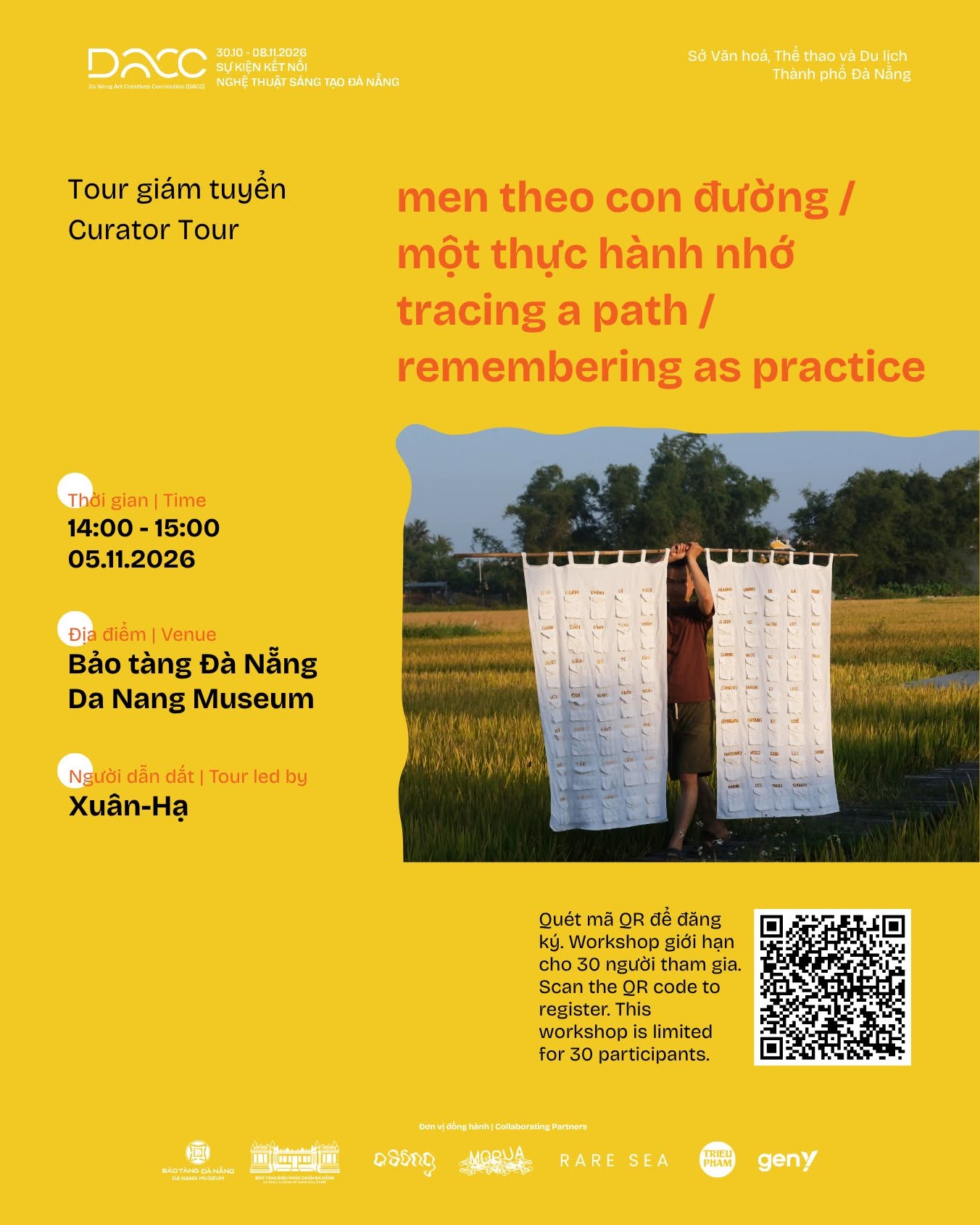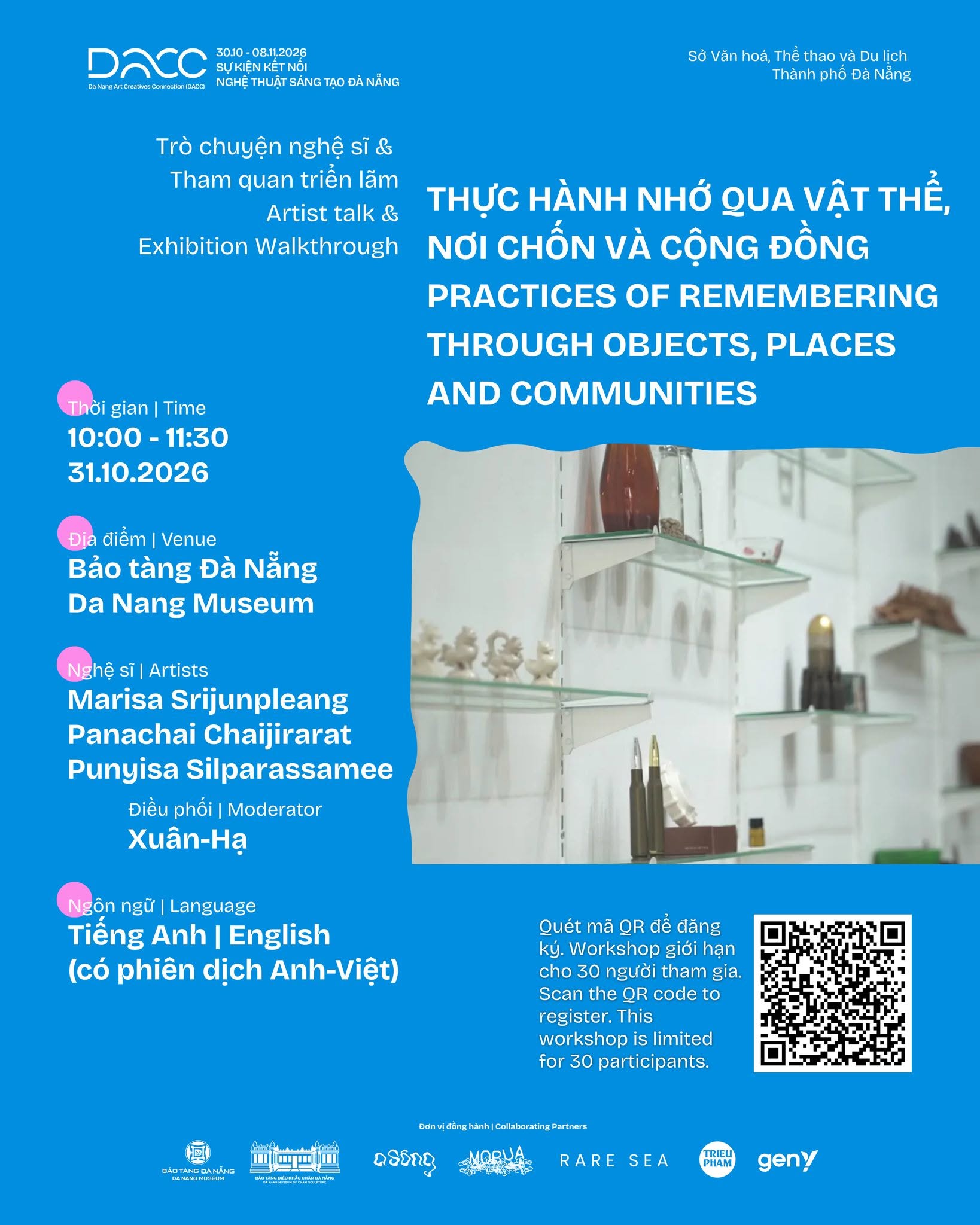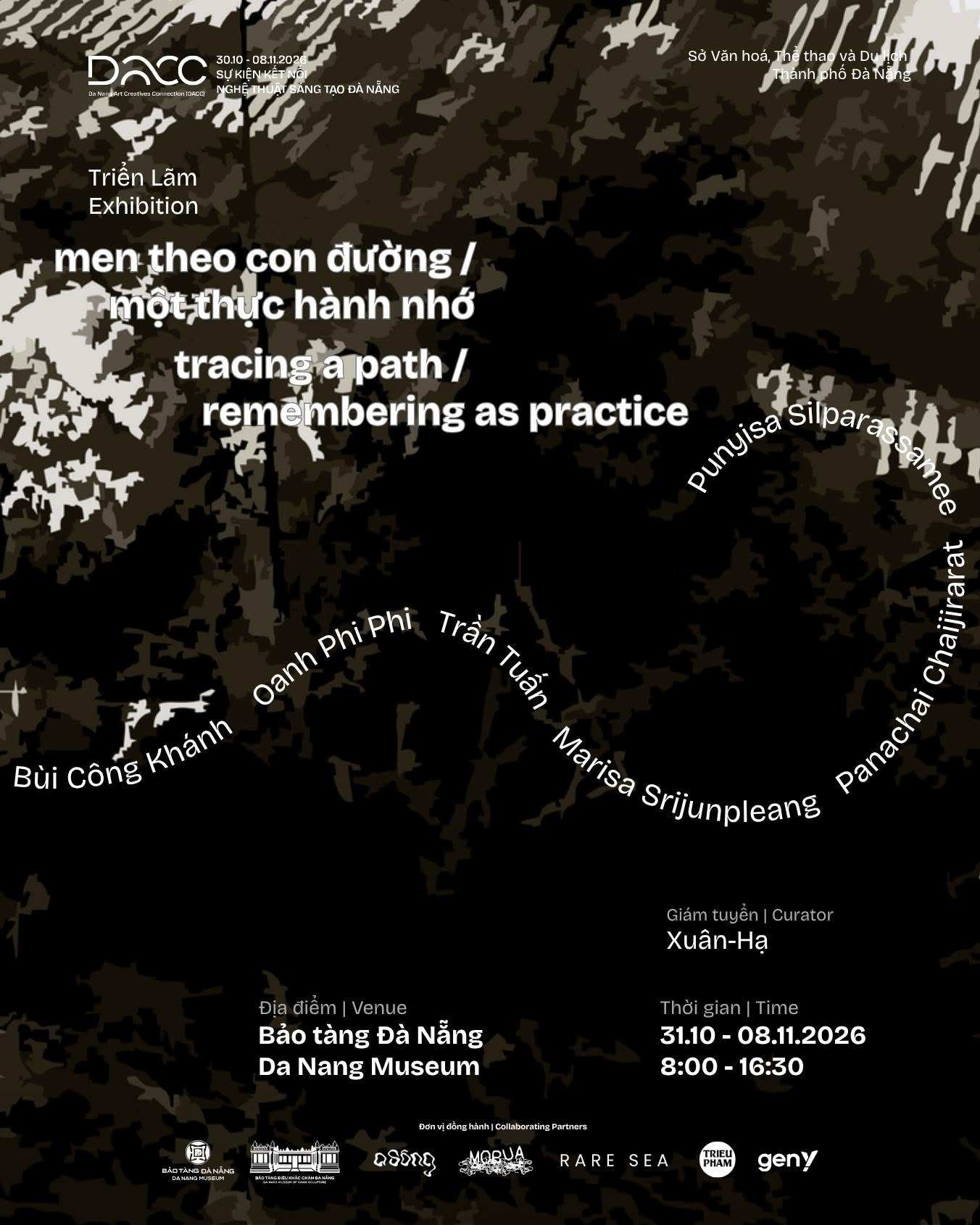















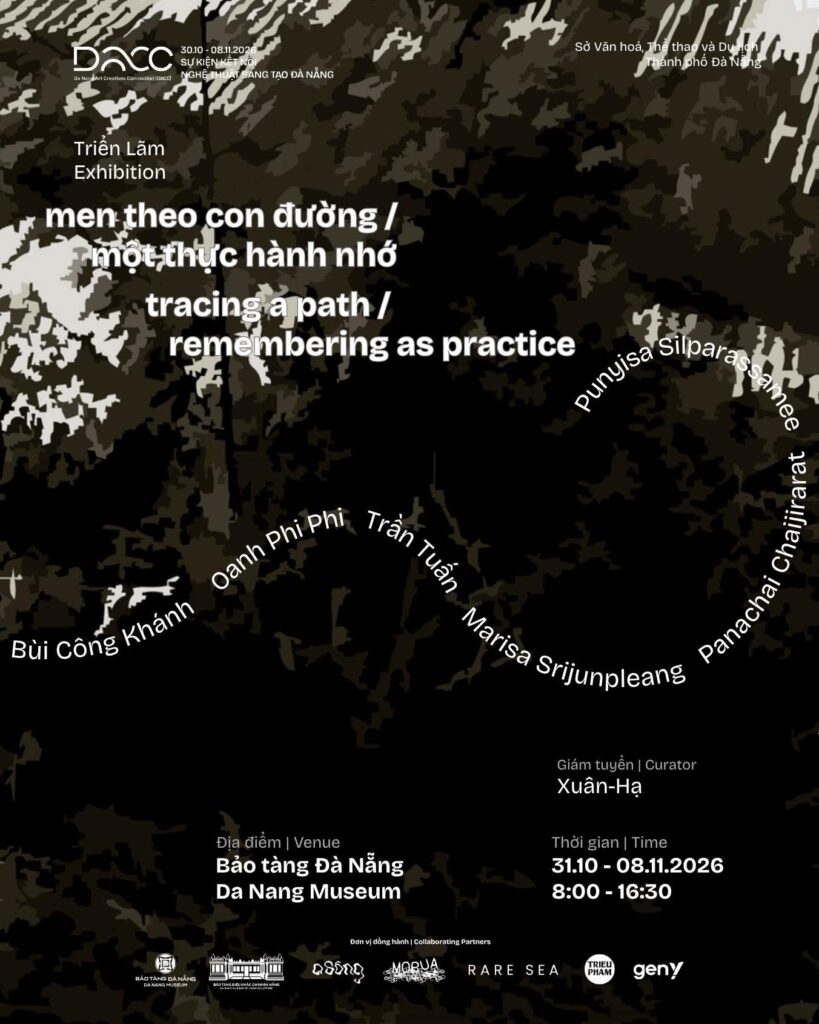
tracing a path / remembering as practice brings together works by Bùi Công Khánh, Oanh Phi Phi, Marisa Srijunpleang, Trần Tuấn, Panachai Chaijirarat, and Punyisa Silparassamee (Noir Row Art Space), collectively reimagining history from the traces of material, life, and post-memory passed down through generations.
In museums, history is often retold through artifacts, collections, and systems of classification within a certain structure. Temporarily placed in that context, the exhibition proposes a more personally inflected narrative approach: a family photograph leading to a place, a material opening up a context, a fragment evoking a history that is never fully reconstructed. Can we remember a past we never belonged to?
Remembering (nhớ) encompasses both the act of thinking and a state of emotion. Suspended between these two dimensions, it forms a relationship between the one who remembers and that which is remembered. With each act of remembrance, something may be retained, altered, or grow increasingly faint. If remembering means turning toward something that was once present, then tracing means moving alongside remaining footprints, feeling one’s way forward, connecting with the uncertain, and sometimes accepting that certain parts of the past will forever lie beyond reach.
For later generations, For younger generations, post-memoriam connections to preceding generations are mediated not by direct recollection, but rather constructed through imaginative investment, projection, and creative expression. The participating artists approach these historical divides from diverse vantage points: through stories, imagery, objects, and behaviors transmitted within their families and the specific social environments in which they were raised. Within the gallery, the artworks open unclosed pathways, inviting viewers to continue interpreting them as they choose to trace and wander along.
History, therefore, continues to live through the filters we choose to remember with, and the very practice of remembering.
About the artists
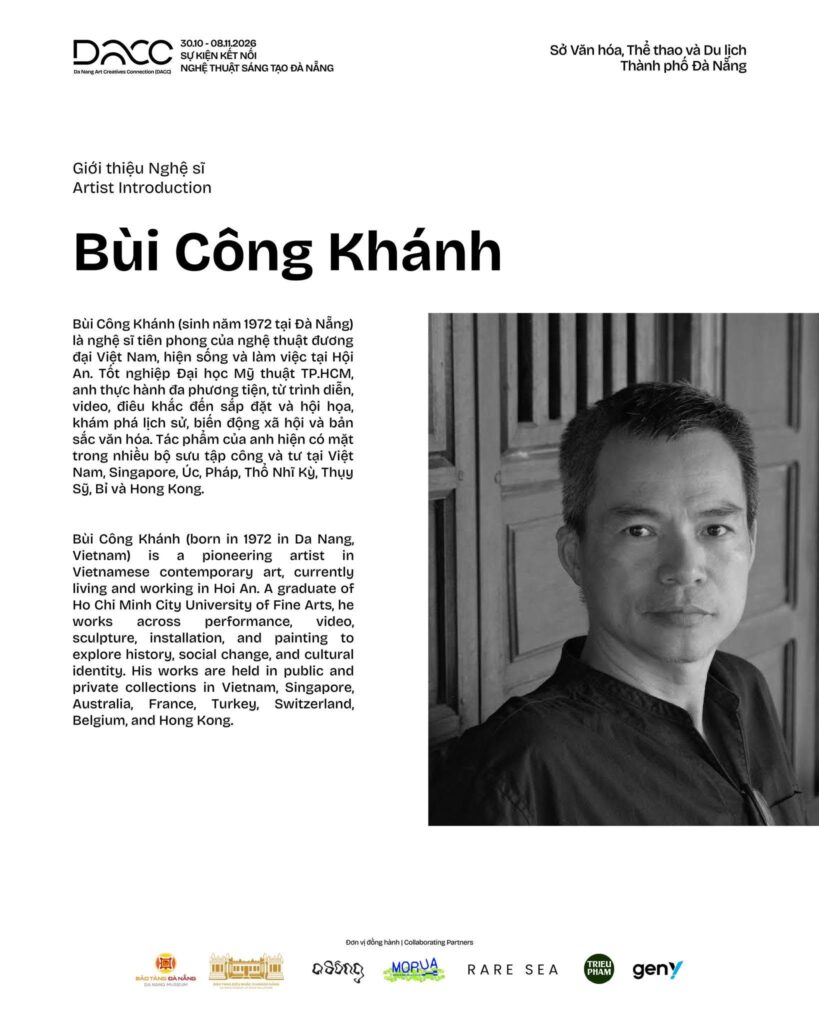
1. Bùi Công Khánh
Bùi Công Khánh (born in 1972 in Da Nang, Vietnam) is a pioneering artist in Vietnamese contemporary art, currently living and working in Hoi An. A graduate of Ho Chi Minh City University of Fine Arts, he works across performance, video, sculpture, installation, and painting to explore history, social change, and cultural identity. His works are held in public and private collections in Vietnam, Singapore, Australia, France, Turkey, Switzerland, Belgium, and Hong Kong.
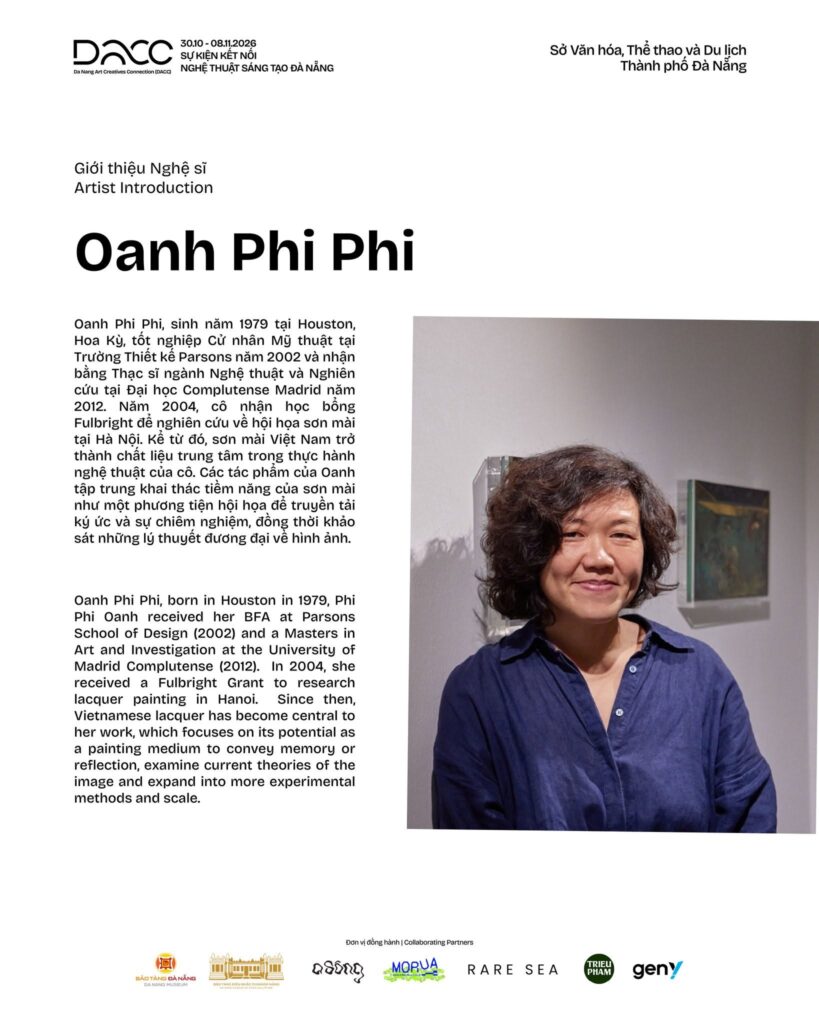
2. Oanh Phi Phi
Oanh Phi Phi, born in Houston in 1979, Phi Phi Oanh received her BFA at Parsons School of Design (2002) and a Masters in Art and Investigation at the University of Madrid Complutense (2012). In 2004, she received a Fulbright Grant to research lacquer painting in Hanoi. Since then, Vietnamese lacquer has become central to her work, which focuses on its potential as a painting medium to convey memory or reflection, examine current theories of the image and expand into more experimental methods and scale.
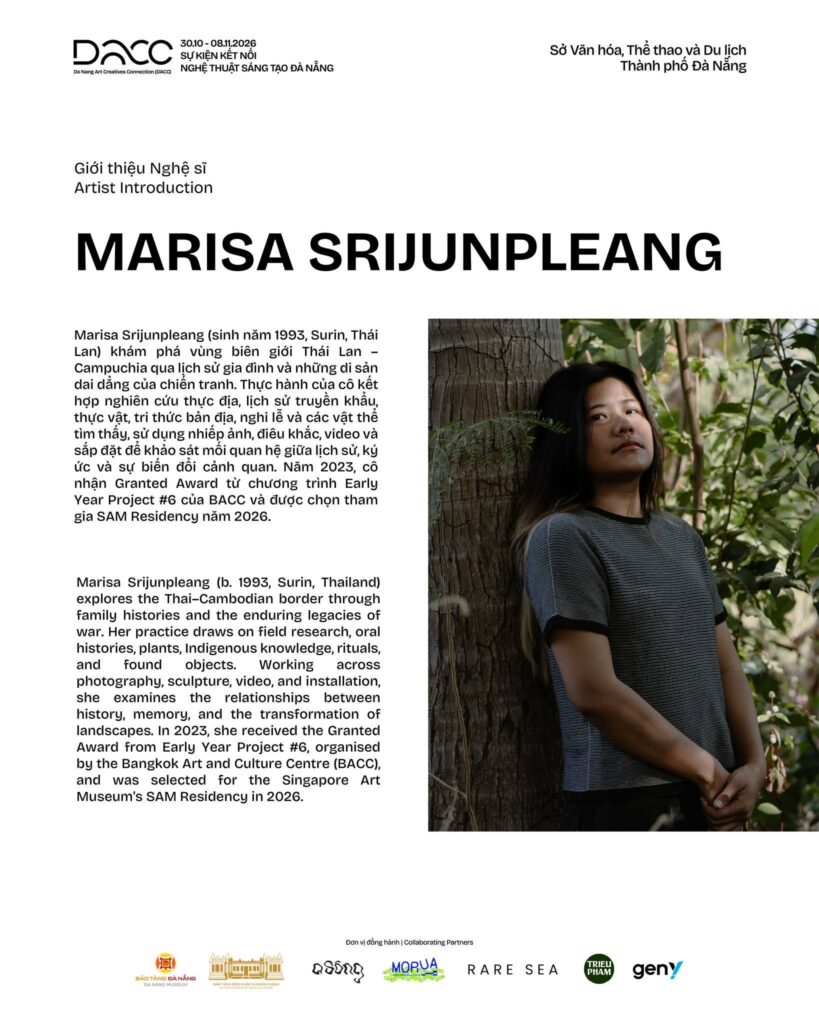
3. Marisa Srijunpleang
Marisa Srijunpleang (b. 1993, Surin, Thailand) explores the Thai–Cambodian border through family histories and the enduring legacies of war. Her practice draws on field research, oral histories, plants, Indigenous knowledge, rituals, and found objects. Working across photography, sculpture, video, and installation, she examines the relationships between history, memory, and the transformation of landscapes. In 2023, she received the Granted Award from Early Year Project #6, organised by the Bangkok Art and Culture Centre (BACC), and was selected for the Singapore Art Museum’s SAM Residency in 2026.
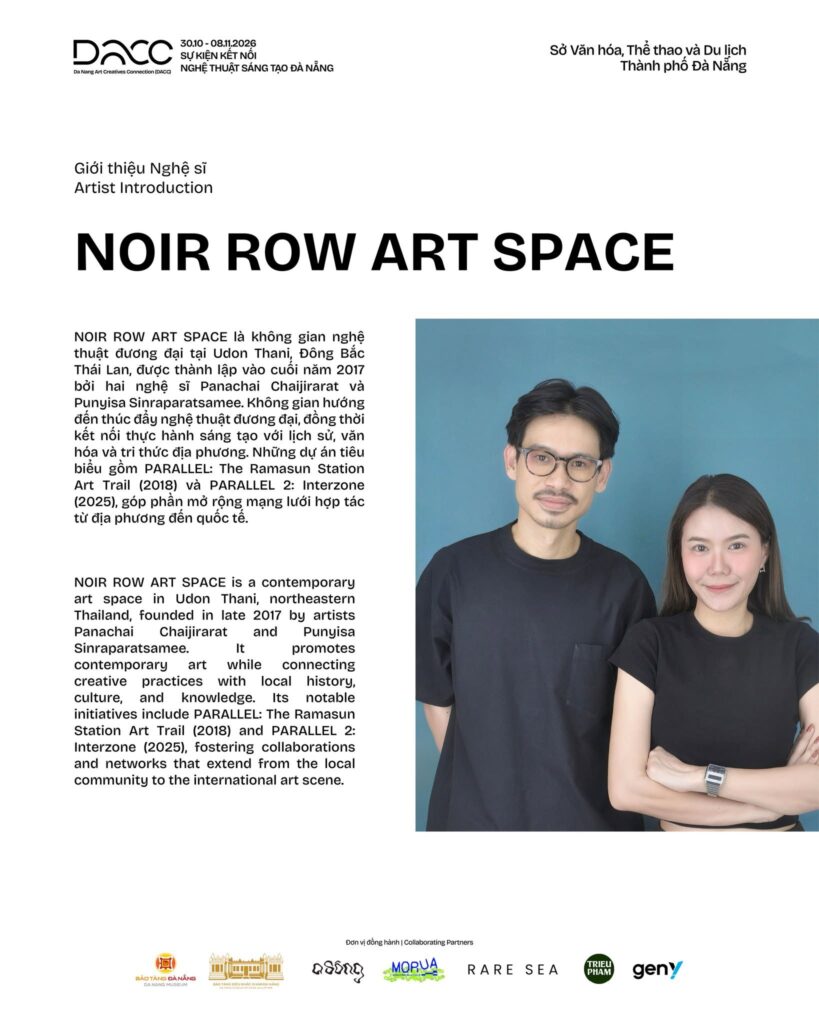
4. Noir Row Art Space – Panachai Chaijirarat và Punyisa Silparassamee
NOIR ROW ART SPACE is a contemporary art space in Udon Thani, northeastern Thailand, founded in late 2017 by artists Panachai Chaijirarat and Punyisa Sinraparatsamee. It promotes contemporary art while connecting creative practices with local history, culture, and knowledge. Its notable initiatives include PARALLEL: The Ramasun Station Art Trail (2018) and PARALLEL 2: Interzone (2025), fostering collaborations and networks that extend from the local community to the international art scene.
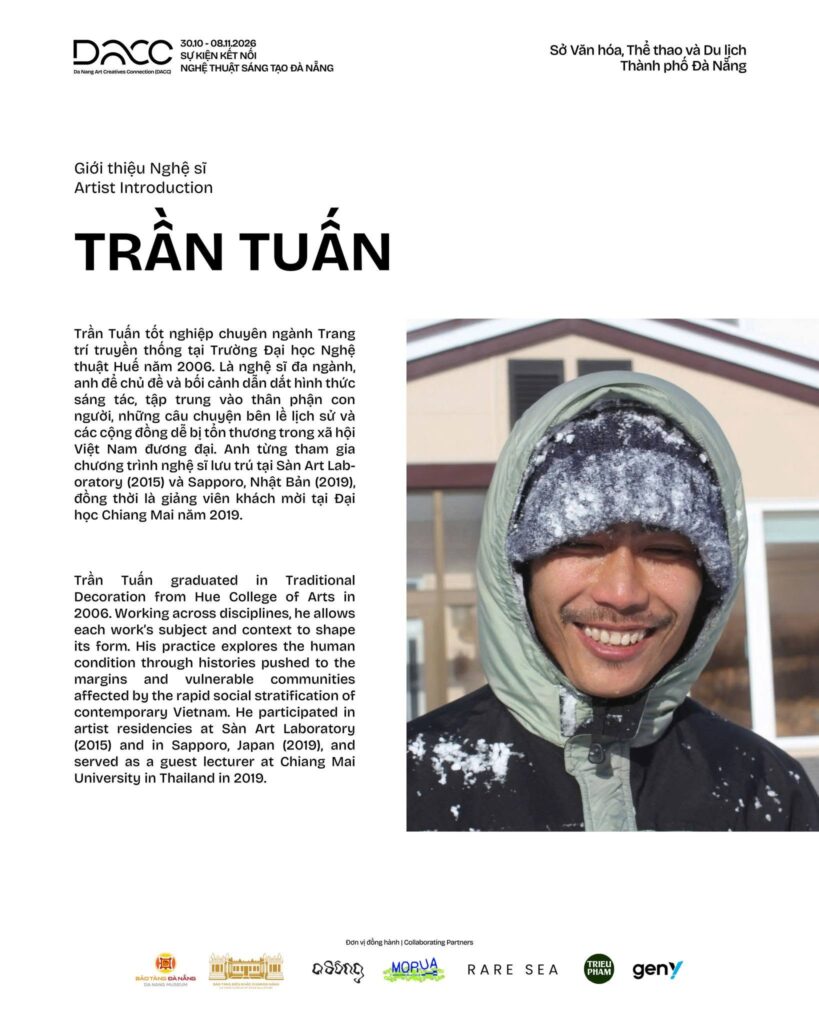
5. Trần Tuấn
Trần Tuấn graduated in Traditional Decoration from Hue College of Arts in 2006. Working across disciplines, he allows each work’s subject and context to shape its form. His practice explores the human condition through histories pushed to the margins and vulnerable communities affected by the rapid social stratification of contemporary Vietnam. He participated in artist residencies at Sàn Art Laboratory (2015) and in Sapporo, Japan (2019), and served as a guest lecturer at Chiang Mai University in Thailand in 2019.
About the curator
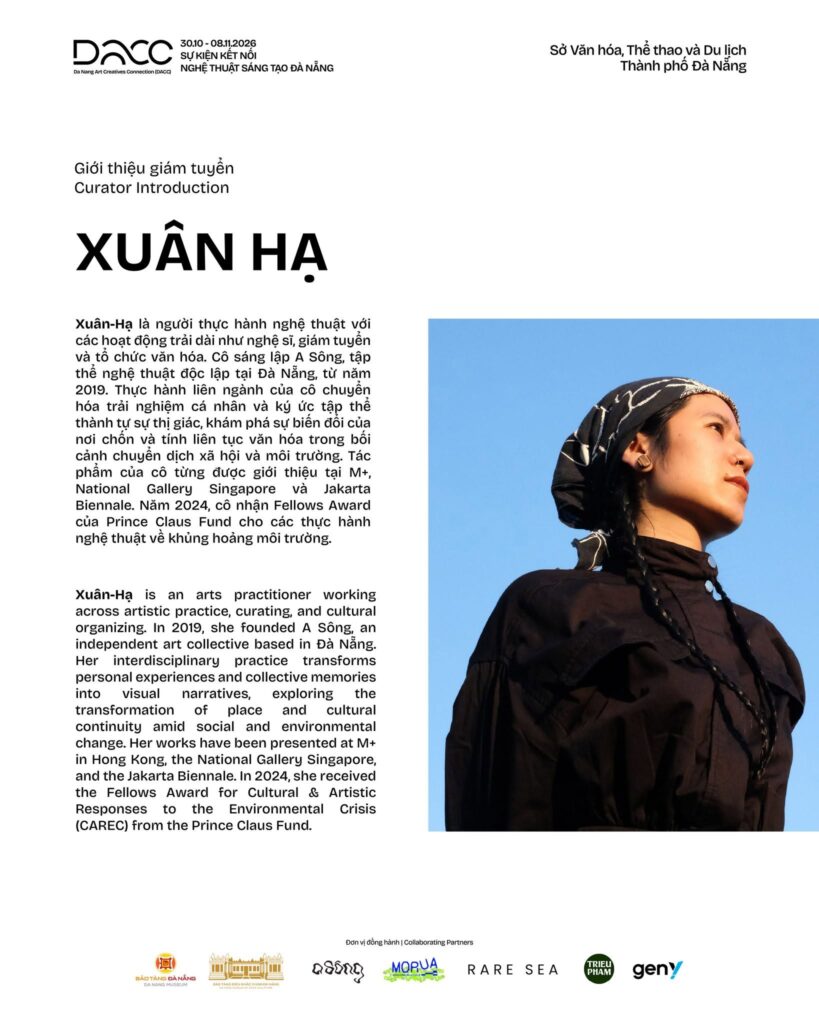
Xuân-Hạ
Xuân-Hạ is an arts practitioner working across artistic practice, curating, and cultural organizing. In 2019, she founded A Sông, an independent art collective based in Đà Nẵng. Her interdisciplinary practice transforms personal experiences and collective memories into visual narratives, exploring the transformation of place and cultural continuity amid social and environmental change. Her works have been presented at M+ in Hong Kong, the National Gallery Singapore, and the Jakarta Biennale. In 2024, she received the Fellows Award for Cultural & Artistic Responses to the Environmental Crisis (CAREC) from the Prince Claus Fund.
Exhibition information
- Title: tracing a path / remembering as practice
- Exhibition dates: 31 October – 8 November 2026
- Opening hours: Daily, 8:00–16:30
- Venue: Da Nang Museum
- Participating artists: Bùi Công Khánh, Oanh Phi Phi, Trần Tuấn, Marisa Srijunpleang, Panachai Chaijirarat and Punyisa Silparassamee (Noir Row Art Space)
- Curator: Xuân-Hạ
The exhibition is part of Da Nang Art Creatives Connection (DACC) 2026 – History of Tomorrow, taking place from 30 October to 8 November 2026.
DA NANG TOURISM PROMOTION CENTER
Information and images provided by: Organising Committee of Da Nang Art Creatives Connection 2026