















First constructed in 1840, the Confucian Temple of Literature is a unique architectural complex recognized by the Ministry of Culture, Sports and Tourism as a National Historical and Cultural Site.
TRADITIONAL SPACE AND ARCHITECTURE
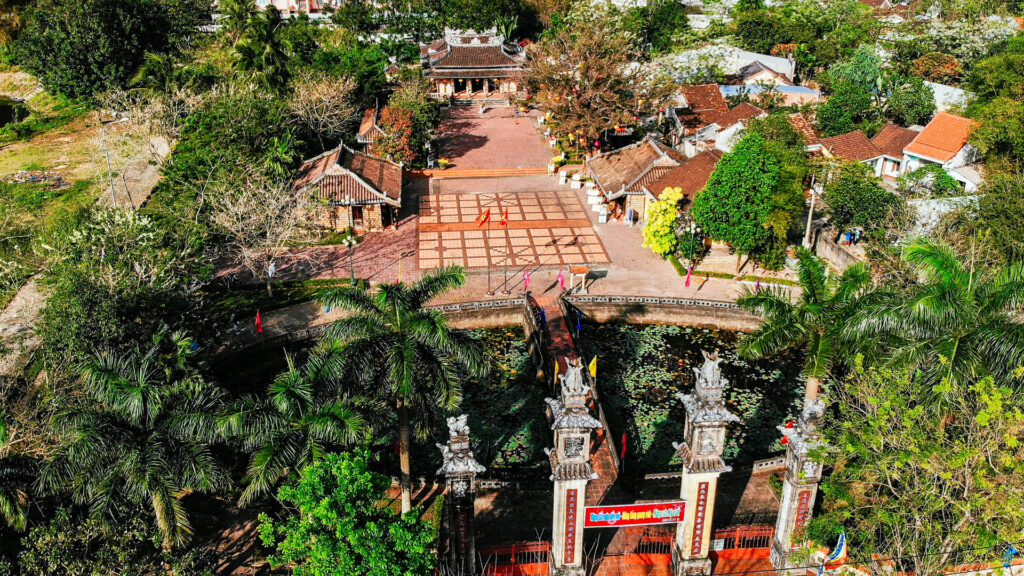
Covering an area of approximately 6,200 m², the Confucian Temple of Literature is built in the traditional architectural style, with a harmonious, symmetrical layout that blends seamlessly with its surroundings.
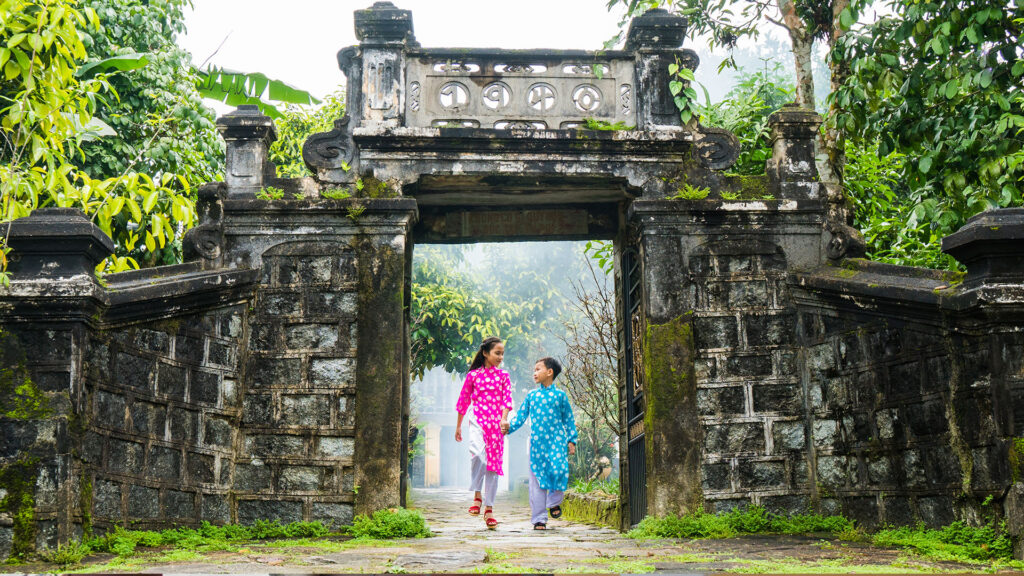
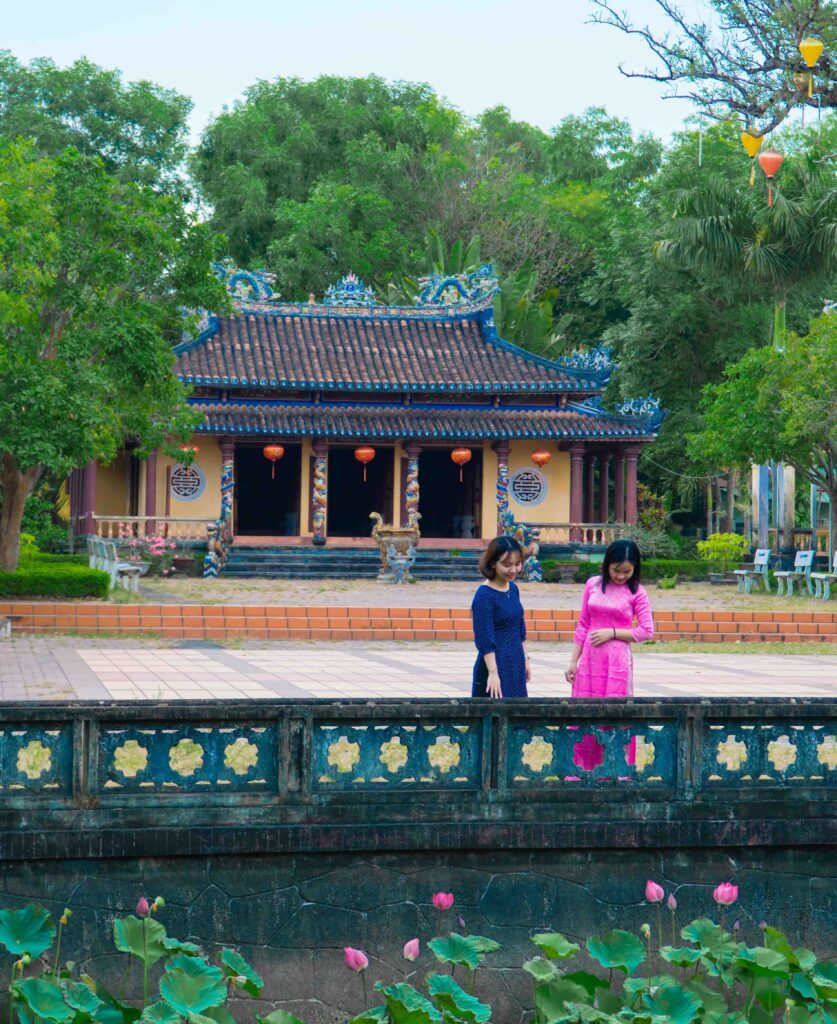
The grand three-entrance gate features four brick pillars adorned with ceramic reliefs. The two main pillars rise prominently with lotus motifs at their tops, resembling calligraphy brushes pointing toward the sky and reflecting beautifully on the crescent-shaped pond. A stone-and-brick rainbow bridge spans this pond, with balustrades decorated in refined geometric patterns. Beyond lies a spacious courtyard paved in a checkerboard layout, creating an open and serene path leading to the main sanctuary.
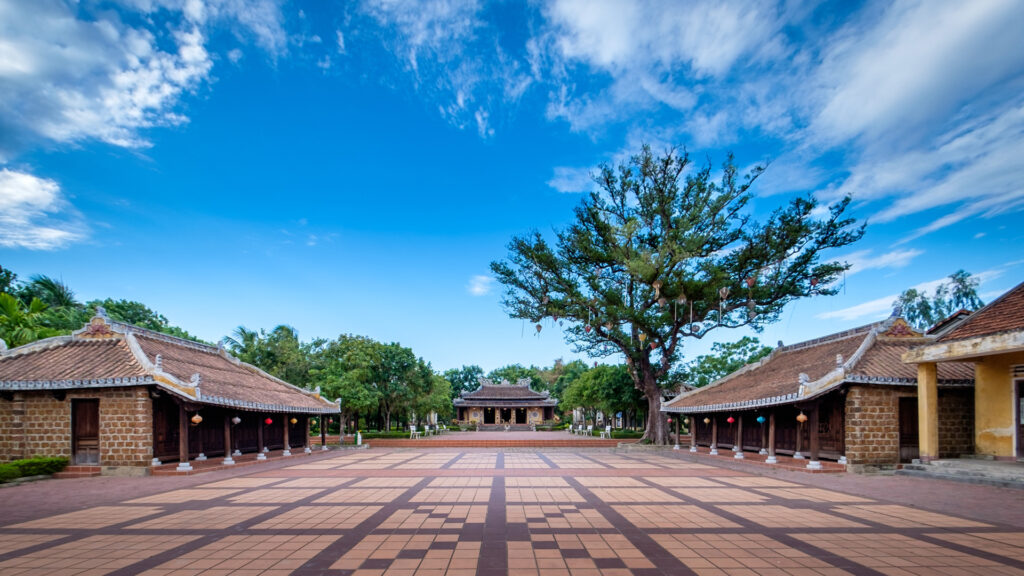
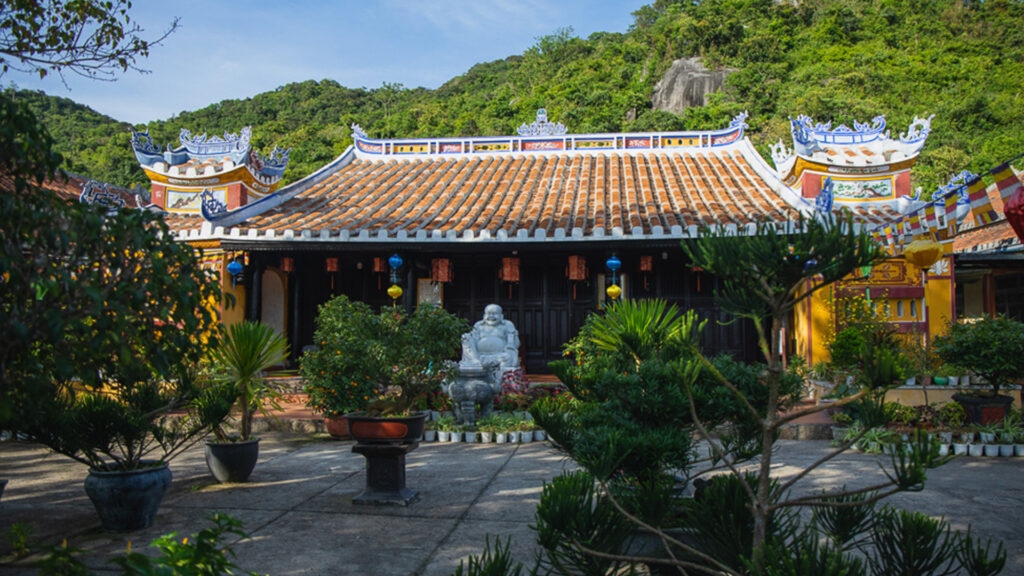
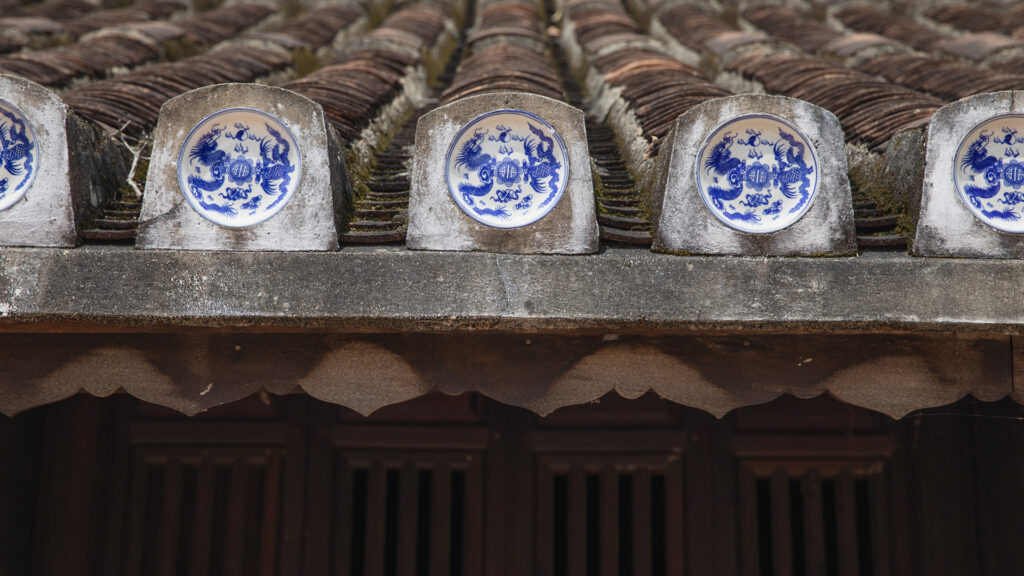
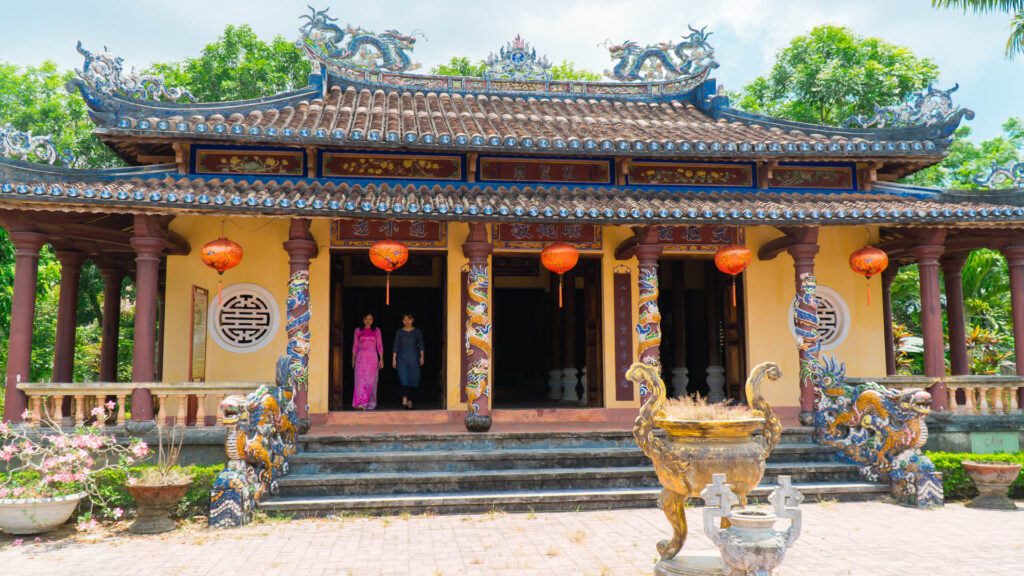
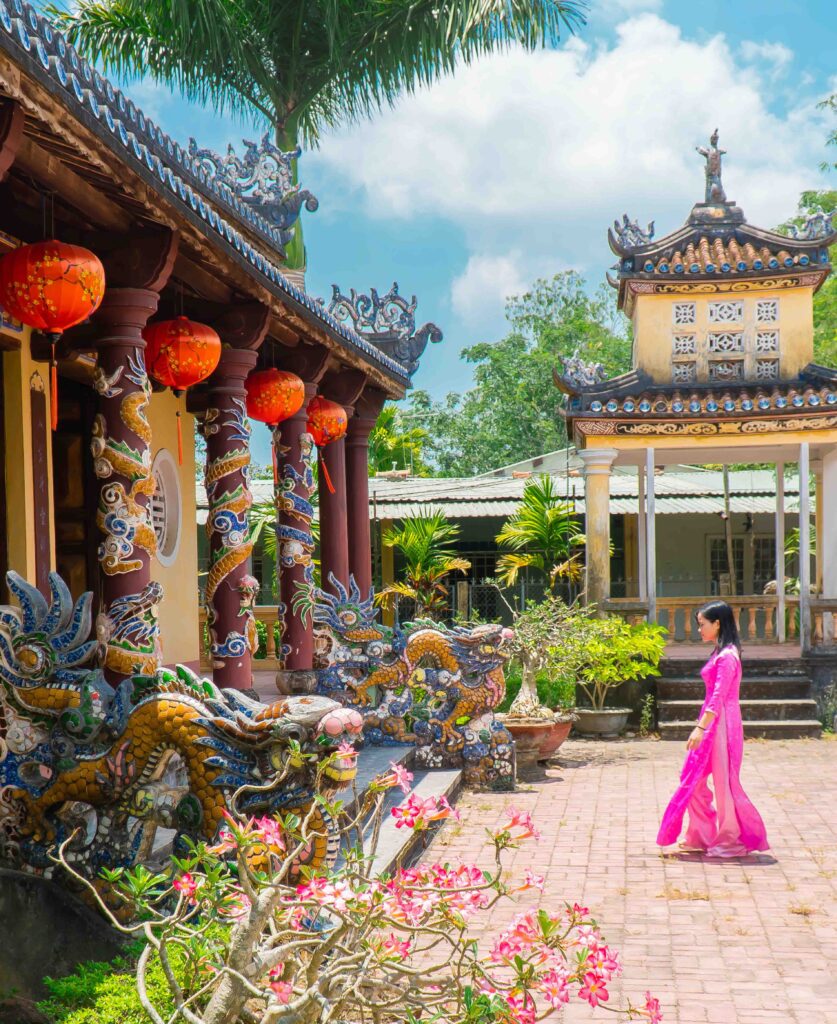
The main hall, constructed in the traditional “three rooms, two wings” layout with yin-yang tiled roofs, bears an impressive “two dragons chasing the pearl” sculpture atop the ridge. Stylized cloud motifs adorn the curved roof corners, while intricately carved dragon details embellish the eaves and pillars. Behind the main hall is the rear sanctuary, also in the “three rooms, two wings” style and connected by a system of traditional beams; this is where the worship altars are arranged. Symmetrically positioned on either side are the bell tower and drum tower, completing the solemn composition of a classical Confucian temple.
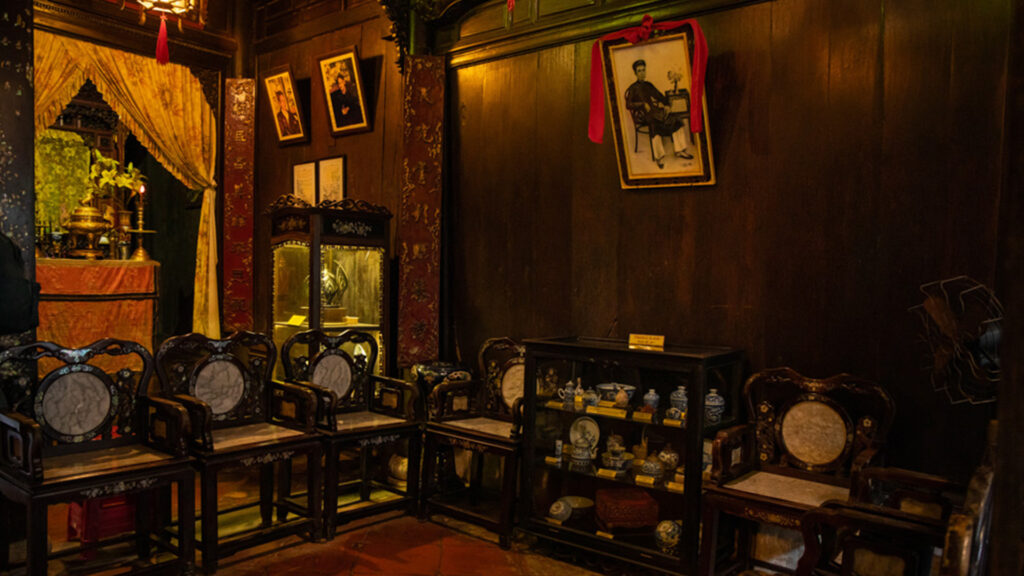
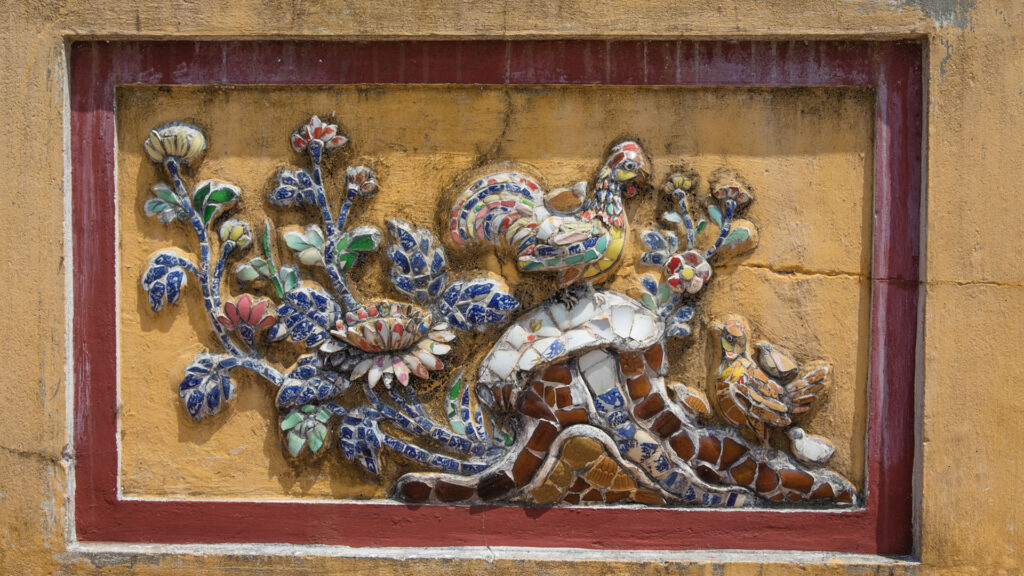
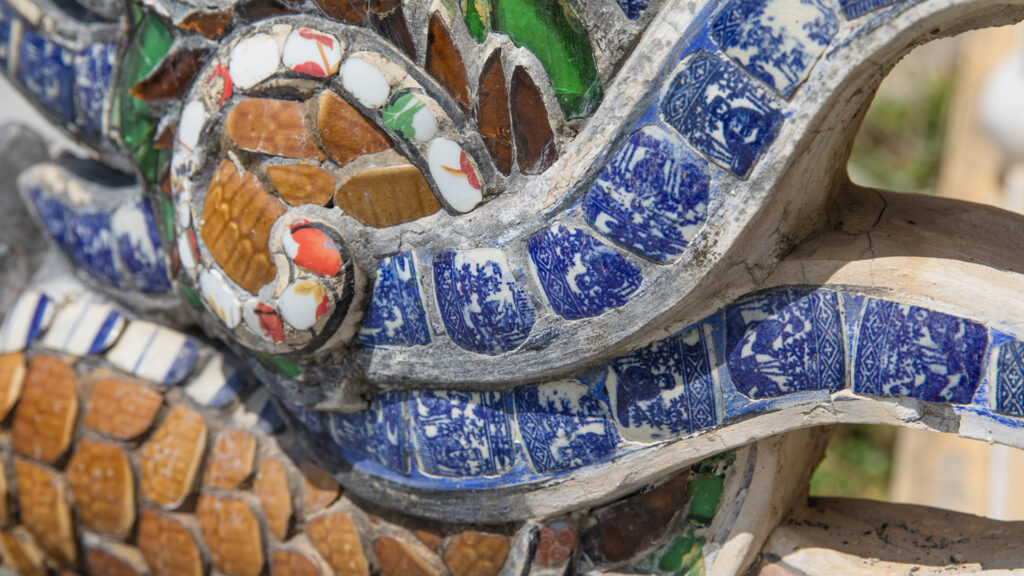
Many architectural elements are crafted or decorated using precious wood and ceramic inlay. Noteworthy features include ceramic-inlaid parallel sentences, lacquered boards, and relief motifs depicting books and deer—all masterfully executed by artisans from the renowned Kim Bong carpentry village. These details together create a tranquil, sacred, and scholarly atmosphere throughout the complex.
CULTURAL AND COMMUNITY VALUES
The Confucian Temple of Literature honors Confucius and the eminent sages of Confucianism, embodying the Vietnamese tradition of respecting teachers and valuing learning. Since its founding, the temple has symbolized the region’s devotion to classical education and academic excellence.
Over the years, it has remained an important cultural hub where cherished values are preserved and passed down. Every first lunar month, lively cultural activities are held in the temple courtyard to honor the region’s scholarly tradition and encourage learning within the community. It is also the venue for the prestigious Phan Chau Trinh Academic Awards, which recognize outstanding students and young scholars.
Annual spring events such as the Full Moon Poetry Night, Bai Choi folk singing, and traditional games bring vibrancy to the temple grounds. Along with the preservation of stone steles, wooden plaques, and antique parallel sentences, these activities help sustain the region’s Confucian heritage for future generations.
VISITOR EXPERIENCES
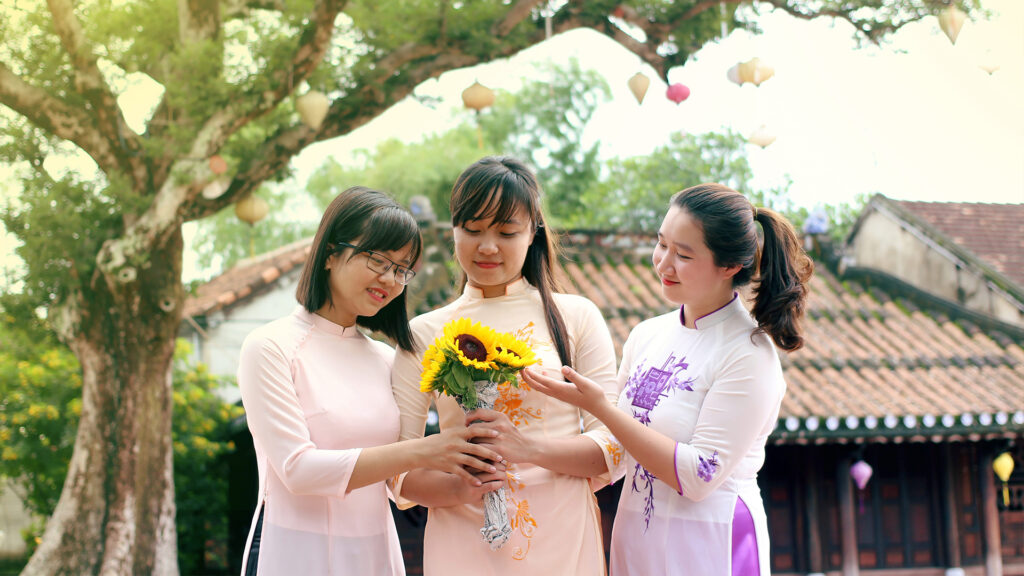
Today, the Confucian Temple of Literature is a compelling destination for cultural and historical enthusiasts. Visitors can immerse themselves in the antique atmosphere, admire the detailed wooden carvings, and observe the unique decorative motifs on the grand gate, main hall, bell tower, drum tower, and other traditional structures.
During the early spring festival season, the temple becomes especially lively with poetry recitals, Bai Choi performances, and traditional games—offering visitors a deeper connection to local culture.
SSENTIAL INFORMATION
Address: Phan Boi Chau Street, Ban Thach Ward, Danang City.
The site is open freely to visitors and is conveniently located in the center of Ban Thach Ward.
Visitors are advised to dress modestly to respect the sacred nature of the space.
Nearby attractions include the Tam Thanh Mural Village, the Vietnamese Heroic Mother Monument, the Chien Dan Towers, and the Ky Anh Tunnels—perfect additions to a cultural exploration of southern Danang.
The Confucian Temple of Literature is not only an ancient architectural landmark but also a lasting symbol of the region’s scholarly traditions. Amid modern life, it remains a serene and sacred cultural space where visitors can reflect on history and appreciate the enduring value of education.
A visit to the Confucian Temple of Literature is a journey back to the roots—a chance to understand the intellectual spirit of earlier generations and to discover the rich cultural heritage of southern Danang. It is a truly meaningful stop for those who love history, reflection, and tranquil cultural spaces.
DANANG TOURISM PROMOTION CENTER