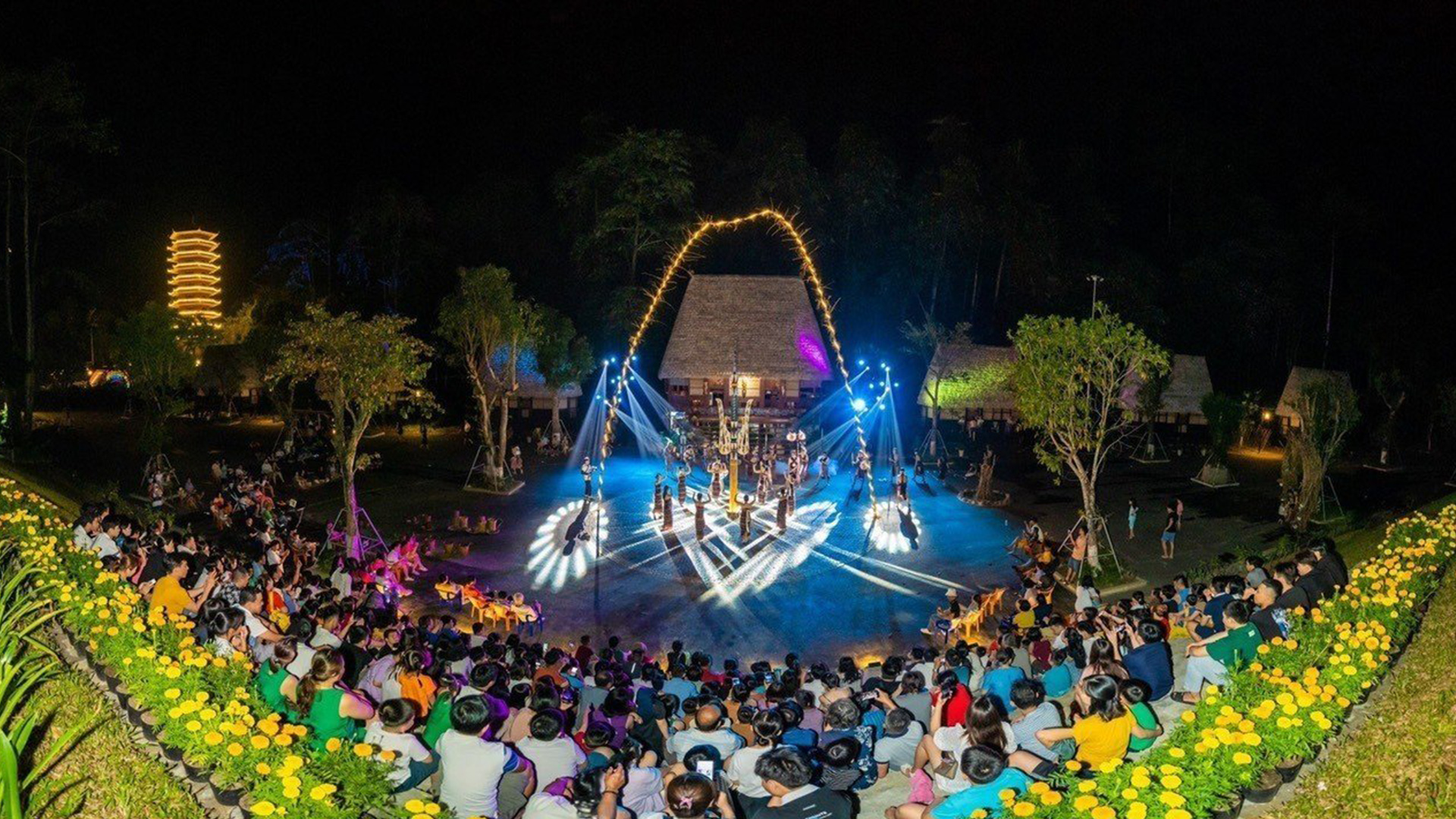















When visiting the mountainous western area of Da Nang City, visitors will have the opportunity to enjoy the Tung tung, da dá dance — a vibrant traditional performance of the Co Tu ethnic people. This dance was recognized as a National Intangible Cultural Heritage by the Ministry of Culture, Sports and Tourism under Decision No. 2684/QĐ-BVHTTDL dated August 25, 2014.
THE DANCE OF FAITH AND ASPIRATION
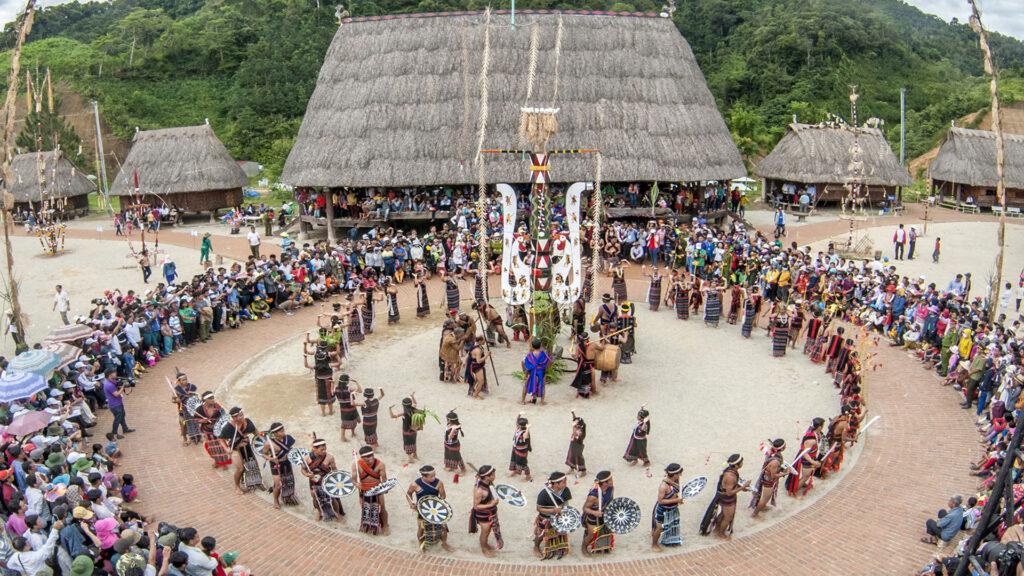
Tung tung, da dá is an ancient traditional dance that has been passed down through generations of the Co Tu people living in the mountainous communes of western Da Nang. Formed from daily life, labor, and the struggle for survival amid nature, this dance is closely associated with spiritual rituals and beliefs, embodying the Co Tu people’s dreams of peace, prosperity, and happiness.
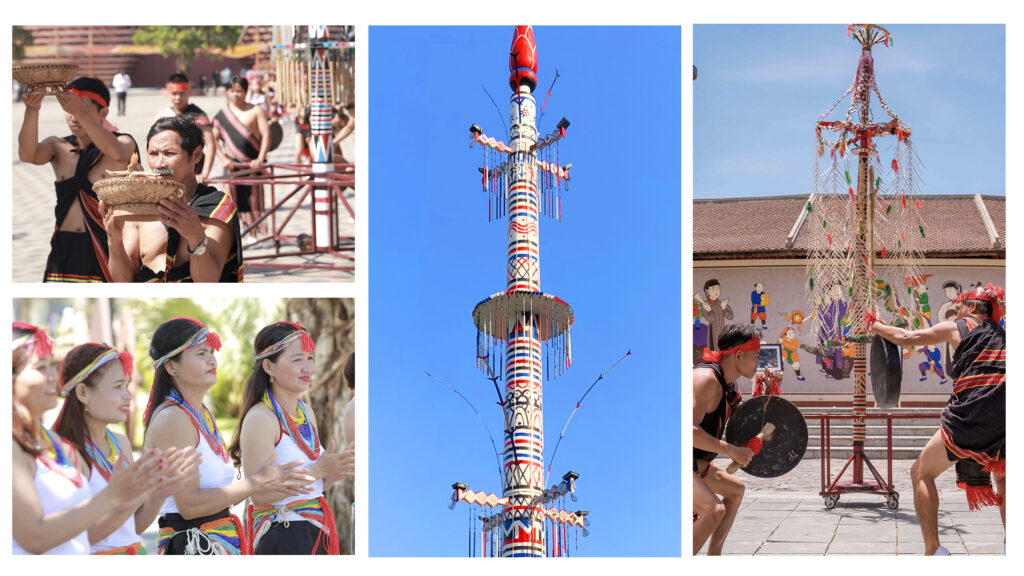
The dance showcases the perfect harmony between men and women, representing the balance between the two cosmic forces of yin and yang, between strength and gentleness — a symbol of equilibrium in both the universe and community life. Dancers move energetically in circular formation, counterclockwise, to the rhythmic sounds of drums and gongs echoing through the majestic Truong Son mountains.
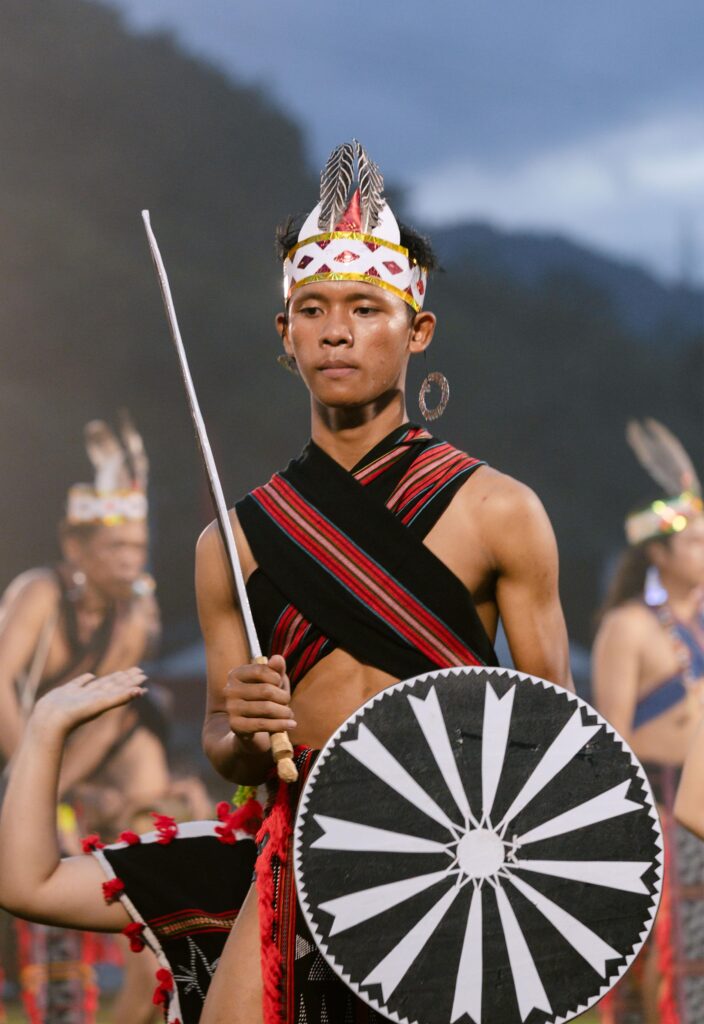
The Tung tung dance, performed by men, reenacts hunting scenes and celebrates victories. Male dancers wear traditional loincloths, sometimes draped with brocade shawls; their heads are adorned with decorations of bird feathers, shells, and animal fangs. Armed with shields, knives, and spears, they execute bold, powerful movements and leaps, expressing strength, courage, and the indomitable spirit of Co Tu warriors. As they dance, the men let out loud shouts mimicking the sounds of wild animals — an expression of joy, freedom, and their connection to nature.
Supporting the dance are other male performers playing long drums and gongs, their movements bending and twisting rhythmically, imbuing the performance with a sacred, spiritual essence.
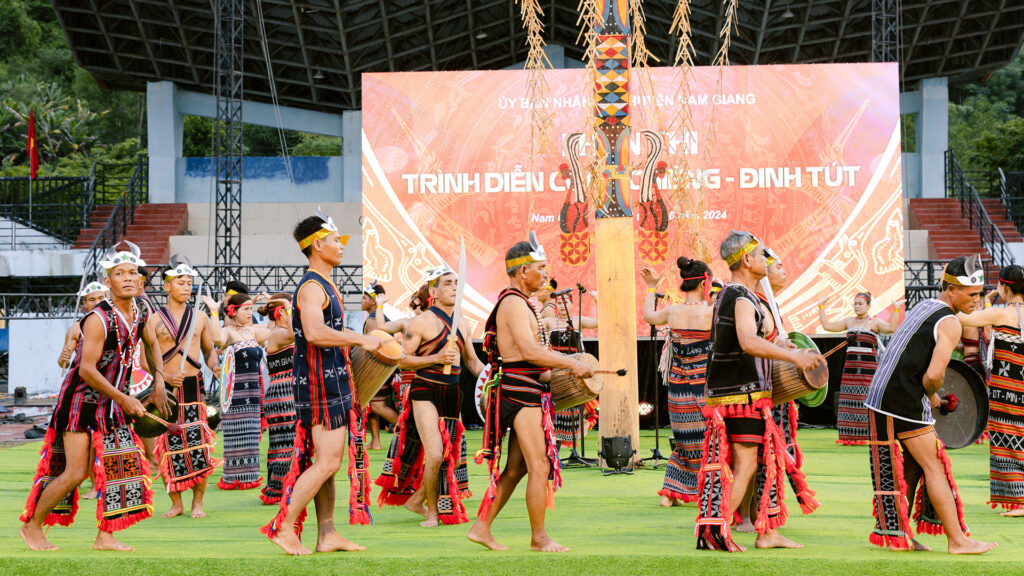


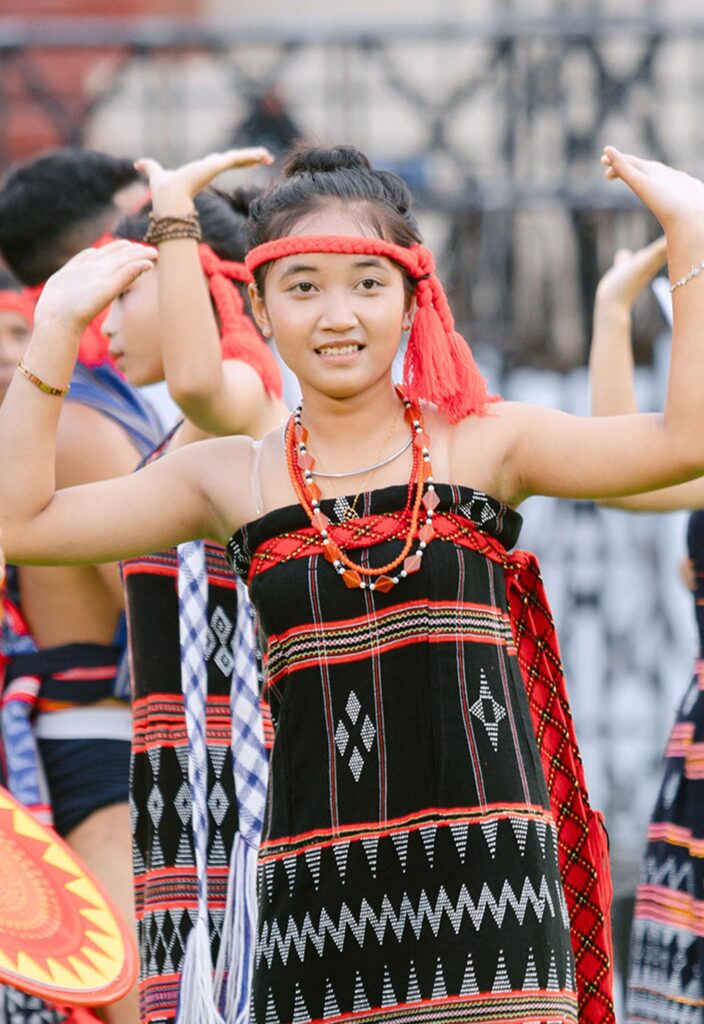
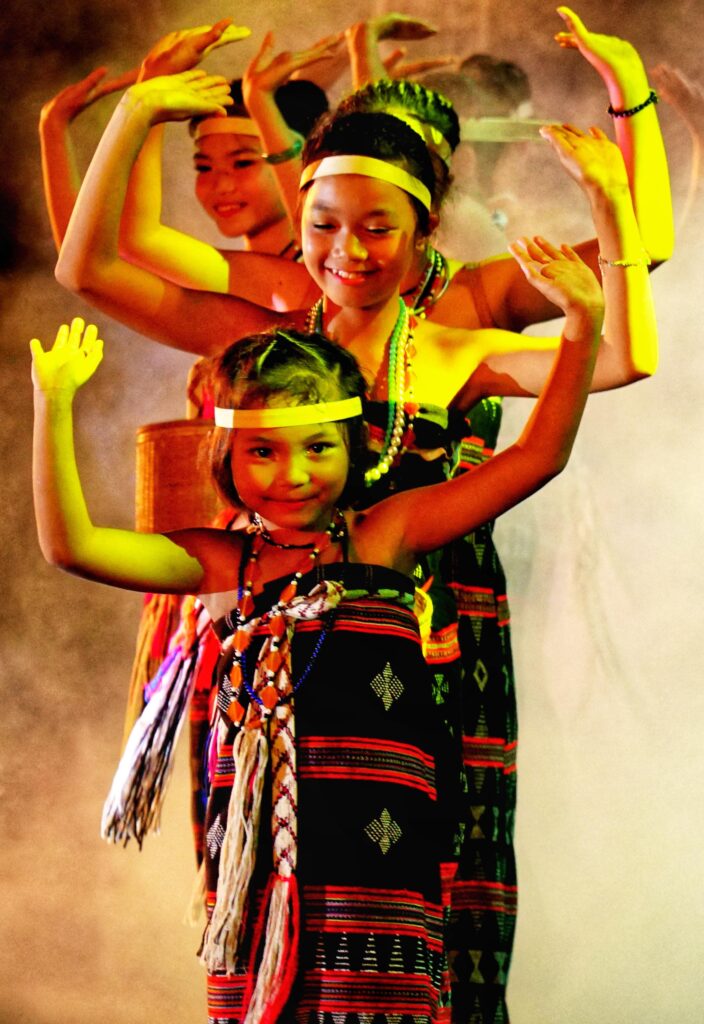
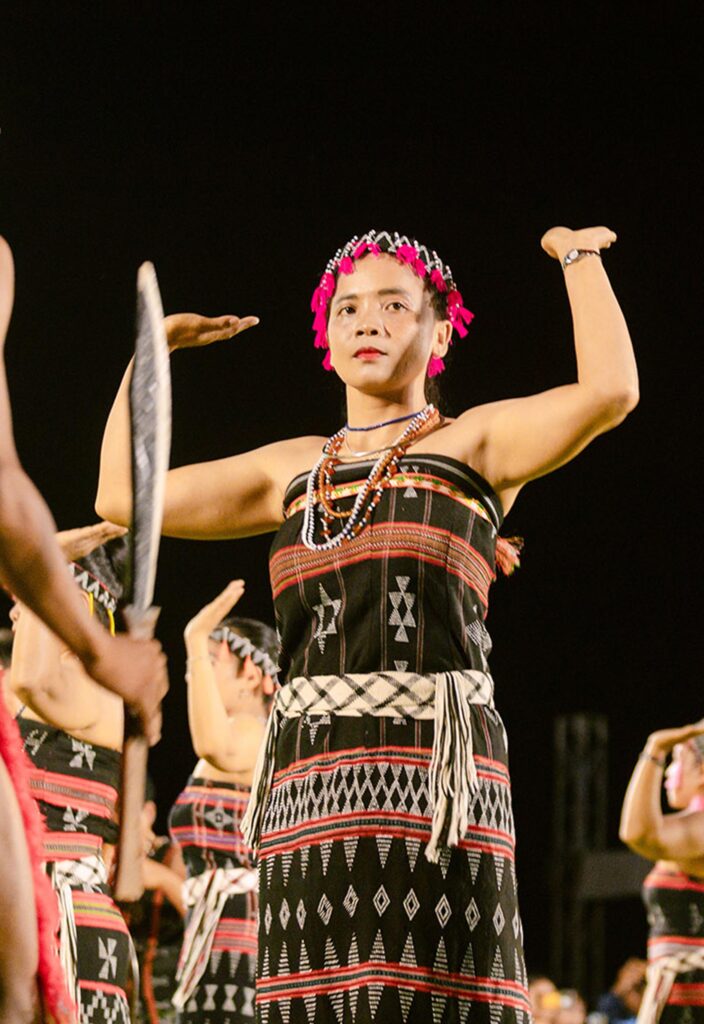
The da dá dance, performed by women, originates from the ancient ritual gestures of offering to the deities. Female dancers wear long brocade skirts and tops adorned with colorful beads and agate necklaces. During the dance, they raise their arms to shoulder height, forearms bent at right angles with palms open and fingers extended backward — symbolizing the image of bird wings lifting offerings to the heavens, expressing reverence and readiness to receive divine blessings.
THE DANCE OF IDENTITY AND PRIDE
or the Co Tu people, Tung tung, da dá is more than just a folk dance — it is the soul of their cultural identity, a symbol of pride and vitality amid the vast Truong Son range. Beyond artistic expression, the dance serves as a cultural ambassador, helping visitors understand the Co Tu’s spiritual life and traditional values.
Containing profound elements of faith and human philosophy, this dance symbolizes gratitude to heaven and earth, unity within the community, and harmony between humans and nature. Each drumbeat and gesture tells a story of the Co Tu people — their history, traditions, and resilience passed down through generations. Thus, Tung tung, da dá acts as a bridge connecting the past and the present, awakening pride and the spirit of heritage preservation among younger generations.
The dance is also a celebration of communal joy and vitality — a time to express wishes for abundant harvests, encourage productivity, and convey love for one another and for their homeland.
A DANCE THAT CONNECTS VISITORS FROM AFAR
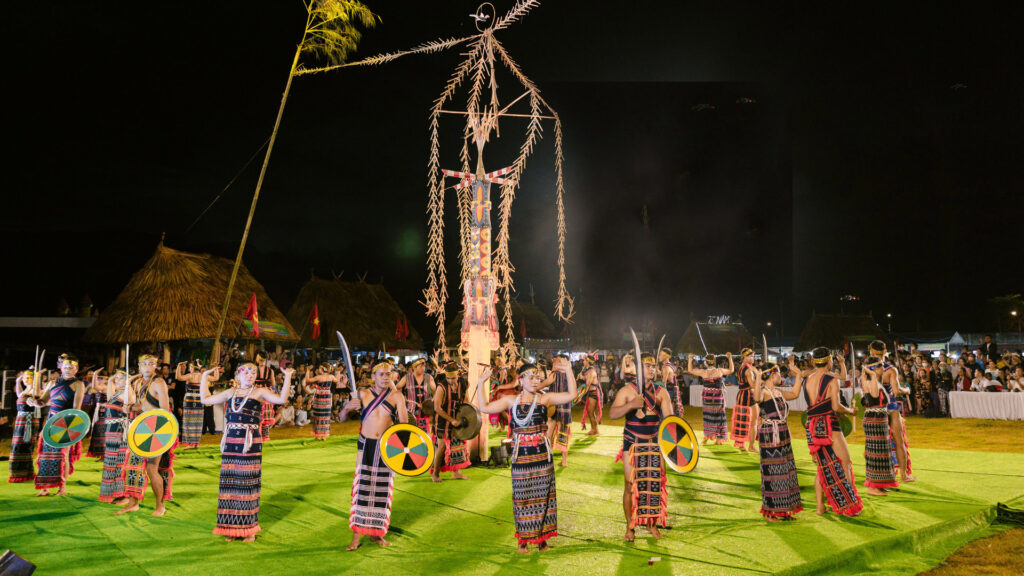
Today, Tung tung, da dá remains an integral part of the Co Tu people’s daily and ceremonial life. It is performed at traditional festivals such as the New Rice Celebration, Forest Gratitude Festival, Mountain and Forest Deity Worship, Kinship Ceremony, and New Guol House Festival, attracting both locals and visitors. The rhythmic sounds of drums and gongs blend with the dancers’ steps, creating an atmosphere that dispels fatigue and uplifts the soul.
Visitors can also experience this traditional dance at various community tourism villages, including Za Ra (Ben Giang Commune), Bhơhôồng (Song Kon Commune), ĐhRôồng (Dong Giang Commune), Ta Lang (Avuong Commune), Pơr’ning (Tay Giang Commune); at the Co Tu Traditional Cultural Village (Tay Giang Commune), Pơ Mu Ecotourism Village (Hung Son Commune), the Ta Lang – Gian Bi Community Tourism Center (Hai Van Ward), Toom Sara Village (Hoa Vang Commune), and Dong Giang Heaven’s Gate Ecotourism Area (Ben Hien Commune).
Here, visitors can not only admire the natural mountain scenery but also explore the Co Tu’s cultural life — tasting ruou can (fermented rice wine), enjoying mountain cuisine, learning to weave brocade, and crafting traditional baskets with local artisans.
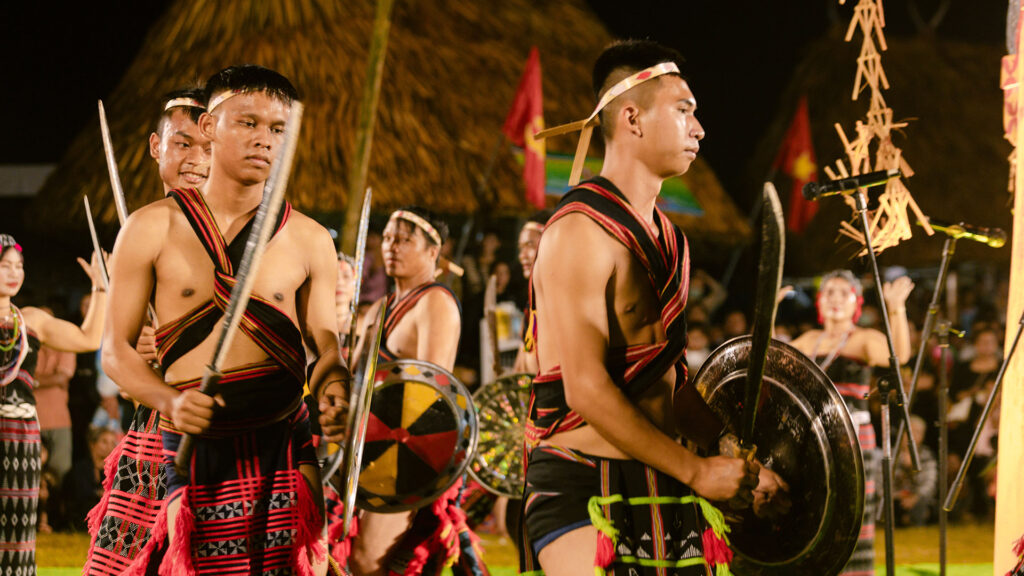
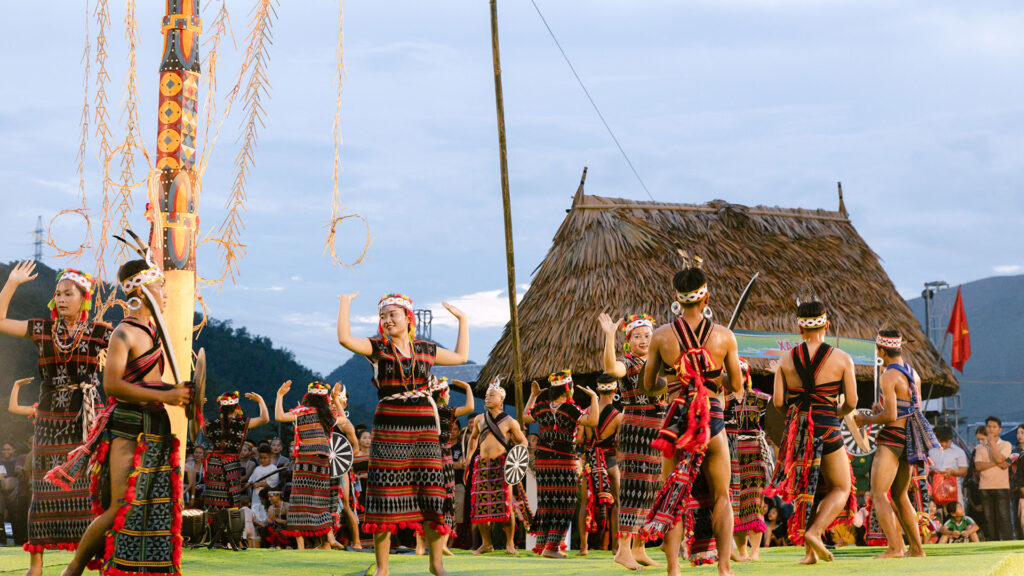
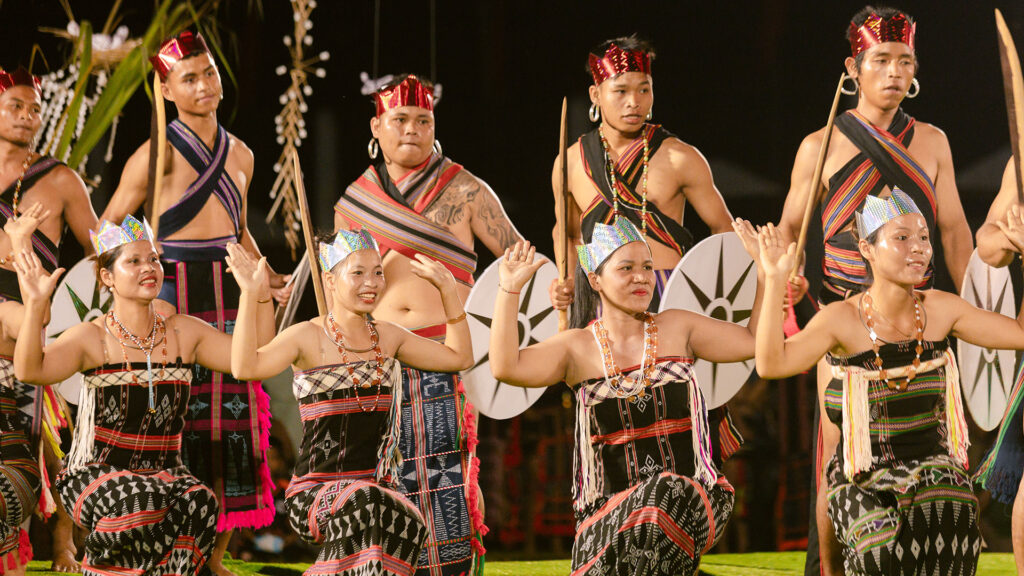
Tung tung, da dá is regarded as a masterpiece of Co Tu traditional art, a symbol of their cultural heritage, and an intoxicating expression of artistic spirit that captivates hearts during every festival season.
If you have the chance to visit the western highlands of Da Nang, join the circle of the Tung tung, da dá dance — to feel the boundless vitality and soulful beauty of the Co Tu people amidst the grandeur of the Truong Son mountains.
DANANG TOURISM PROMOTION CENTER