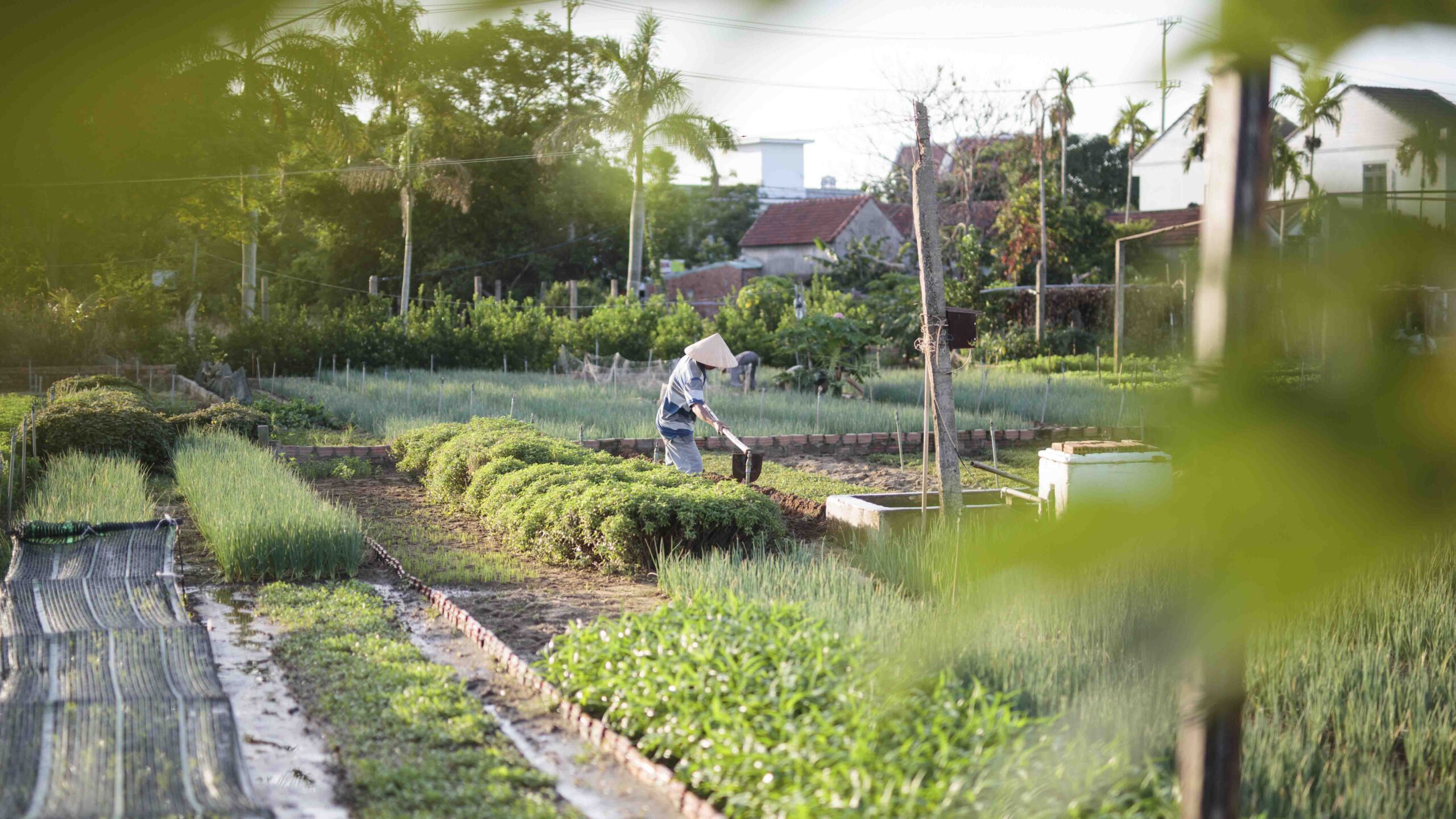
















Trà Quế Traditional Vegetable Farming Village in Da Nang is among the destinations highlighted by Booking.com where travel experiences can help support local livelihoods while connecting visitors with distinctive cultural traditions and ways of life.
For many Vietnamese travellers, spending meaningfully is becoming an increasingly important part of the journey, with greater consideration given to how their travel choices can support the communities they visit.
According to Booking.com’s latest Travel & Sustainability Research, 78% of Vietnamese travellers want the money they spend while travelling to go back to the local community. At the same time, 85% seek authentic experiences that represent the culture of their destinations.
These two priorities are closely connected. Experiences rooted in local knowledge, traditional crafts and everyday ways of life can give travellers a deeper understanding of a destination while generating additional income for the communities that bring those experiences to life.
From the centuries-old farming traditions of Trà Quế Traditional Vegetable Farming Village in Da Nang and the H’Mong linen-weaving heritage of Lung Tam, to the flower-growing community of Sa Dec, the Tay cultural landscape of Thai Hai and community-based tourism in Lo Lo Chai, each destination offers a different perspective on how tourism can connect travellers with local culture and livelihoods.
Booking.com therefore highlights several destinations across Vietnam where travellers can connect with local traditions while supporting the people who continue to preserve and share them.
Note: The destinations listed below are suggestions only and are not ranked in any order of preference.
Lung Tam Village (Tuyen Quang): Home to a centuries-old H’Mong linen-weaving tradition
28% of Vietnamese travellers say they have joined a tour or activity through which they learned about or interacted with local Indigenous people or cultures. Lung Tam reveals the depth such encounters can hold.
Here, linen is closely tied to H’Mong identity and spiritual beliefs, with every piece passing through 41 intricate stages – from weaving and indigo-dyeing to applying symbolic beeswax motifs – before completion.
The Lung Tam Linen Weaving Cooperative has expanded from 10 members to over 100 local workers, primarily women. Tourism provides these artisans with a wider audience and crucial revenue, helping to keep this traditional craft vibrant and sustainable.
What to do: A guided journey along the Ha Giang Loop places Lung Tam within the region’s wider cultural landscape. Connect the village with landmarks such as Quan Ba Heaven Gate, the Twin Mountains, Lung Khuy Cave and Trang Kim Village to explore how the region’s dramatic mountain landscapes and cultural crafts are deeply intertwined.
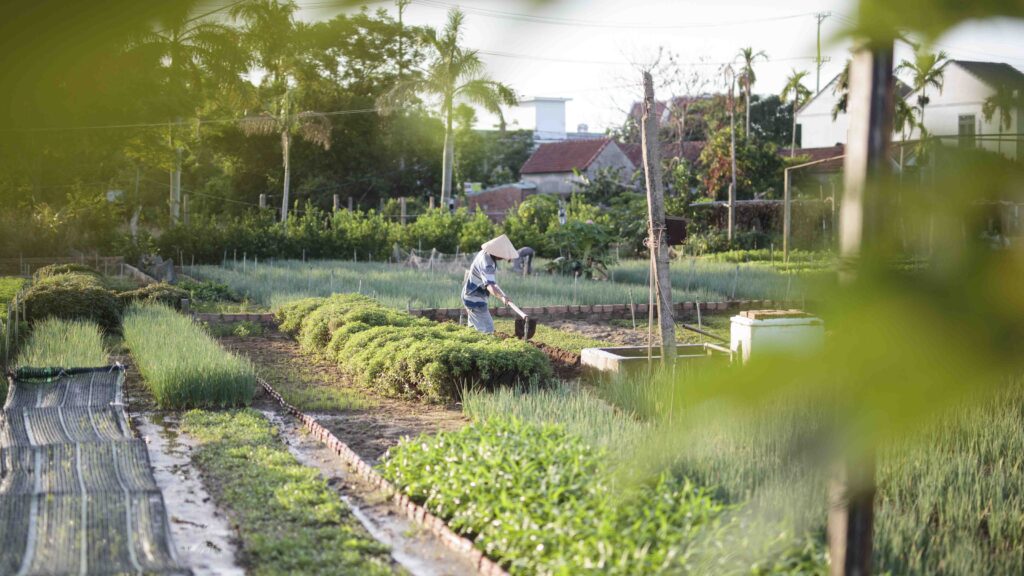
Trà Quế Traditional Vegetable Farming Village (Da Nang): Cultivating a centuries-old farming heritage
Dating back to the 16th century, Trà Quế Traditional Vegetable Farming Village remains a working agricultural community shaped by the fertile soil between the Co Co River and Tra Que Lagoon.
Across 18 hectares, over 300 farmers from 200 households cultivate around 20 varieties of organic herbs and vegetables.
Tourism here builds upon the village’s existing way of life rather than replacing it. Everyday knowledge of the soil, seasons and cultivation becomes a source of cultural exchange and additional income. This allows farming to remain economically relevant while giving local people a direct role in deciding how their heritage is shared.
What to do: Visit during the early morning or late afternoon, when the fields are most active. A walking or cycling tour through the gardens, combined with hands-on experiences, offers insight into traditional cultivation techniques while supporting local agricultural households.
Sa Dec Flower Village (Dong Thap): A century of cultivating flowers above the water
Hơn một thế kỷ qua, nghề trồng hoa đã định hình nên cảnh quan độc đáo và là nguồn sinh kế của xã Tân Quy Đông, hay còn được biết đến rộng rãi với tên gọi Làng hoa Sa Đéc. Được bồi đắp bởi nguồn phù sa màu mỡ từ dòng sông Tiền, vùng đất rộng 85 héc-ta nơi đây là không gian sinh trưởng của hơn 2.000 giống hoa và cây cảnh.
Để thích nghi với địa hình ngập nước đặc thù của vùng Đồng bằng Sông Cửu Long, các nhà vườn đã canh tác trên các giàn gỗ cao và di chuyển giữa các luống hoa bằng thuyền bè. Phương thức canh tác độc đáo này không chỉ thu hút đông đảo du khách ghé thăm, mà còn mang lại nguồn thu nhập bền vững cho các hộ nông dân thông qua việc kết hợp bán hàng trực tiếp cùng dịch vụ du lịch.
Gợi ý trải nghiệm: Một chuyến hành trình mở rộng khám phá Đồng Tháp sẽ đưa du khách đi qua ba cảnh sắc đối lập nhau: Làng hoa Sa Đéc, Vườn quốc gia Tràm Chim và rừng tràm Gáo Giồng. Tràm Chim thay đổi diện mạo theo mùa nước nổi – thời điểm thảm thực vật bừng sức sống và trải rộng trên mặt nước, trong khi Gáo Giồng là nơi trú ngụ của các loài chim muông phong phú, nổi bật với những đàn cò trắng chao liệng ngợp trời.
Làng Sinh thái Thái Hải (Thái Nguyên): Điểm đến di sản đạt giải thưởng UN Tourism
For more than a century, flower cultivation has shaped the distinctive landscape and livelihoods of Tan Quy Dong, better known as Sa Dec Flower Village.
Nourished by the Tien River’s fertile alluvium, its 85 hectares support over 2,000 varieties of flowers and ornamental plants.
To adapt to the Mekong Delta’s waterlogged environment, farmers cultivate plants on raised wooden trestles, navigating between rows by boat. This distinctive agricultural practice attracts visitors while direct sales and tourism provide farming households with sustainable revenue.
What to do: A wider journey through Dong Thap connects three contrasting landscapes: Sa Dec Flower Village, Tram Chim National Park and Gao Giong’s wetland forest. Tram Chim changes with the floating season, when vegetation spreads across the water, while Gao Giong shelters diverse birdlife, including large flocks of white egrets.
Thai Hai Ecological Village (Thai Nguyen): UN Tourism Award-Winning Heritage Site
Recognized by UN Tourism as one of the Best Tourism Villages 2022, Thai Hai is a preserved eco-village of over 30 traditional Tay ethnic stilt houses.
More than four generations of Tay families live in the village communally. Tourism income directly supports the collective preservation of the Tay language, folk music including Then singing, traditional medicine and organic agriculture.
What to do: Experience daily life alongside Tay hosts, learn about traditional rice wine distillation, pick tea leaves in organic fields and enjoy home-cooked meals prepared with ingredients harvested directly from the village lands.
Lo Lo Chai Village (Lung Cu, Tuyen Quang): Where community tourism keeps local heritage alive
Situated near Vietnam’s northernmost point, Lo Lo Chai was named among the Best Tourism Villages 2025 by UN Tourism out of more than 270 applications worldwide.
This recognition highlights the village’s approach to community-based tourism, which supports local livelihoods while protecting Lo Lo culture and centuries-old rammed-earth architecture.
More than 50 of the village’s 120 households actively participate in community-based tourism, adapting historic homes into family-run homestays without compromising their traditional aesthetic. Staying here directs tourism income directly to the families preserving this cultural landscape.
What to do: Much of Lo Lo Chai’s character lives within its well-preserved rammed-earth houses. Stay in a locally owned rammed-earth homestay to experience daily life firsthand. Beyond exploring the village pathways, visitors can gather around an evening bonfire, learn traditional clothing embroidery, or join residents in planting and harvesting seasonal crops.
Methodology
The research was commissioned by Booking.com and independently conducted among a sample of 32,500 respondents across 35 countries and territories, including 1,000 respondents from Vietnam.
To participate, respondents had to be aged 18 or above, have travelled at least once in the previous 12 months, be planning to travel in 2026, and be either the primary decision-maker or involved in the decision-making process for their travel.
The survey was conducted online in January 2026. The age ranges for each generation were defined as follows: Gen Z, 18–28; Millennials, 29–44; Gen X, 45–60; and Boomers, 61+.
About Booking.com
Part of Booking Holdings Inc. (NASDAQ: BKNG), Booking.com’s mission is to make it easier for everyone to experience the world. By investing in technology that helps remove
DANANG TOURISM PROMOTION CENTER