














The wars have passed, but their painful marks remain. The consequences of war have been overcome, but the loss to the mothers is still a hard-healed wound. Mothers bade farewell to their husbands and children who set off to defend their country with a desire for a future reunion, but many of them never returned. Mothers had to restrain their grief and, again, send another child to the battlefields.
With such profound meaning, the project of the construction of the Statue of Vietnamese Heroic Mother is elaborated in recognition of the valuable contribution and the noble sacrifice of about 140,000 Vietnamese heroic mothers across the country. This is also a place to carry out propaganda activities and educate today’s and tomorrow’s generation about traditional patriotism and peace –loving. The statue is built with central government funding and contributions from individuals and social organisations throughout the country.
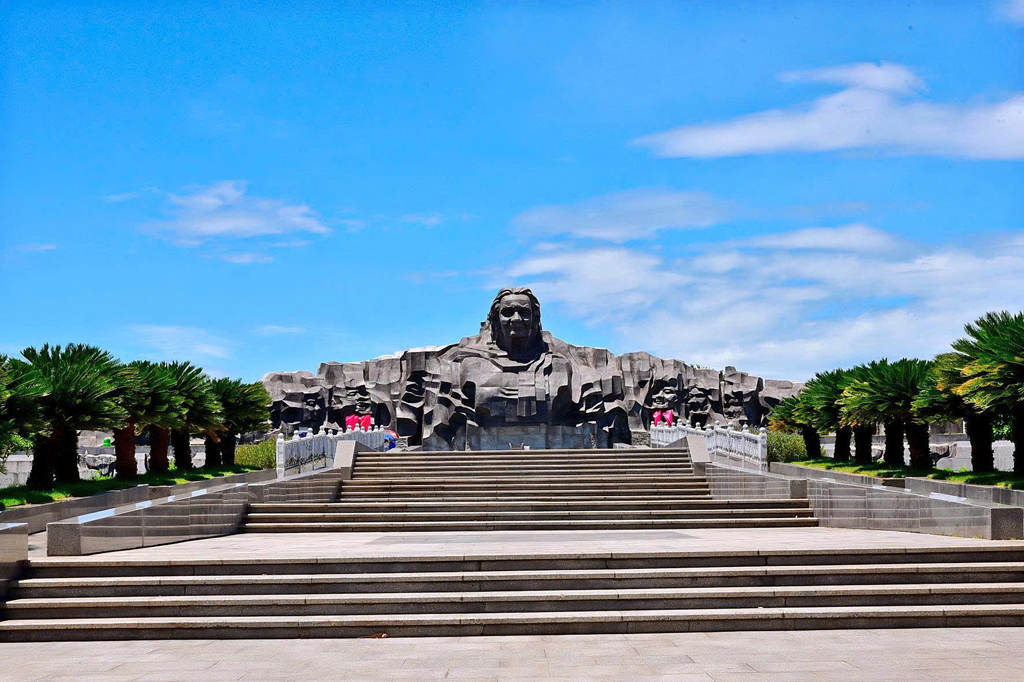
Being 65 km away from Da Nang International Airport, 40 km from Hoi An Ancient Town and My Son Sanctuary, and 30 km from Chu Lai Airport, the Statue of Vietnamese Heroic Mother is located under the Cam Mountains at Quang Phu ward, Da Nang city. This is a national cultural project that was strictly appraised through three rounds of selection by the Art Council.
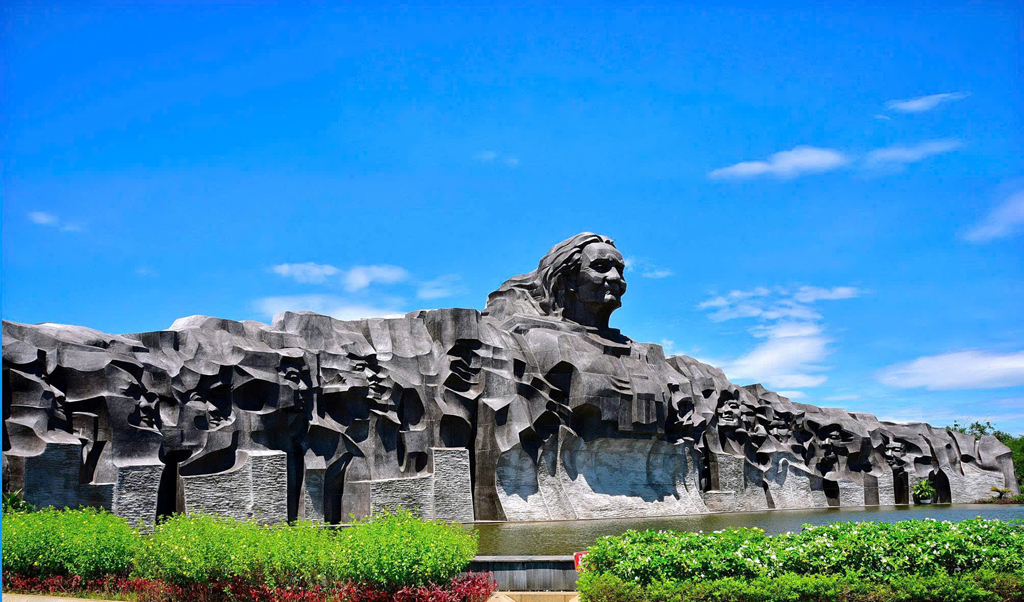
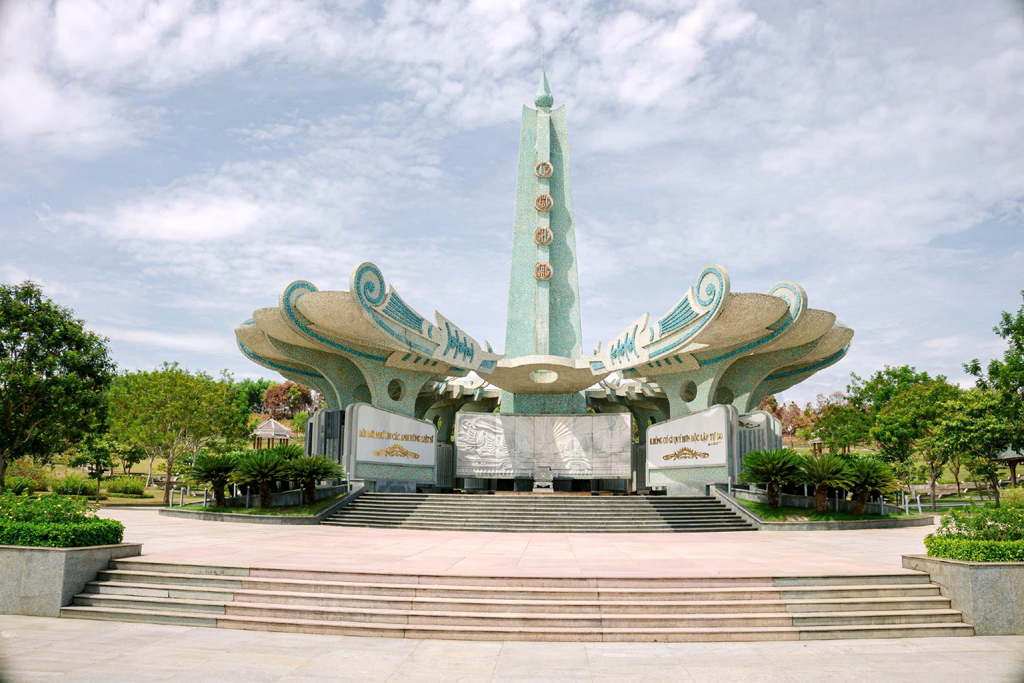
The whole monument bears an Asian traditional architectural style and is built on an area of 16,500 sq.m. The statue resembles Vietnamese Heroic Mother Nguyen Thi Thu – who devoted her nine sons, two nieces, and one son-in-law to the national liberation. The whole statue was erected by assembling hundreds of monolithic granite blocks, weighing about 20,000 tons. The mother’s statue is shaped like a mountain range that rises high in the middle and slopes gently down at both ends. The two side walls are engraved with the faces of her children in the descriptive art, conveying an image of a peaceful and united country. It signifies the gathering of children from all the corners of the Northern – Central – Southern regions in a tender embrace of their gentle mother.
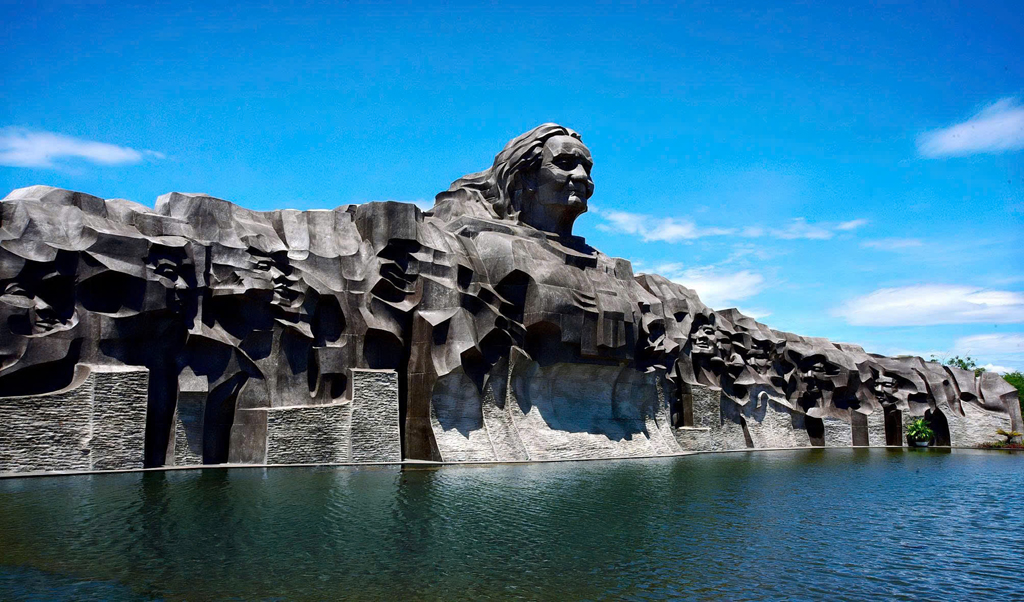
The pond in front of the statue has an area of nearly 1,000 sq.m, designed in a semicircle shape to create a harmonious combination of Mountain and Water. The crystal water quietly drips out from the cliffs around the mother’s face to the pond below, implying the silent dedication of the mother to her children and to the Motherland. It is like a bowl of water that is inexhaustible.
Eight legendary pillars at the Tien Mon Square (Front Gate Square) serve as an “imaginary” entrance to the Monument of Vietnamese Heroic Mother. Sculpted on the pillars are the images of heroic mothers across the country: Mothers from the North are gentle and upright, mothers from the South are indomitable and persevering, mothers from the Central region are hard-working and conscientious. Mothers from the central highlands, though suffering from hunger, gave soldiers a tiny bowl of rice, corn, or sweet potato. The images of young female volunteers on the Truong Son legendary road are also found engraved on these pillars.
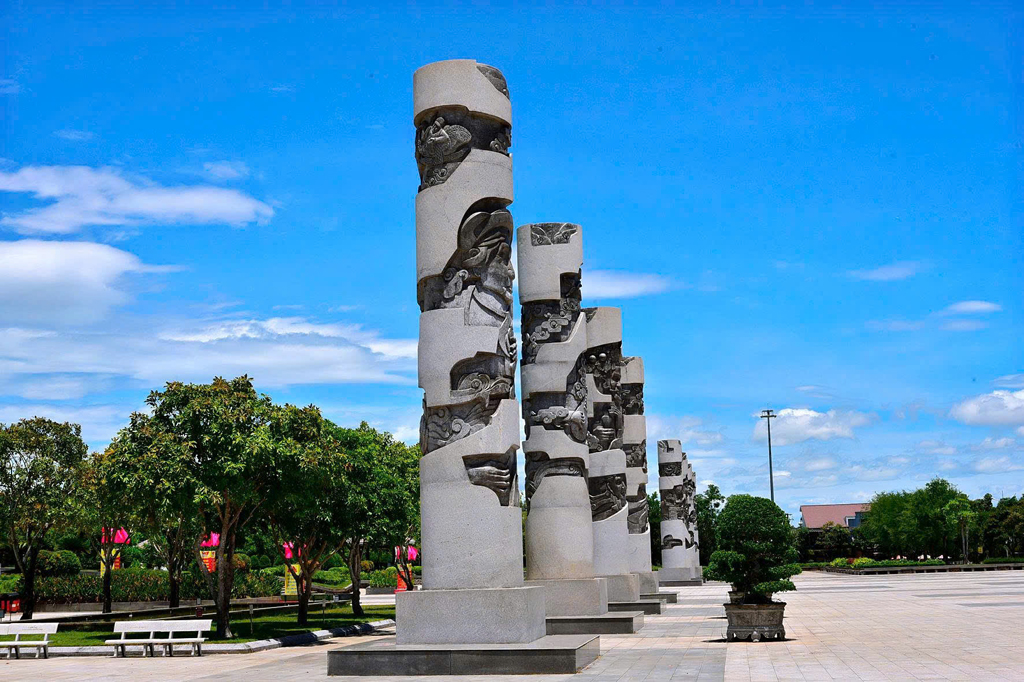
The number 8 has the meaning of prosperity and good reunion. It corresponds to 8 golden words in the Vietnamese language that President Ho Chi Minh awarded to Vietnamese women, which are translated into English as”Heroism, determination, faithfulness, and resourcefulness”.
Connecting the Front Gate Square with the Ceremony Square, located in front of the Mother statue, is the main path with a length of 200 m. The two sides of the path have 30 stone lamps. The lamps symbolize 30 years (1945-1975) of the mothers’ patience, waiting for the day the country would be united, and for their children from North-Central- South to return home.
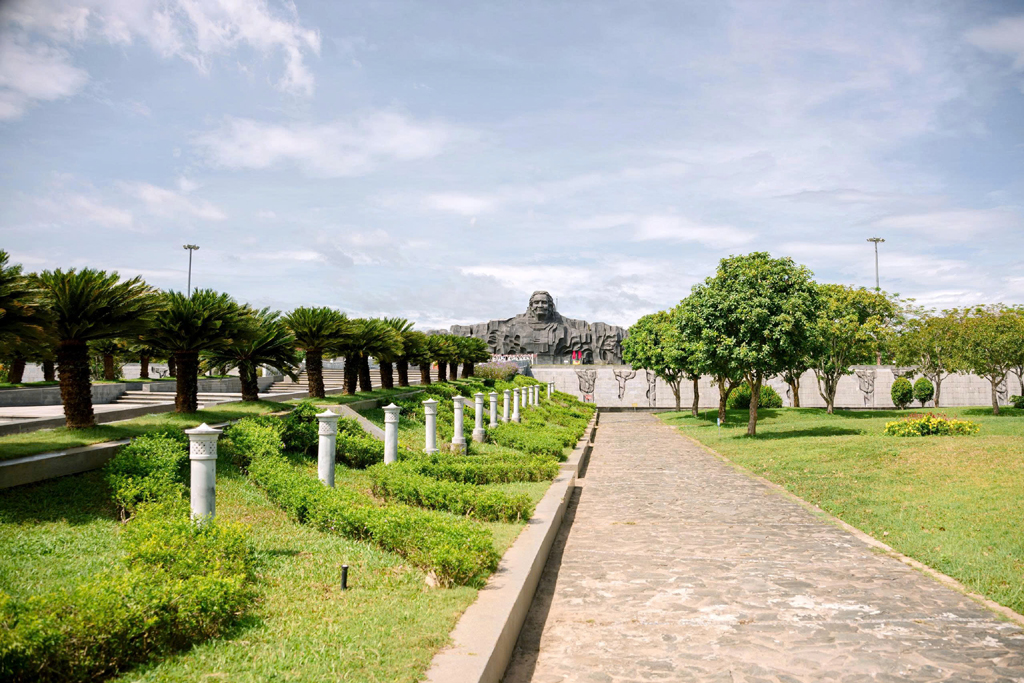
Located along both sides of the main path are two stone-yards, inscribed with many lyric poems about mothers. These remind their children and grandchildren of the heroic sacrifice and indomitable example of Vietnamese mothers.
Surrounding the Monument and along the paths running towards the Mother statue is a green garden. It was built thanks to the contributions from individuals and organizations throughout the country as a gift to express their deep sentiment and gratitude to the Mother. Highlighting the beauty of the monument is a 4.5 m high waterfall.
The dazzling water that comes pouring out from the rocks implies the vital strength of the nation, and of future generations, who will always be infused with the mother’s immense strength.
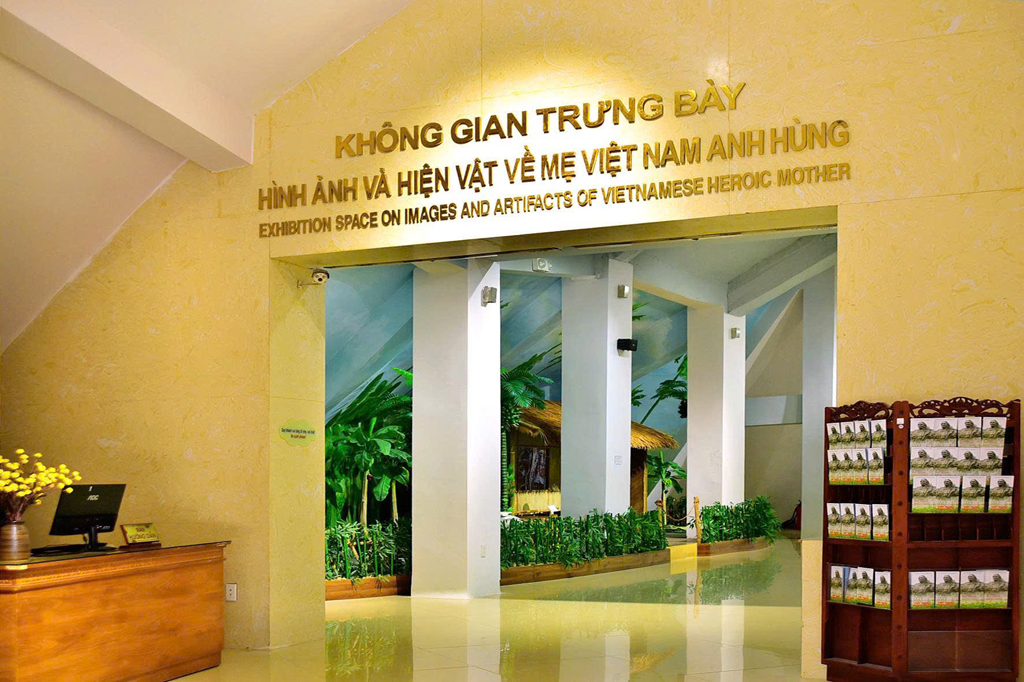
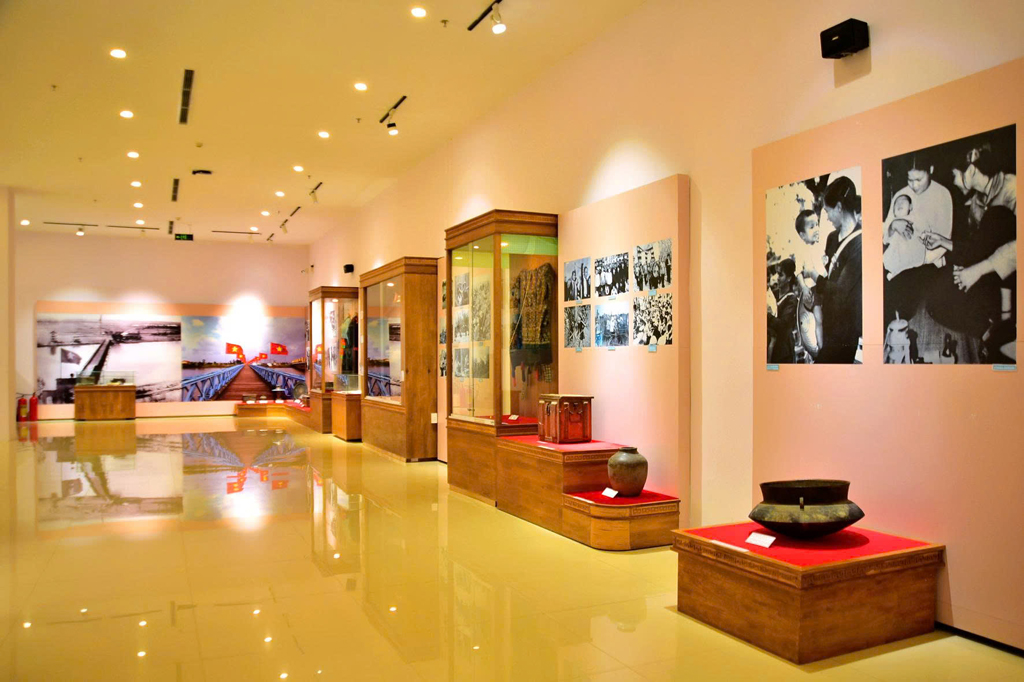
This is a place holding photos and items collected from about 140 thousands Vietnamese heroic mothers, and from those who once set a typical example in fighting for national defence and construction. In addition to the images and objects, there are stories and legends about the lives of Vietnamese heroic women and mothers. Paintings and artworks portraying typical Vietnamese women of the 54 ethnic groups of the country are also exhibited in this space.
Attached to the Mother’s Monument is a cemetery for martyrs with a total area of about 8 hectares, the cemetery includes a bell house, a drum house and burial site for up to 3,000 martyrs. Names of more than 65,000 martyrs are inscribed on the honour steles. The philosophy behind the construction of the cemetery next to the Mother’s Monument is that the wars caused so many separations among thousands of families, especially the painful separations between mothers and sons. When they were alive, they were not able to live together with their mother, so when they died, the country brought them back to their mother.
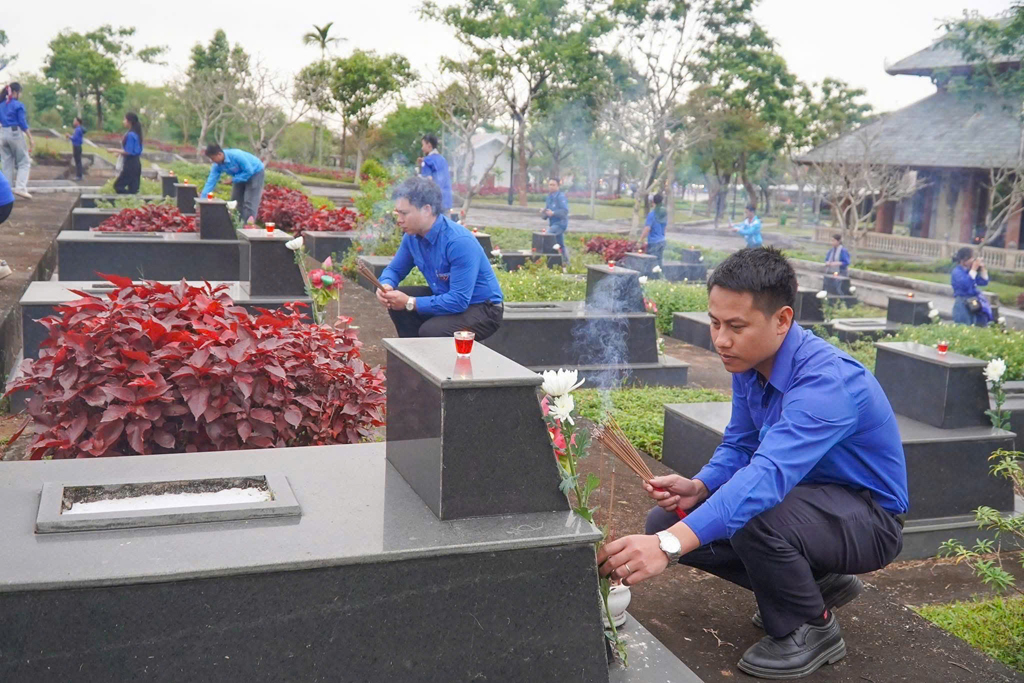
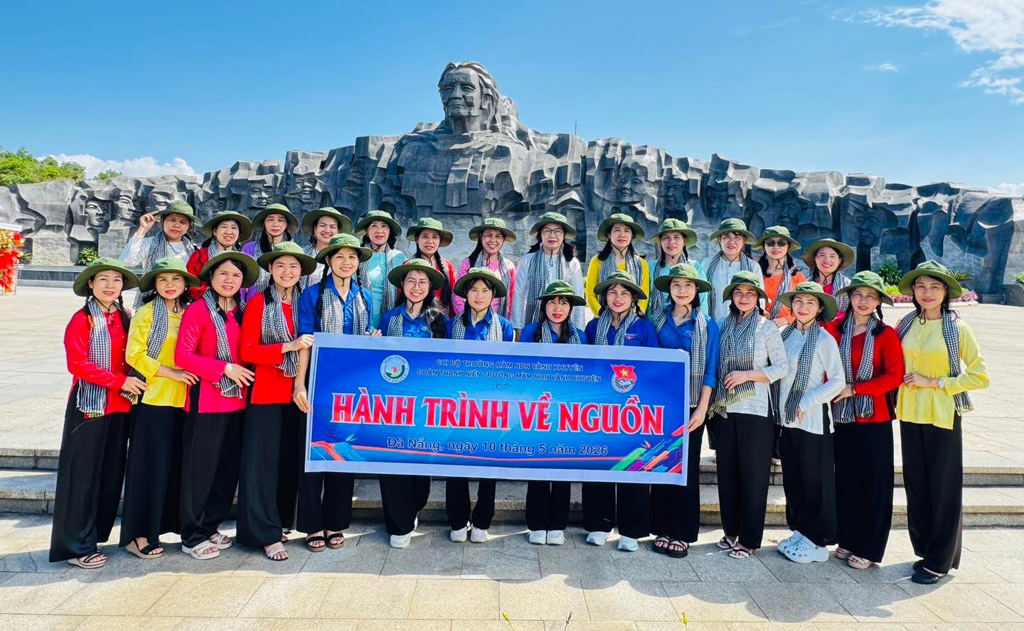
The Vietnamese Heroic Mother Monument is a venue where agencies, unions, and schools can educate the young generations about our patriotic tradition and revolutionary spirit. It is also a place for the older generations to show their deep gratitude for the great contributions and sacrifices of Vietnamese heroic mothers. This can be done through a wide range of activities such as organizing the flower offering ceremony, burning incense ceremony, organising Party member admission ceremony, admission ceremony to Ho Chi Minh Youth Union, admission ceremony to Ho Chi Minh Young Pioneer Organization, and other activities such as camping and excellent achievement report ceremonies.
SOURCE: DA NANG MANAGEMENT BOARD OF MONUMENTS AND LANDSCAPES