















Just 3 km from Hoi An Ancient Town, Tra Que Vegetable Village offers a completely different atmosphere from the bustling heritage streets and crowds of visitors. Expansive green vegetable fields, winding paths through gardens, and a farming lifestyle preserved through generations create a rare sense of tranquility in the heart of a heritage region.
Located in Hoi An Tay Ward, Tra Que Vegetable Village has long been recognized as one of Hoi An’s most iconic traditional craft villages. Beyond supplying fresh vegetables to the local community, Tra Que has become a popular community-based tourism destination where visitors can discover traditional farming practices, explore centuries-old cultural values, and enjoy a slower pace of life surrounded by nature.
Dating back to the 16th century, Tra Que benefits from unique natural conditions, nestled between the Co Co River and Tra Que Lagoon. Its fertile sandy alluvial soil and mild climate have provided ideal conditions for generations of local farmers to cultivate vegetables using traditional organic methods. Today, the village spans more than 18 hectares of farmland, producing dozens of varieties of herbs and vegetables such as basil, perilla, Vietnamese coriander, spring onions, cilantro, fish mint, and many others. These fresh ingredients contribute to the distinctive flavors of many signature dishes from Hoi An and Quang Nam.
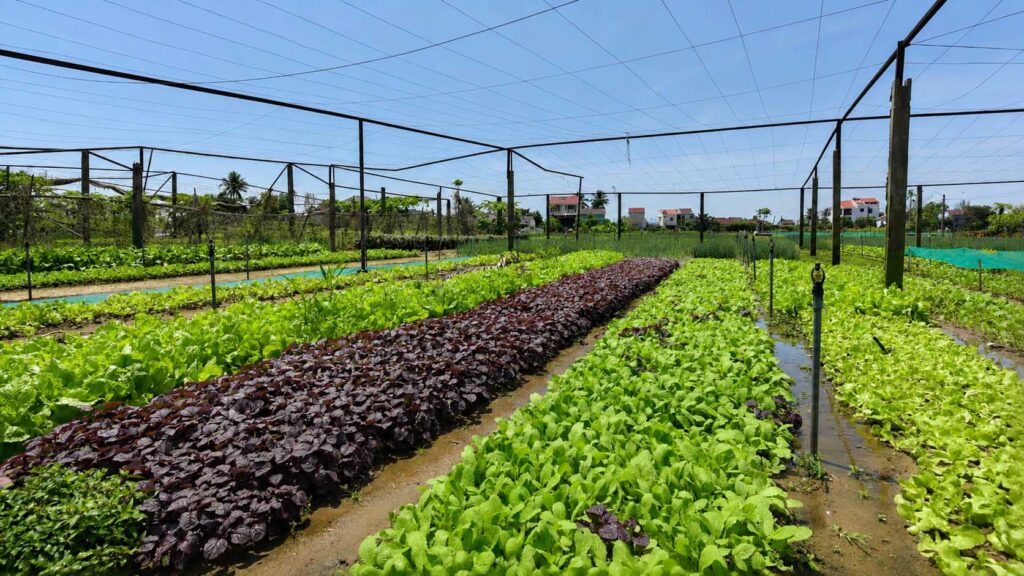
Beyond its agricultural heritage, Tra Que was recognized as a National Intangible Cultural Heritage of Vietnam in 2022 under the category of folk knowledge and traditional crafts. In 2024, the village was further honored by the United Nations Tourism Organization (UN Tourism) as one of the Best Tourism Villages, becoming one of Vietnam’s representatives recognized for its outstanding cultural values, scenic landscapes, and commitment to sustainable tourism development.
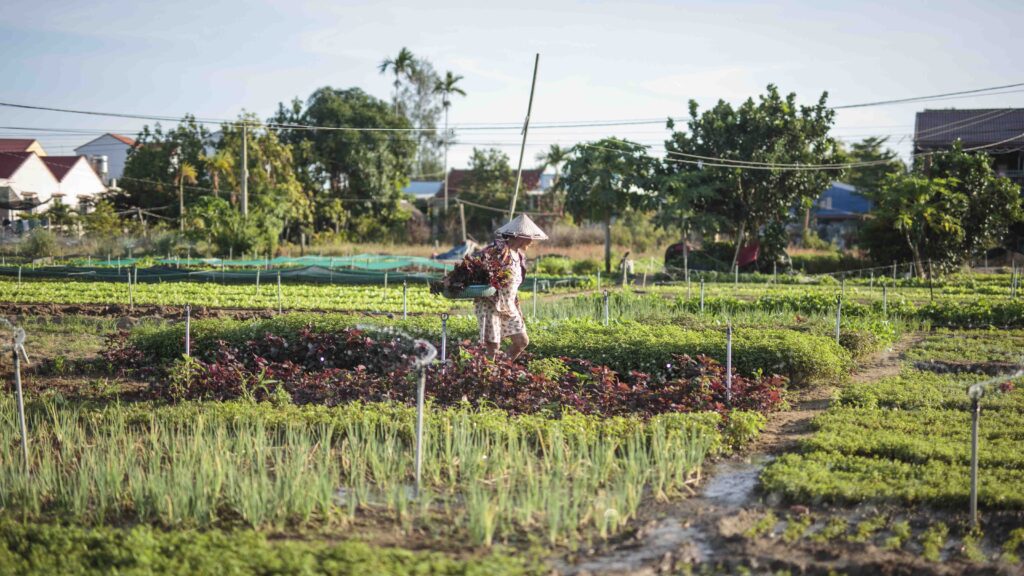
Strolling Through Lush Green Vegetable Fields
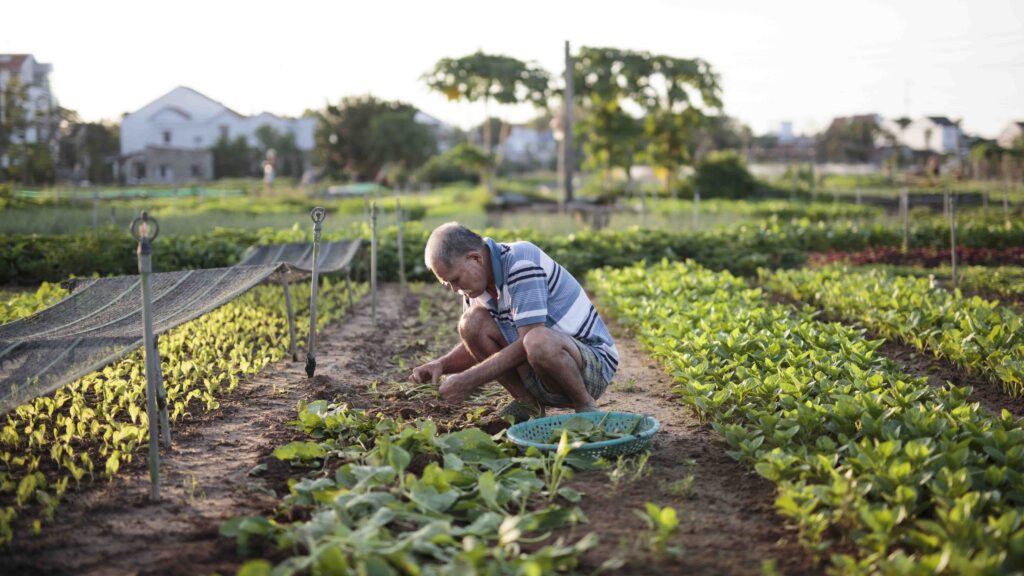
One of the first things that captivates visitors to Tra Que is its peaceful rural landscape. Carefully tended vegetable plots form vibrant green patches stretching across the countryside beneath the warm Central Vietnam sunshine.
Early morning is especially beautiful, when dew still glistens on the leaves and local farmers begin their daily routines. At this time, the village reveals its simple yet vibrant charm. It is also the perfect moment to cycle along quiet country lanes, breathe in the gentle fragrance of fresh herbs carried by the breeze, and observe the daily rhythm of local life.
Unlike many large-scale agricultural areas, Tra Que has retained the character of a traditional farming village, where families remain closely connected to their land and continue cultivating crops using techniques passed down through generations.
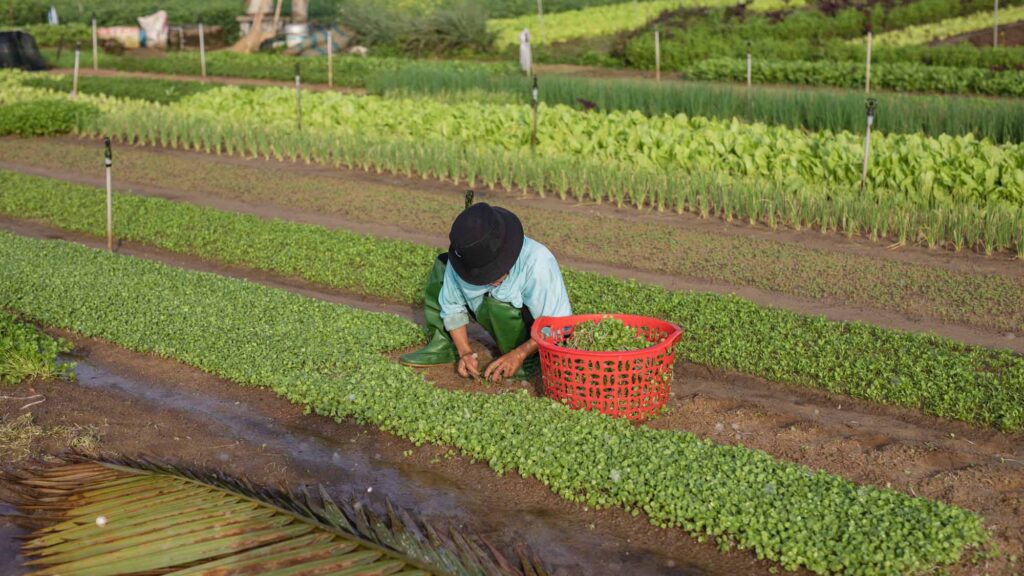
Discovering a 400-Year-Old Agricultural Heritage
Behind the lush vegetable fields lies the story of a community that has dedicated itself to farming for centuries.
The village is home to several cultural and historical landmarks, including an ancient Cham stone well, shrines dedicated to the Earth God and the Five Elements, and various cultural spaces that reflect the spiritual life of local residents. Together, these sites tell the story of Tra Que’s formation and development across generations.
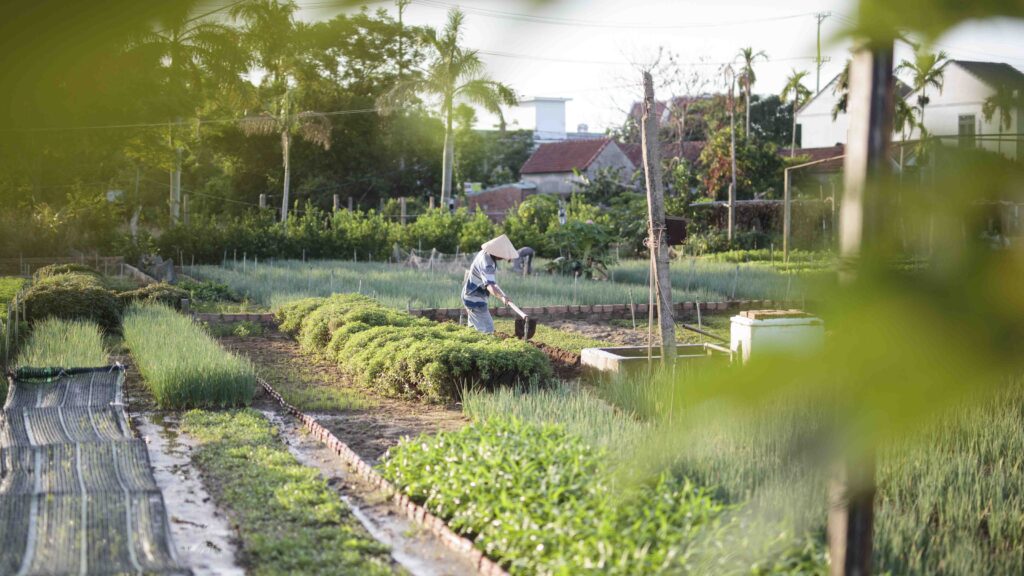
Visitors who come to Tra Que at the beginning of the year may also have the opportunity to experience the Cau Bong Festival, one of the village’s most important traditional celebrations. During this annual event, local residents express gratitude to nature, pray for favorable harvests, and honor the agricultural traditions inherited from their ancestors.
Becoming a Tra Que Farmer
One of the most popular experiences in Tra Que is the “A Day as a Farmer” program.
Under the guidance of local farmers, visitors can take part in traditional agricultural activities such as preparing the soil, sowing seeds, planting vegetables, removing weeds, and watering crops using traditional shoulder yokes. While these tasks may seem simple, they offer valuable insight into the dedication, patience, and hard work behind the village’s thriving vegetable gardens.
What makes Tra Que unique is its traditional cultivation method. Instead of relying heavily on chemical fertilizers, local farmers use seaweed and algae collected from nearby lagoons to nourish their crops. This time-honored practice contributes to the distinctive aroma and quality that have made Tra Que vegetables famous for generations.
Exploring Hoi An Cuisine Through Cooking Classes
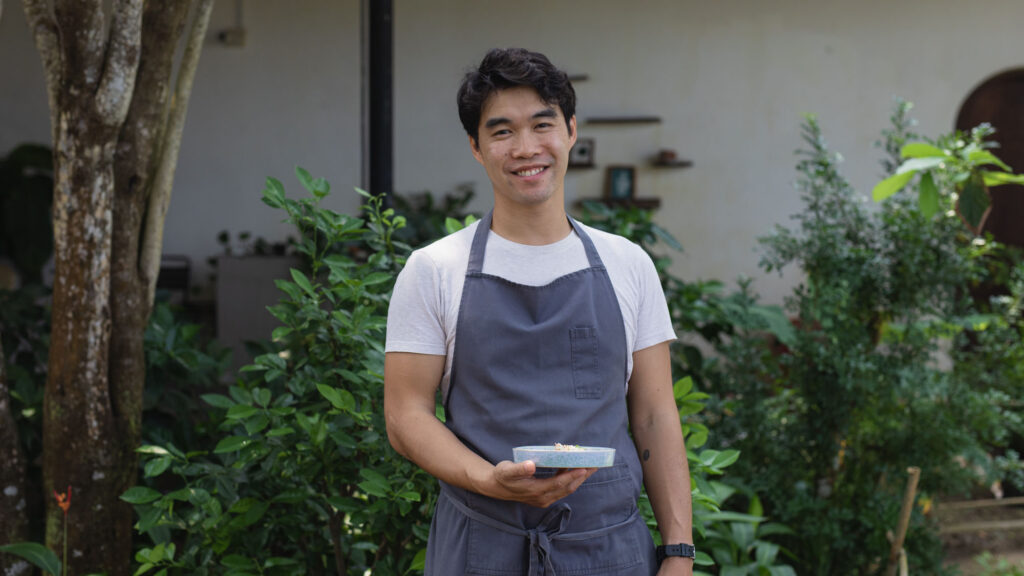
One of the experiences most appreciated by international visitors is joining a cooking class combined with a visit to the vegetable village. The journey often begins with a walk through the gardens, where participants learn about local herbs and vegetables before harvesting fresh ingredients directly from the fields.
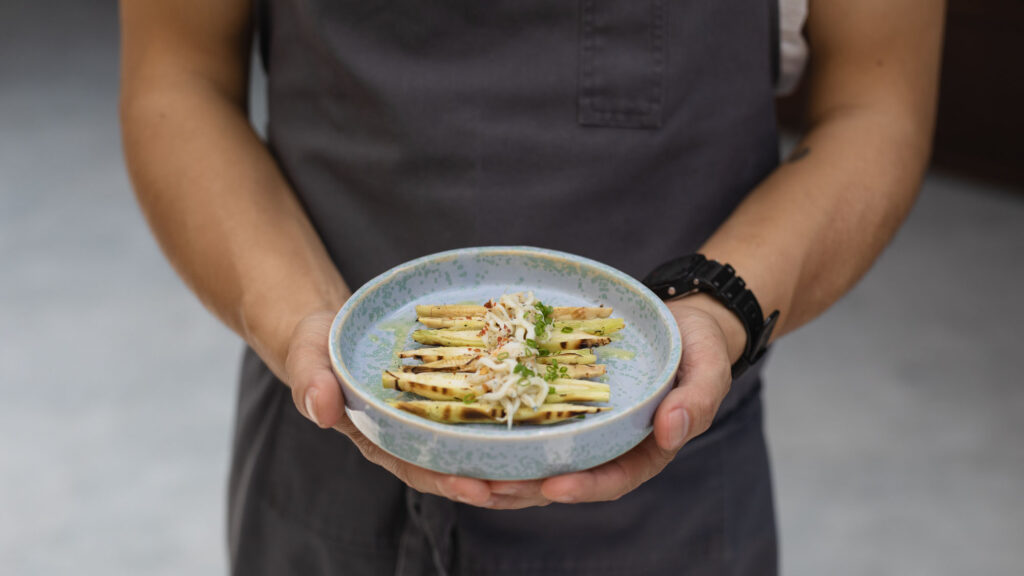
Guided by local chefs and residents, visitors can learn how to prepare traditional dishes from Hoi An and Quang Nam, including banh xeo (Vietnamese savory pancakes), fresh spring rolls, tam huu (Hoi An-style pork and shrimp skewers), Mi Quang, and various family recipes that have been passed down through generations.
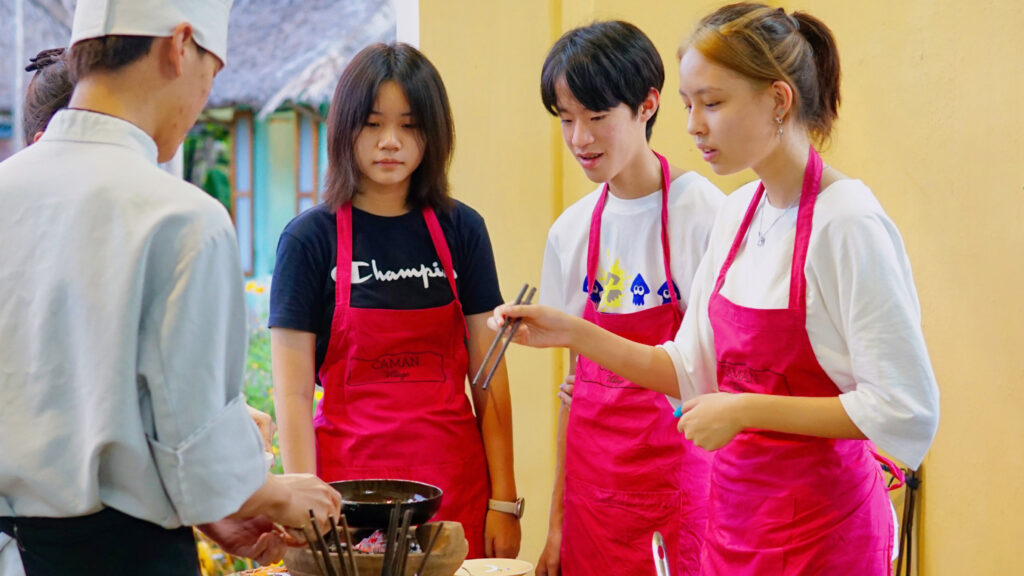
From preparing ingredients and mixing dipping sauces to mastering wrapping techniques and balancing flavors, every step offers a deeper understanding of local culinary traditions.
What makes these cooking classes special is not simply learning recipes, but discovering the stories behind each ingredient. Fresh herbs harvested moments before cooking, seasonings deeply rooted in local culture, and cooking techniques preserved through generations all contribute to the distinctive character of Hoi An cuisine.
When the meal is ready, participants can sit down together and enjoy their creations in the peaceful countryside setting. More than a culinary experience, it becomes an opportunity to appreciate the close relationship between agriculture, local culture, and daily life—values that have shaped Tra Que for centuries.
Savoring Flavors From Local Gardens
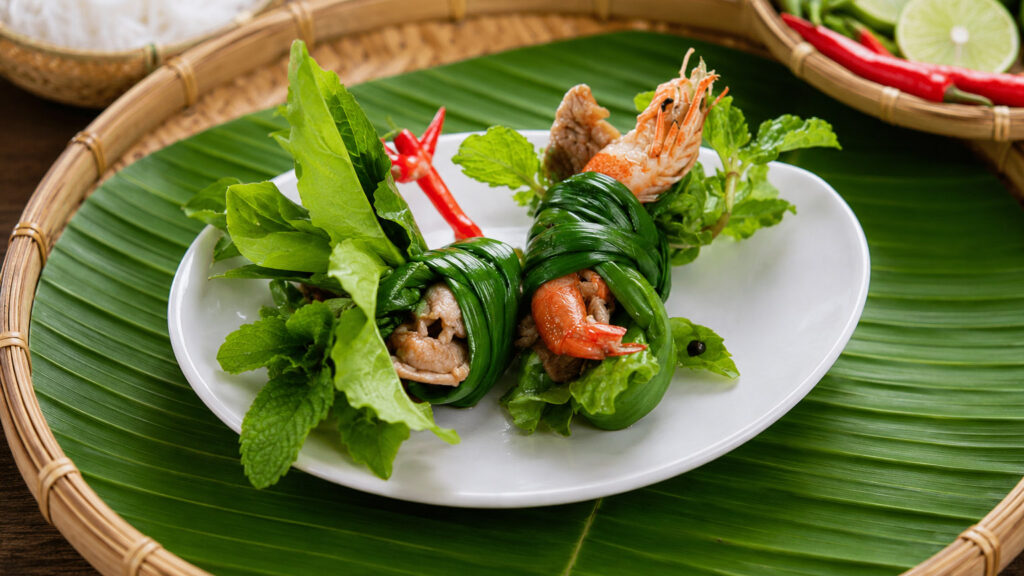
The influence of Tra Que vegetables on Hoi An’s culinary identity is unmistakable.
From cao lau, Mi Quang, and banh xeo to fresh salads, herb platters, and everyday family meals, many dishes rely on vegetables grown in Tra Que’s fertile fields. Their distinctive fragrance and freshness have become an essential part of the region’s culinary character.
Today, many households and tourism operators in the village organize cooking workshops for visitors. These programs allow participants to harvest vegetables from the gardens, learn about local ingredients, and prepare traditional dishes under the guidance of local residents.
The experience offers more than just a meal. It provides a meaningful opportunity to understand the connection between the land, farming traditions, and the culinary heritage of Hoi An.
Cycling Through Riverside Countryside
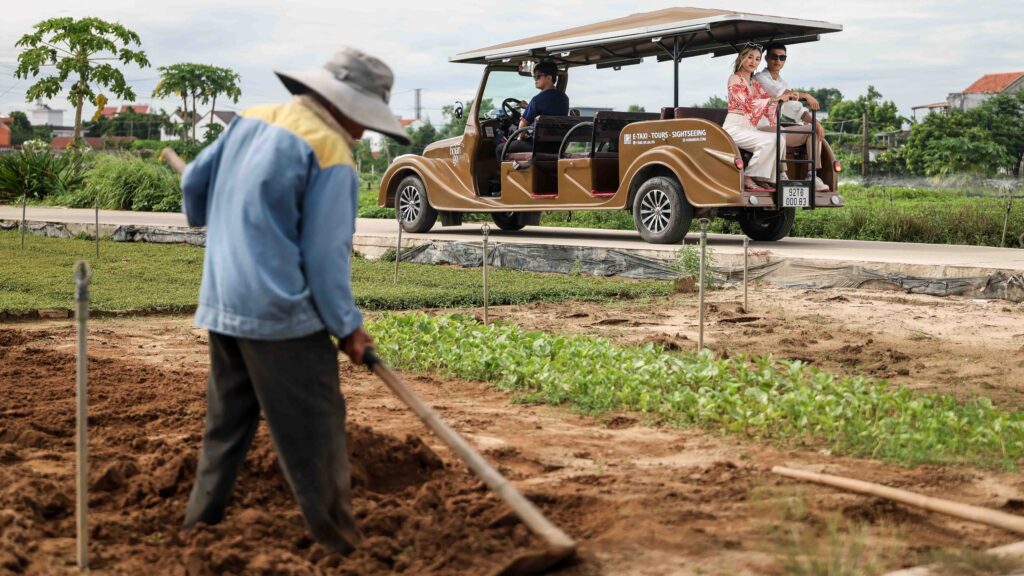
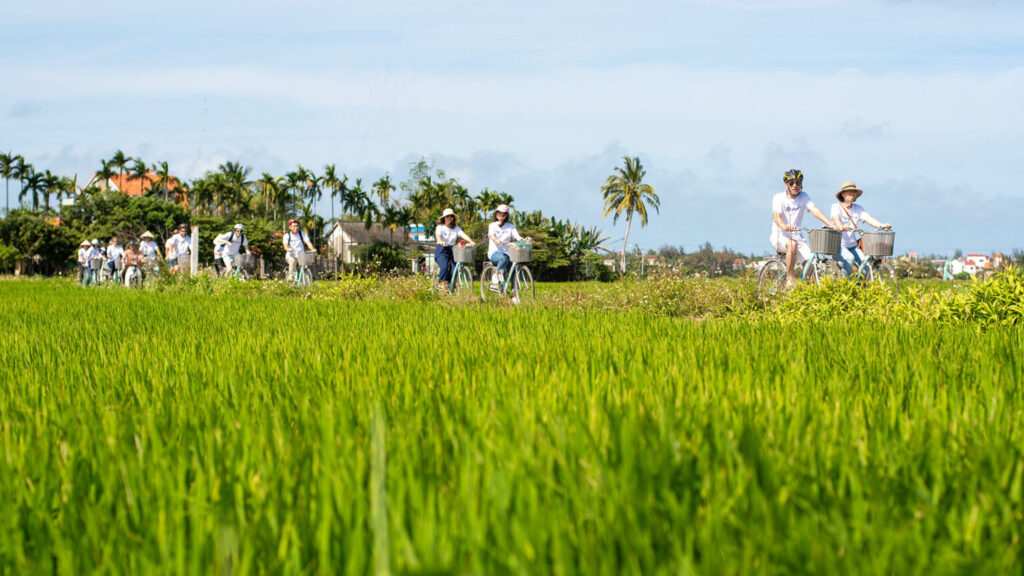
Thanks to its convenient location near Hoi An Ancient Town, Tra Que has become a popular stop on cycling routes around the region.
From the ancient town, visitors can easily ride through tree-lined village roads, passing vegetable fields, ponds, waterways, and traditional homes along the way. This journey not only brings travelers closer to nature but also reveals another side of Hoi An—one shaped by agriculture, community values, and rural traditions that continue to thrive today.
Many cycling routes also connect Tra Que with other well-known attractions such as An Bang Beach, Cam Thanh Coconut Forest, and Thanh Ha Pottery Village, creating diverse experiences that combine nature, culture, and local life.
Enjoying a Green and Sustainable Tourism Destination
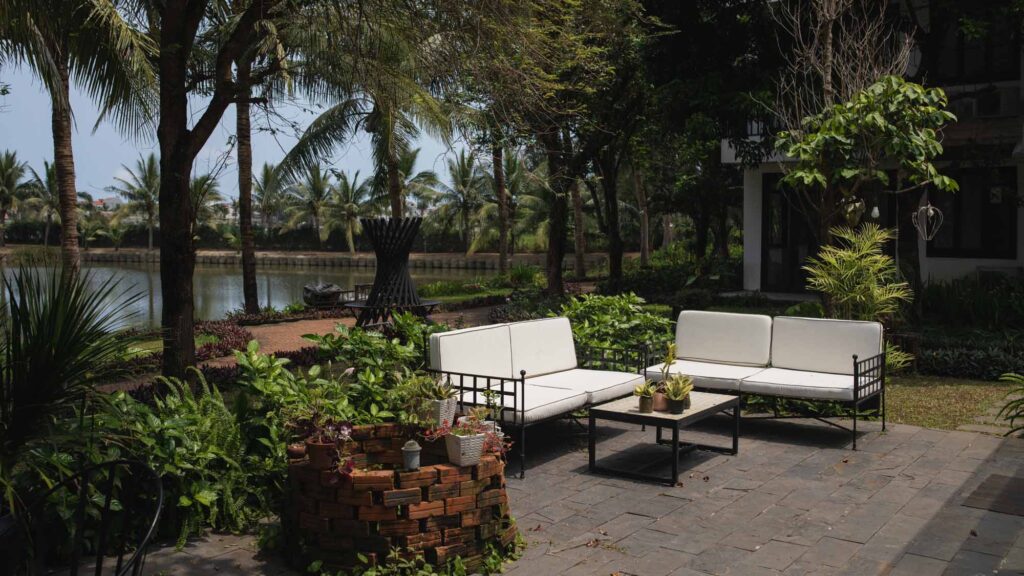
Alongside the growth of community-based tourism, Tra Que is gradually becoming a model for sustainable tourism in Hoi An.
Many homestays, villas, and tourism services in the village have been developed with environmentally friendly practices in mind. Visitors are encouraged to explore by bicycle, reduce plastic waste, and participate in activities that support the preservation of the village’s rural landscape and cultural heritage.
With the active involvement of the local community, every experience in Tra Que not only enriches visitors but also helps sustain traditional farming practices and create long-term livelihoods for local residents.
Visitor Information
Location: Tra Que Vegetable Village, Hoi An Tay Ward, Da Nang City.
Distance: Approximately 3 km from Hoi An Ancient Town, easily accessible by bicycle, motorbike, or taxi.
Opening Hours: 08:00 – 18:00 daily.
Entrance Fee
- Vegetable village admission: approximately VND 35,000 per person.
- Children under 6 years old may enter free of charge in accordance with regulations at certain traditional craft village attractions in Hoi An.
Popular Experiences
- Explore the vegetable village and learn about traditional farming methods.
- Join a farming experience: soil preparation, sowing seeds, watering, and harvesting vegetables.
- Cycle through the countryside and riverside landscapes.
- Participate in cooking classes using ingredients harvested directly from the gardens.
- Enjoy local specialties from Hoi An and Quang Nam.
Estimated Experience Costs
- Farming experience tours: approximately VND 200,000–500,000 per person.
- Cooking classes: approximately VND 300,000–400,000 per person, depending on the program.
- Combined experiences that include village visits, local markets, cooking classes, and meals may vary in price depending on the tour operator.
Tips for Visitors
- The best time to visit is early morning or late afternoon when the weather is cooler and local farmers are actively working in the fields.
- Cycling is highly recommended as it allows visitors to fully appreciate the rural scenery while easily combining visits to An Bang Beach, Cam Thanh Coconut Forest, and Hoi An Ancient Town in a single journey.
- One of the most scenic routes to Tra Que follows Hai Ba Trung Street from Hoi An Ancient Town. The route passes open rice fields, coconut groves, and picturesque countryside landscapes before arriving at the village. At sunrise and sunset, it becomes one of the most popular cycling routes for sightseeing and photography.
- Bring a hat, sunscreen, and comfortable clothing if you plan to participate in outdoor farming activities.
- For a deeper cultural experience, consider joining programs that combine farming activities with cooking classes. These provide valuable insight into the connection between vegetable cultivation and Hoi An’s culinary traditions.
- Take time to relax at one of the small cafés overlooking the vegetable gardens. As the gentle breeze carries the fragrance of fresh herbs and birdsong drifts through the trees, visitors can truly appreciate the peaceful atmosphere that makes Tra Que so special.
- The most beautiful growing season generally extends from the beginning of the year through the end of summer, when the gardens are lush and weather conditions are ideal for outdoor activities.
- For a more complete experience, combine your visit to Tra Que with nearby attractions such as An Bang Beach, Bay Mau Coconut Forest in Cam Thanh, and Hoi An Ancient Town to create a journey that blends nature, culture, and local cuisine.
A Green Oasis in the Heart of a Heritage Land
Amid the vibrant experiences of Hoi An Ancient Town, Tra Que Vegetable Village offers a completely different rhythm of life. It is a place where rows of vegetables tell stories of the enduring bond between people and the land, where traditional values continue to thrive in everyday life, and where visitors can find moments of tranquility surrounded by nature.
From cycling through lush fields and experiencing life as a local farmer to joining cooking classes and learning about centuries-old agricultural traditions, Tra Que is far more than a sightseeing destination. It is an opportunity to connect with local culture, discover sustainable ways of living, and experience the authentic beauty that has shaped Hoi An for generations.
DA NANG TOURISM PROMOTION CENTER