















Hidden deep in the mountainous southwest of Da Nang, the Ngoc Linh ginseng region offers a distinctive journey through primeval forests, cloud-covered mountains and culturally rich villages. It is not only the natural home of one of Vietnam’s most precious medicinal plants but also a vibrant cultural landscape where knowledge of the forest, medicinal herbs and harmonious coexistence with nature has been preserved and passed down through generations.
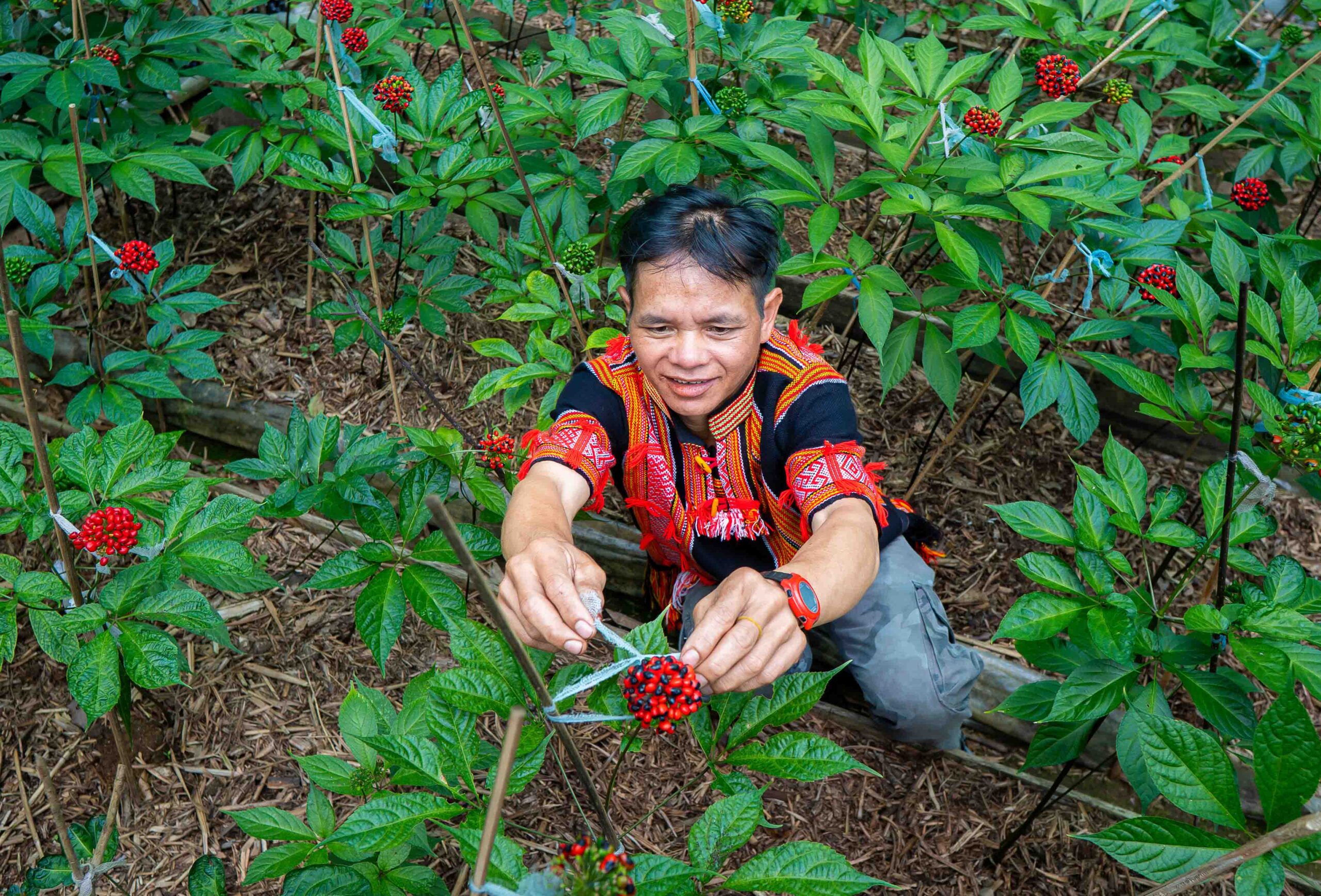
Photo: Huynh Van Truyen
The ginseng-growing region is currently concentrated mainly in Tra Linh, Tra Tap, Nam Tra My and Tra Leng communes. Located at the foot of the majestic Ngoc Linh massif, whose highest peak reaches 2,598 metres and is known as the “roof of Central Vietnam”, the area enjoys a cool and humid climate throughout the year. Its loose, humus-rich old-growth forest soil and multi-layered ecosystem create exceptional conditions for Ngoc Linh ginseng to grow beneath the canopy of the primeval forest.
A journey to the Ngoc Linh ginseng region is about much more than discovering a precious medicinal plant. It is also an opportunity to step into the lives of the Xo Dang, Ca Dong, Bh’noong and Cor communities; listen to stories of the mountains and forests; explore traditional rituals and highland cuisine; and admire pristine landscapes stretching from the Tak Ngo ginseng garden and the cloud-hunting destination of Tak Po to Nam Tang Waterfall and the Song Tranh hydropower reservoir.
The Ginseng Capital and Vietnam’s National Treasure
Ngoc Linh ginseng grows naturally across the Ngoc Linh massif, part of the Truong Son mountain range. Unlike the vast medicinal herb fields that many people might imagine, the ginseng is cultivated beneath the forest canopy, amid layers of fallen leaves, humus-rich soil and dense vegetation.
According to the experience of local communities, the plant thrives in high-altitude areas with a cool climate, high humidity, well-drained soil and the protection of the forest canopy. For this reason, preserving Ngoc Linh ginseng has always been closely linked to protecting forests, water sources and the balance of the ecosystem.
In this environment, the forest does more than provide shade for the ginseng. It supplies water, protects the soil, regulates the climate and supports many indigenous medicinal plants, including codonopsis, gynostemma, angelica, jewel orchids and Paris polyphylla. Each ginseng garden can therefore be viewed as part of a living forest ecosystem in which medicinal plants, nature and people coexist in a close and enduring relationship.
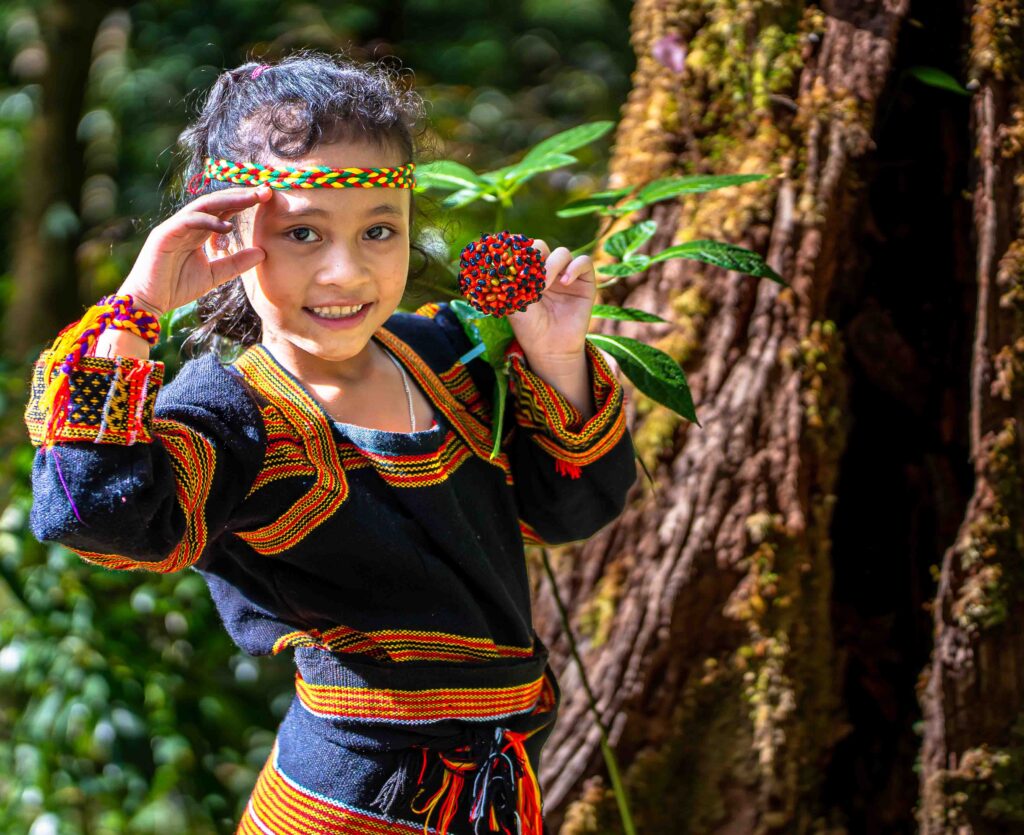
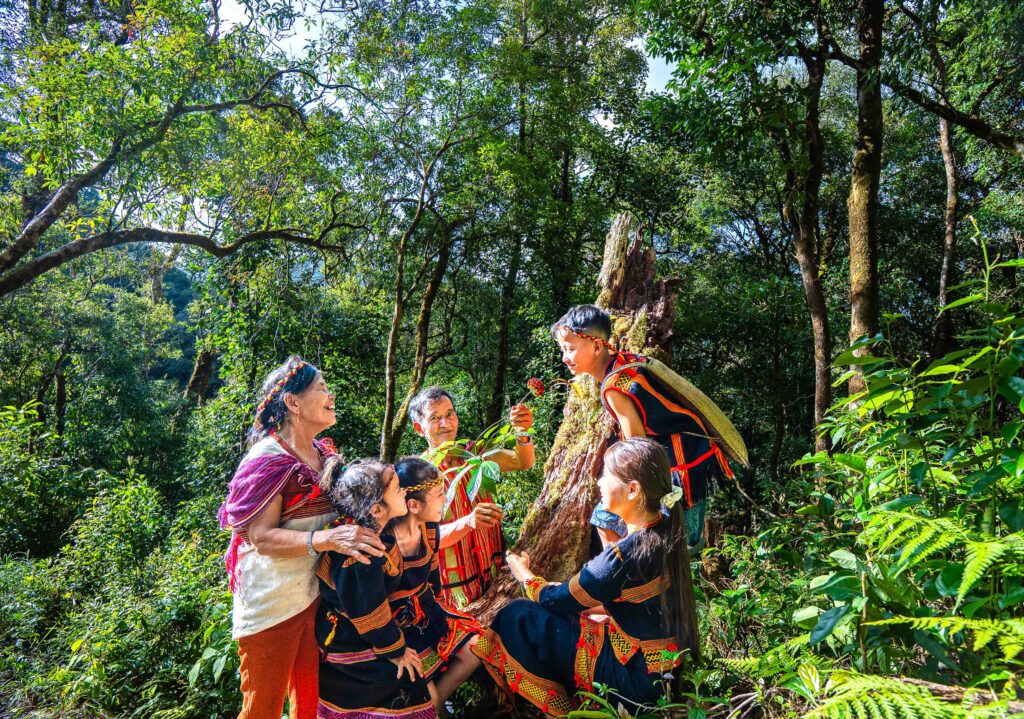
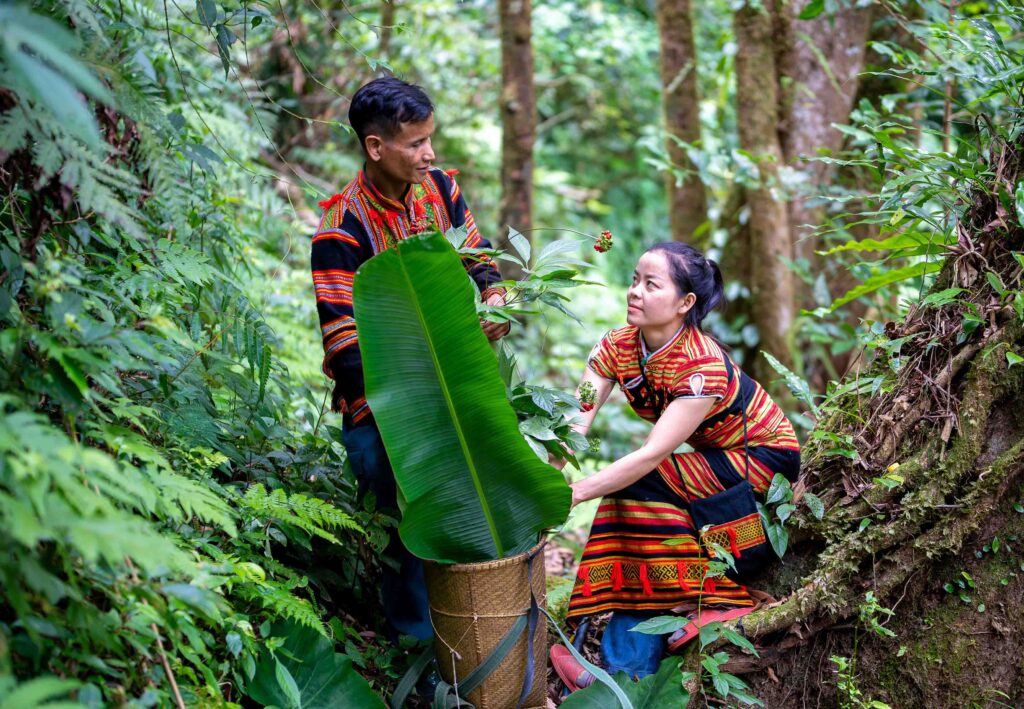
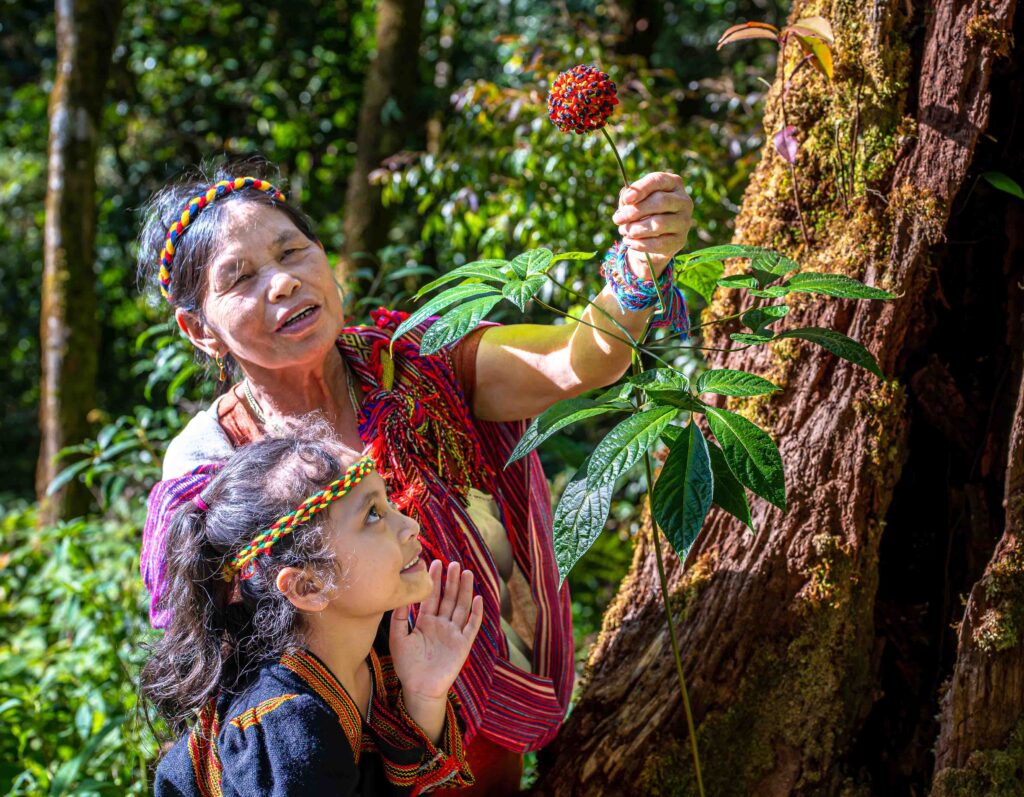
Photo: Huynh Van Truyen
For the Xo Dang people, Ngoc Linh ginseng has long been regarded as a treasure of the mountains and forests. Local communities refer to it by names such as “cu ngai rom con” and “thuoc giau”, suggesting a precious medicinal plant protected as a community secret. Knowledge of identifying the plant, selecting suitable soil, collecting seeds, raising seedlings, planting, caring for, protecting and using ginseng has traditionally been passed down through observation, practice and oral storytelling between generations.
Knowledge of Ngoc Linh Ginseng – A Living Heritage amid the Great Forest
On May 14, 2025, the Ministry of Culture, Sports and Tourism included the Folk Knowledge of Ngoc Linh Ginseng in the National Intangible Cultural Heritage List under Decision No. 1355/QD-BVHTTDL.
This heritage encompasses far more than techniques for growing and caring for ginseng. It is a comprehensive system of knowledge developed through generations of observing and adapting to the mountainous forest environment. It includes recognising terrain, humidity and soil conditions; selecting growing areas; protecting the plants from frost, hail and pests; harvesting them at the right time; and appropriately processing and using ginseng products.
The plant is also surrounded by stories passed down through generations, customary community laws and beliefs in the deities who protect the forests and mountains. Rituals such as the Ginseng Deity Worship Ceremony, mountain deity worship and other community practices express gratitude to nature while reminding people of their responsibility to protect the forest and its precious medicinal resources.
The recognition of folk knowledge related to Ngoc Linh ginseng as a National Intangible Cultural Heritage affirms the cultural and historical value and community identity of the region. It also provides a foundation for traditional knowledge to continue being passed down and combined with science and technology to conserve genetic resources, improve local livelihoods and develop the ginseng region sustainably.
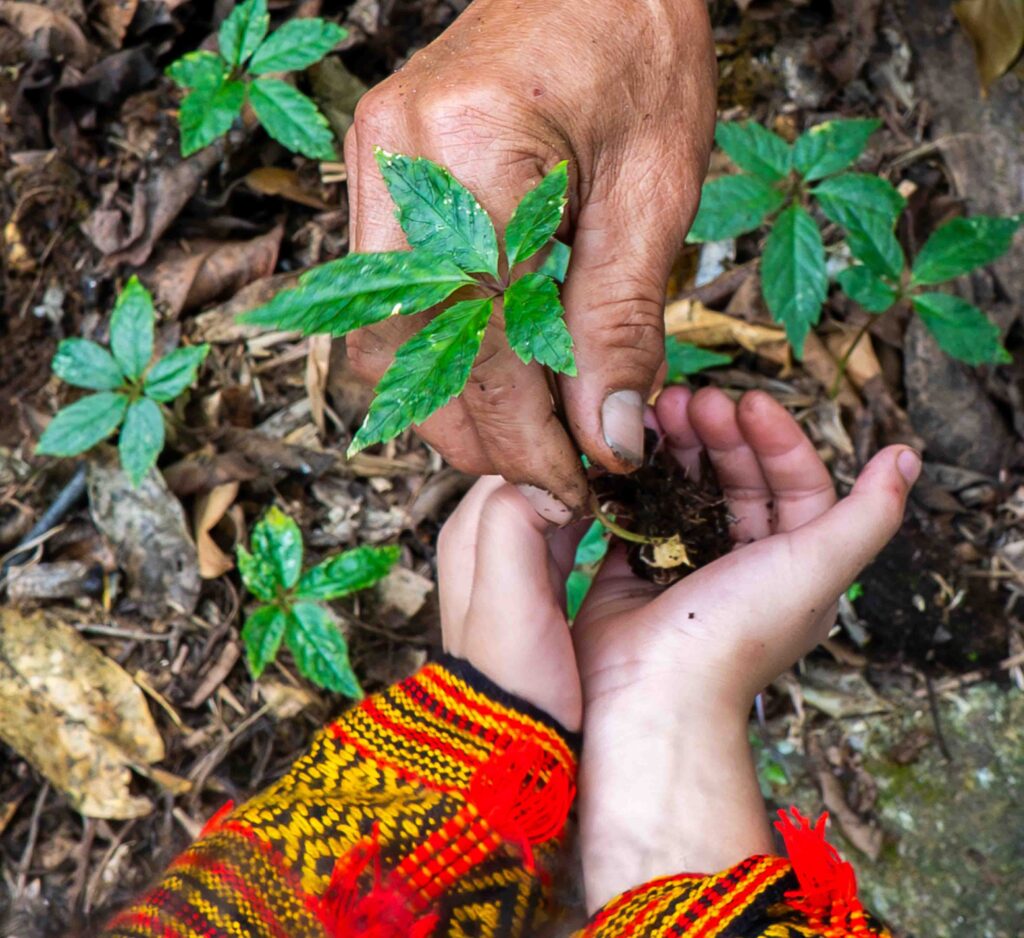
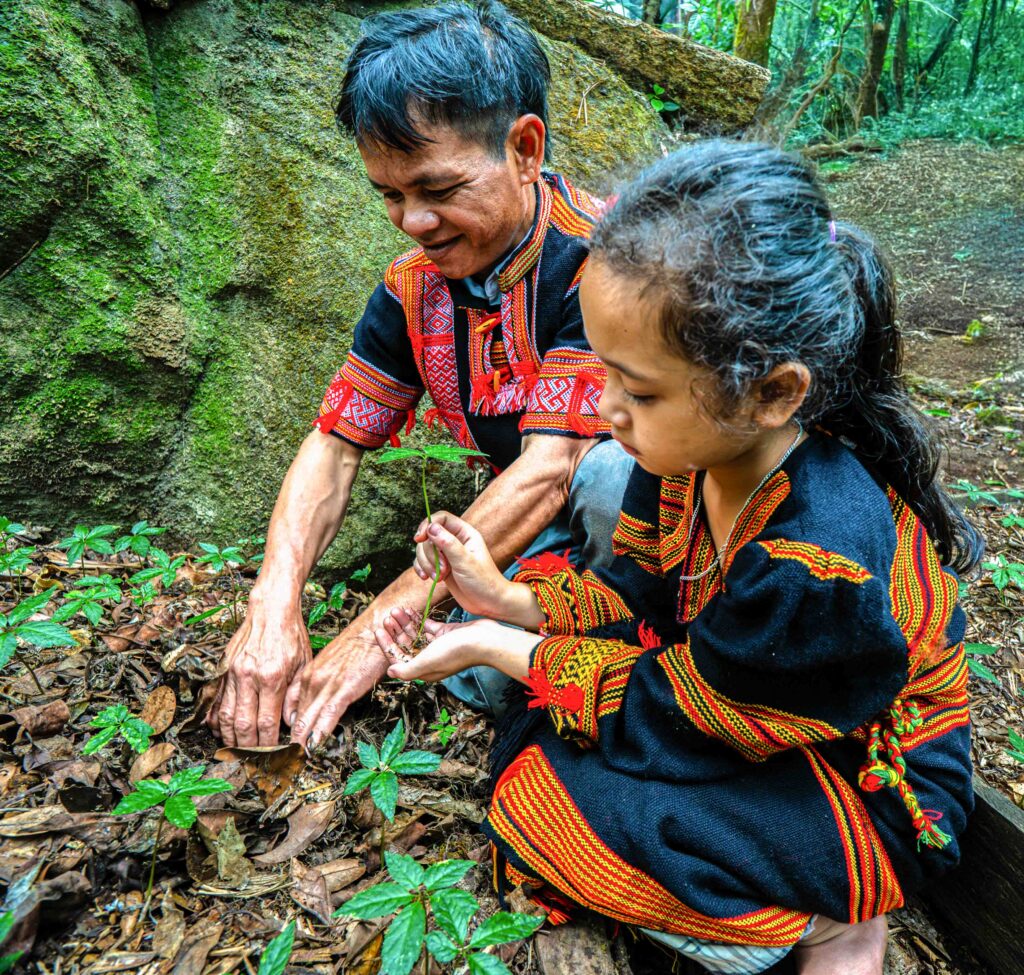
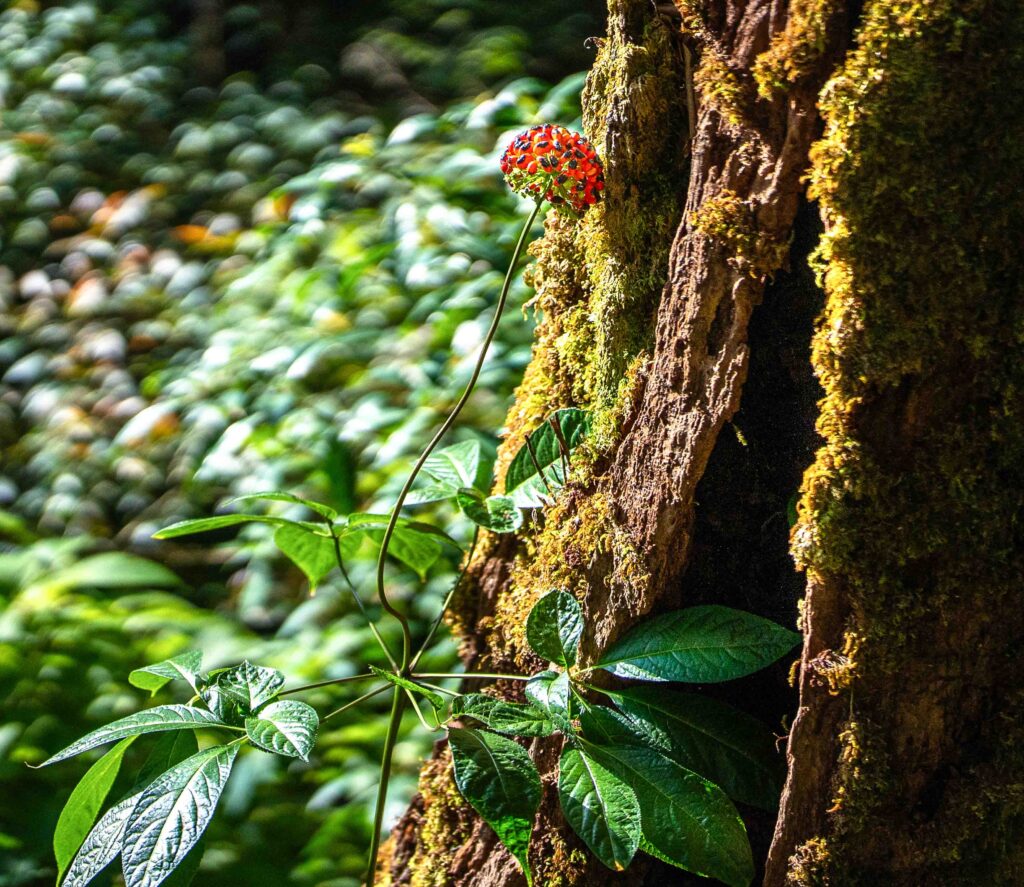
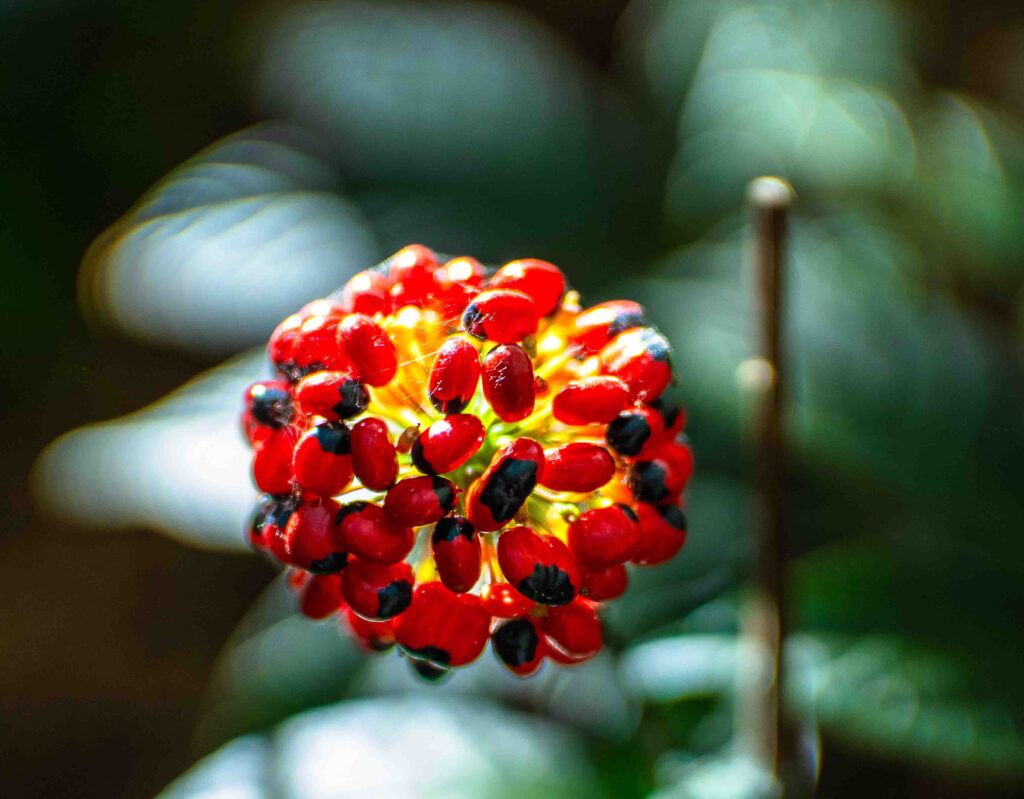
Photo: Huynh Van Truyen
Experiences Not to Be Missed
Explore Ginseng Gardens beneath the Forest Canopy
The Ngoc Linh – Tak Ngo Ginseng Garden in Tra Linh Commune is one of the region’s most representative destinations. The journey to the garden takes visitors along winding mountain roads, through ancient forests, across streams and along mist-covered trails.
Subject to approval from the garden’s management authority, visitors may follow local guides into designated areas, learn to recognise the leaves, stems and fruits of the ginseng plant, and discover how seeds are germinated, young plants are cared for and the gardens are protected. The most memorable part of the experience is not simply seeing Ngoc Linh ginseng in person, but understanding why such a small plant requires an entire forest ecosystem in which to grow.
In Tra Tap Commune, visitors can trek through the forest, visit ginseng gardens and learn about the cultivation, care and harvesting of Ngoc Linh ginseng. The journey also offers opportunities to enjoy local cuisine, interact with the Ca Dong and Xo Dang communities, and experience the pristine mountain landscape.
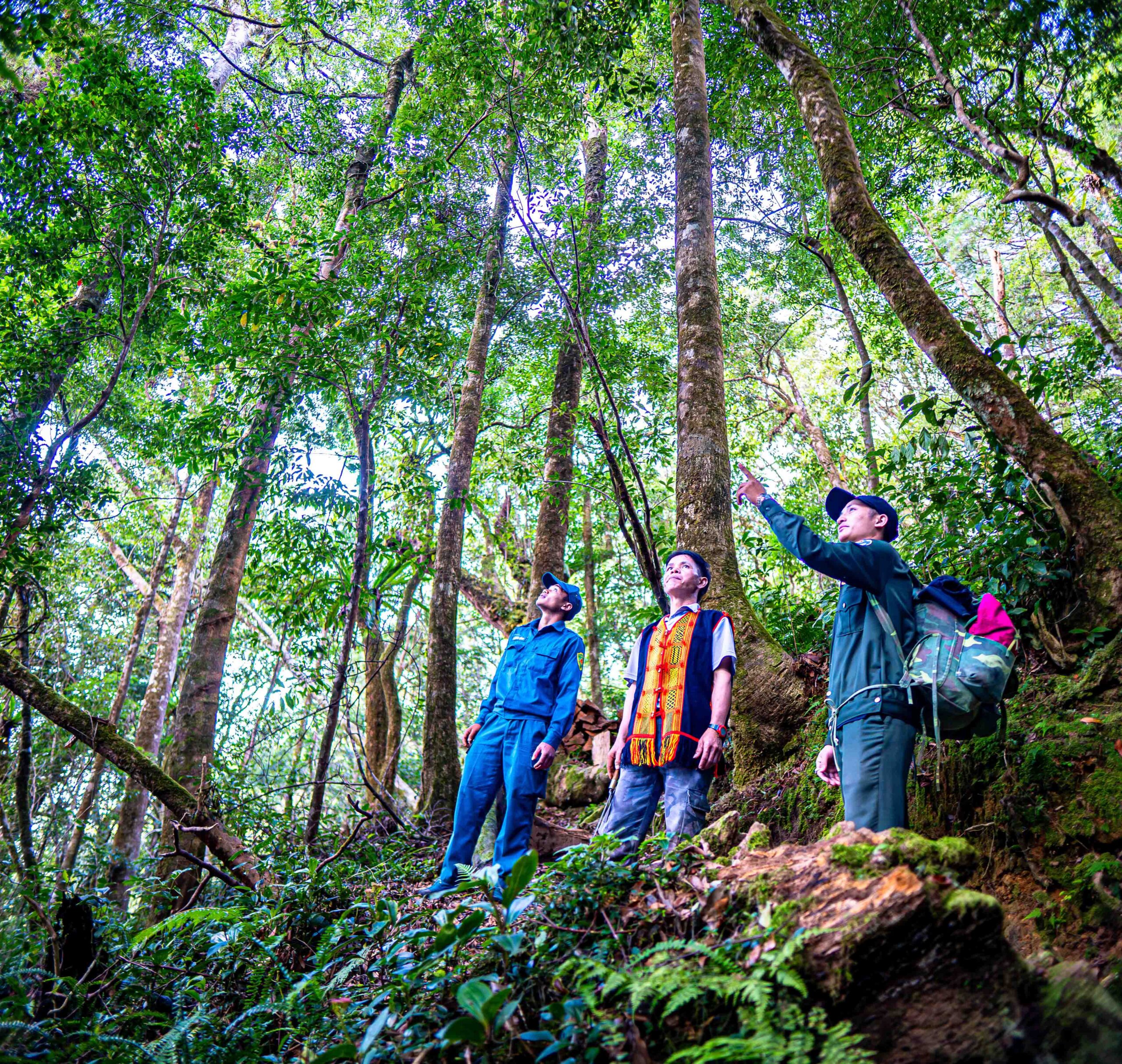
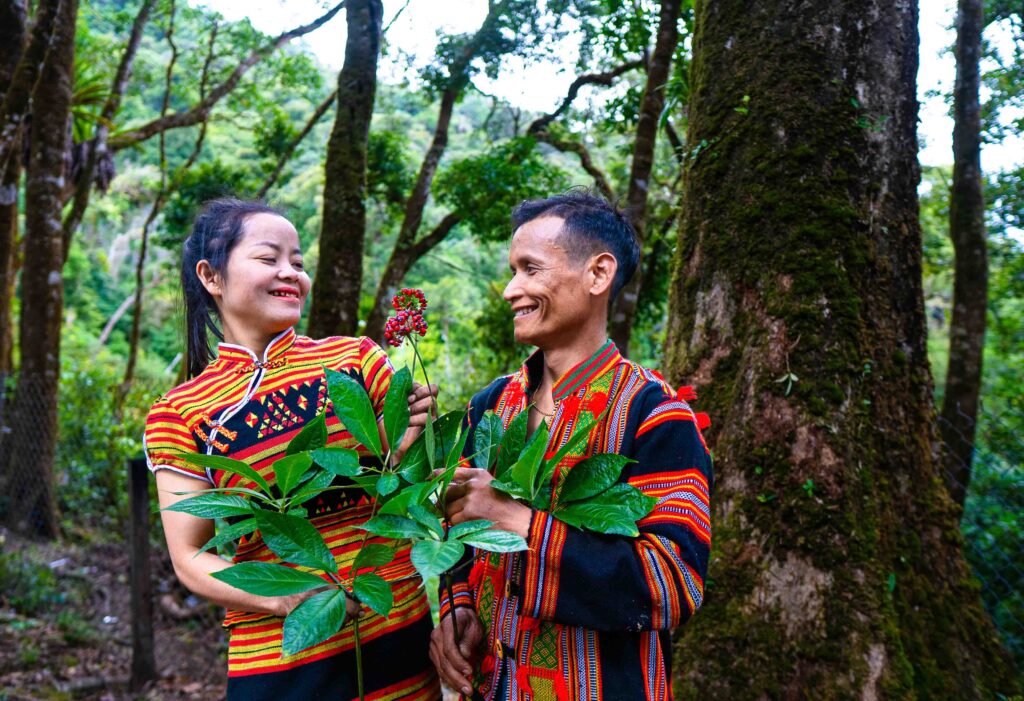
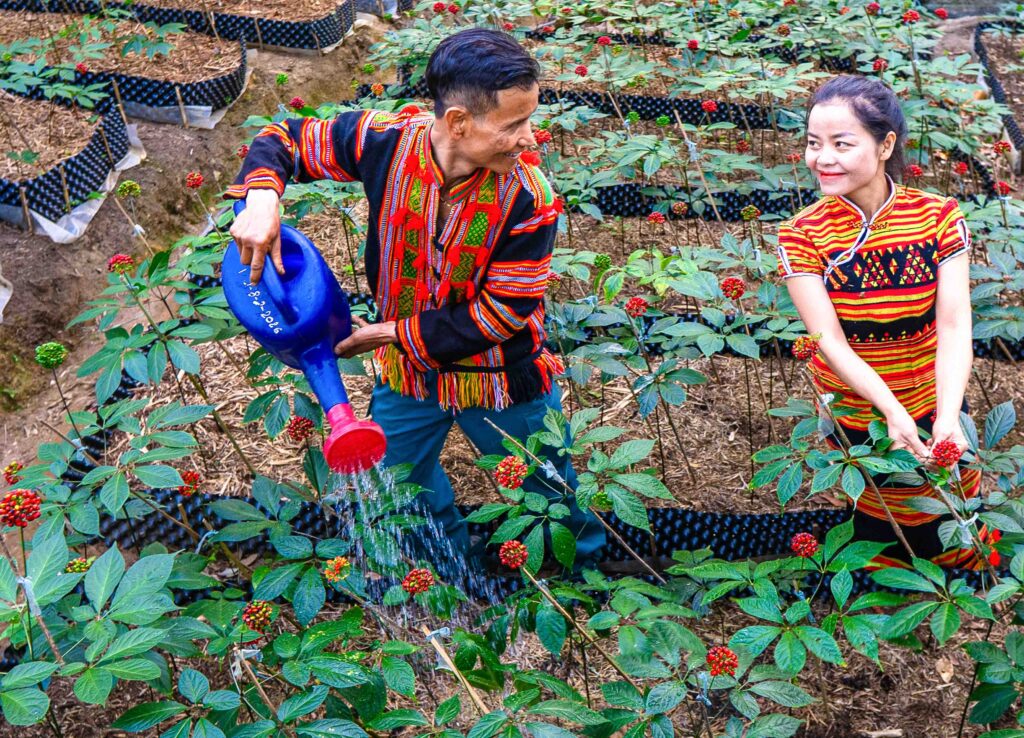
Photo: Huynh Van Truyen
Ginseng gardens are production and research areas where highly valuable medicinal resources are protected. They are not freely accessible tourist attractions. Visitors should register in advance through the local authorities, the garden management unit or a tour operator offering an approved programme.
Visit the Ginseng Deity Temple
The Ginseng Deity Temple in Tra Linh Commune provides an insight into the spiritual depth of the ginseng region. It is where the community expresses gratitude to the mountains and forests and prays for the healthy growth of the ginseng plants, good health for the people and peaceful harvests.
Visitors should dress respectfully, speak quietly and follow the instructions of the temple’s caretakers. The experience becomes even more meaningful when village elders or local residents share stories about the origins of the ginseng plant, traditions passed down through generations and the relationship between spiritual beliefs and forest conservation.
Attend the Ginseng Deity Worship Ceremony
The Ginseng Deity Worship Ceremony is one of the most distinctive cultural practices in the Ngoc Linh ginseng region. It is usually performed by the Xo Dang community on important occasions and expresses reverence for the mountain and forest deities, as well as for the plant regarded as a treasure of the great forest.
The ritual commonly involves village elders, artisans and members of the local community, accompanied by gongs, traditional costumes and symbolic offerings. Visitors should observe respectfully and should not enter the ceremonial area or take close-up photographs without permission.
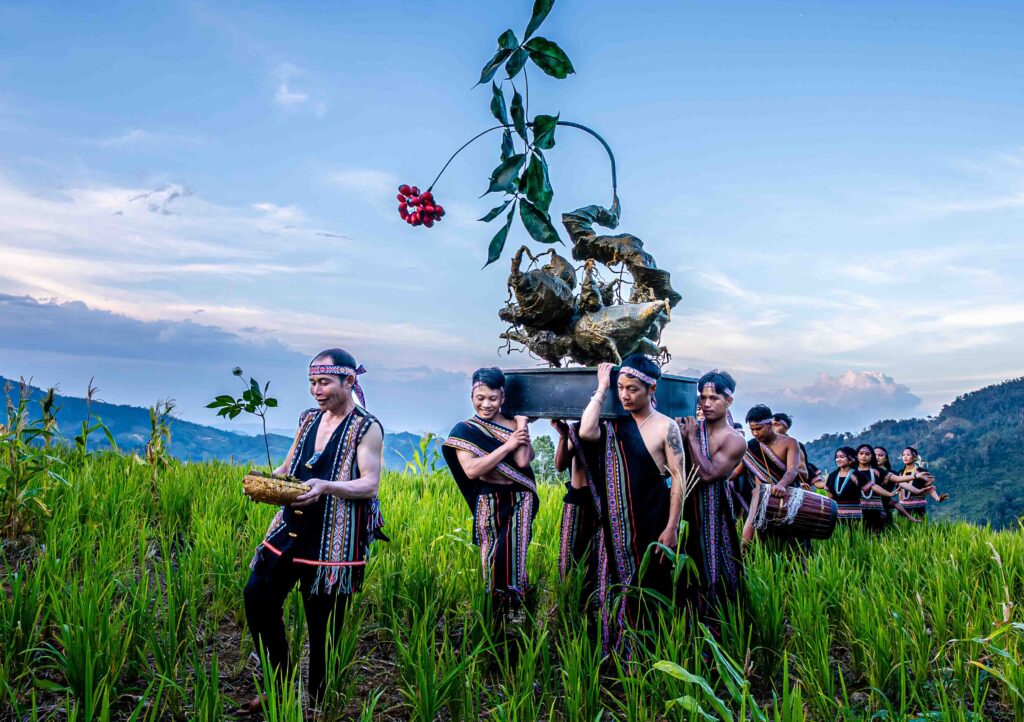
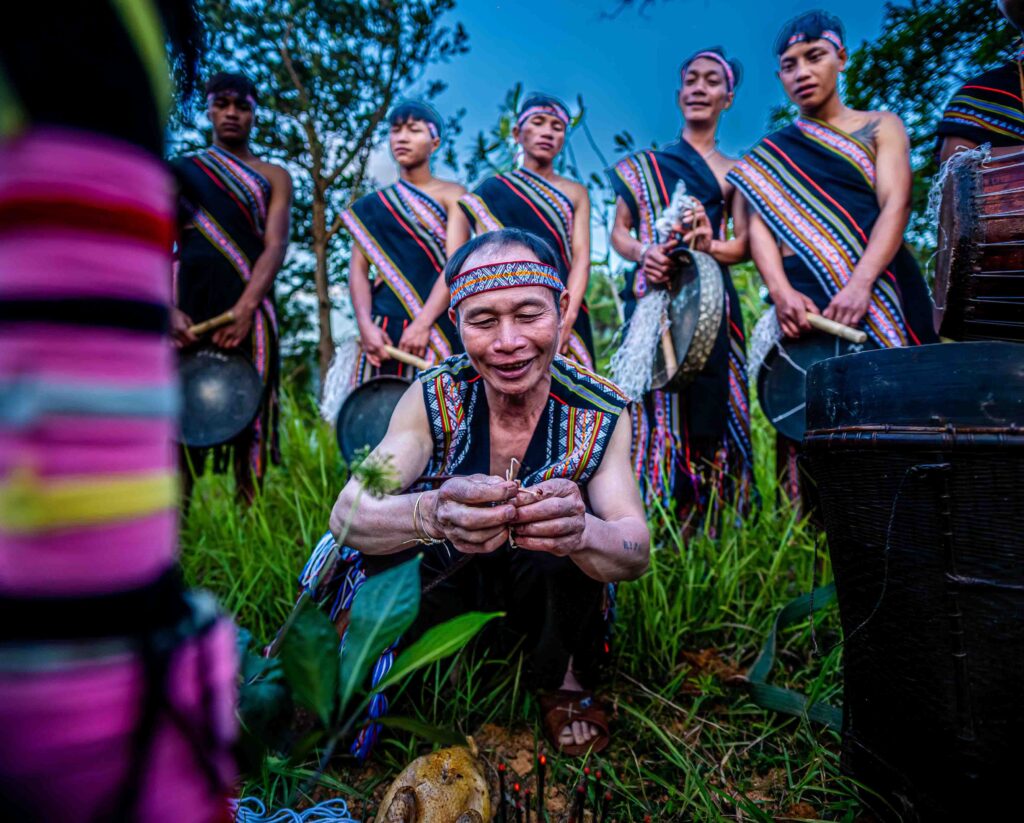
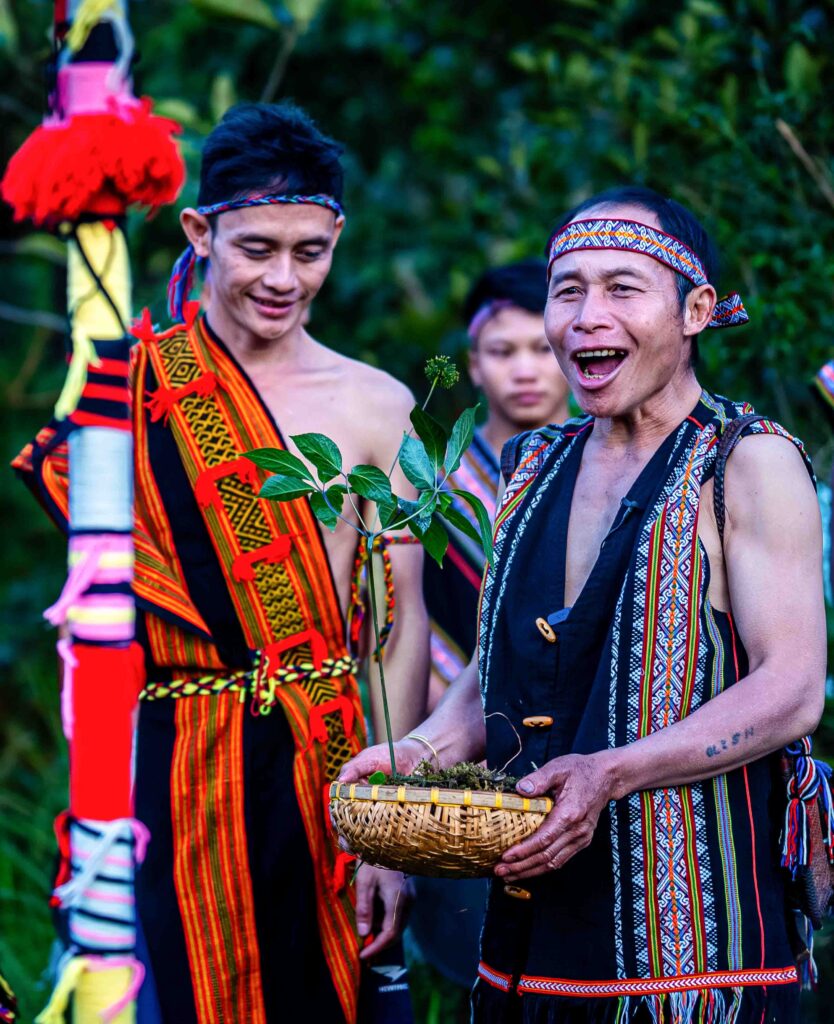
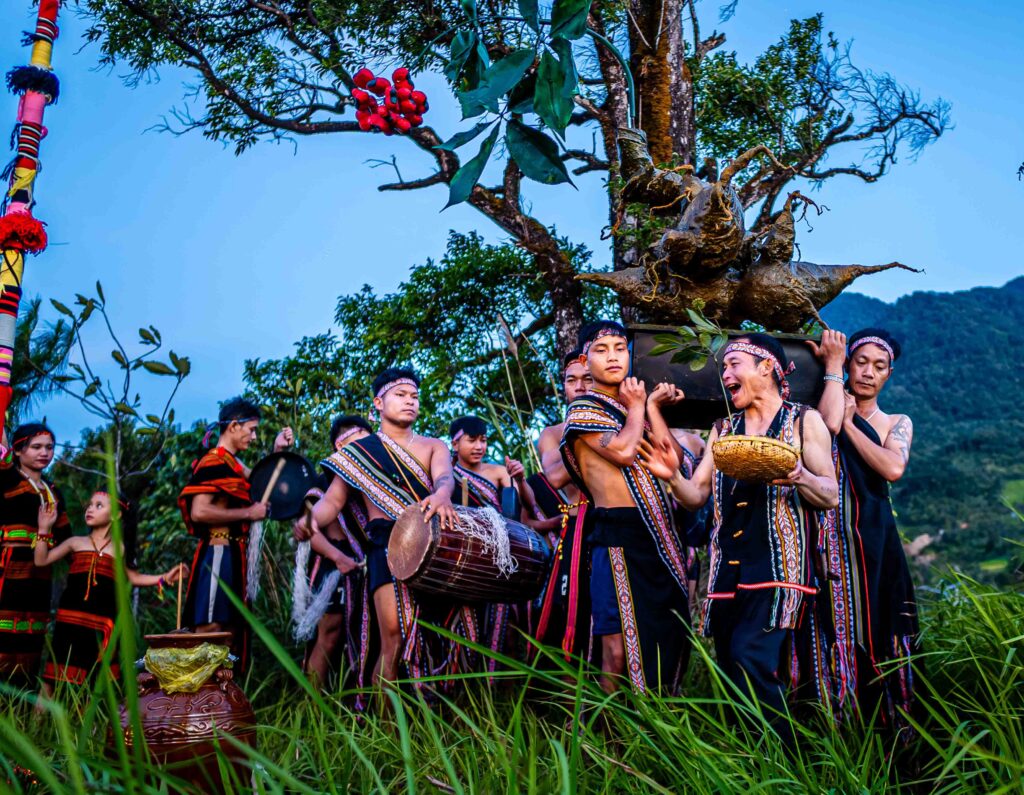
Photo: Huynh Van Truyen
Explore a Highland Market
The Tra Linh Market is held on the Saturday and Sunday of the first week of each month at Konpin Cultural House in Hamlet 2, Tra Linh Commune. Local residents bring Ngoc Linh ginseng, medicinal herbs, agricultural produce, handicrafts and distinctive highland dishes to the market.
While exploring the market, visitors can learn about indigenous medicinal plants, sample traditional cuisine, interact with members of the Xo Dang community and choose clearly sourced local products as gifts.
The market schedule and location may be adjusted from time to time. Visitors should check the latest information before travelling, particularly when planning to combine the market with a visit to a ginseng garden.
Immerse Yourself in the Ngoc Linh Ginseng Festival
August is a particularly lively time in the ginseng region, with activities celebrating Ngoc Linh ginseng and medicinal herbs. The festival usually combines traditional rituals, ginseng competitions, product displays, medicinal herb markets, cultural performances, highland cuisine and hands-on experiences.
For visitors, it is an ideal opportunity to learn about Ngoc Linh ginseng in a concentrated setting, meet ginseng growers, explore medicinal herb products and enjoy a wide range of distinctive cultural programmes.
Trek through the Primeval Forest
The routes leading into the ginseng region pass through dense forests, mountain slopes, streams and layers of vegetation that change with altitude. Mist often drifts between the trees, creating the mystical scenery characteristic of the Ngoc Linh mountains.
Depending on the programme, visitors can choose a short trek to a ginseng garden or a longer journey combining villages, waterfalls and primeval forest areas. Trekking here requires a local guide, as the terrain can be slippery and steep, while weather conditions may change rapidly.
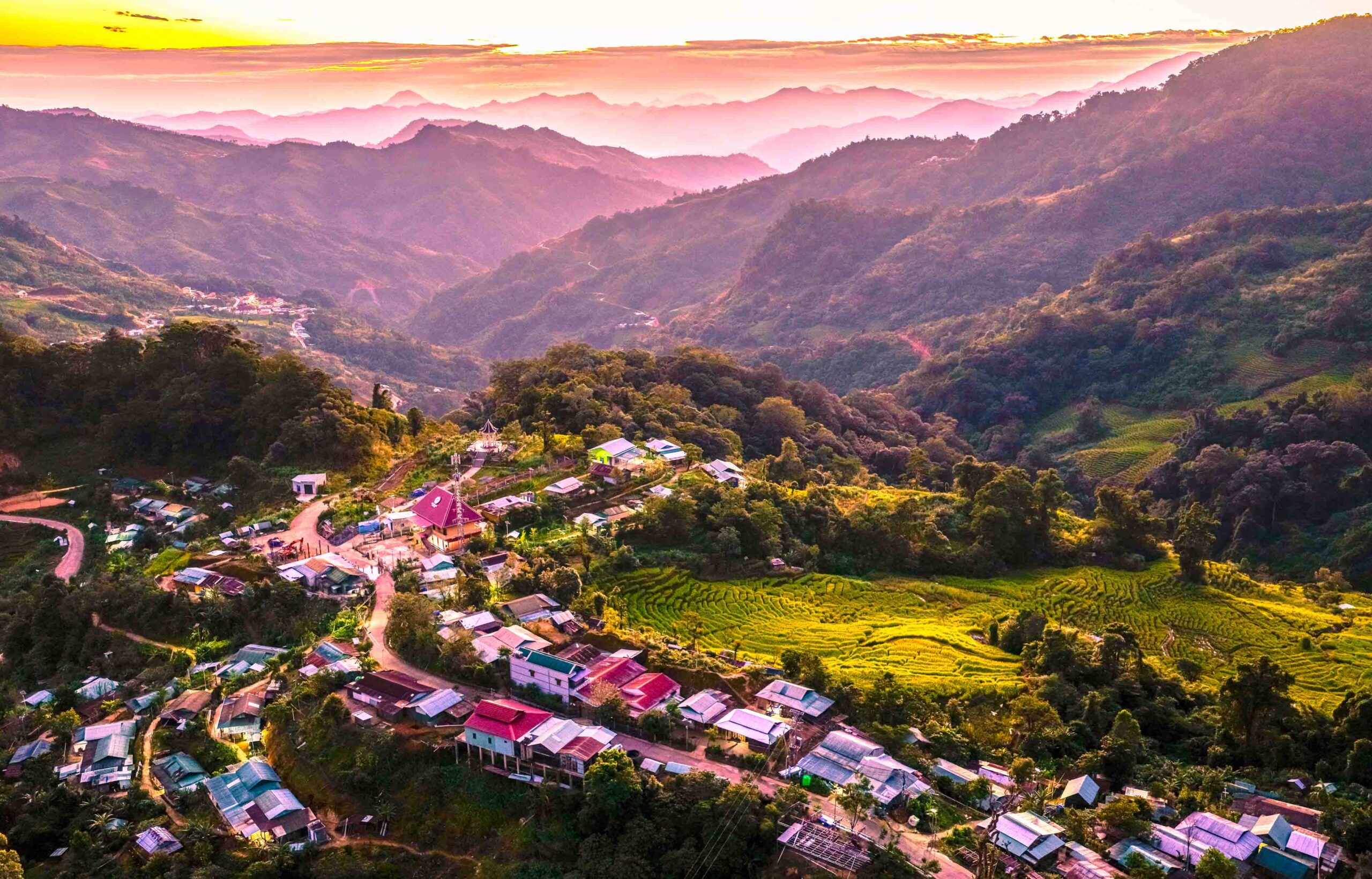
Photo: Huynh Van Truyen
Hunt for Clouds at Tak Po
Tak Po in Tra Tap Commune is a highlight of any journey through the ginseng region. The village lies among high mountain slopes, where clouds rising from the valleys in the early morning can form soft white layers around the mountainsides.
Visitors should arrive in Tak Po the previous afternoon, stay overnight at a homestay, wooden lodge or community accommodation, and wake before sunrise to wait for the clouds. Evenings can be spent enjoying simple experiences such as drinking herbal tea, talking with local residents, listening to the wind across the mountains and learning about Ca Dong culture.
The chances of seeing a sea of clouds are generally higher between March and August, although conditions still depend on daily rainfall, humidity, wind and temperature. There is no time when a sea of clouds can be guaranteed.
Nam Tang Waterfall and the Song Tranh Reservoir
Nam Tang, or Five-Tier, Waterfall in Nam Tra My Commune is a suitable stop to include in a journey through the ginseng region. Water cascades over several tiers of rock amid the mountain forest, creating an expansive landscape that is particularly impressive after periods of rain, when the water flow is stronger.
Along the mountain route, visitors can also admire the scenery of the Song Tranh hydropower reservoir. Its broad waters stretch between mountain ranges, creating a tranquil contrast to the deep forest roads. Visitors should stop only at safe locations with suitable parking and must not enter operational areas of the hydropower facility.
Connect with Highland Cultural Life
The Ngoc Linh ginseng region has long been home to the Xo Dang, Ca Dong, Bh’noong and Cor communities. Here, visitors may encounter houses nestled at the foot of the mountains, fires burning in the centre of family homes, the sound of gongs during community occasions and stories of the forest passed from village elders to younger generations.
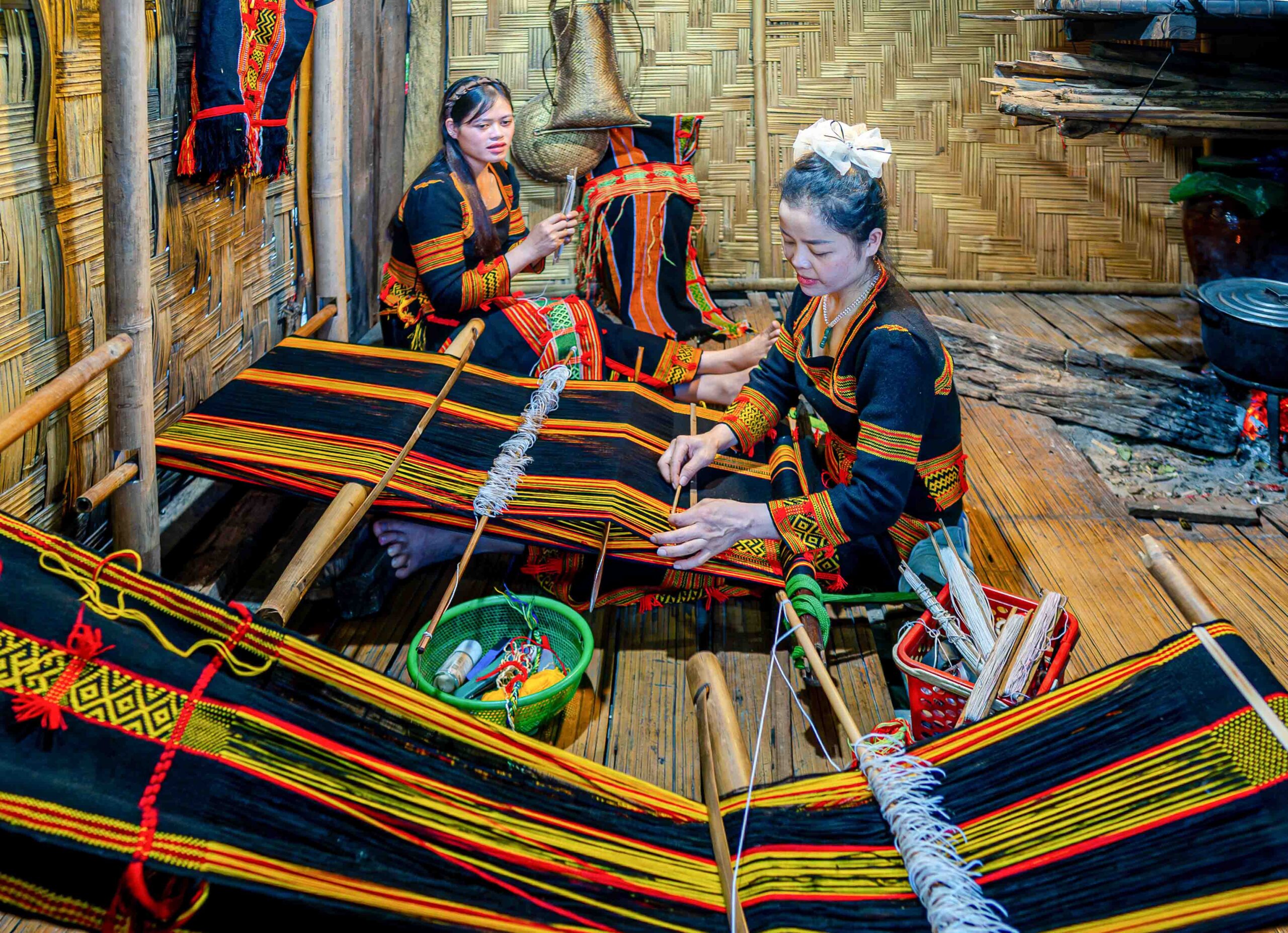
Photo: Huynh Van Truyen
In the Son–Ngoc–Que highland area covering Tra Lien, Tra Giap and Tra My communes, Cor culture is expressed through the ceremonial erection of the Neu pole, the Gu ensemble, Ca Dao dances and gong-duelling performances. The Cor people’s performance practices involving the Neu pole and Gu ensemble have been recognised as a National Intangible Cultural Heritage.
Muong Village in Tra My Commune is home to Muong families who migrated from Hoa Binh to the area in 1985 and 1986. In this rural village at the foot of Hon Ba Mountain, visitors can explore stilt houses and orchards, learn about the production of traditional jar wine and bamboo and rattan weaving, and participate in bamboo dancing, ball throwing and gong exchanges.
Nearby, Cao Son Village is a long-established settlement of the Ca Dong community. Located in a valley with natural streams and rocky areas, the village is suitable for combining landscape exploration with insights into local life and a meal shared with residents.
Cultural activities in the villages are generally organised by appointment or as part of community programmes and may not take place regularly. Visitors should register in advance and prioritise experiences directly guided and organised by local residents.
Taste the Flavours of the Great Forest
Cuisine in the ginseng region draws heavily on ingredients from upland fields, household gardens, streams and forests. Meals are generally simple rather than elaborate, but stand out for the freshness of their ingredients, rustic preparation and flavours closely connected with local life.
Visitors can order dishes in advance, including bamboo-tube rice, grilled free-range chicken, local pork, stream fish, bamboo shoots, forest vegetables, wild bananas and soups prepared with local greens or medicinal herbs. Some experience programmes also introduce fish wrapped in ginseng leaves, ginseng leaf tea and dishes incorporating ingredients from the ginseng plant.
Ginseng and ginseng-based products should be consumed in accordance with each person’s physical condition. Visitors with underlying health conditions, those taking medication, pregnant women and young children should seek professional advice before consuming concentrated herbal products.
Suitable gifts to take home include Tra My cinnamon, herbal teas, codonopsis, gynostemma, honey, highland agricultural products and processed products made from Ngoc Linh ginseng.
Suggested Two-Day, One-Night Itinerary
Day 1: Nam Tra My – Ginseng Deity Temple – Ginseng Garden – Tak Po
In the morning, visitors arrive in the Nam Tra My area, meet a local guide and continue to the Ginseng Deity Temple. After visiting the temple, the group follows an authorised walking route to explore a ginseng garden and learn about the forest ecosystem and the process of caring for the plants.
Lunch features local dishes served in a village or near the ginseng garden. In the afternoon, visitors travel to Tak Po, check in and explore the scenery surrounding the village.
In the evening, enjoy a highland meal, interact with local residents and listen to stories about Ngoc Linh ginseng and the cultures of the Ca Dong and Xo Dang communities. Stay overnight in Tak Po.
Day 2: Cloud Hunting in Tak Po – Highland Market or Nam Tang Waterfall
Wake before sunrise to hunt for clouds and admire the mountain scenery. After breakfast, visitors can explore the Tra Linh Market when their trip coincides with the market schedule, or continue to Nam Tang Waterfall and enjoy views of the Song Tranh reservoir before returning.
Suggested Three-Day, Two-Night Itinerary from Central Da Nang
Day 1: Central Da Nang – southern midland region – Loc Yen Ancient Village or Muong Village – overnight in the Tra My area.
Day 2: Tra My – Tra Linh ginseng region – Ginseng Deity Temple – ginseng garden visit – travel to Tak Po – overnight in the mountains.
Day 3: Cloud hunting in Tak Po – Nam Tang Waterfall or the Song Tranh reservoir – return to central Da Nang.
A three-day, two-night itinerary is more suitable for visitors departing from central Da Nang, as Tra Linh is nearly 210 kilometres southwest of the city’s administrative centre. The journey is long and includes many steep mountain passes, so a same-day return trip is not recommended.
Important Notes for Visiting the Ginseng Region
Visitors should contact the relevant authorities and register for a programme before travelling. Access to each ginseng garden depends on the management unit, production conditions, weather and security requirements applying to the growing area.
Vehicles should be in good technical condition, and drivers familiar with mountain roads are strongly recommended. Visitors should avoid travelling after dark or during heavy rain and dense fog.
Clothing should be lightweight, warm and suitable for outdoor activities. Trekking shoes or sports shoes with good grip, a lightweight raincoat, a hat, insect repellent, drinking water and light snacks are essential.
Do not leave the group, dig the soil, pick leaves, touch ginseng plants or enter unauthorised areas. Professional filming, drone use and other specialised equipment require approval from the management unit.
Respect the community’s spiritual spaces and customs. Ask for permission before photographing residents, rituals, homes or objects with sacred significance.
Do not leave rubbish in the forest. Limit the use of single-use plastics, light fires only in designated areas and do not remove plants, soil, rocks or wildlife from the natural environment.
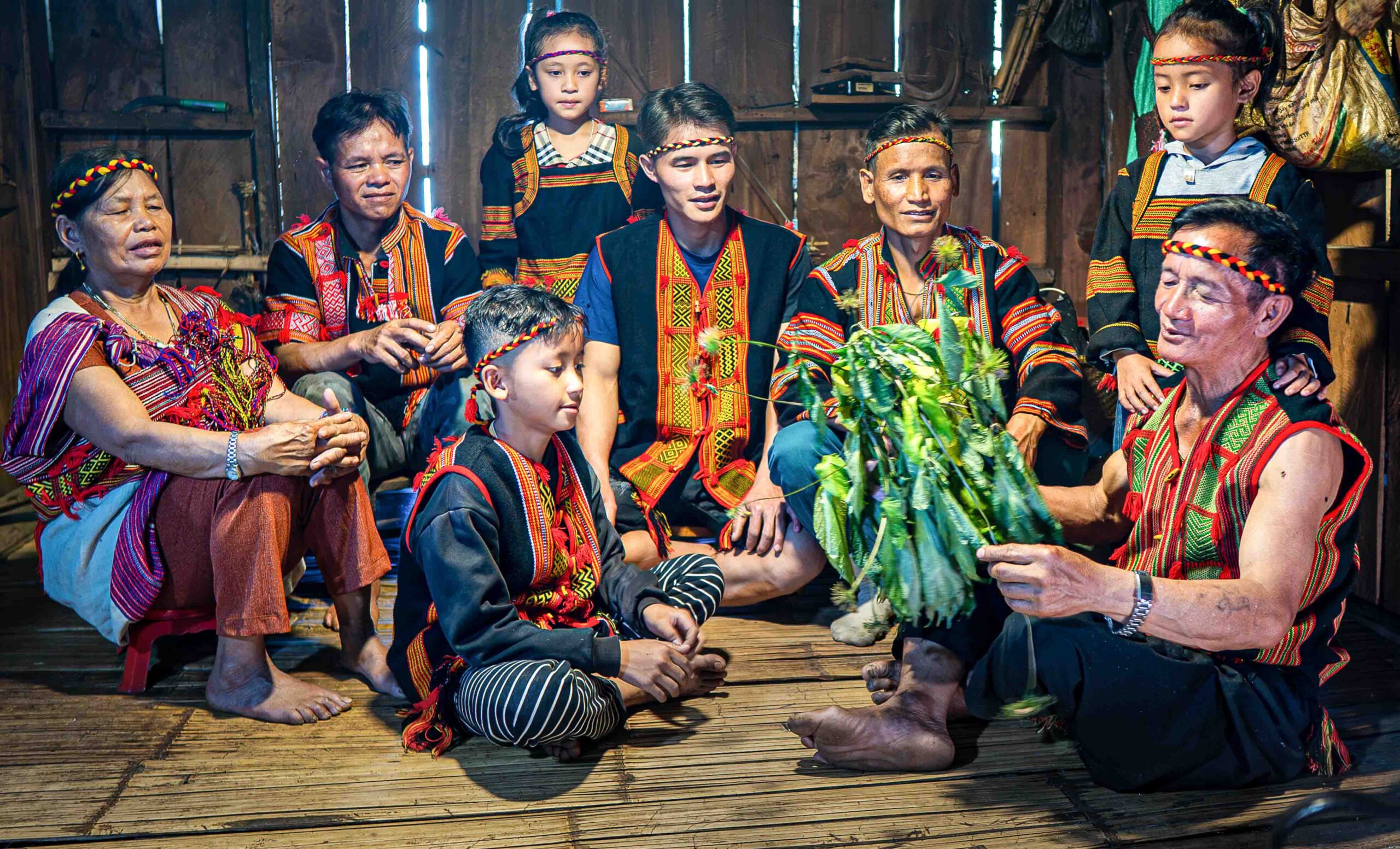
Photo: Huynh Van Truyen
The Ngoc Linh ginseng region is not a destination to be rushed through. In the old-growth forest, each ginseng plant is the result of many years of care; each story holds memories passed down through generations; and each ritual serves as a reminder of gratitude to the land, water, mountains and forests.
A journey to the ginseng region therefore brings visitors closer not only to Vietnam’s “national treasure” but also to an authentic side of Da Nang, where nature, culture and people work together to preserve precious values amid the vast Truong Son mountains.
DA NANG TOURISM PROMOTION CENTER