















Lunar New Year in Da Nang is not only found amid brightly lit city streets or along the lively banks of the Han River. In the western part of the city, among deep green mountains and peaceful Co Tu villages, spring arrives with a very different rhythm – gentle, warm, and truly original.
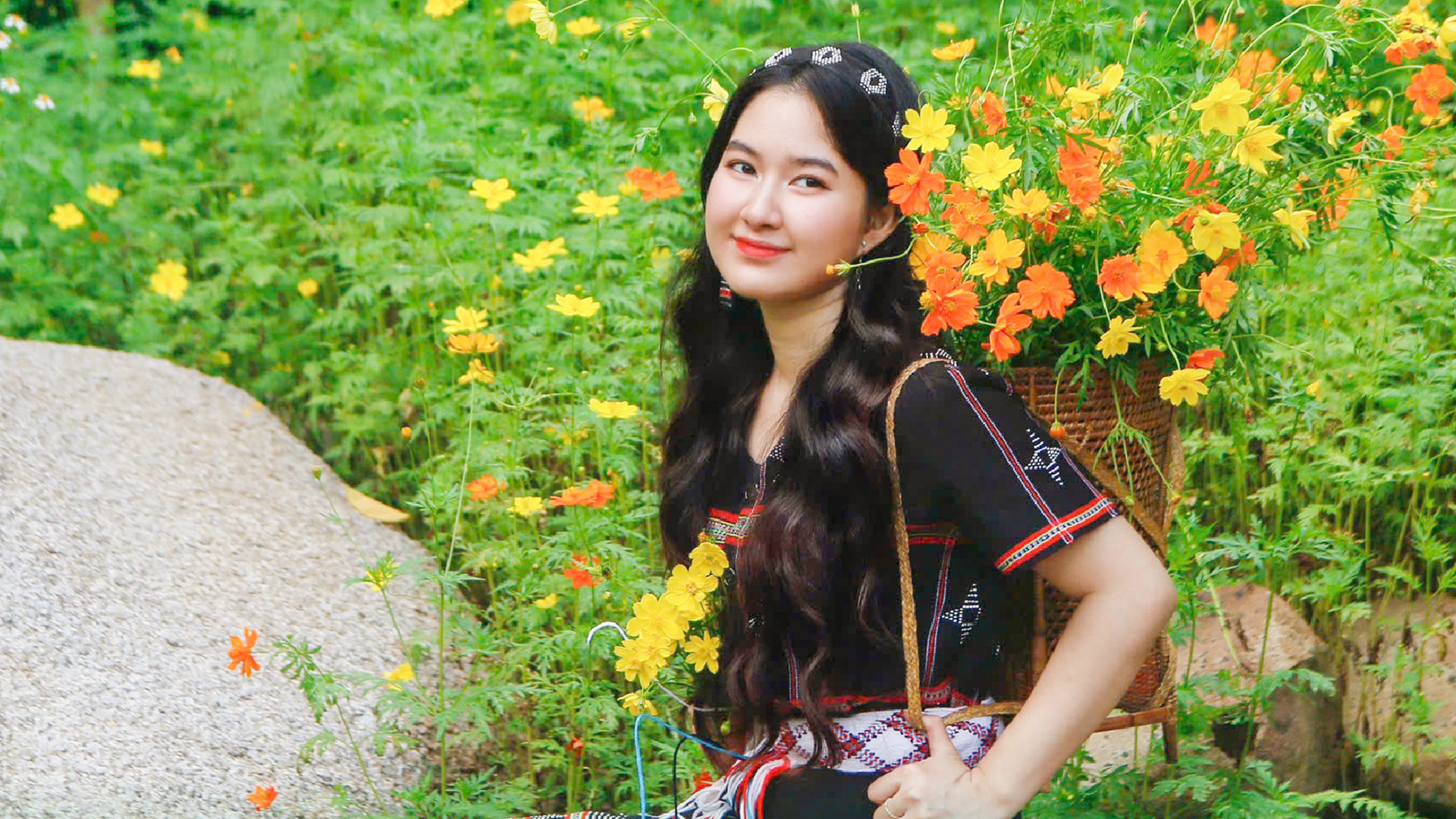
For the Co Tu people, Lunar New Year is not merely the moment marking the turn of the year, but a journey of togetherness – when the entire village celebrates as one, sharing the fruits of a year lived in close harmony with the mountains and forests. It is a distinctly unique way of welcoming Tết, where spring is felt through many senses and lingers as lasting, heartfelt emotions.
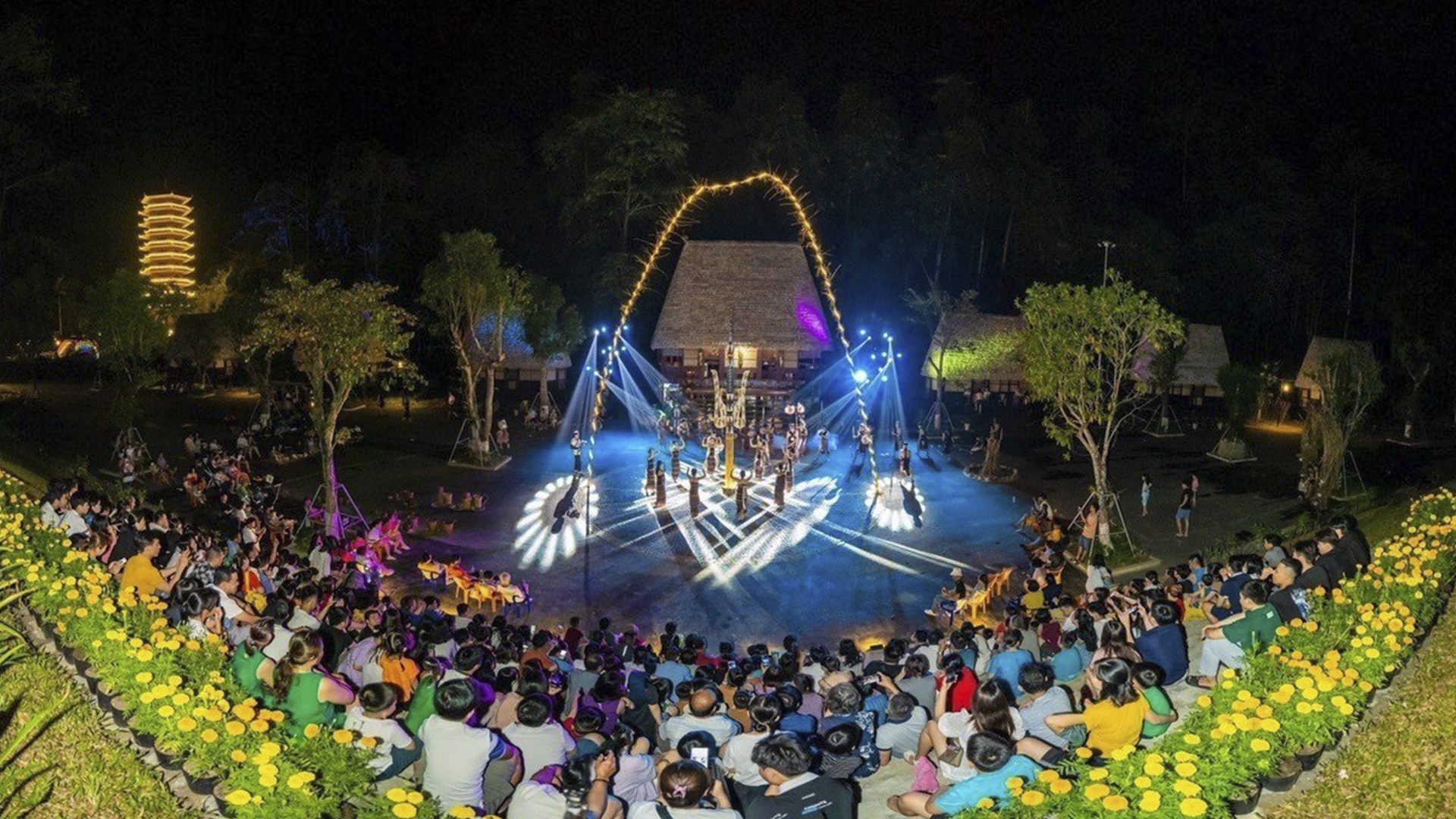
The Co Tu People’s Lunar New Year – When Spring Comes to the Gươl House
Alongside festivals deeply rooted in mountain life, such as the New Rice Festival, Lunar New Year has increasingly become a much-anticipated moment for the Co Tu community. As spring approaches, the festive atmosphere gradually spreads along the mountain paths: village markets grow livelier, voices call out to one another, meat is shared and prepared for New Year’s Eve—carrying with it a uniquely warm sense of reunion.
In the days leading up to Tết, the colors of spring are already present throughout Co Tu villages in the western mountainous areas of Da Nang. Each household busies itself with New Year preparations, yet Tết does not remain within individual homes. Instead, it opens into the shared life of the entire village—where joy is collectively shared and spring is welcomed together.
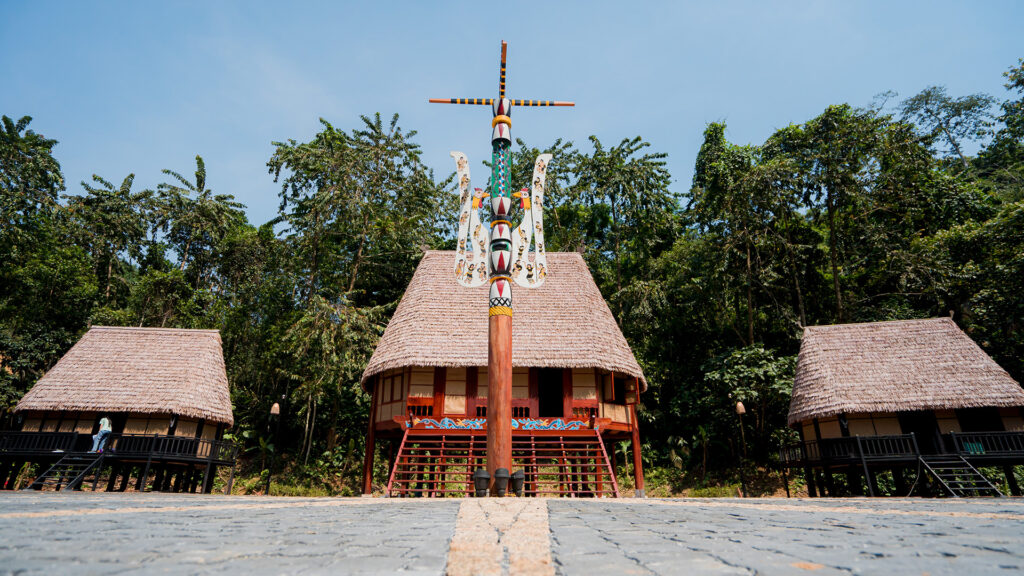
On New Year’s Eve and during the first days of the new year, the Co Tu people hold rituals to worship Giàng, offering thanks to deities and ancestors for protecting the village throughout the past year, and praying for favorable weather, bountiful harvests, and a peaceful life ahead. Amid the soft smoke of cooking fires mingled with the scent of the forest, the whole village gathers around the Gươl house to celebrate Tết together—singing, telling stories of the new year, and sharing the joy of spring’s return.
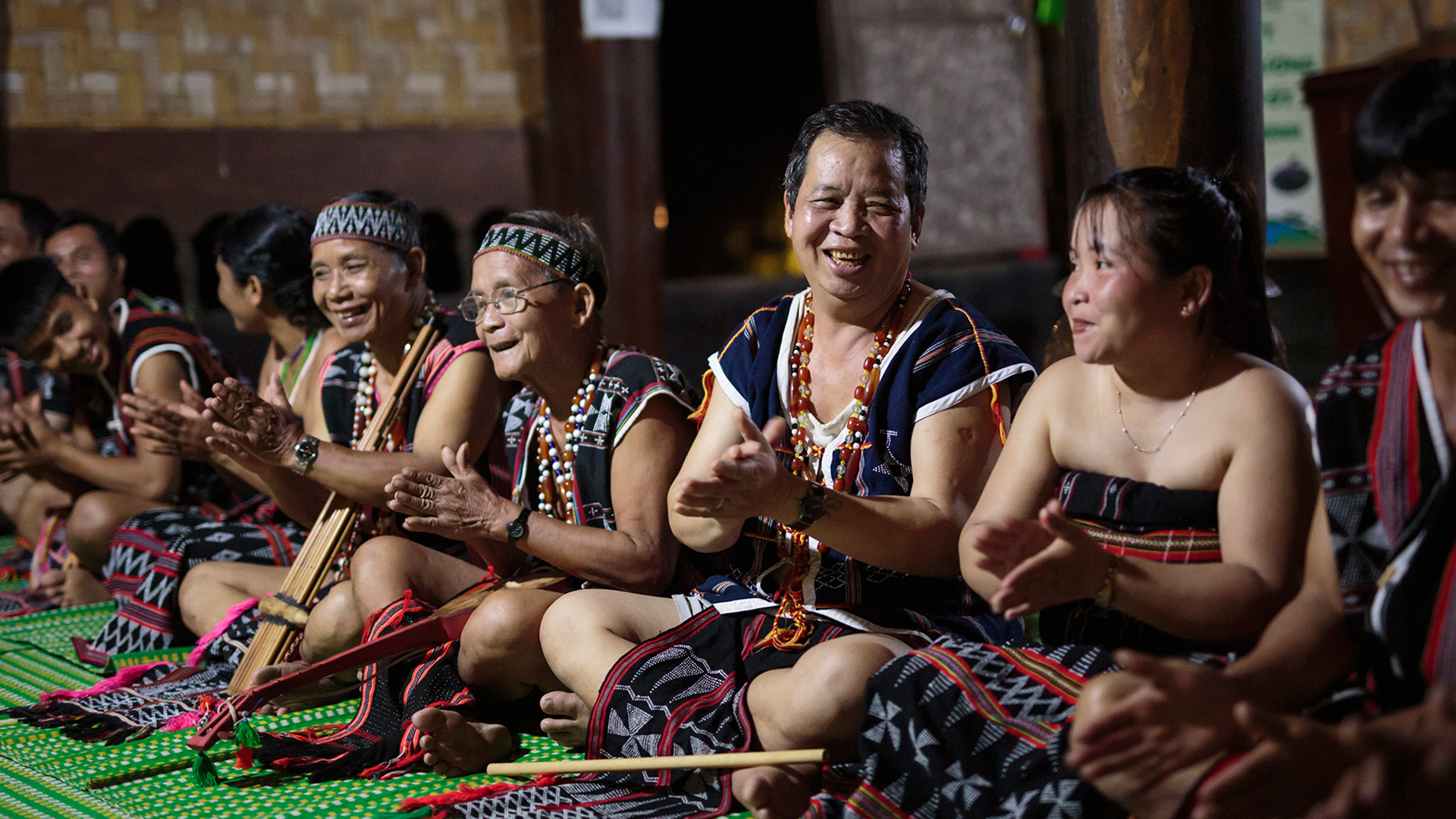
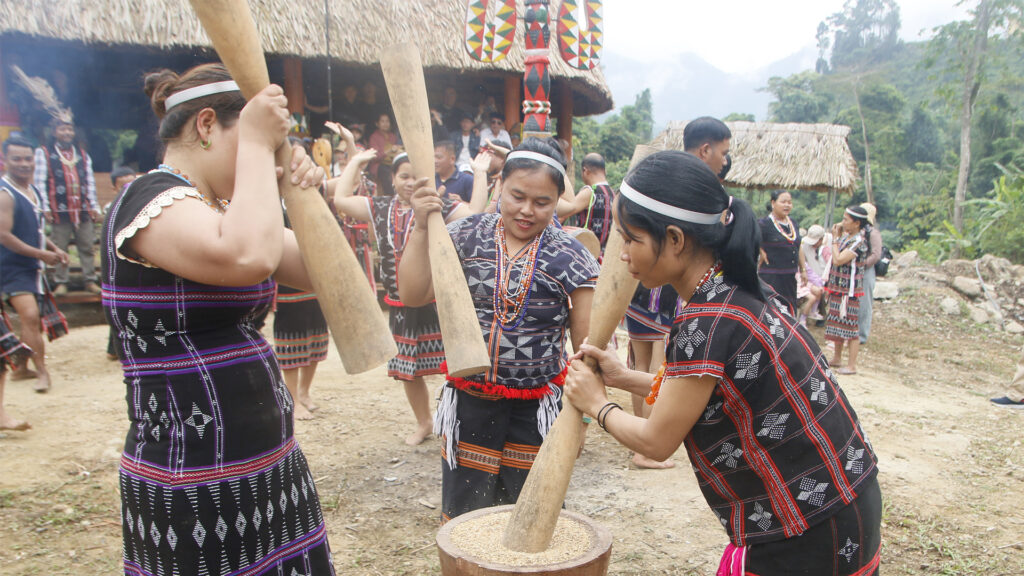
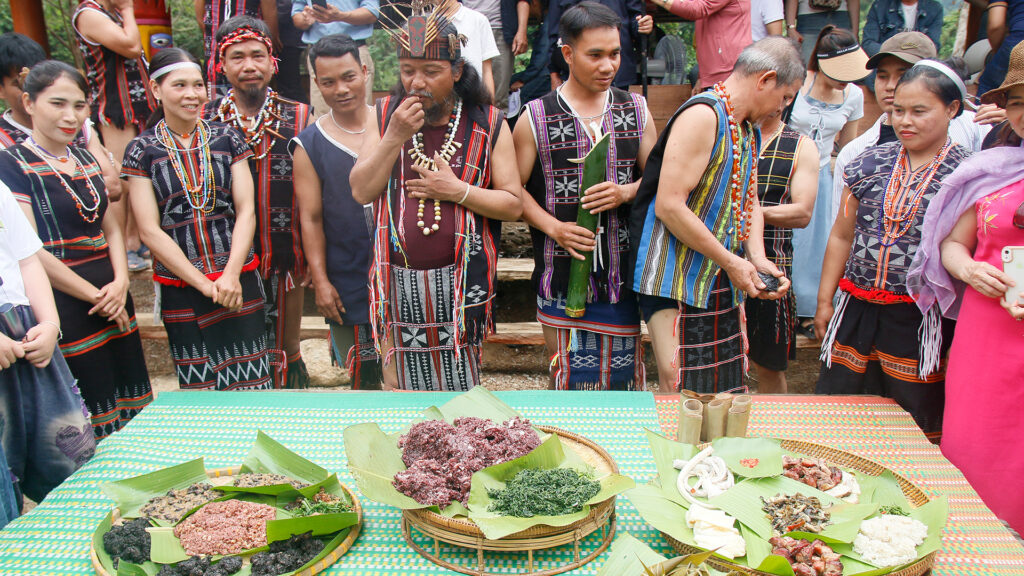
For the Co Tu people, Tết is therefore not merely the moment marking the transition from the old year to the new, but a springtime of togetherness—where emotions are nurtured by the warmth of the hearth, shared meals, and moments of close-knit community amid the great forests.
The Mountain New Year Feast – Flavors of the Forest and the Spirit of Sharing
Lunar New Year cuisine of the Co Tu people carries the deep imprint of the mountains and a strong sense of hospitality. On the spring festive tray, familiar dishes are not only meant to be enjoyed, but also embody profound cultural meanings. Bánh sừng trâu—known in the Co Tu language as Avị Cuốt—is an indispensable Tết delicacy. Made from glutinous rice and wrapped in forest leaves, it is shaped like a buffalo horn, symbolizing strength, abundance, and an auspicious beginning.
Alongside it are smoked meats, grilled meats, cá liêng, and bamboo-tube grilled dishes, all infused with the distinctive aroma of wood smoke—a signature flavor of the highland forests.
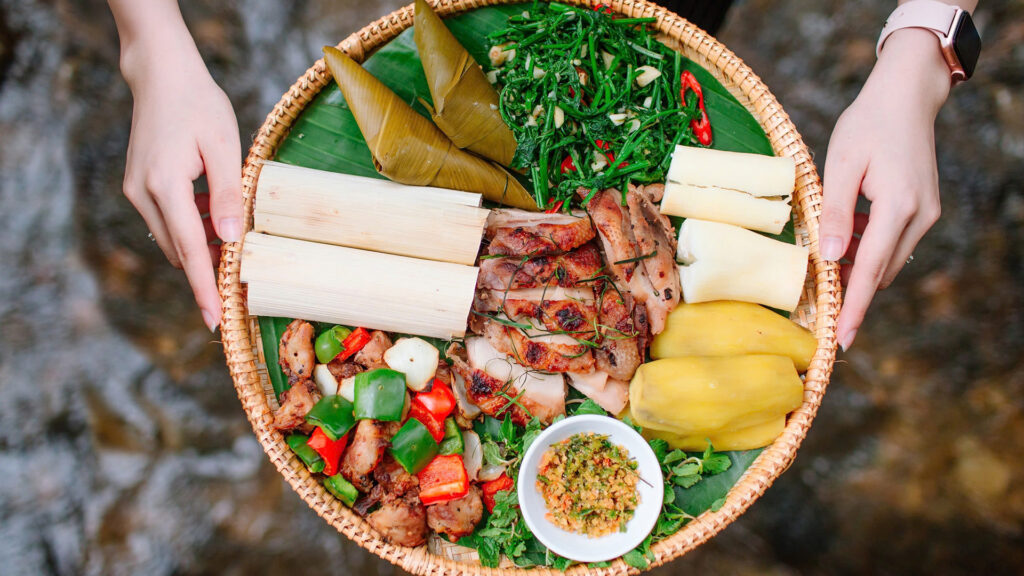
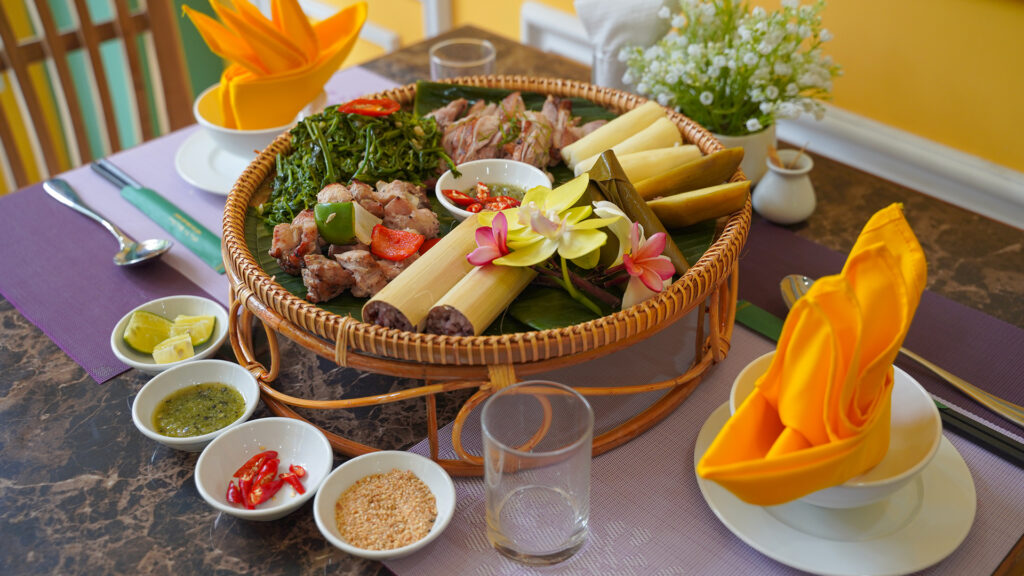
Tết of the Co Tu people is also inseparable from ruou can and ta vat wine—traditional drinks deeply associated with community bonding. Visitors to a Co Tu home during the Lunar New Year are always invited to eat together, drink together, and share the joy of the new year as members of the village themselves.
Touching the Rhythm of Tết in the Co Tu Cultural Space
To fully answer the question, “How do the Co Tu people celebrate Lunar New Year?”—leave behind the lively city streets and journey to the western highlands of Da Nang, where you can personally touch a very different spring—original, warm, and rich in cultural depth.
During the Lunar New Year of the Year of the Horse 2026, the forested mountains in the western part of the city are dressed in spring colors that are both festive and deeply rooted in tradition. Early-year rituals, community gatherings, and a shared sense of togetherness unfold into a distinctive spring journey—where Tết is not just something to observe, but to feel, to take part in, and to live alongside the Co Tu community. Here, spring reveals itself through dances, food, customs, and a way of life closely intertwined with the mountains and forests.
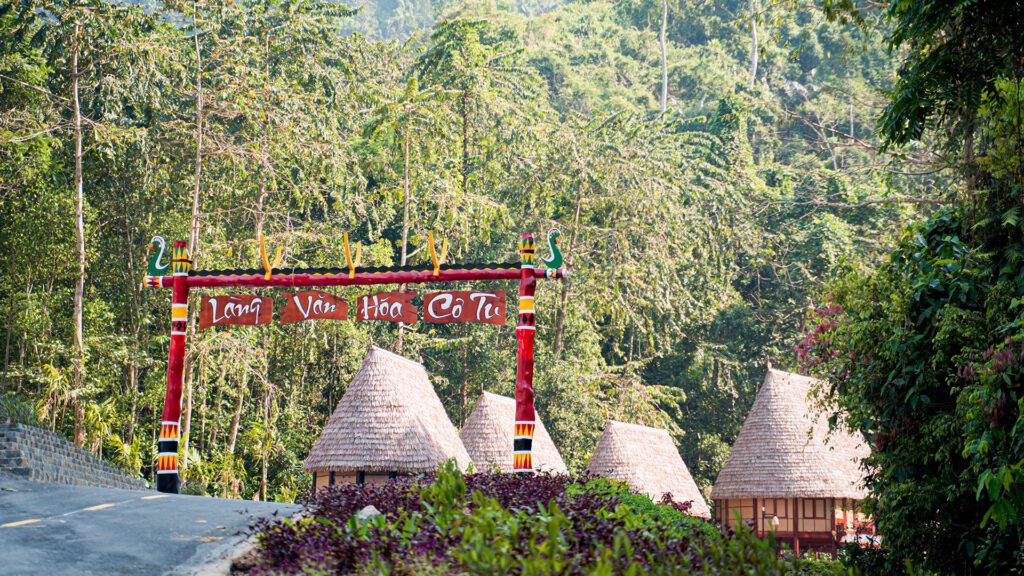
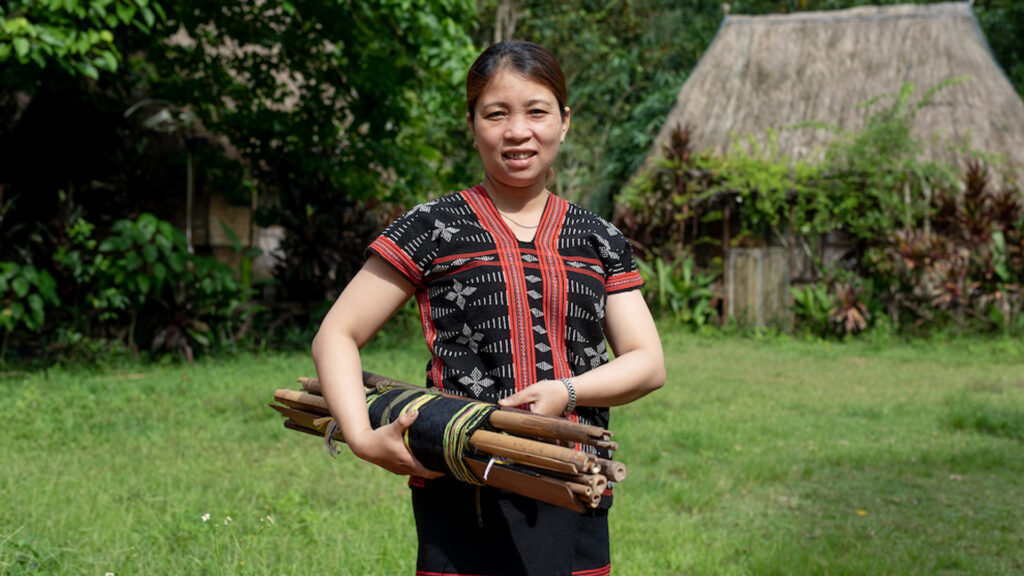
A highlight of the program is the 1st Co Tu Cultural Spring Festival of Dong Giang Commune – Spring of the Year of the Horse 2026 (05–07 February 2026).
The festival vividly recreates the shared community life of the early year through indigenous cuisine, folk art performances, traditional rituals, and especially the Tâng Tung Da dá dance—a rhythmic community dance symbolizing solidarity and the joyful spirit of spring.
For visitors, this is not merely an occasion to “watch a festival,” but an opportunity to truly live Tết alongside the Co Tu people: moving in step within the community dance circle, savoring traditional New Year dishes, listening to stories of customs and traditions, and feeling the spring atmosphere spreading through the village’s shared living space. These moments make the Lunar New Year journey feel intimate, vibrant, and emotionally rich—far beyond any description.
Continuing the spring narrative, the Forest Thanksgiving Opening Ceremony (06–07 March 2026 at the Po Mu Heritage Ecological Village, Hung Son Commune) carries a profound meaning of gratitude toward nature and the forests—the vital source of life for the Co Tu people—while conveying wishes for a peaceful, prosperous new year and harmony between humans and nature. This reflective ritual offers deeper insight into the enduring bond between the community and the mountains and forests, as well as the spiritual values preserved across generations.
During the early-year spring journey, visitors can also seek out original spaces to touch tranquility and restore energy after busy days. From Dong Giang Heaven Gate, where nature connects the Truong Son valleys with primeval forests, caves, and majestic waterfalls, to Toom Sara Village, Da Nang, where the daily life, architecture, and rhythms of the Co Tu community come together. Beyond sightseeing, visitors step into authentic living spaces—learning about brocade weaving, bamboo and rattan crafts, and listening to stories of customs and ways of life carefully preserved through generations.
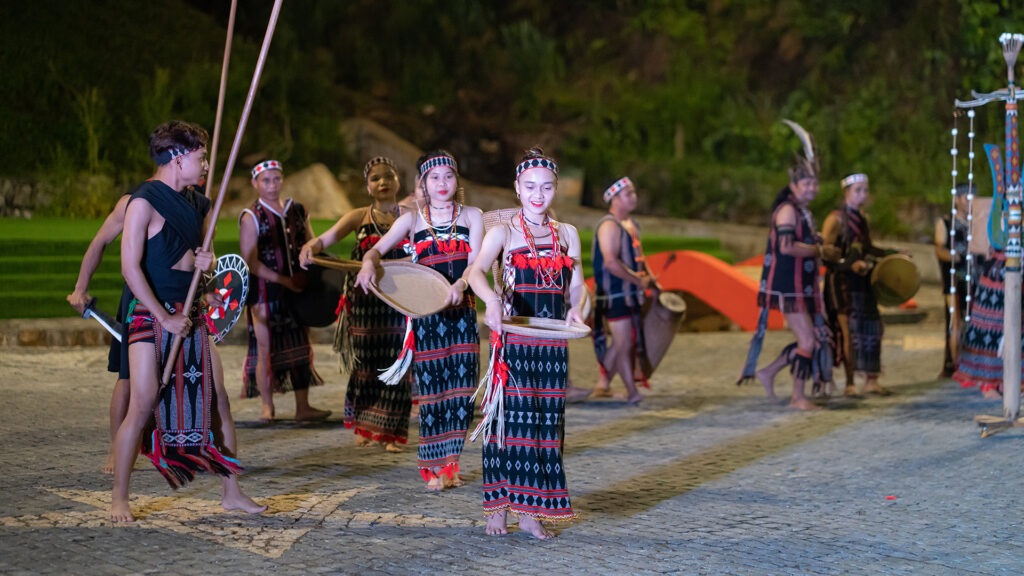
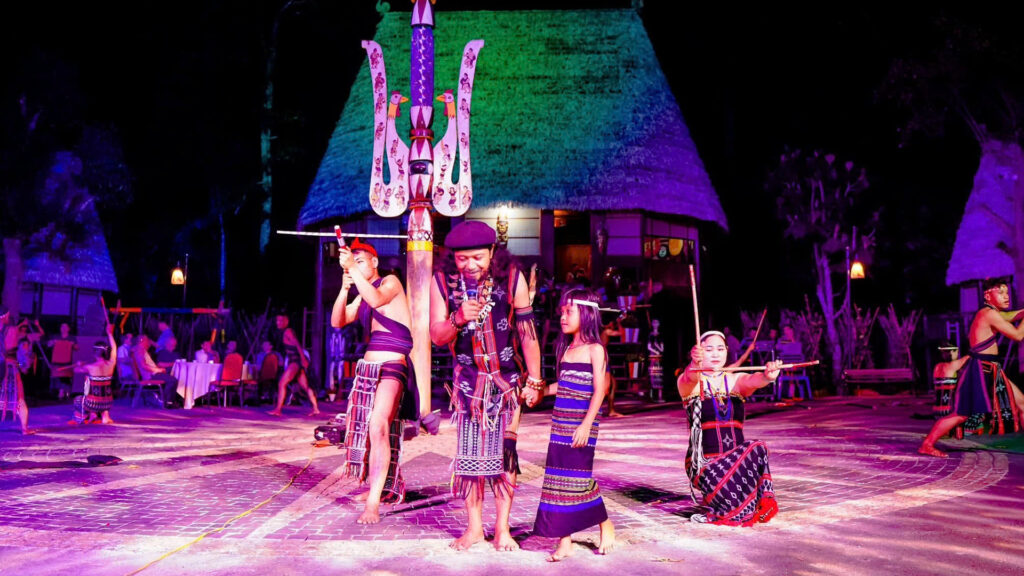
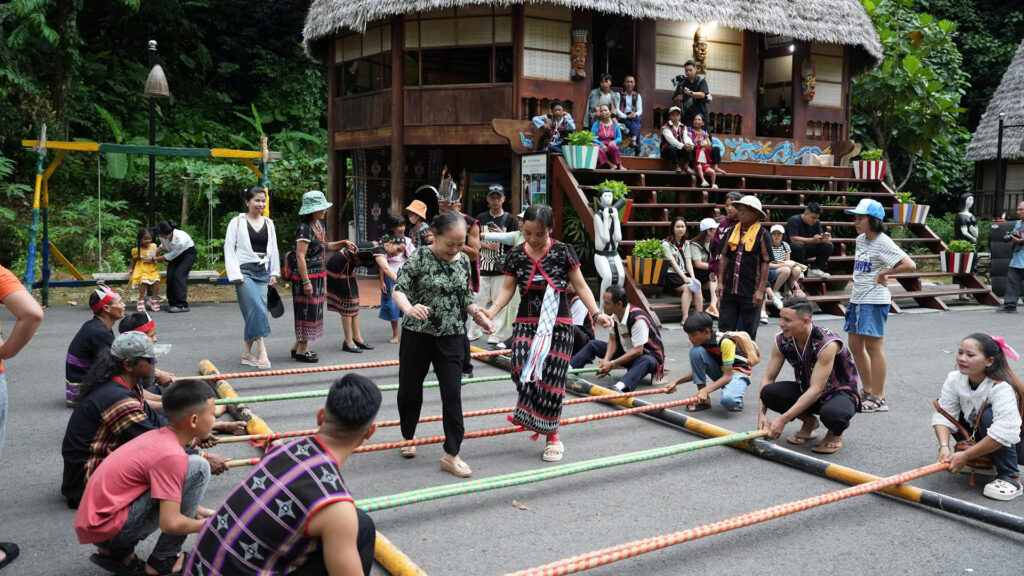
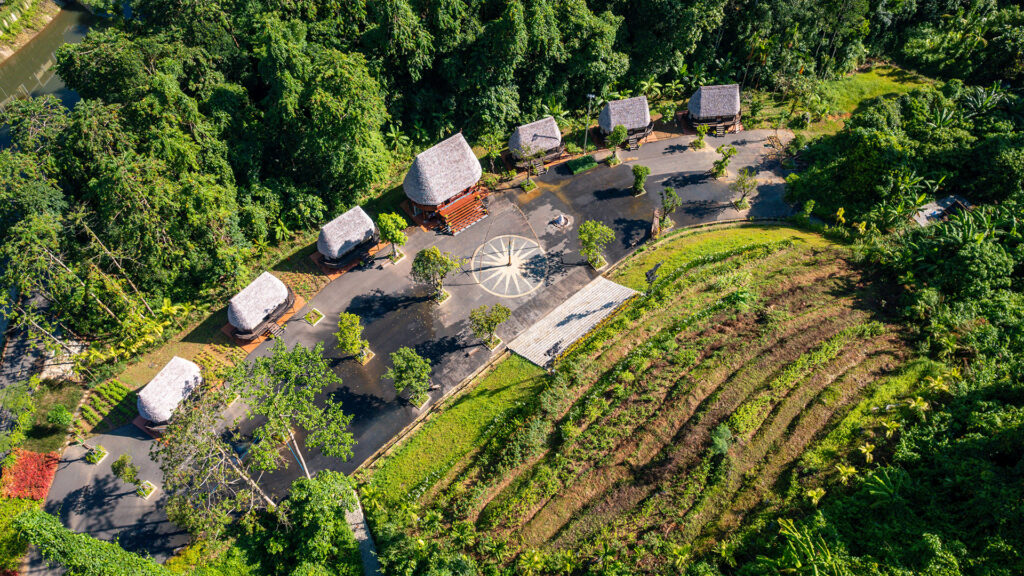
As dusk falls along the mountain slopes, beside glowing hearth fires in the heart of the village, visitors can join local residents in preparing Tết dishes rich with the flavors of the forest: bamboo-cooked rice, grilled wild boar, and bamboo-tube grilled fish still rising with warm, fragrant steam. These rustic dishes are not merely meant to be tasted, but embody the Co Tu way of welcoming spring—unhurried, heartfelt, and filled with a deep spirit of sharing.
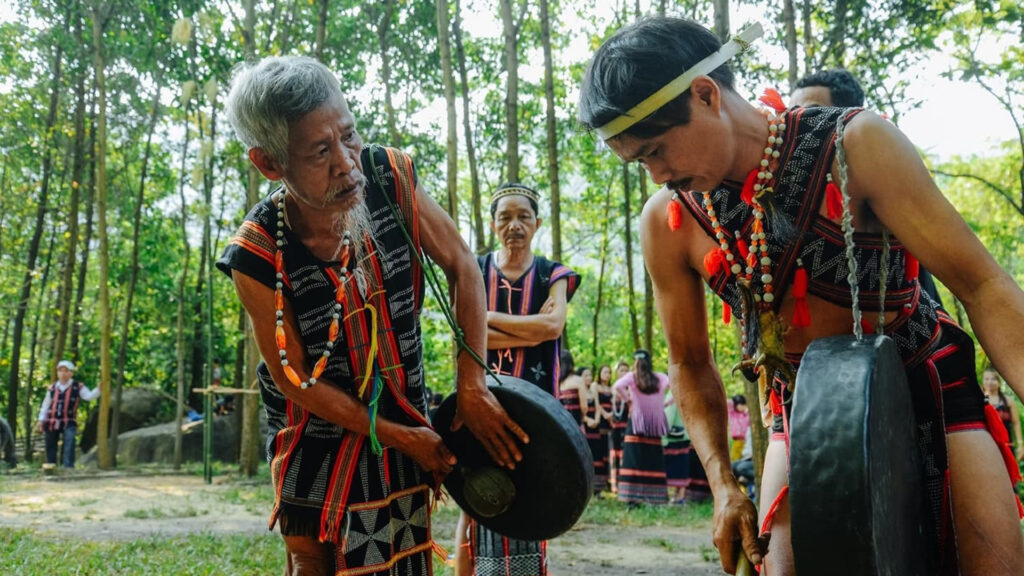
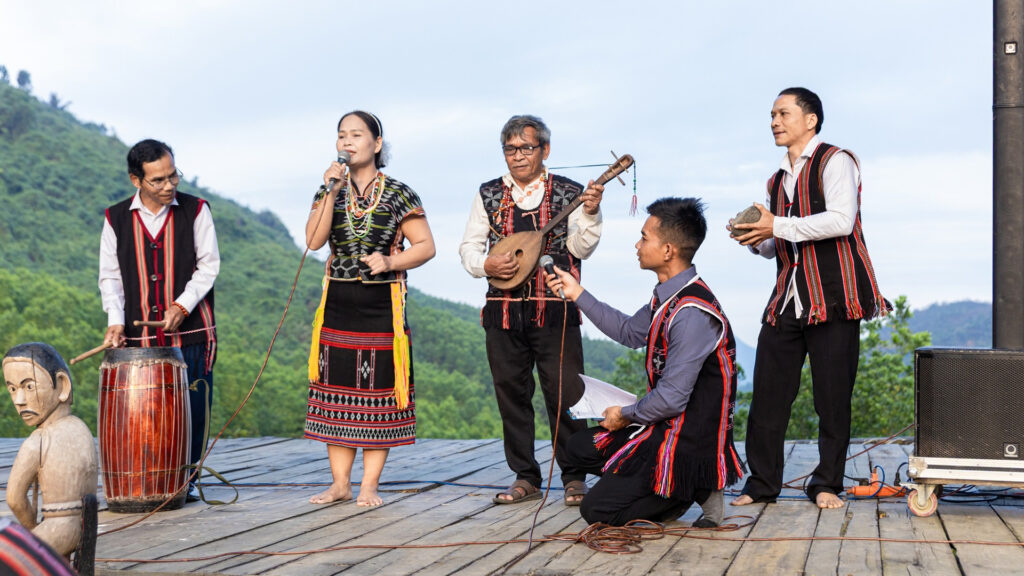
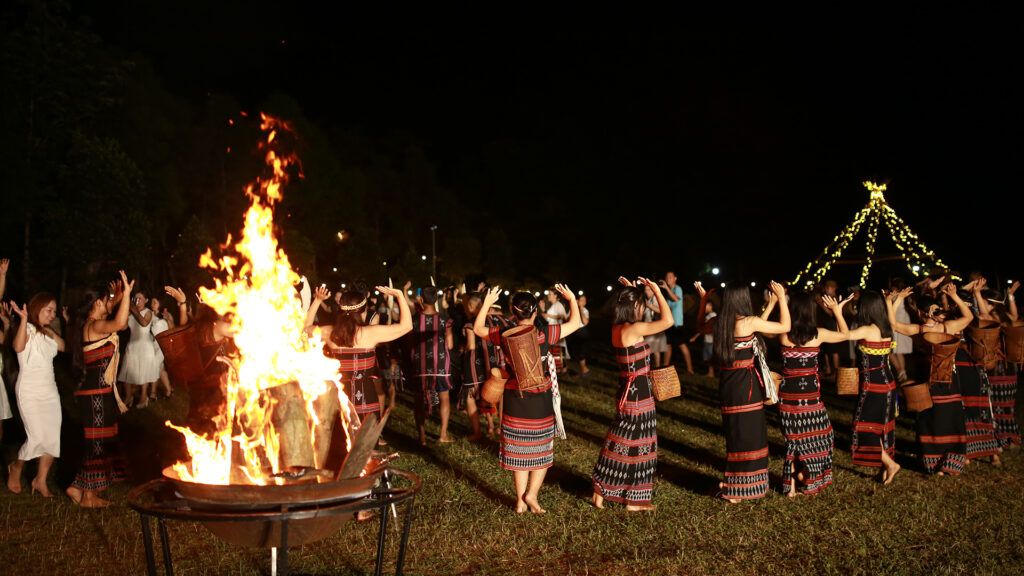
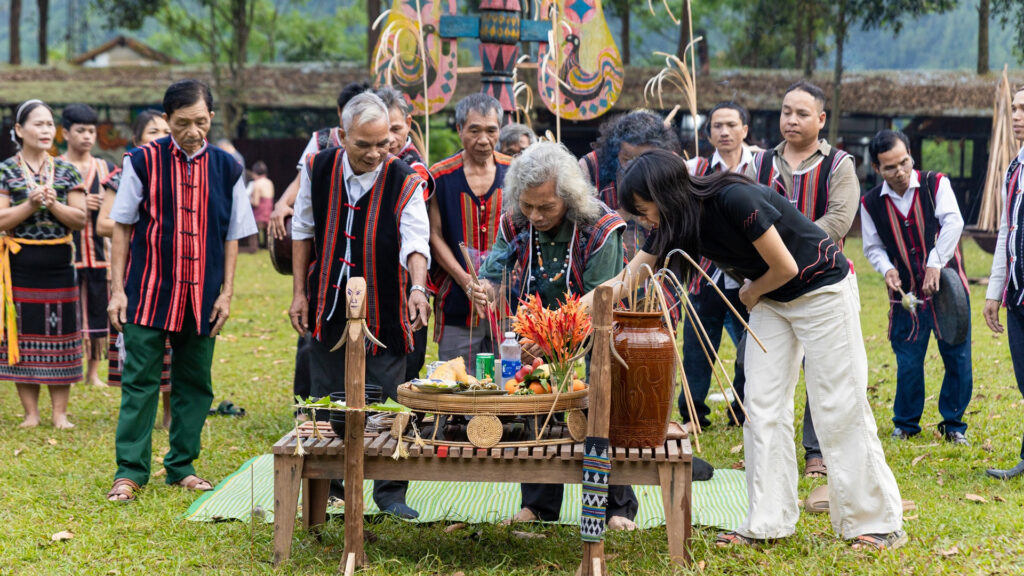
Along the western Truong Son range, destinations such as Za Ra (Ben Giang Commune), Bhohloong (Song Kon Commune), DhRloong (Dong Giang Commune), Ta Lang (A Vuong Commune), Pơr’ning (Tay Giang Commune), the Co Tu Traditional Cultural Village (Tay Giang Commune), Po Mu Ecotourism Village (Hung Son Commune), and the Ta Lang – Gian Bi Community Tourism Cultural Center (Hai Van Ward) open up authentic glimpses into highland life.
Here, Tết is not only present on the festive tray or in ritual ceremonies, but lives on in the resonant echoes of gongs, in the warm embrace of the community gathered around the Gươl house, and in early-year stories shared beside the glowing hearth.
It is a journey to touch identity—where culture tells its own story; to touch tranquility—where healing energy is restored; and more importantly, to understand that Tết for the Co Tu people is not merely the first days of a new year, but a season of togetherness, gratitude, and an enduring bond between people and the mountains and forests.
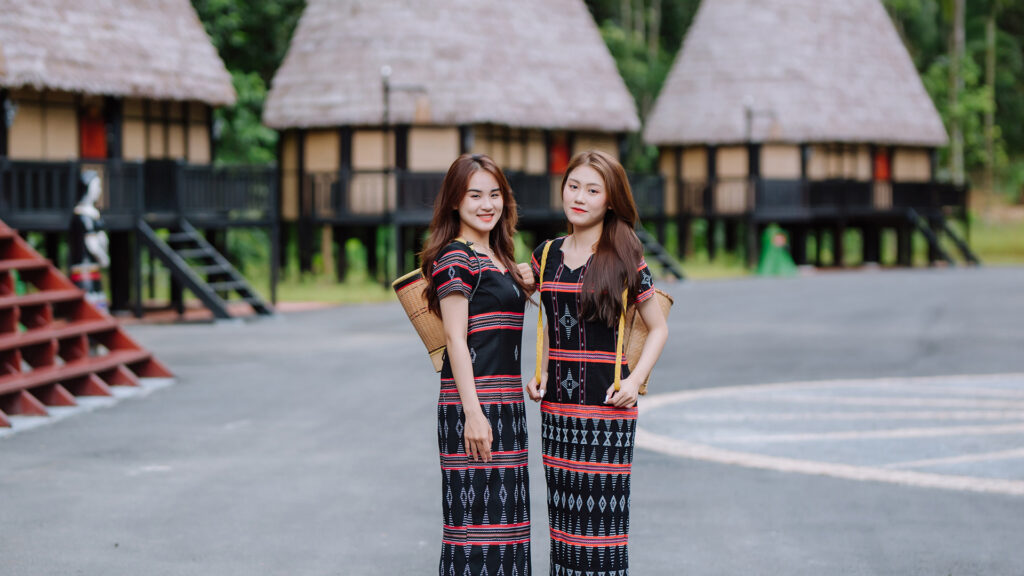
Lunar New Year in the western highlands of Da Nang is not noisy, nor dazzling with city lights, yet it is profound enough to linger long in memory—like a spring shaped by warm hearth fires, shared meals, and community dances amid the great forests.
Lunar New Year in the western highlands of Da Nang is not loud or brightly lit, but deeply memorable. It is a New Year of togetherness—of glowing fires, communal feasts, and community dances woven into the rhythm of the mountains and forests.
DANANG TOURISM PROMOTION CENTER