














Hai Tang Pagoda is located in Cam Hamlet, Bai Lang Village, Tan Hiep Commune, Danang City. Built in 1758, this ancient pagoda has stood for nearly three centuries.
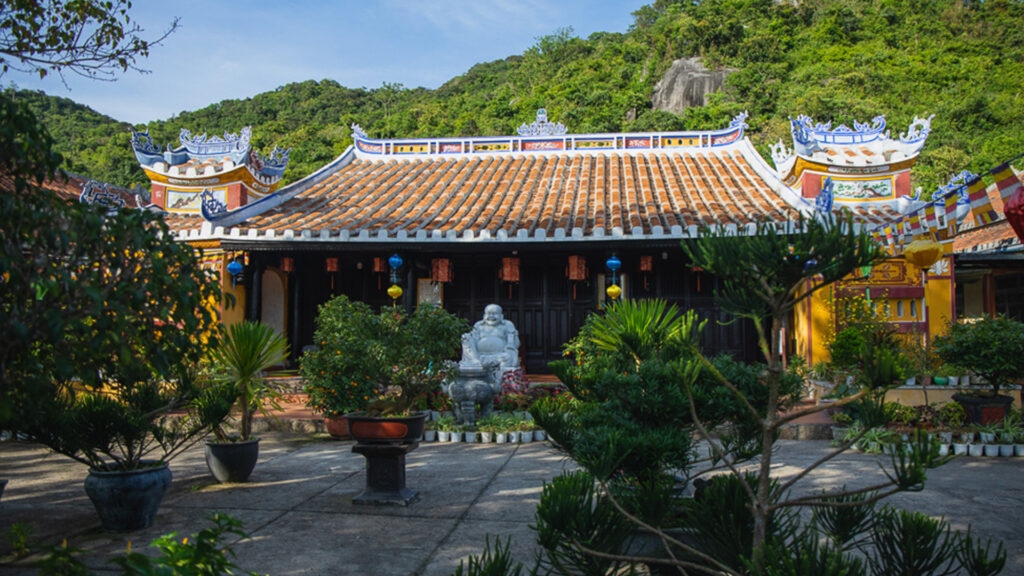
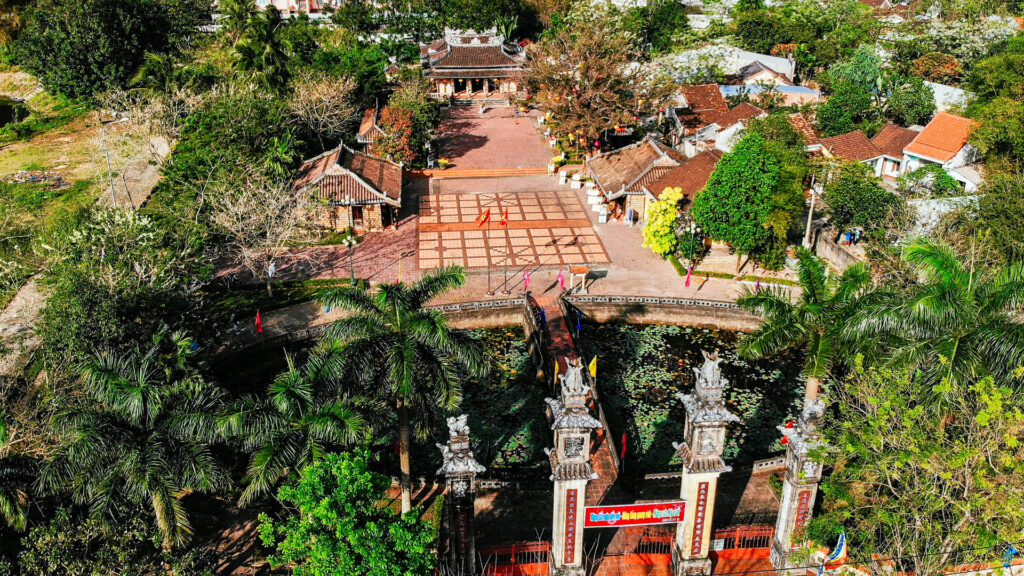
Nestled against Hon Lao Mountain and facing a small valley with the island’s only lush green rice field, Hai Tang Pagoda appears simple yet poetic amid the pristine landscape of Cu Lao Cham. With its rare “mountain-back, sea-facing” position and serene surroundings, the pagoda offers an immediate sense of tranquility—far removed from the bustle of the mainland.
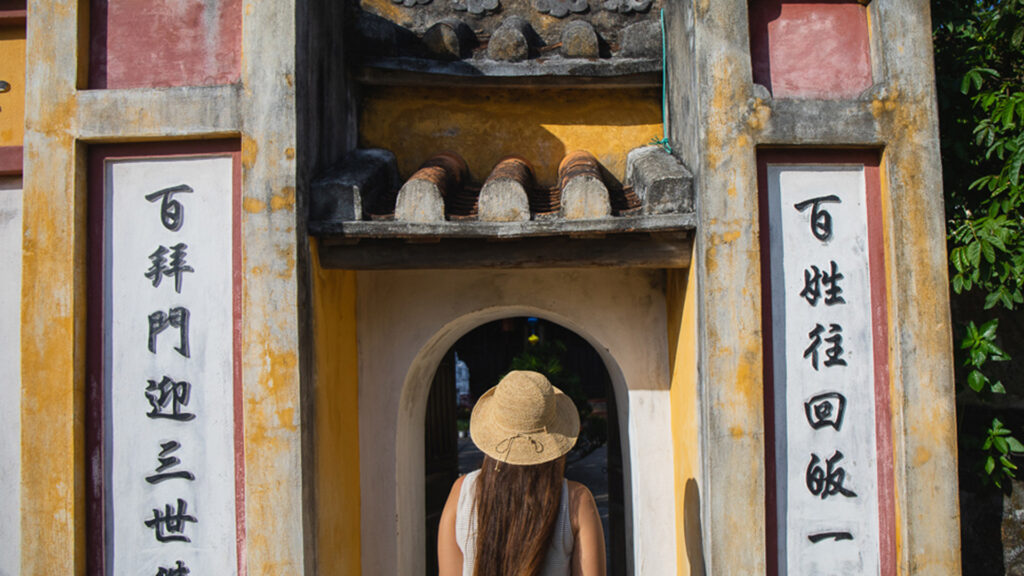
More than a sightseeing spot, Hai Tang Pagoda has long been the spiritual anchor of the island community. For generations of Cu Lao Cham residents, the pagoda is the place they turn to when seeking inner peace—“a sanctuary to return to whenever the heart needs quiet.” Whenever life feels heavy, islanders listen to the chime of the temple bell echoing across the sea, letting the sound bring calm. Today, Hai Tang Pagoda remains an essential stop for visitors exploring Cu Lao Cham. Whether pilgrims or culture lovers, all who step inside feel a rare serenity—as though every worry stops at the foot of the old three-entrance gate.
ORIGINS AND HISTORICAL FORMATION
According to local records, Hai Tang Pagoda was founded in 1758 under King Le Canh Hung by Zen master Huong Hai. It began simply as a small hermitage where the master and a few disciples practiced and took refuge. Later, under his fourth-generation disciple, the pagoda was expanded and reconstructed with contributions from the island community, and officially named Hai Tang.
The name “Hai Tang” is tied to a local legend: It is said that a merchant ship carrying timber passed through the waters of Cu Lao Cham but was trapped for days by fierce storms. After praying to the deities, the sailors were told that the timber must be left on the island to build a pagoda if they wished for calm seas. When they followed this divine instruction and helped construct the temple, the sea immediately became peaceful. The pagoda was thus named Hai Tang—symbolizing a place containing the vast ocean of Buddhist scriptures (Tam Tạng).
Originally located elsewhere on the island, the pagoda suffered severe storm damage over time. In 1848, islanders and merchants joined hands to move it to its current location and rebuild it sturdily. The new site—at the base of the mountain—was considered more auspicious and more convenient for worship. Since then, Hai Tang Pagoda has undergone several restorations yet retains its antique, moss-covered charm.
In 2007, the pagoda and other heritage sites on Cu Lao Cham were recognized as National Historical and Cultural Sites, underscoring the historical and architectural significance of this ancient religious landmark. Despite centuries of storms and time’s erosion, Hai Tang Pagoda still stands as a witness to the island’s deep spiritual heritage.


CULTURAL, ARCHITECTURAL, AND SYMBOLIC VALUES
Hai Tang Pagoda is a distinctive religious structure that uniquely combines Buddhist worship with the veneration of folk deities—a characteristic spiritual practice of the island community of Tan Hiep. In the main sanctuary, alongside the statues of the Three Buddhas and the solemn figure of Shakyamuni Buddha, the pagoda also enshrines various deities in accordance with local beliefs. These include the Jade Emperor, Dharma protectors, and Guan Gong, all arranged in a harmonious and balanced layout.
This interweaving of the Three Teachings—Buddhism, Taoism, and Confucianism—creates a sacred yet inviting atmosphere, where Buddhist spirituality coexists naturally with the everyday folk beliefs of the coastal community. Island residents often explain that “Hai” means “sea” and “Tang” refers to the Buddhist scriptures, implying that the pagoda is a place where the boundless wisdom of the Buddhist canon gathers like the vast ocean.
True to its name, for centuries Hai Tang Pagoda has served as an essential spiritual symbol, a place where countless generations of Cu Lao Cham inhabitants—as well as merchants and travelers from afar—have entrusted their prayers for peace, well-being, and safe journeys.
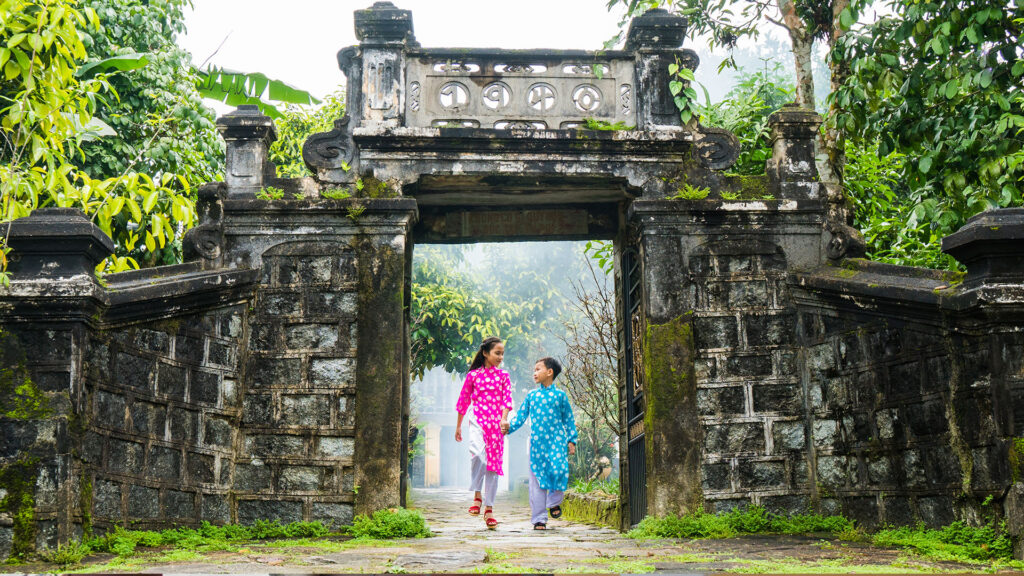
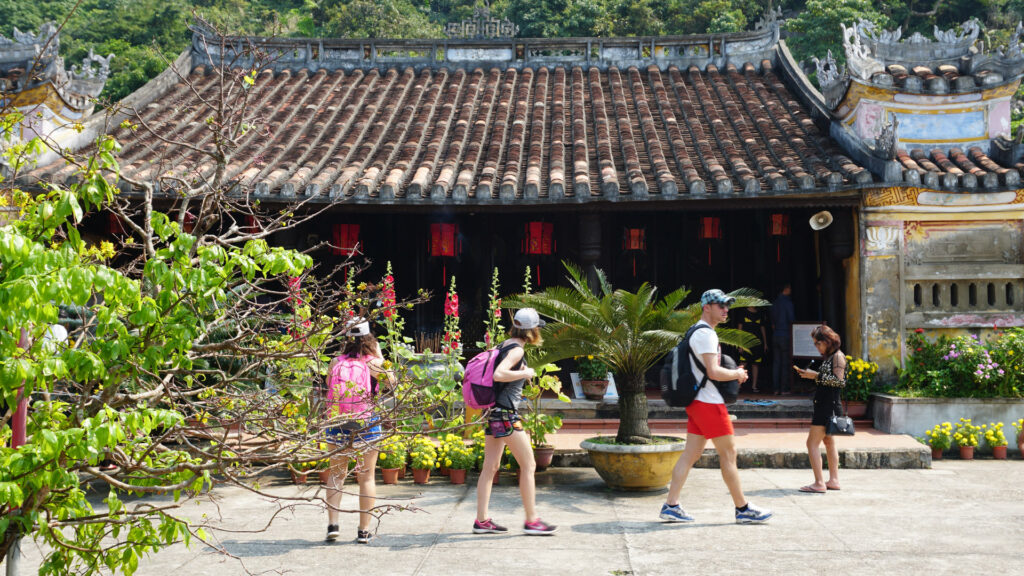
Architecturally, Hai Tang Pagoda embodies the style of traditional Central Vietnamese temples. The layout follows the classic “front hall – rear sanctuary” structure, with weathered yin–yang roof tiles. The prominent three-entrance gate, built of stone and brick, features three arched doorways.
One of the most unique features is the stone wall encircling the pagoda, built by hand long ago to keep wild animals and snakes away—ensuring safety for monks and visitors.
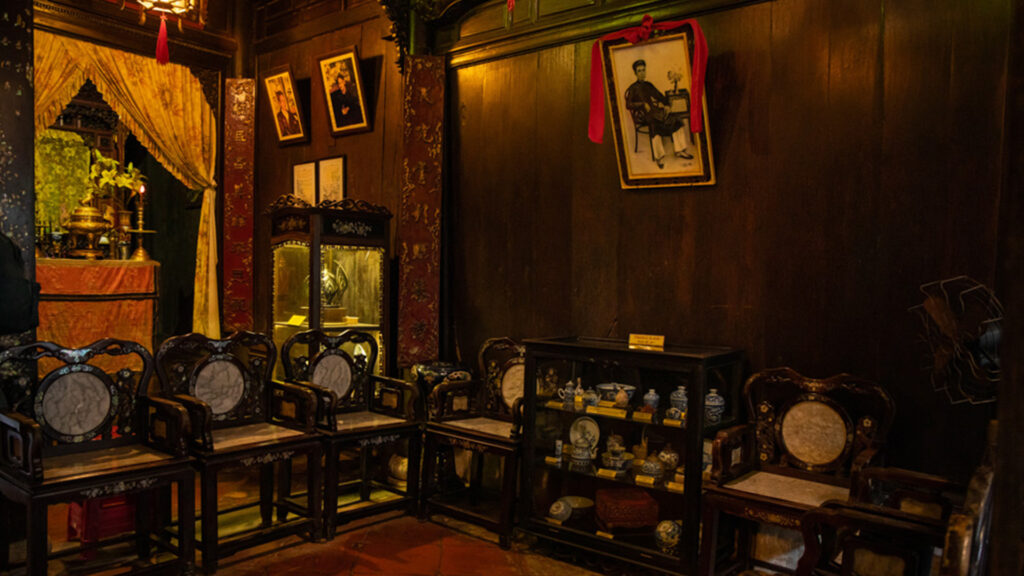
Although located on a remote island, Hai Tang Pagoda houses an impressive collection of lacquered boards, gilded parallel sentences, and intricately carved wooden elements, demonstrating the high craftsmanship of ancient artisans.
Inside the main hall, the statues of the Three Buddhas and the majestic Shakyamuni Buddha seated on a lotus pedestal are particularly striking. The pagoda also preserves a large bronze bell decorated with a raised dragon motif, believed to have been cast in the Early Le Dynasty—meaning the bell may be older than the pagoda itself.
Beyond its architecture and relics, Hai Tang Pagoda is known for its intangible cultural heritage and its preservation of original spiritual practices. Visitors and locals often come not to pray for wealth or fame but simply for peace, fair weather, and a harmonious life. Perhaps because of this simplicity, the pagoda has remained deeply cherished for centuries—a spiritual refuge that has helped generations endure storms at sea and in life.
VISITING EXPERIENCE
A trip to Hai Tang Pagoda offers visitors not only the chance to admire an ancient religious site but also the opportunity to immerse themselves in the rare tranquility of Cu Lao Cham. From Bai Lang Pier, visitors can walk along the quiet village path, across the small green rice field, and toward the three-entrance gate. From afar, the pagoda’s mossy roof peeks out from the forest canopy, blending gently into the green mountainside. The peaceful scenery evokes a profound sense of calm.
Inside, visitors can explore the architecture, examine ancient inscriptions and lacquered boards, and admire the statue of Quan Am Nam Hai standing gracefully in front of the gate. Many travelers light a stick of incense to pray for peace and good fortune.
The best time to visit Hai Tang Pagoda—and Cu Lao Cham in general—is during the dry season (March–August), when the weather is clear and the sea is calm. In summer, the island’s coral trees bloom bright red along the cliffs, adding vivid color to the serene landscape and enhancing the timeless beauty of the pagoda.
For an unforgettable experience, consider visiting at sunrise or sunset, when golden sunlight casts warm hues across the roof tiles and courtyard, accompanied by birdsong and the soft chime of wind bells—creating a scene reminiscent of a peaceful mountain retreat.
During Buddhist festivals, Hai Tang Pagoda becomes particularly vibrant with traditional ceremonies. Annual events include the Lunar New Year Peace Ceremony, Vesak Day, Vu Lan Festival, and the Celebration of Avalokitesvara Bodhisattva—all drawing monks, island residents, and visitors. Despite the festive atmosphere, the pagoda maintains a tradition of not burning votive offerings, helping preserve the island’s pristine environment.
ESSENTIAL INFORMATION
Location: Bai Lang Village, Tan Hiep Commune, approximately 18 km east of Hoi An by sea.
How to get there:
Visitors must travel by boat to Cu Lao Cham. From Cua Dai Pier, wooden boats and speedboats depart daily.
Wooden boat: 60–90 minutes depending on weather.
Speedboat: around 20 minutes.
Morning departures typically begin at 8:00; return trips run from 13:00–16:00.
From Bai Lang Pier, the pagoda is a 10-minute walk (about 300 m) through the village. The path is easy to follow and signposted; motorbike rental is available for those who wish to explore more.
Opening hours: Free admission. Open daily during daylight hours (around 7:00–17:00).
Visiting etiquette:
As a historic island pagoda, Hai Tang has no nighttime lighting or commercial services inside the grounds, so visitors should plan to visit before dusk. A freshwater well and shaded stone benches provide a peaceful resting spot. Modest clothing is recommended.
Cu Lao Cham is committed to being plastic-free—visitors should avoid bringing plastic bags and instead use reusable or paper alternatives.
Before leaving, take time to appreciate the quiet moments within the moss-covered walls and beneath the ancient trees. Every corner of Hai Tang Pagoda carries traces of time and stories waiting to be discovered.
Many visitors depart with a lingering sense of attachment—to the temple’s solemn beauty, the warm hospitality of its caretakers, and the cultural heritage cherished by generations of islanders. These impressions often inspire travelers to one day return, to again hear the pagoda bell resonate across the vast sea…
DANANG TOURISM PROMOTION CENTER