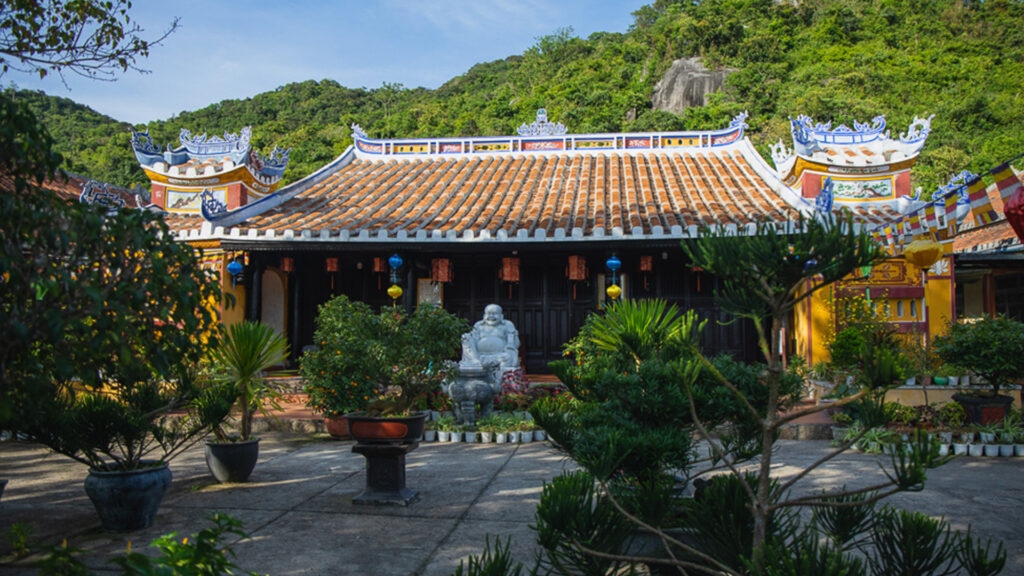















The Fujian Assembly Hall (also known as the Phước Kiến Assembly Hall) is a national relic that embodies the quintessential features of traditional East Asian architecture, reflecting the prosperity and cultural depth of Hoi An’s ancient urban landscape. Beyond its remarkable aesthetic and artistic values, the hall preserves unique spiritual practices and community traditions, standing as an iconic symbol of Vietnamese–Chinese cultural exchange.
ORIGINS AND HISTORICAL DEVELOPMENT
The Fujian Assembly Hall has long-standing historical roots tied to the earliest days of Hoi An Ancient Town. According to local accounts, the site was originally a small pagoda named Kim Son Pagoda, built to worship a Buddha statue that had drifted ashore. Over time, the humble structure deteriorated. In 1697—during Hoi An’s golden age—Fujian merchants purchased the old pagoda grounds to construct an assembly hall for community gatherings and spiritual worship. Initially, the hall retained the pagoda’s name, Kim Son Tu. Later, in 1757, it underwent major restoration and expansion, and officially became known as the Fujian Assembly Hall.
In its early years, the hall was constructed entirely of simple wooden materials. After several rounds of renovation, the hall became more spacious and durable, with brick walls and traditional yin-yang roof tiles—most notably during the significant reconstruction in 1757, when the structure was rebuilt completely in bricks and tiles. These transformations reflect the craftsmanship of Chinese artisans and the collective contributions of the Fujian community in Hoi An. In 1990, the assembly hall was recognized as a National Historic and Cultural Relic, becoming a source of pride for local residents.
Since the 1980s, the hall has been open to visitors and has rapidly grown into one of Hoi An’s most popular attractions, welcoming tens of thousands of visitors annually.
CULTURAL, ARCHITECTURAL, AND SYMBOLIC VALUES
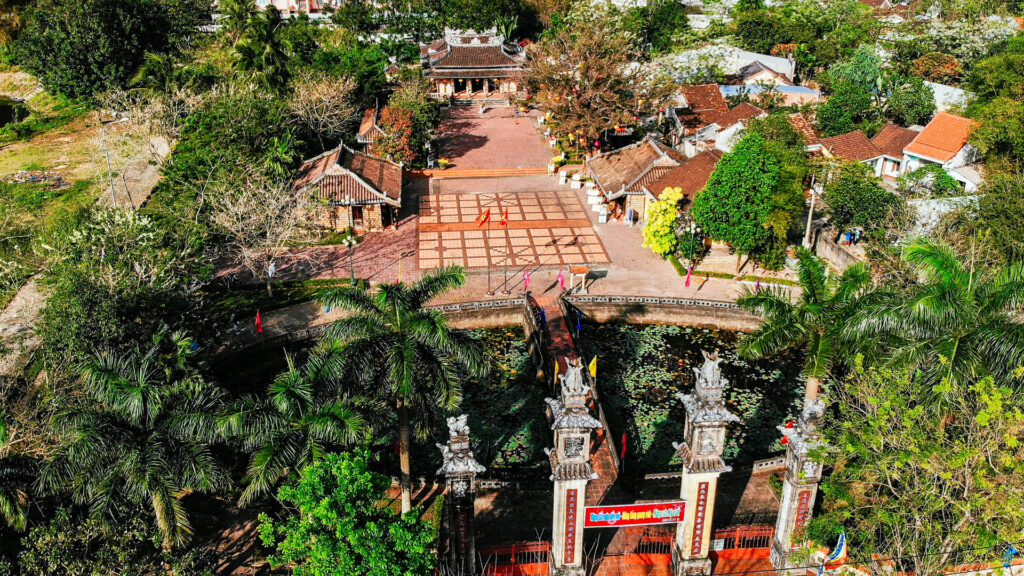
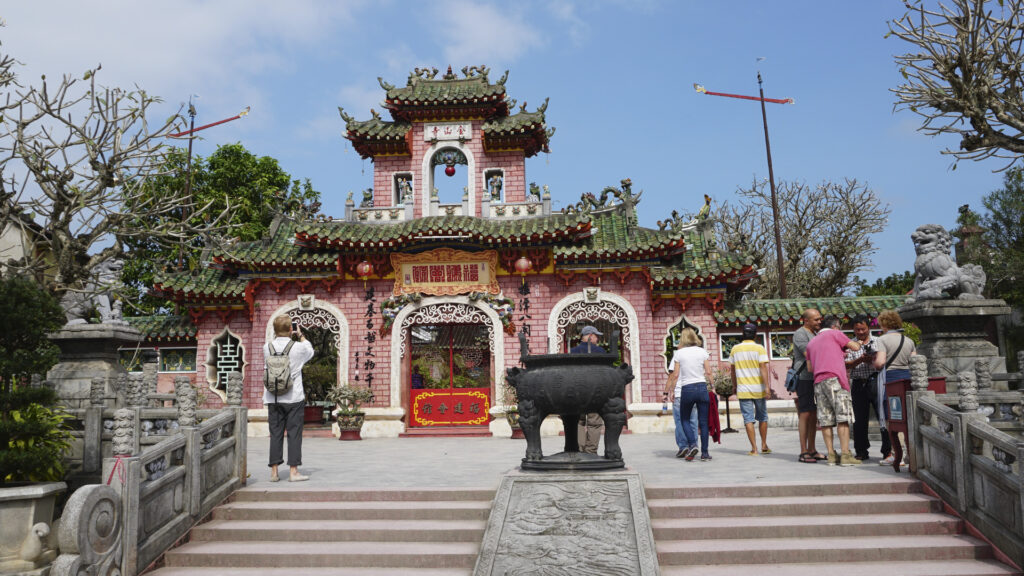
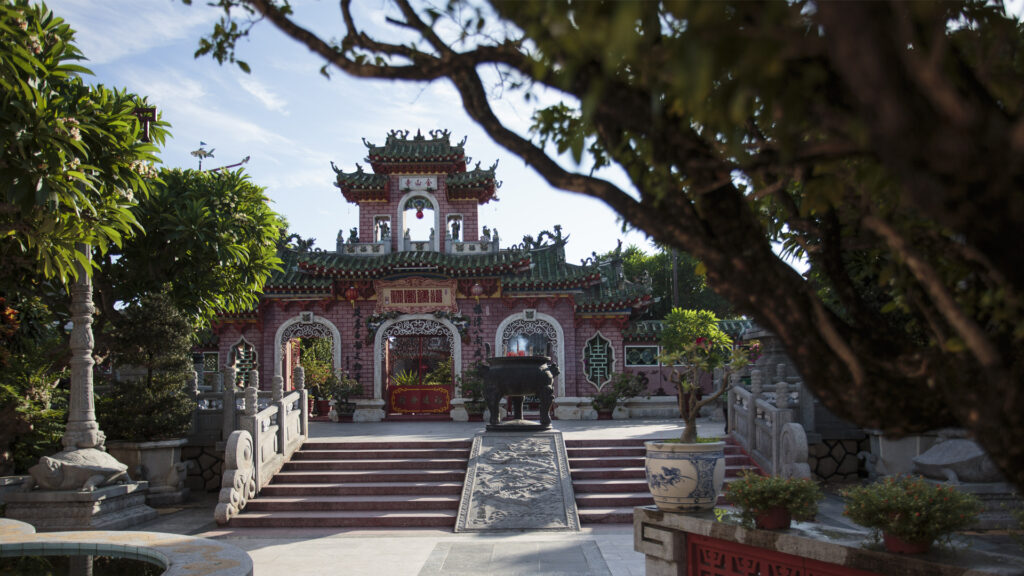
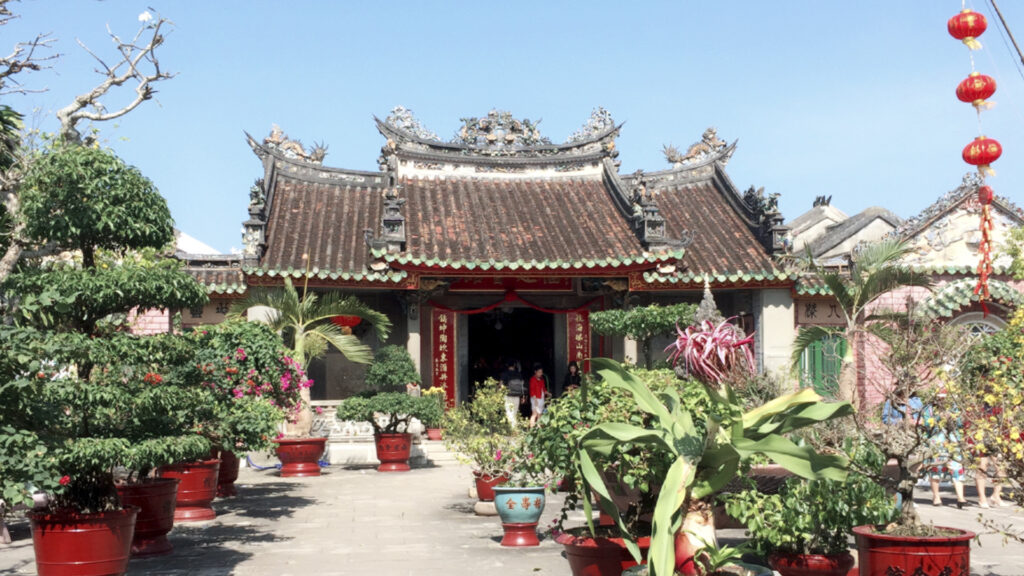
The Fujian Assembly Hall—built by one of the earliest and largest Chinese communities in Hoi An—boasts outstanding cultural significance and exquisite architectural craftsmanship. The entire complex follows the traditional “three-section” layout of Chinese assembly halls. From the main gate on Trần Phú Street, visitors enter an open forecourt with greenery and miniature landscapes, followed by the symmetrical East and West wings, the main sanctuary, the rear courtyard, and the back hall arranged in a deep axial sequence.
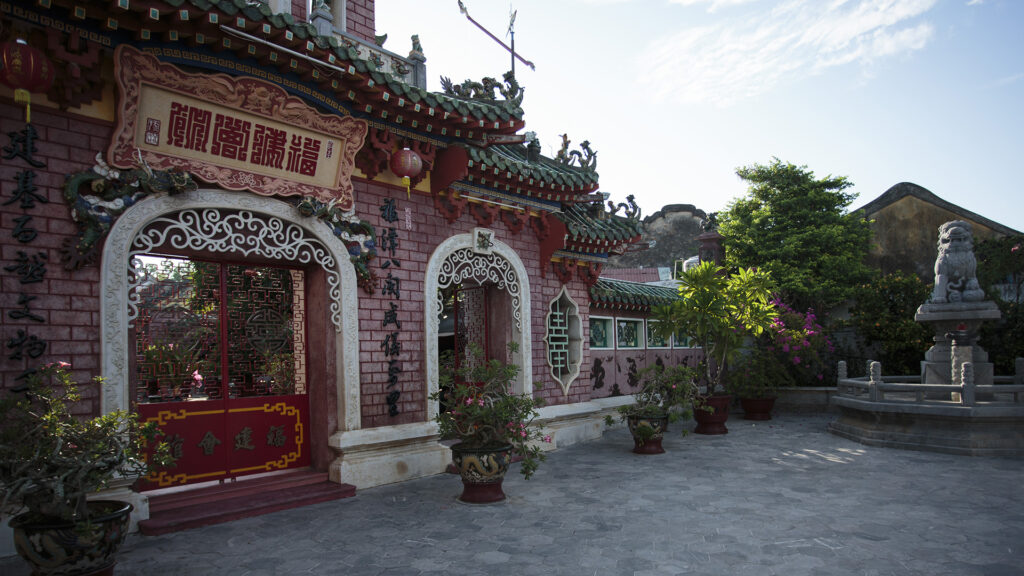
A striking feature of the hall is its predominant red palette—from the three-arched gate and stone guardian lions to the pillars, lanterns, and parallel verses—symbolizing luck and prosperity in East Asian culture. The brilliant red hues, combined with ornate carvings, make the hall a vibrant architectural highlight within the ancient town.
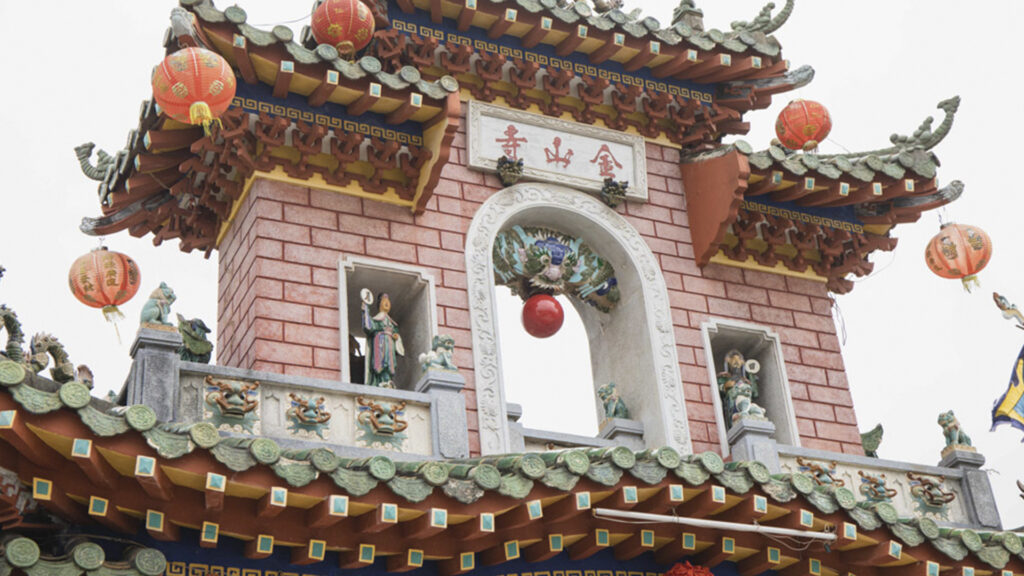
The three-arched gate (tam quan) is an artistic masterpiece. It features three entrances topped with gracefully curved yin-yang tiles and a sculpted motif of two dragons flanking a moon. The façade is elaborately decorated with ceramic inlays and bears the original name “Kim Son Tu” in Chinese characters. Statues of the Sun God and Moon Goddess stand guard on both sides, symbolizing Heaven and Earth, Yin and Yang. The three entrances represent Heaven – Earth – Humanity, reflecting harmony within the universe. Passing through the gate, visitors step into a peaceful, open courtyard with bonsai trees and a small pond—a serene contrast to the bustling streets outside.
The main sanctuary is the most solemn and magnificent part of the hall, home to the revered statue of Lady Thien Hau (Mazu), the goddess of the sea who protects fishermen and merchants during their voyages. Flanking her are the deities “Thousand-Li Eyes” and “Favorable-Wind Ears,” who are believed to assist Lady Thien Hau in watching over and hearing the prayers of the people. The sanctuary also displays an ancient model of a 19th-century merchant ship—symbolizing gratitude for safe journeys across the sea. The hall’s layout and decorative elements follow principles of feng shui, embodying hopes for peace, harmony, and prosperity. The scent of incense, soft lantern light, and solemn atmosphere immerse visitors in a deep spiritual experience.
The rear hall venerates various deities and ancestors, reflecting the diverse beliefs of the Fujian community. Here, visitors find the altar of the Six Fujian Patriarchs—loyal figures who supported the Ming Dynasty and later became guardian deities for the community—as well as those of the Twelve Midwives and the Three Ladies of Childbirth, protectors of fertility and family well-being.
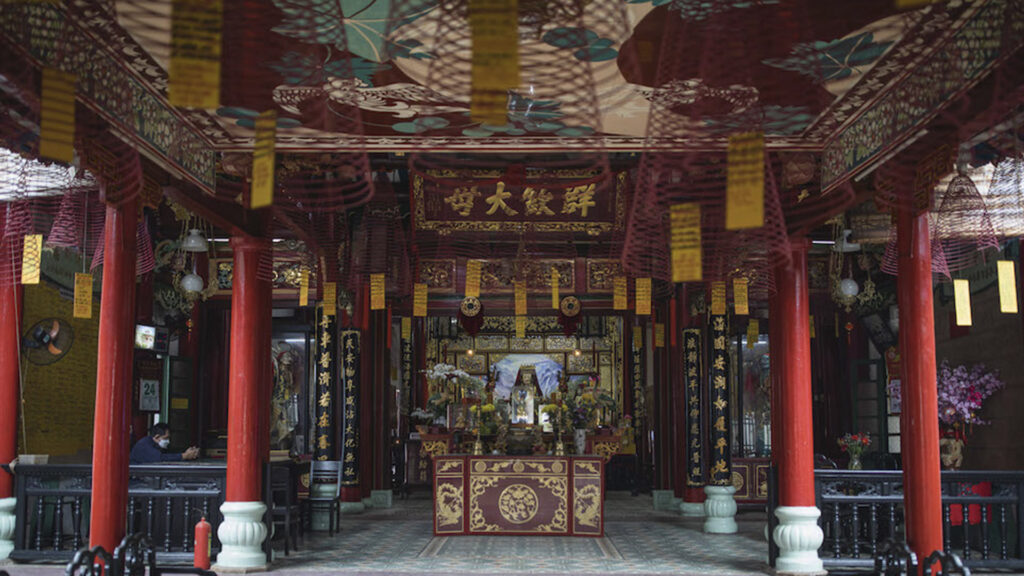
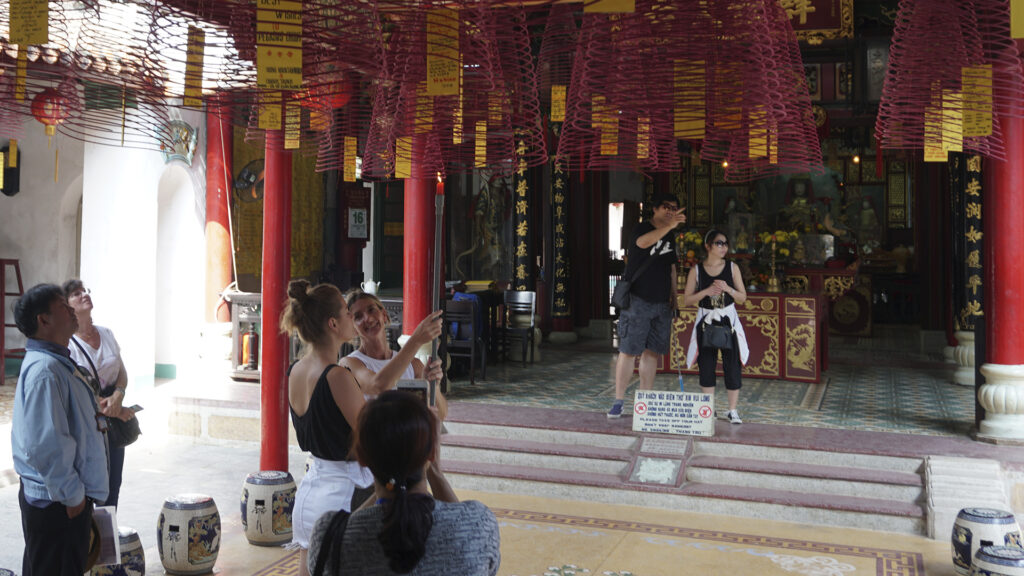
One of the hall’s most distinctive cultural features is the sight of large spiral incense coils hanging from the ceiling. Locals and visitors often purchase these coils, write their wishes on slips of paper, and hang them near the shrine. Each coil burns continuously for weeks—sometimes up to 30 days—symbolizing long-lasting prayers to the deities. When the incense burns out, the prayer slips are ritually burned to send the wishes to the spiritual realm.
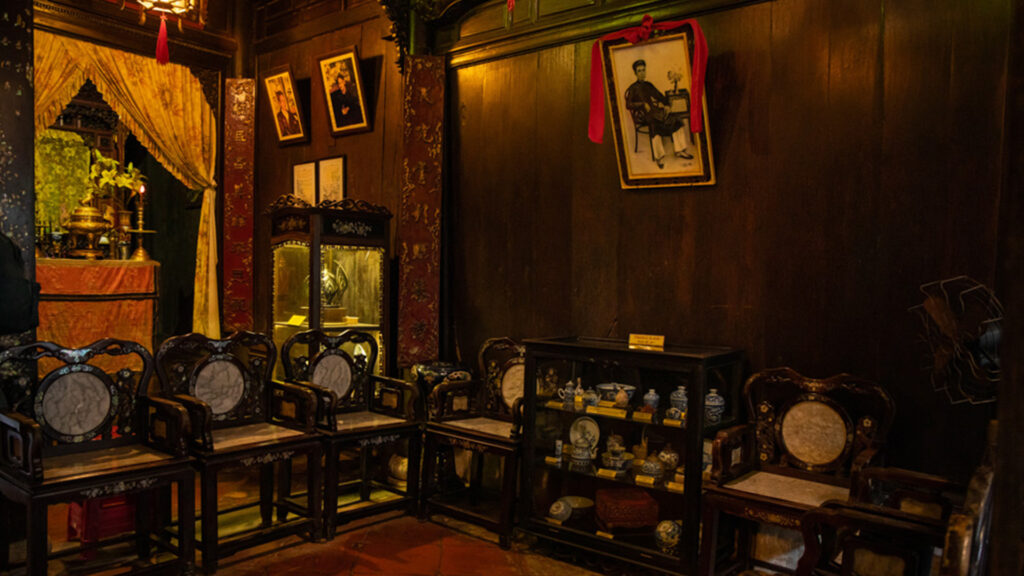
Within the hall are numerous valuable artifacts, including a bronze bell cast in 1790, ancient bronze drums, incense burners, gilded wooden statues, and 14 lacquered horizontal plaques inscribed with Chinese characters. Each artifact represents the prosperity of Hoi An’s former trading port and the exceptional artistry of traditional craftsmen. Thanks to its outstanding historical, architectural, and artistic values, the Fujian Assembly Hall stands among Hoi An’s most iconic relics alongside the Japanese Covered Bridge and the Cantonese and Chaozhou Assembly Halls.
VISITOR EXPERIENCE
For today’s travelers, the Fujian Assembly Hall offers a memorable cultural and architectural experience. Upon stepping through the gate, the lively sounds of the marketplace fade into the tranquil and sacred ambiance of the courtyard. Architecture enthusiasts will be captivated by the intricate carvings on beams and rooftops, the vividly colored dragon–phoenix reliefs, and the elegant interior spaces that provide perfect backdrops for photography. Many couples even choose this heritage site for pre-wedding photos, drawn to its atmospheric blend of romance and antiquity.
Visitors are encouraged to pause at the altar of Lady Thien Hau, light an incense stick, and make a wish. Whether or not one follows a particular belief, the quiet moment beneath century-old roof tiles creates a sense of peace and connection to traditional spiritual values. On special lunar days—such as the 1st and 15th of each month—the hall becomes lively with local worshippers. Major festivals, including the Lantern Festival (15th day of the first lunar month) and the Lady Thien Hau Festival (23rd day of the third lunar month), attract thousands of attendees with lion dances, offerings, and vibrant cultural performances.
Located along the main sightseeing route of Hoi An Ancient Town, the hall is conveniently close to many other attractions such as the Japanese Covered Bridge, the Cantonese and Chaozhou Assembly Halls, and the Tan Ky Old House. After visiting the solemn interior of the hall, visitors can explore the bustling market nearby, enjoy dishes such as cao lầu or mì Quảng, or purchase lanterns and handicrafts as souvenirs.
The best times to visit are early morning or late afternoon, when the weather is pleasant and the hall is less crowded. Morning hours are also ideal for observing locals offering incense before starting their day. During the summer, visitors should avoid midday heat for a more comfortable experience.
Every visit to the Fujian Assembly Hall offers a chance to appreciate the spiritual and cultural richness of Hoi An—a place where ancient architecture, sacred traditions, and living heritage continue to flourish.
ESSENTIAL INFORMATION
Address: 46 Trần Phú Street, Hội An Ward (in the heart of the ancient town, near Hội An Market). Easily accessible on foot or by bicycle.
Opening hours: Typically 7:00 AM – 5:00 PM daily.
Admission: Included in the Hoi An Ancient Town ticket (approx. 80,000 VND for Vietnamese visitors / 120,000 VND for international visitors; subject to change). The ticket allows access to the assembly hall and several other sites within 24 hours.
On-site information: Bilingual signboards explaining the hall’s history and artifacts are available. Local tour guides may also be hired for deeper insights.
Visitor guidelines:
– Dress modestly (avoid very short shorts or sleeveless tops in sacred areas).
– Maintain quietness and respect; avoid touching ancient artifacts.
– Do not use flash photography near the altars.
– If offering incense, light an odd number of sticks and place them neatly as a sign of respect.
Nearby services:
Souvenir stalls selling handicrafts, lanterns, and artwork surround the hall. Nearby vendors also offer local snacks such as sweet soup (chè), tofu pudding (tào phớ), and bánh ít. Visitors attending festivals at the hall should try Fujian stir-fried noodles—a traditional dish of the local Chinese community, featuring soft rice noodles stir-fried with dried shrimp, dried squid, diced pork, and greens.
The Fujian Assembly Hall stands both majestic and familiar—an enduring spirit of Hoi An. Its moss-covered roof tiles, drifting incense, and whispered stories invite visitors to return again and again, each time discovering something new within this timeless heritage.
DANANG TOURISM PROMOTION CENTER