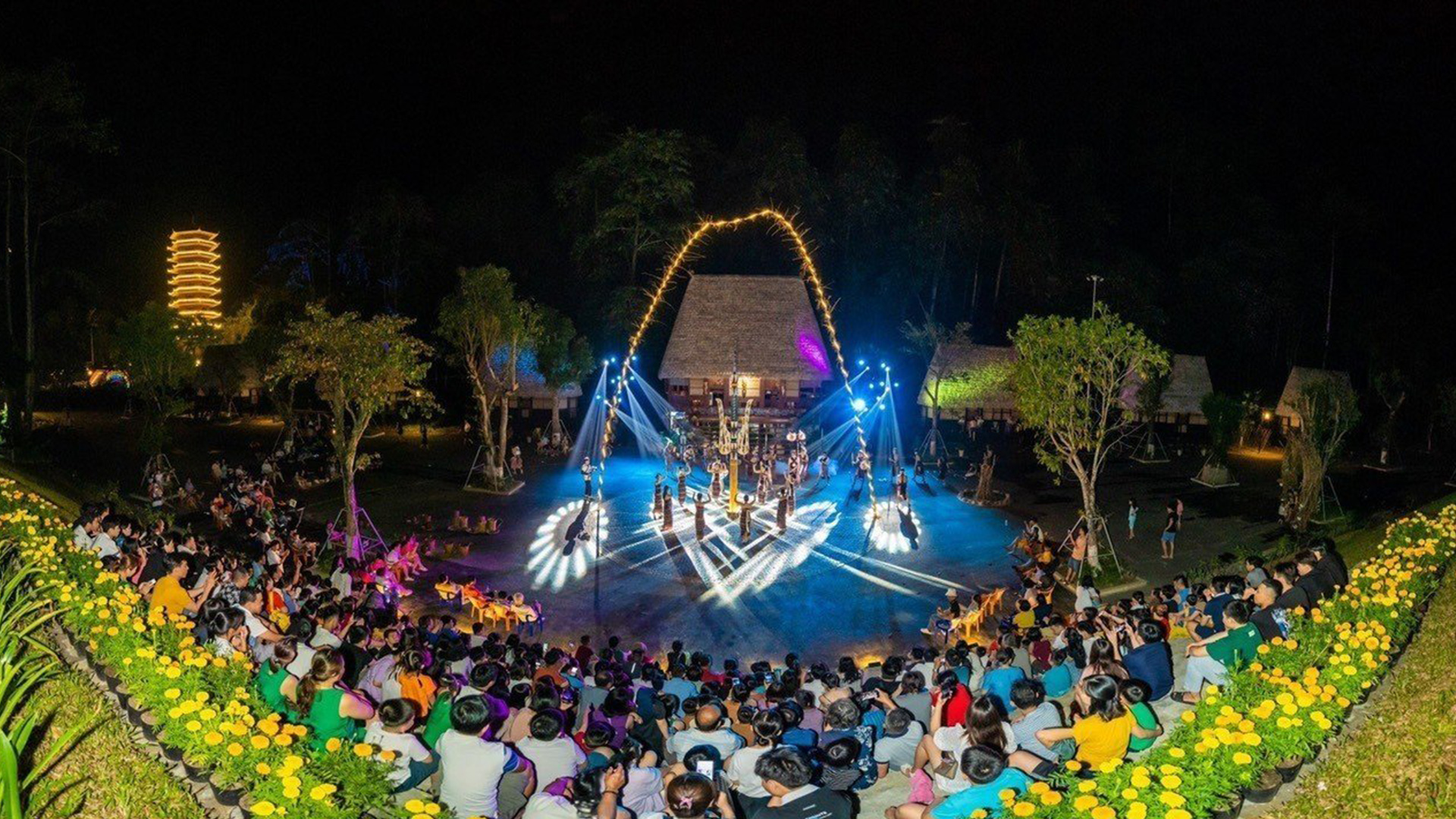















Amid the majestic mountains of Tra Lien, Da Nang City, the Cor people still preserve a rich treasury of traditional culture, among which the Ritual of Erecting the Neu Tree and the Gu Set stands out as a National Intangible Cultural Heritage.
FROM FAITH TO ART
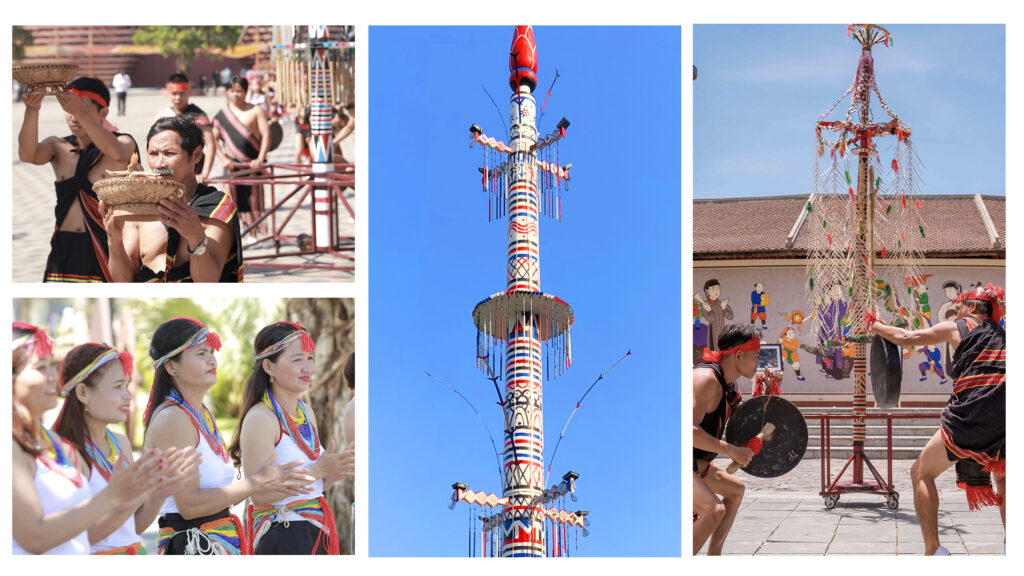
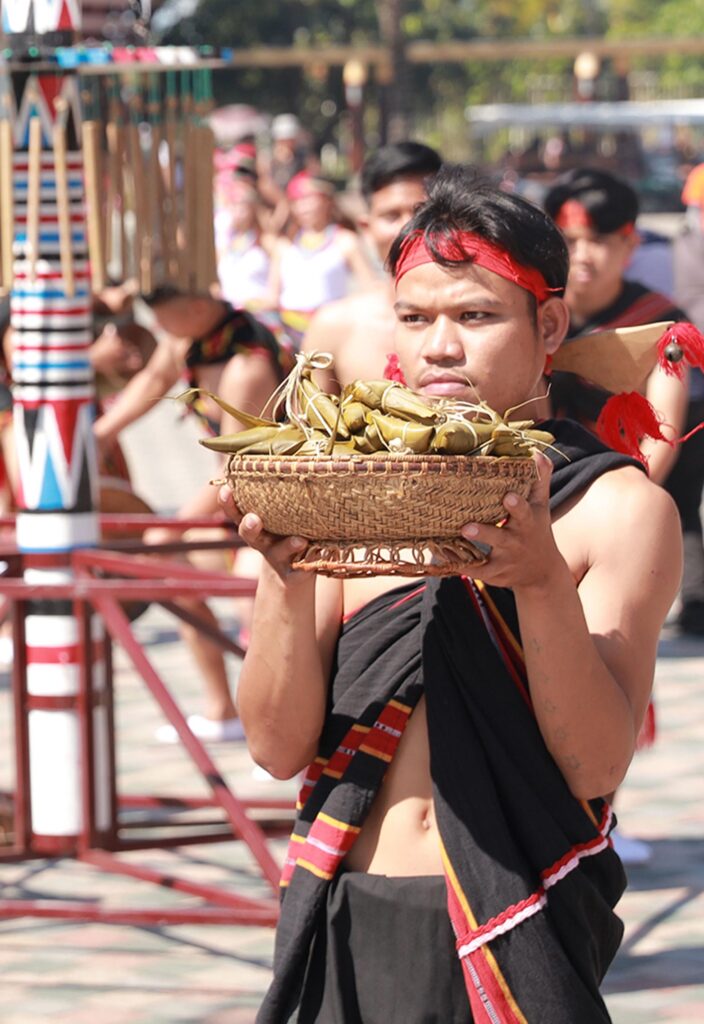
Each year, after the main harvest season when the upland rice is stored, the Cor people hold the New Rice Celebration to thank the deities for a bountiful harvest. The ritual of erecting the Neu tree during this occasion reflects their reverence for heaven, earth, and ancestors. They believe that erecting the Neu tree helps dispel evil spirits and protect the village from misfortune. Through this ritual, the community expresses their wish for harmony with nature, peace, and prosperity.
Besides harvest celebrations, the Neu ritual is also performed during other important community events such as the New House Ceremony, Village Festivals, or when welcoming honored guests — as a way to report to the ancestors and pray for blessings on new beginnings.
According to Cor belief, there are three types of Neu trees:
- Ô zô — erected to worship ancestors,
- Ô rát — for buffalo sacrifice ceremonies dedicated to river, mountain, and forest deities,
- Ô cờ trấu — for buffalo sacrifice rituals offered to the gods of heaven, earth, and water.
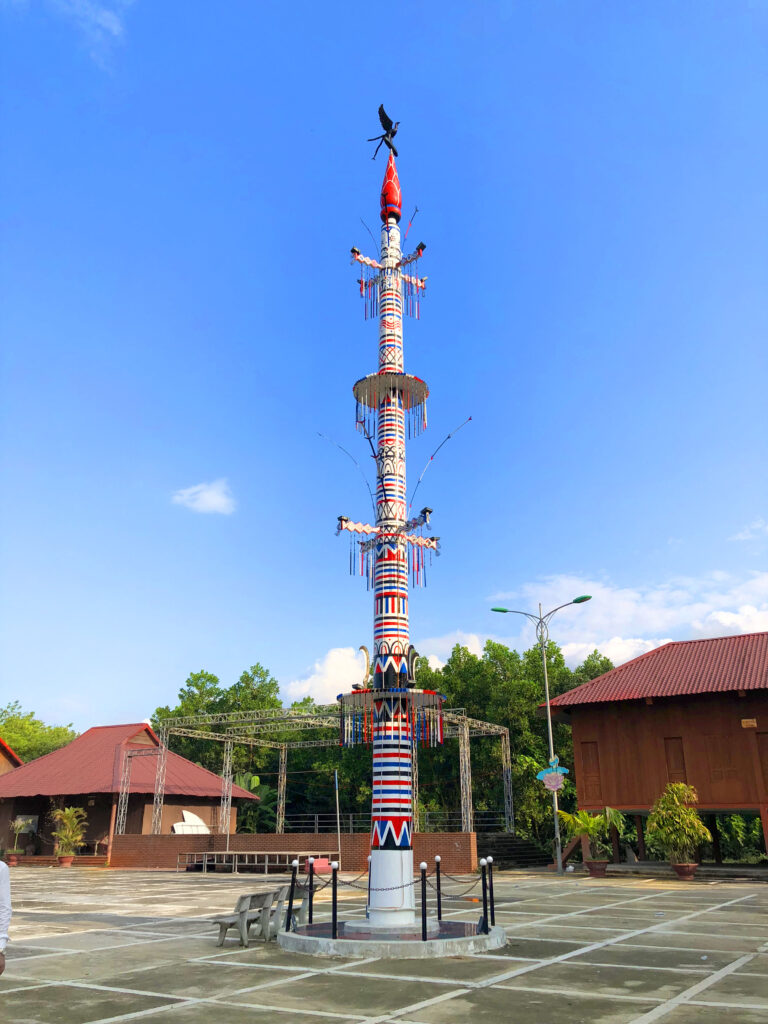
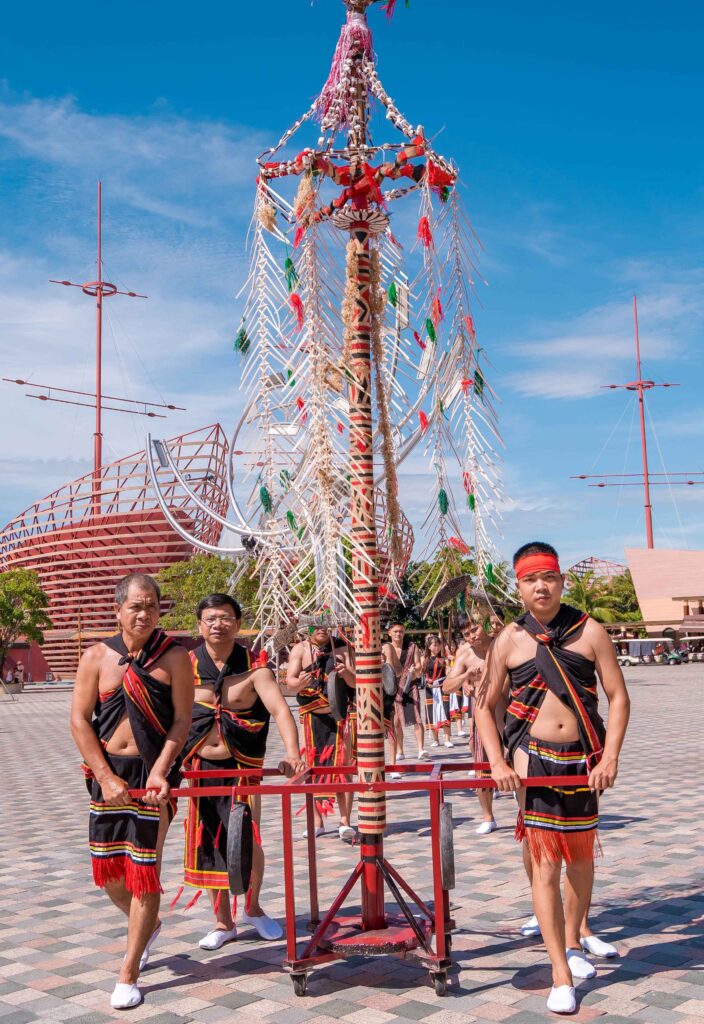
Typically, a Neu tree stands from 5 to 9 meters tall, carefully selected from straight, living chò trees that grow high on clean mountain slopes — never from impure places. Each Neu tree consists of five parts, with similar decorative motifs, differing mainly in the symbolic creature at the top, representing the deity being honored.
One of the most distinctive elements of the Neu tree is the Gu Set, a wooden sculpture placed midway on the tree, serving as both a sacred and decorative centerpiece. Unique to the Cor people, the Gu Set combines traditional carving and folk painting, representing a fusion of spirituality and artistry. It rests on a round wooden tray (thần tray) adorned with vibrant patterns and colored bark tassels. The Gu’s surface often illustrates scenes of daily life, mythical beliefs, or symbolic motifs such as the chò tree, the cinnamon moon tree, and the rainbow — all emblematic of Cor culture.
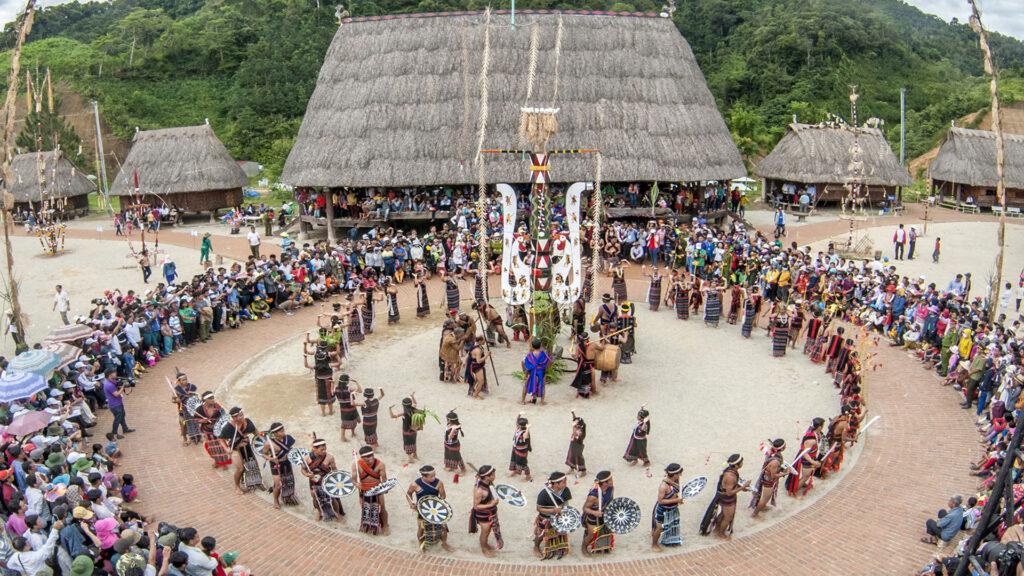
The ritual space is usually a wide courtyard at the village center or in front of the hosting family’s stilt house. The Neu tree stands at the most sacred spot, where the main offerings take place. The ceremony is held at dawn, as the sun rises — believed to awaken the spirits and help prayers ascend smoothly to the heavens.
After the Neu is erected, the Cor community gathers for k’đtấu dances, gong duels, love duet singing, communal drinking, and various folk games. The atmosphere bursts with music, laughter, and movement — celebrating unity, gratitude, and joy after a successful harvest.
A SACRED SYMBOL OF COMMUNITY LIFE
For the Cor people, the Neu tree and Gu Set hold deep spiritual significance — serving as a sacred bridge between humans, deities, and ancestors. The ritual plays a vital role in the cultural and spiritual life of the community, embodying their beliefs, artistry, and collective identity.
Beyond its spiritual meaning, the Neu and Gu ritual reinforces community cohesion. Every villager — from elders to children — participates in preparations and festivities, fostering unity and shared pride. Amid the resounding gongs and graceful k’đtấu dances, the Cor people celebrate together, enjoying buffalo meat and traditional dishes under the shadow of the sacred Neu. It becomes a time of reunion, gratitude, and transmission of ancestral wisdom.
Elders, artisans, and shamans are regarded as “living treasures,” passing down traditional knowledge — from crafting the Neu and Gu to performing rituals, music, and dance — ensuring that the younger generation understands and cherishes their cultural heritage.
The ritual also serves as a composite cultural stage, where various forms of traditional Cor art converge: wooden sculpture through carved animal figures on the Neu; vivid decorative motifs on the Gu; the powerful resonance of gong music; and the lively k’đtấu dances of men and women. Together, they form a magnificent tableau of Cor cultural life, both spiritual and artistic.
HERITAGE EXPERIENCE IN THE TRUONG SON MOUNTAINS
Today, the Cor people of Tra Lien continue to hold traditional festivals featuring the sacred Neu ritual. Visitors who come during this time will witness the exquisite craftsmanship of towering, vividly adorned Neu trees, observe solemn rituals against the backdrop of vast mountains, and hear heartfelt prayers rising to the heavens.
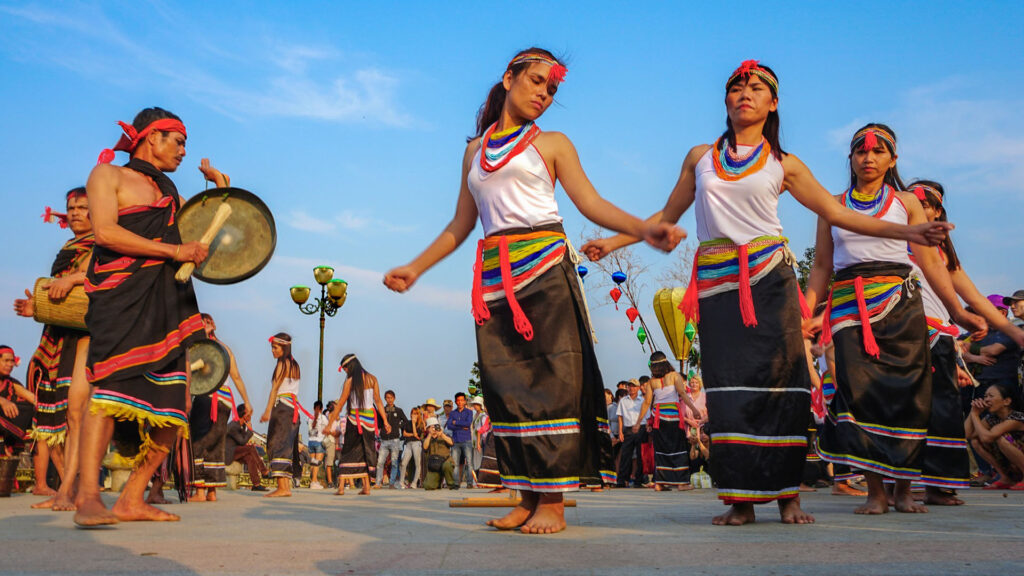
Following the ceremonial part, the festival bursts into color and rhythm — with k’đtấu dances performed by women in traditional costumes, accompanied by gong and drum performances by young men. These two art forms — dance and gong performance — are recognized as distinctive cultural heritages of the Cor, symbolizing their vitality, beauty, and solidarity.
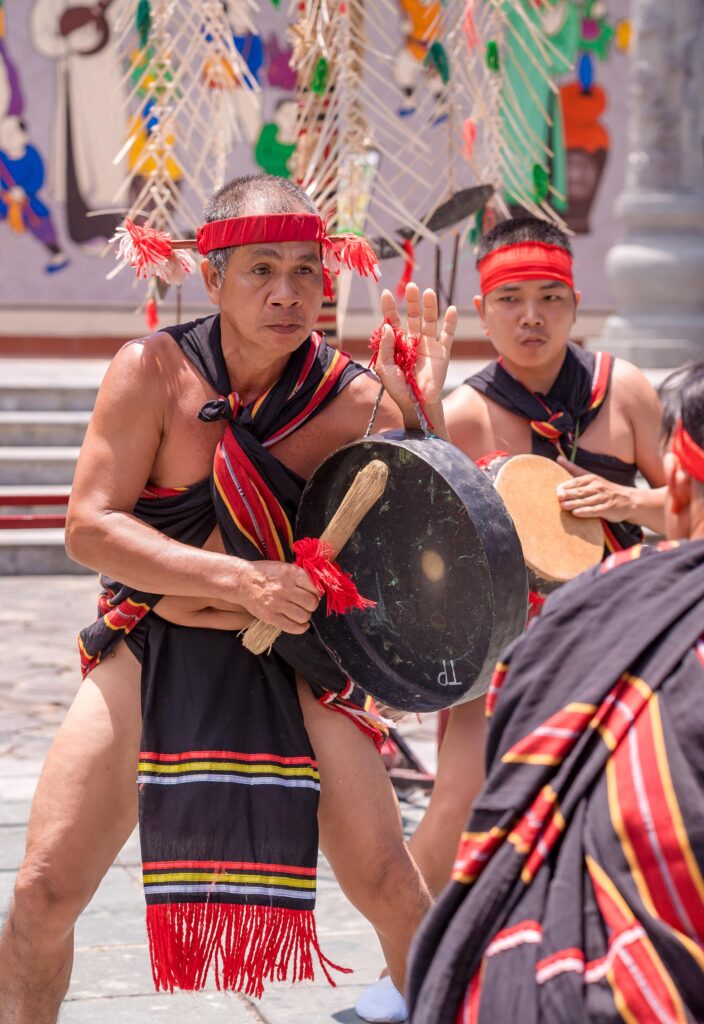

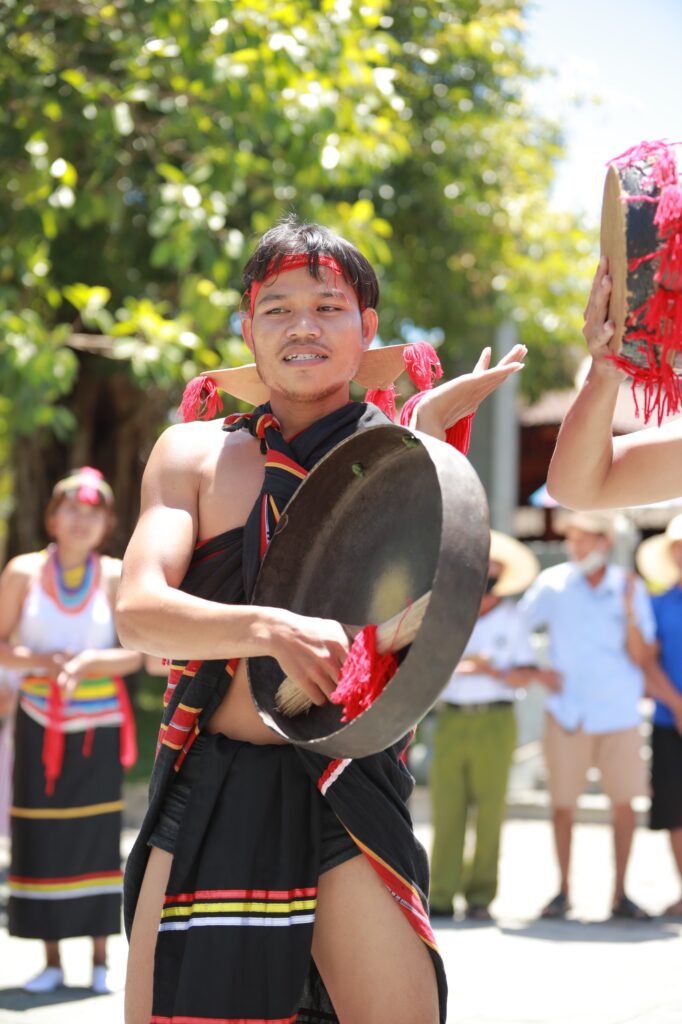
Participating in these activities offers visitors a profound experience of Cor community spirit, warm hospitality, and the enduring cultural identity of this ethnic group amid the grandeur of the Truong Son mountains.
DANANG TOURISM PROMOTION CENTER