















Some journeys do not begin with a destination, but with a return. If you slow down just a little, Tra Giap in the days of May reveals itself in that very way – not displayed, not calling out, only quiet enough for you to step in and feel on your own.
Over two days, May 18–19, 2026, in Village 2, Tra Giap Commune, the 1st Tra Giap Ethnic Cultural Festival unfolds within the community’s everyday rhythm. You will not see the culture of the Cor and Ca Dong separated for performance; instead, you encounter it through daily routines, labor, and the way people exist alongside nature. From gong sounds, rituals, and handicrafts to everyday meals, each value needs little explanation yet is deeply felt – quietly, naturally, and close to its most original state.
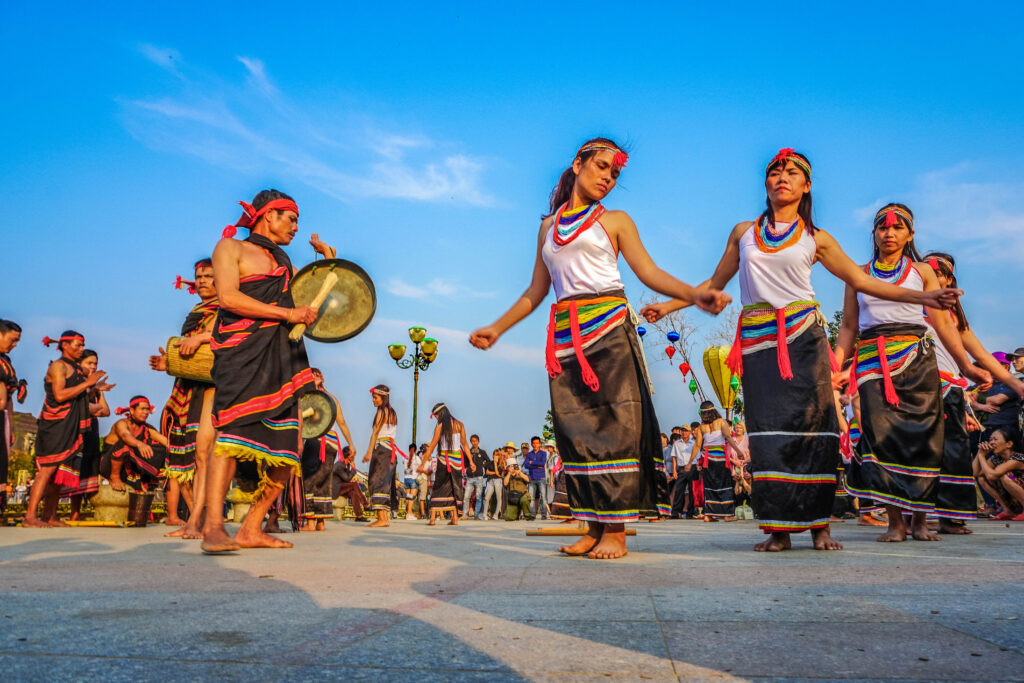
The festival space opens not for observation from afar, but for participation. At 7:30 PM on May 18, the opening ceremony begins with the slow, resonant rhythm of gongs. The sound expands into the space, then reaches you. Movements unfold organically, without a clear boundary between participant and observer. Pause for a moment, and you may realize you have already become part of that rhythm.
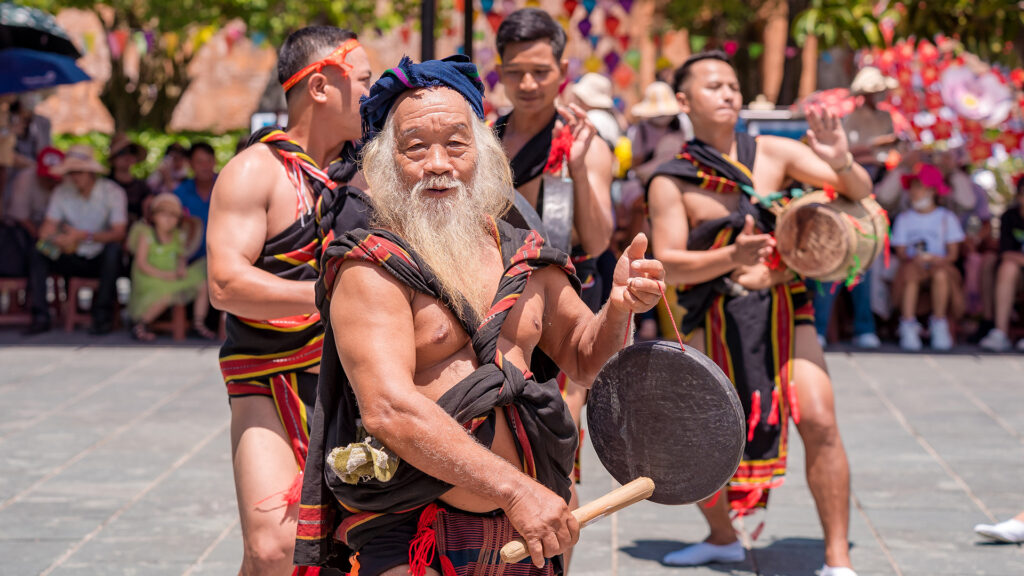
Along the traditional stalls (May 18–19), each step reveals another layer of life. You may touch local products, watch a stilt house being reconstructed, or simply sit by a fire where stories are not told in words, yet remain present. Nothing is arranged for display; everything exists as it always has.
Sound continues to guide the journey through the gong performance competition (4:00 PM, May 18) and the mass gong dance (6:00 PM the same day). The performers do not remain fixed on a stage; they move through space, allowing you to follow, come closer, and let the sound shape your emotions.
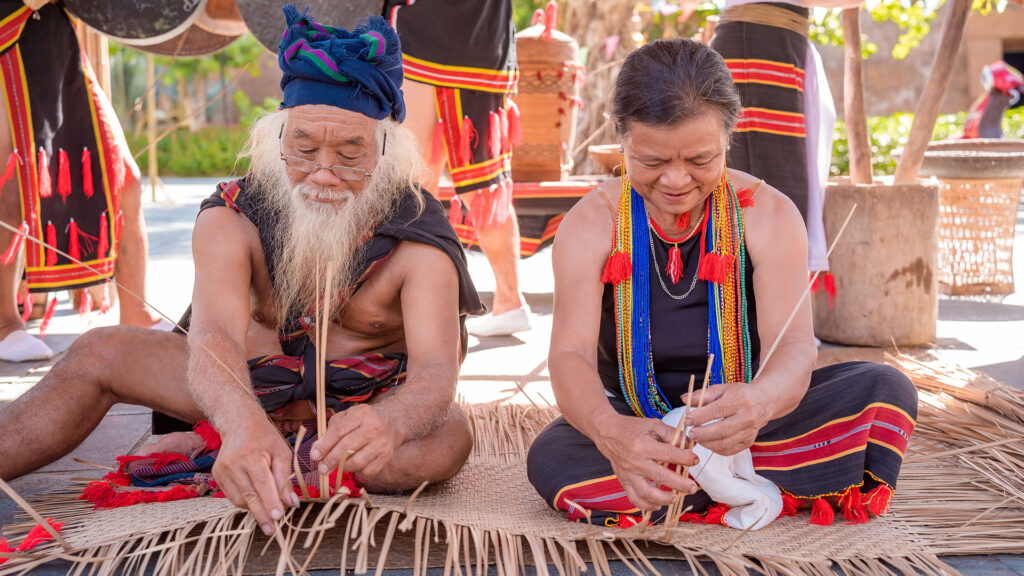
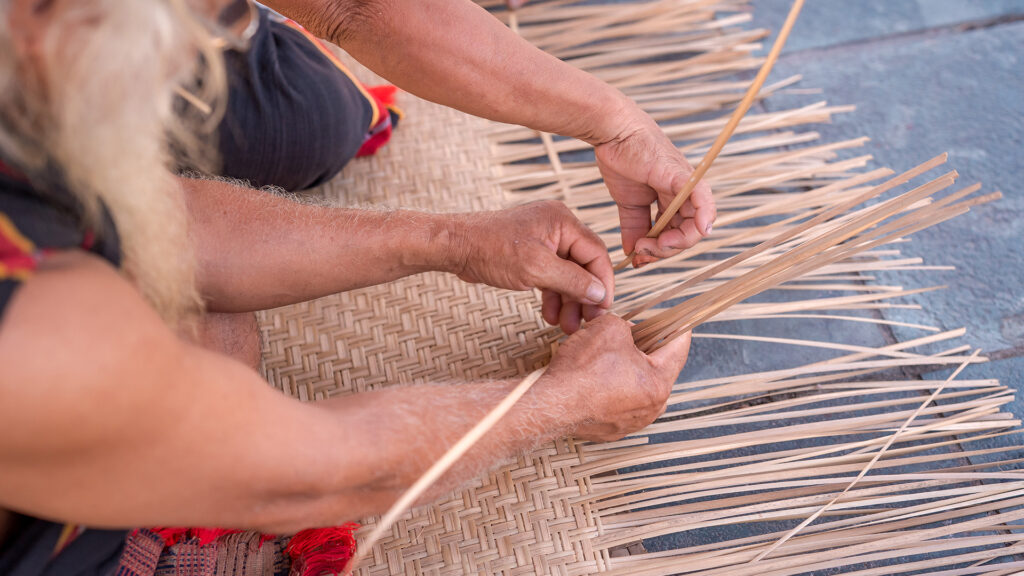
As you begin to take part, the distance almost disappears. At the bamboo and rattan weaving competition (2:00 PM, May 18), you may sit beside artisans, observe each movement, and try weaving your own uneven patterns. At the traditional culinary area (3:00 PM), you not only taste but also witness how dishes are prepared and how local ingredients are preserved through small, careful details.
Earlier that morning, the ceremonial Cay Neu reconstruction (9:00 AM) unfolds at a slower pace. You can pause to observe how the pole is erected and how rituals are practiced – not merely as a form, but as a living continuation of daily life.
On May 19, if you choose to go a little further, the journey leads to cinnamon gardens (8:00 AM). There, you do not simply observe; you walk among the trees, touch the bark, and sense the subtle yet lasting fragrance – something that has been intertwined with the lives of the Cor and Ca Dong through many seasons.
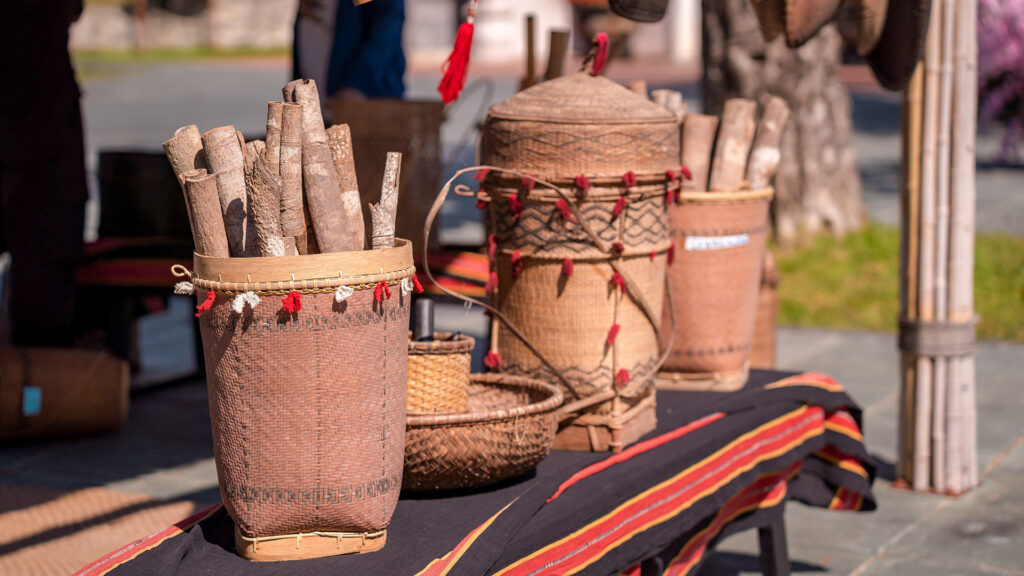
That same morning, traditional offering rituals (8:00 AM) take place in an open space. You may stand close, observe each detail, without needing to fully understand, yet still feel the connection between people and the beliefs they preserve.
In another corner, the rice pounding and cooking competition (10:00 AM) offers a more direct experience. As you try holding the pestle and follow the first rhythms, you begin to understand how such a familiar activity requires coordination and experience.
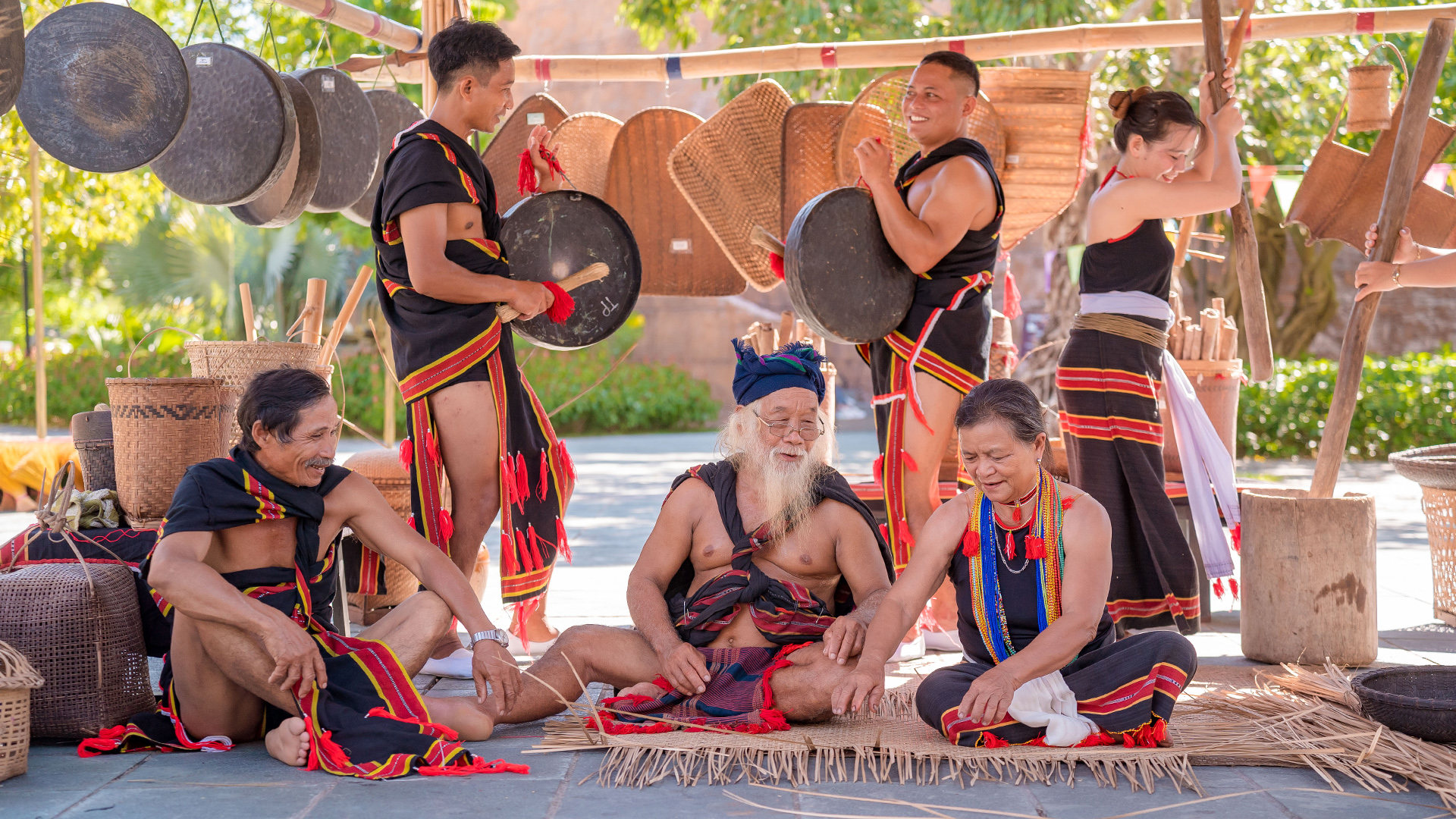
By the afternoon of May 19, as the festival gradually quiets, the space returns to its everyday rhythm. There is no clear ending point. Only the fading sound, the slowing steps, and the realization that you have just passed through an experience difficult to name.
What remains is not how many activities you joined, but the sensations you carry with you: a first attempt at weaving, an unfamiliar rhythm of pounding rice, a lingering hint of cinnamon, or the echo of gongs still resonating.
And perhaps Tra Giap is meant to be touched in this way – not through a fixed itinerary, but through your own rhythm of feeling, deep enough to remember.
DA NANG TOURISM PROMOTION CENTER