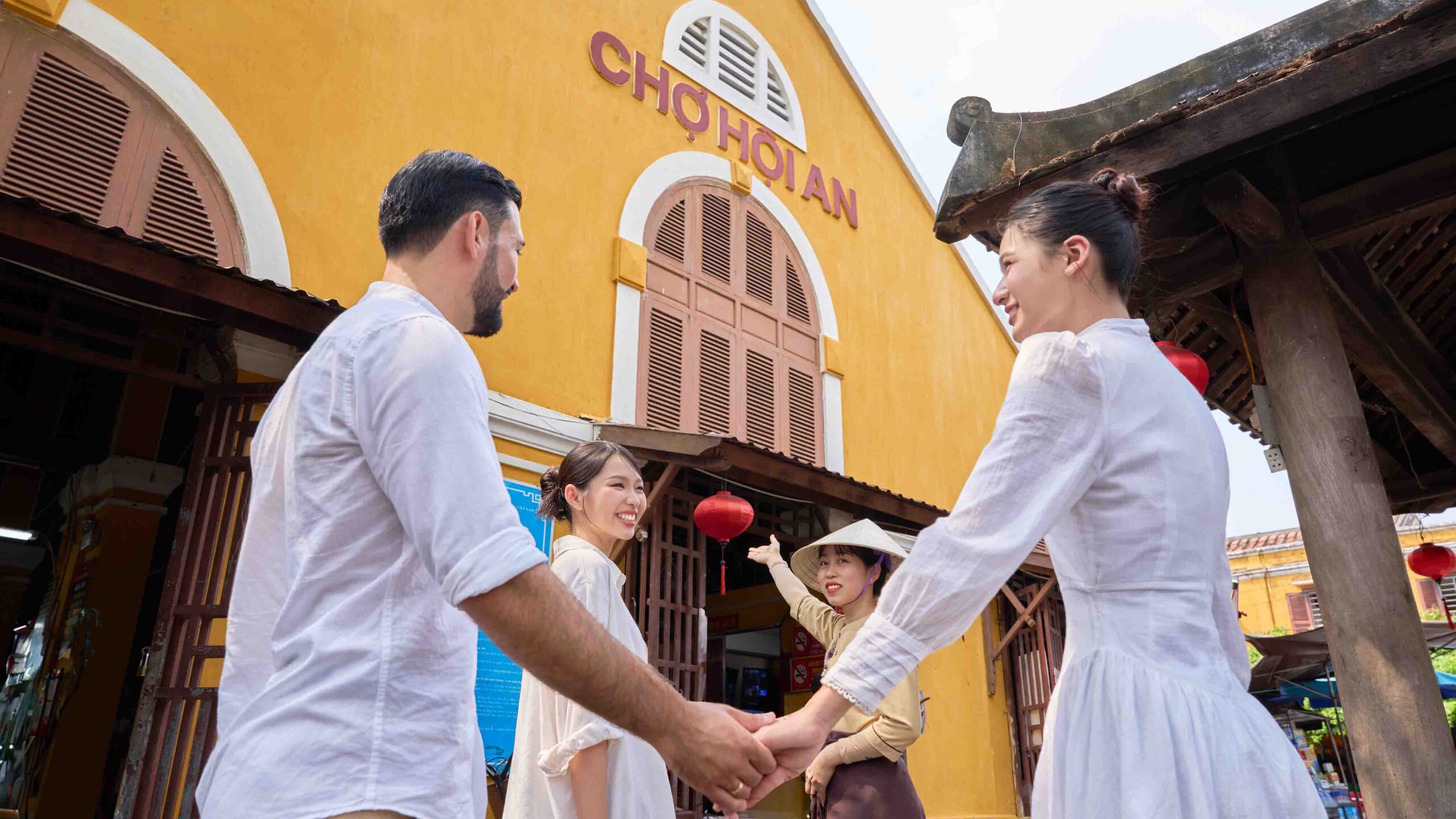
















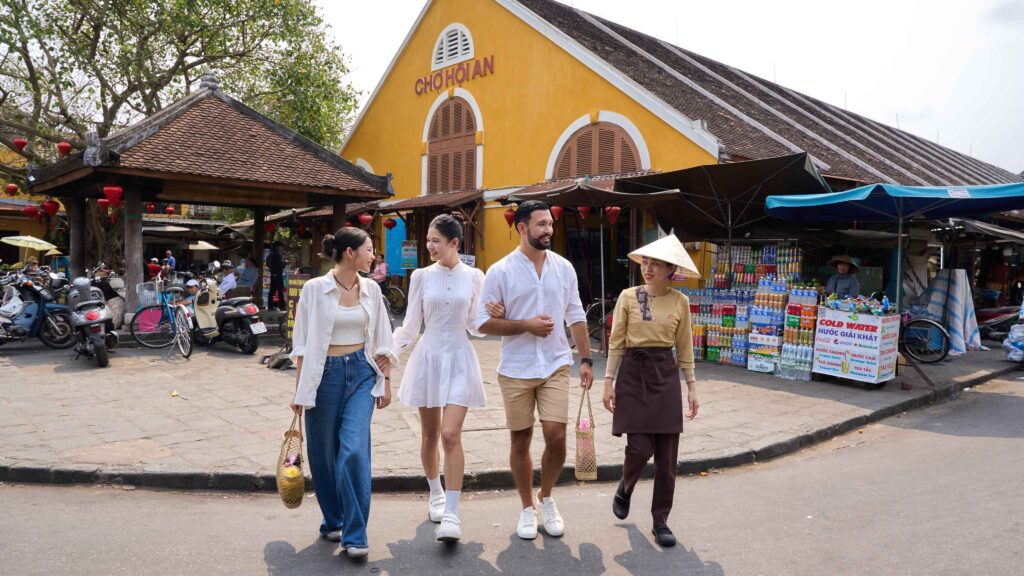
Located within the Ancient Town, Hoi An Market is one of the traditional shopping destinations that attracts visitors to Hoi An. More than a place for the daily exchange of goods among local residents, the market also preserves the long-standing trading spirit of a once-bustling commercial port by the Thu Bon River.
Hoi An Market is located on Tran Phu Street, near the Bach Dang riverside area, right in the heart of Hoi An Ancient Town. With its convenient location, the market is an ideal stop for visitors to combine a walk through the Ancient Town, a stroll along the river, shopping for local specialties and souvenirs, and experiencing the rhythm of local life.
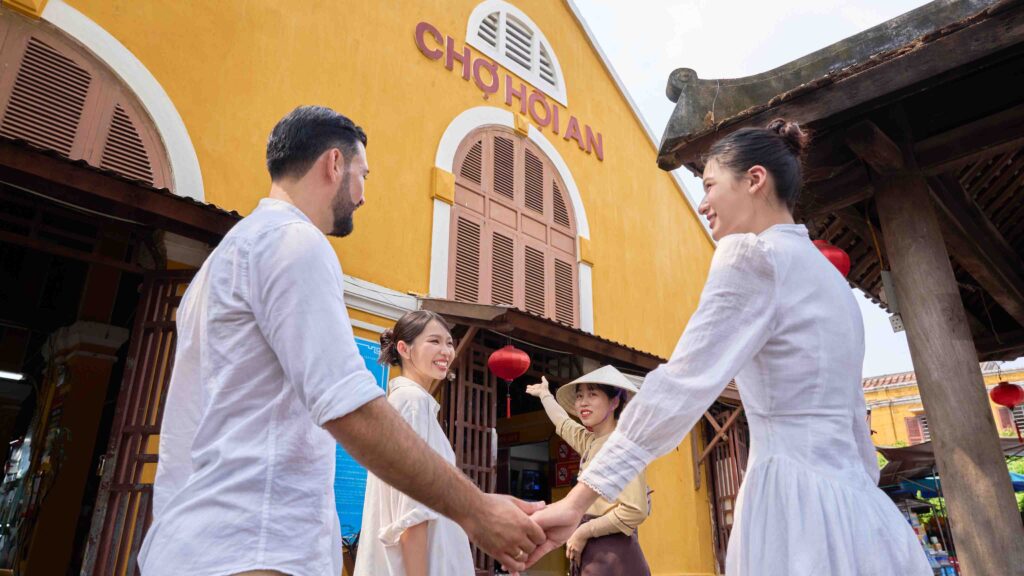
The market carries the character of a traditional Central Vietnamese market, where goods are arranged by product groups, from vegetables, fruits, spices, seafood and dried products to fabrics, household items, footwear, clothing, leather goods and souvenirs. Though not overly large, Hoi An Market has its own appeal thanks to its friendly atmosphere, vivid colours and the distinctive feeling of “going to market in Hoi An”.
A visit to Hoi An Market is not only about shopping. It is also a chance to observe how local residents choose goods, exchange conversations, wrap up local produce, prepare ingredients for family meals and preserve a warm trading culture that has become part of the identity of the Ancient Town.
History of Hoi An Market
According to materials from the Hoi An Center for World Cultural Heritage Preservation, the current Hoi An Market, located in Hoi An Ward, was established around 1848, after Nguyen Thai Hoc Street was formed following 1840. Before that, the market was located in front of Ong Voi Communal House, also known as Hoi An Communal House, stretching along Le Loi Street to Tran Phu Street and bordering the riverbank. When it was moved to its current location, the market gathered all the key elements of a traditional marketplace: close to the town, close to the river and close to the main road network of Hoi An.
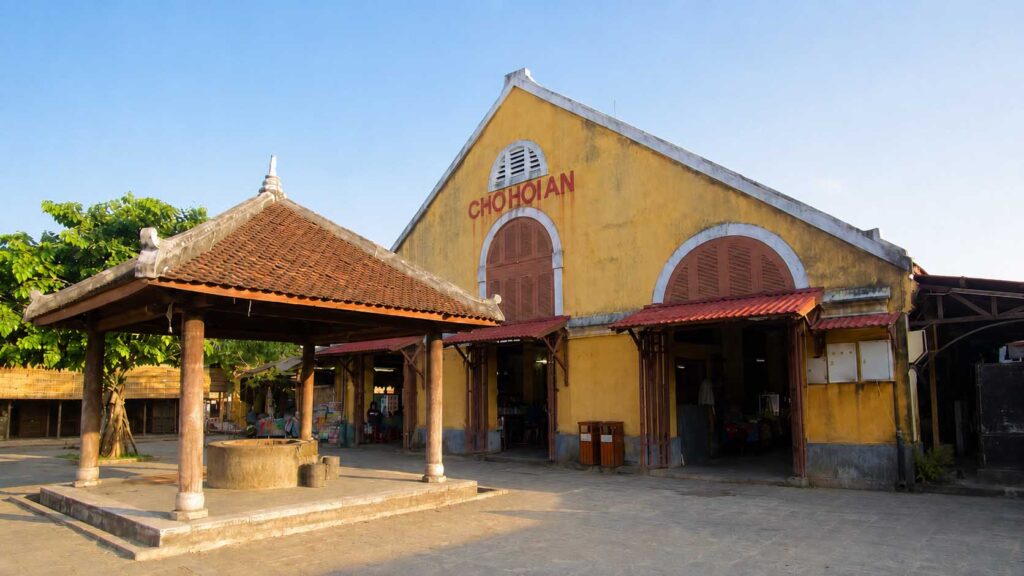
Hoi An Market is not only a trading place but also a space that reflects the commercial history of the Ancient Town. In its early period, the market was where agricultural, handicraft and fishery products were exchanged, mainly serving local self-sufficient needs. As the commodity economy developed and Hoi An came into contact with Western merchants, trading activities gradually expanded into the residential areas of the town.
During the age of the trading port, the whole of Hoi An was once likened to a “large marketplace”, where goods converged from many regions by waterways and land routes. Research materials show that Hoi An was once a gathering place for goods from the upper, middle and lower reaches of the Thu Bon River, coastal estuaries and various other regions, contributing to the prosperity of Hoi An as a historic commercial port.
Today, Hoi An Market still reflects the spirit of the old marketplace. Although its goods no longer serve international trade on the same scale as in the past, they remain diverse, ranging from agricultural products from the countryside around Hoi An, fabrics, handicrafts, river and coastal seafood to local forest and agricultural products such as areca, cinnamon, pepper, chilli and many Quang-inspired local specialties.
What makes Hoi An Market valuable is not only the richness of its goods, but also its friendly, intimate and unmistakably Hoi An trading culture. The market is lively and colourful, yet still carries a familiar and gentle feeling, allowing visitors to wander around at ease, chat with vendors, choose local specialties and souvenirs, and feel the local rhythm through each stall.
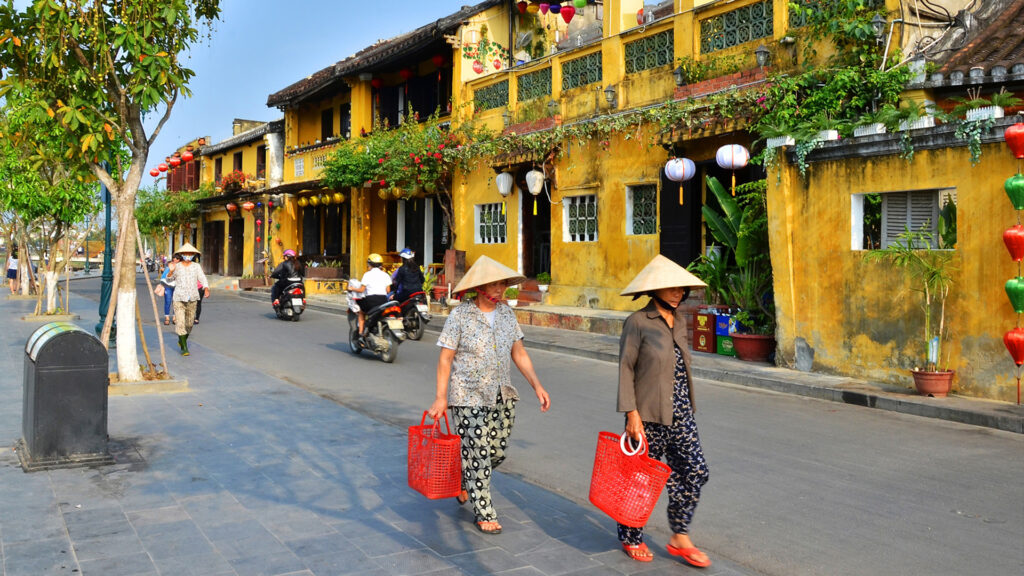
Address and Suggested Visiting Time
Address: Tran Phu – Bach Dang – Tran Quy Cap – Tieu La area, in the centre of Hoi An Ancient Town, Hoi An Ward, Da Nang City.
Suggested opening hours: Around 5:00 AM – 6:00 PM daily.
Best time to visit: Early morning to feel the lively atmosphere of a local market, or late afternoon to combine a gentle shopping experience with a walk through the Ancient Town and nearby souvenir stalls.
The market is located in an area that is easy to access on foot from many attractions in the Ancient Town. According to several travel guides, the market is surrounded by Tran Phu, Bach Dang, Tran Quy Cap and Tieu La streets, with areas selling spices, cooking utensils, fresh food, fish and seafood.
What to Buy at Hoi An Market?
Local Specialties, Cakes and Gifts to Bring Home
For visitors looking for small gifts carrying the flavours of Hoi An and the Quang cultural identity, the specialty, traditional cake and dried goods stalls are a good place to start. Popular choices include Hoi An mung bean cakes, banh it la gai, banh thuan, banh to, banh su se, grilled coconut cakes, sesame candies, dried sesame cakes, Hoi An chilli sauce, dried mi Quang or cao lau noodles, spices, tea, jams, nuts, dried goods and packaged local products.
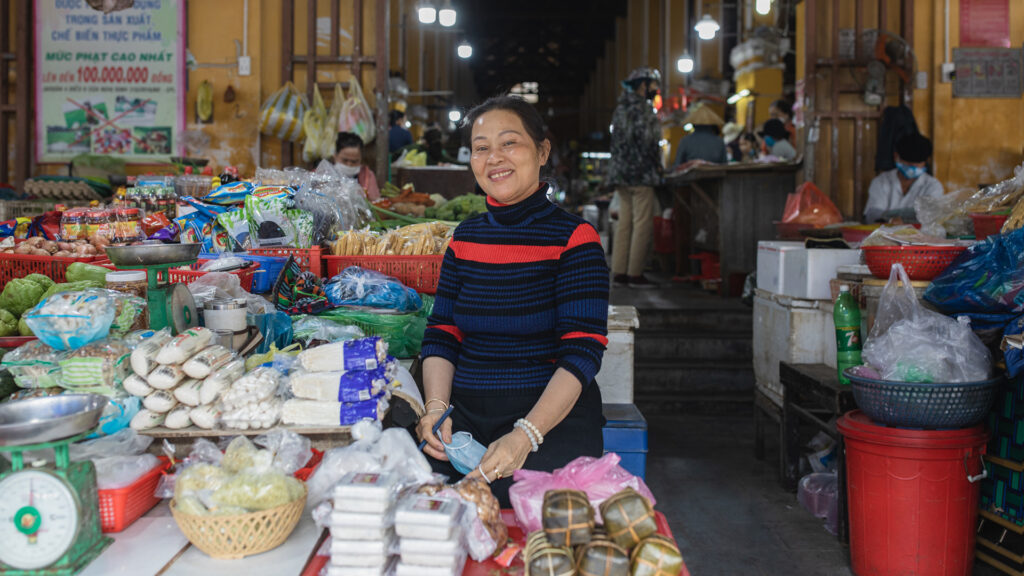
In addition to regional cakes and specialties, coffee is also a favourite choice among many international visitors who want to explore the flavours of Viet Nam. At the market and shops around the Ancient Town, visitors can find instant coffee, whole-bean coffee, ground coffee, Vietnamese coffee filters, cups, spoons and compact brewing tools to bring home as gifts or to recreate the Vietnamese coffee experience after the trip.
Vegetables, Herbs and Local Produce
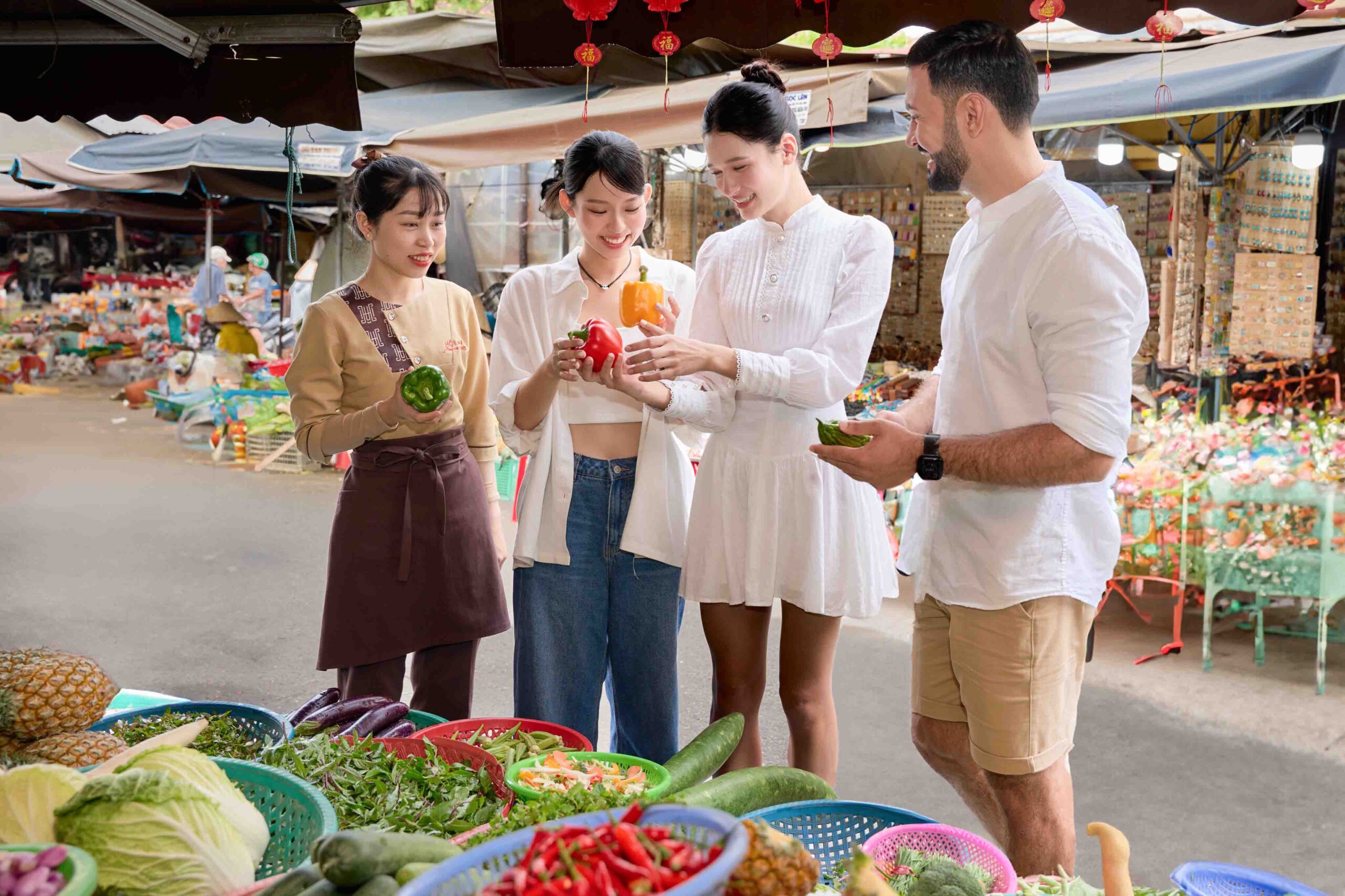
One of the appealing features of Hoi An Market is its stalls selling agricultural products, herbs, fruits and fresh ingredients. This is where visitors can see herbs, tropical fruits and ingredients used in signature Quang-inspired dishes such as cao lau, mi Quang and local family meals.
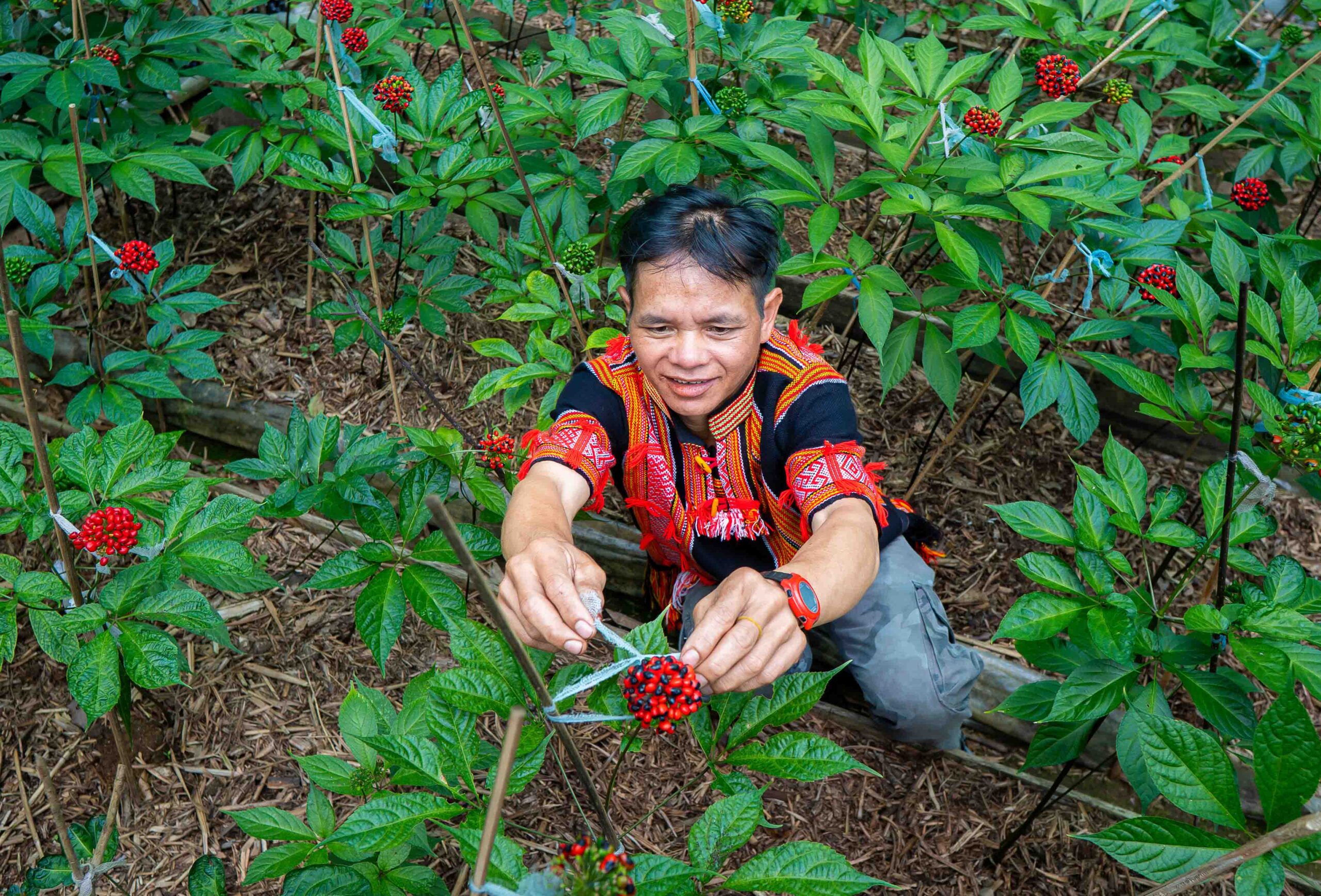
From the countryside around Hoi An, bundles of green vegetables, fresh herbs, pumpkin flowers, fruits, fish, shrimp and Central Vietnamese seafood are brought to the market by small traders, creating a shopping space that feels both familiar and full of colour. This connection between the countryside, river areas, the Central Vietnamese coast and the Ancient Town is what creates the distinctive feeling of visiting Hoi An Market.
Souvenirs, Handicrafts and Charming Local Products
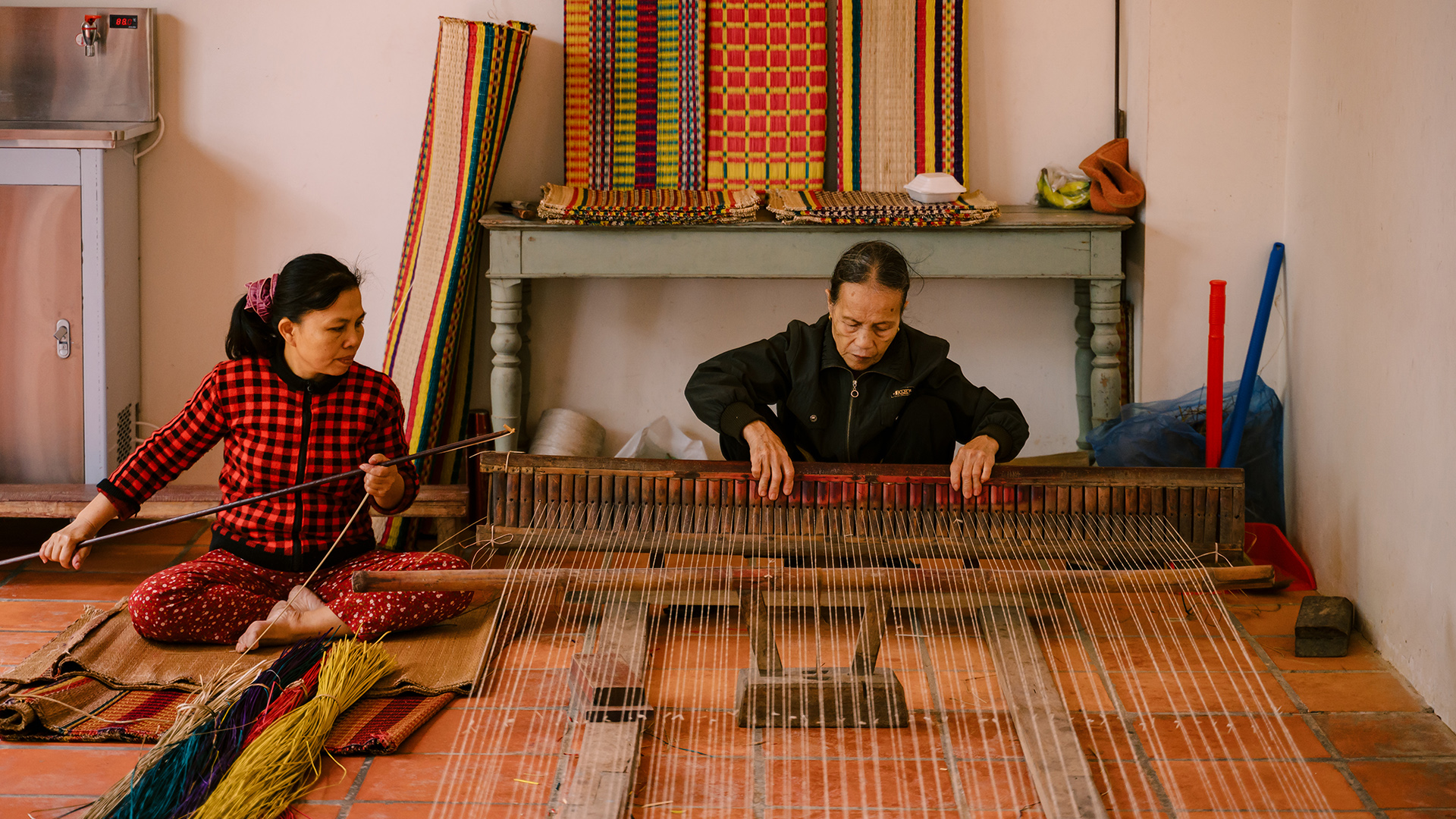
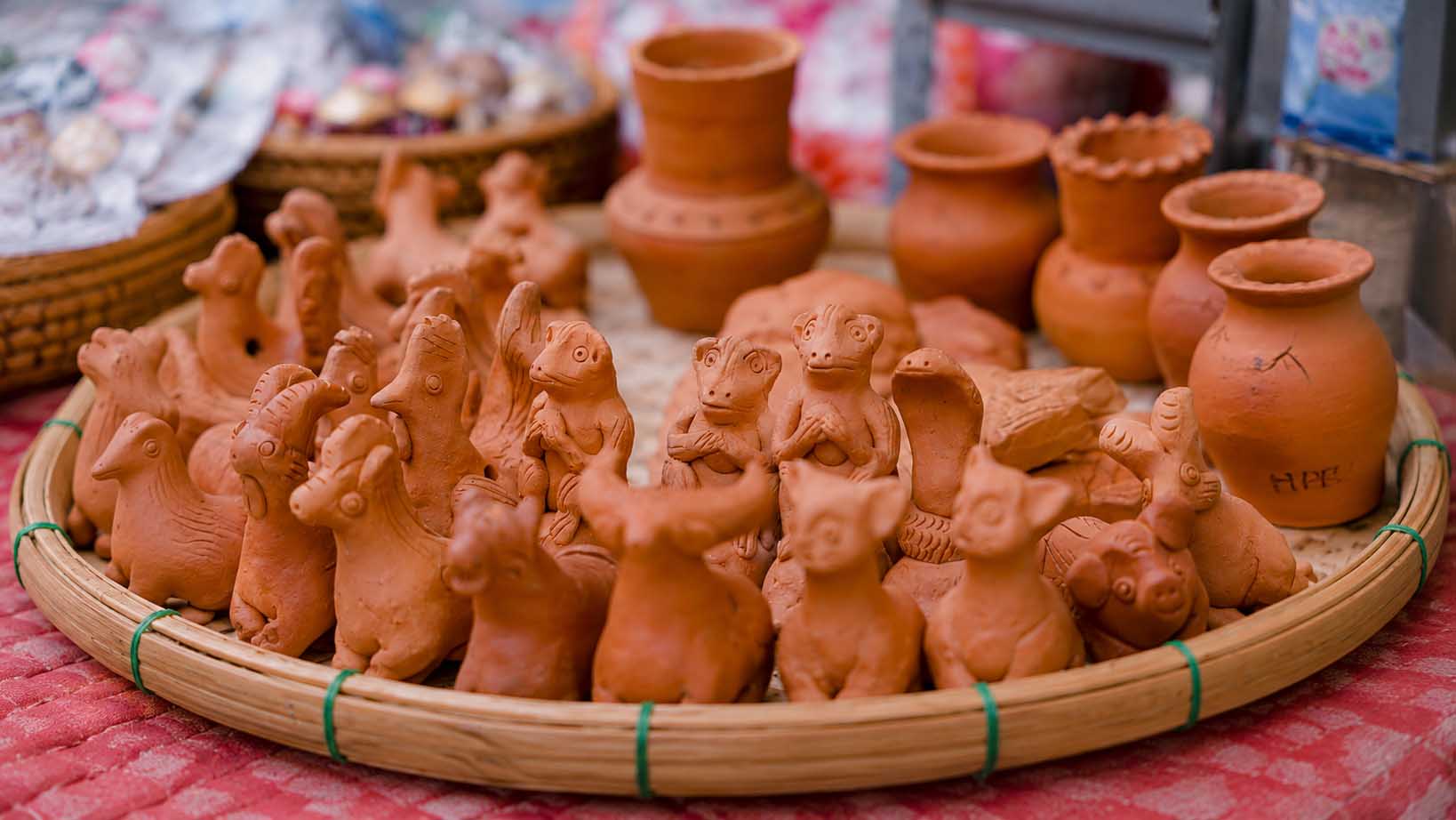
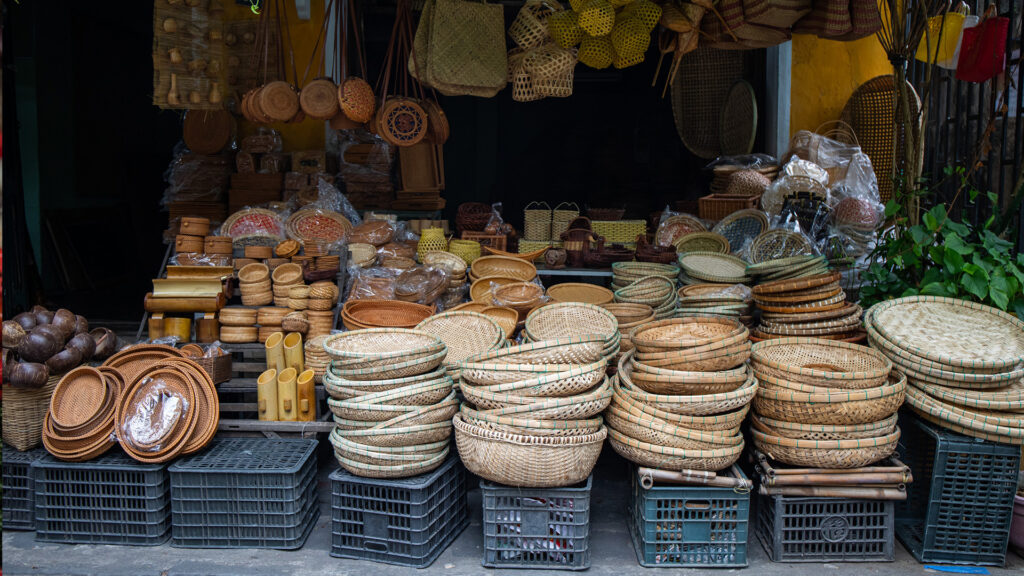
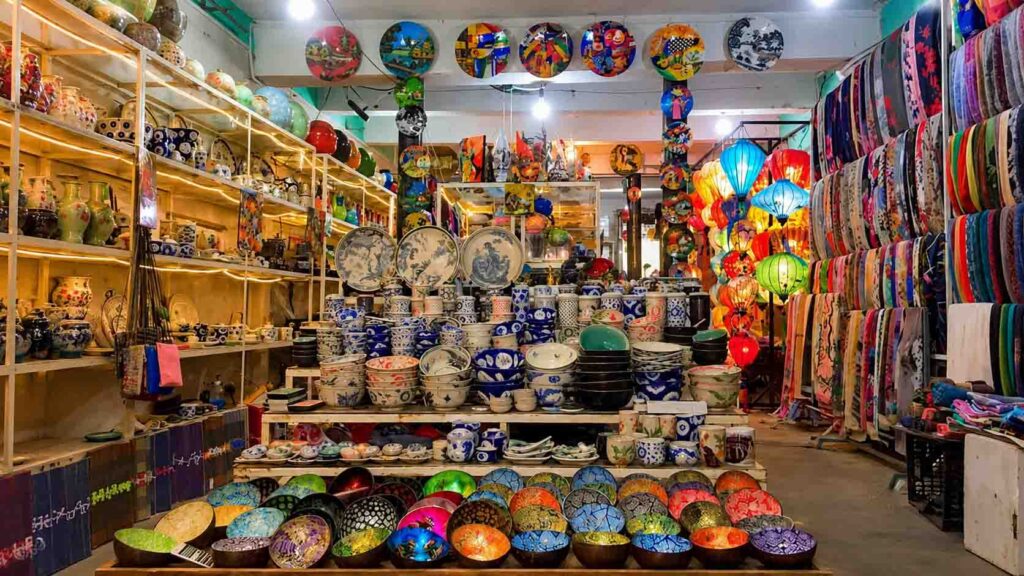
Alongside specialties and locally flavoured gifts, Hoi An Market is also where visitors can find many charming souvenirs that carry the spirit of the Ancient Town. From lanterns, fabric bags, woven baskets, keychains, postcards, paintings and decorative items to wooden, rattan, bamboo and ceramic handicrafts, each item evokes the rustic yet refined beauty of Hoi An.
Visitors can also choose bracelets, handmade jewellery, small accessories, decorative gifts or products featuring Ancient Town patterns to bring home as keepsakes. These gifts are suitable not only for family and friends, but also as a way to preserve a part of the memory of Hoi An, where lantern lights, moss-covered tiled roofs, golden walls and a slow rhythm of life have become familiar images in the hearts of travellers.
Leather Goods, Footwear, Clothing and Accessories
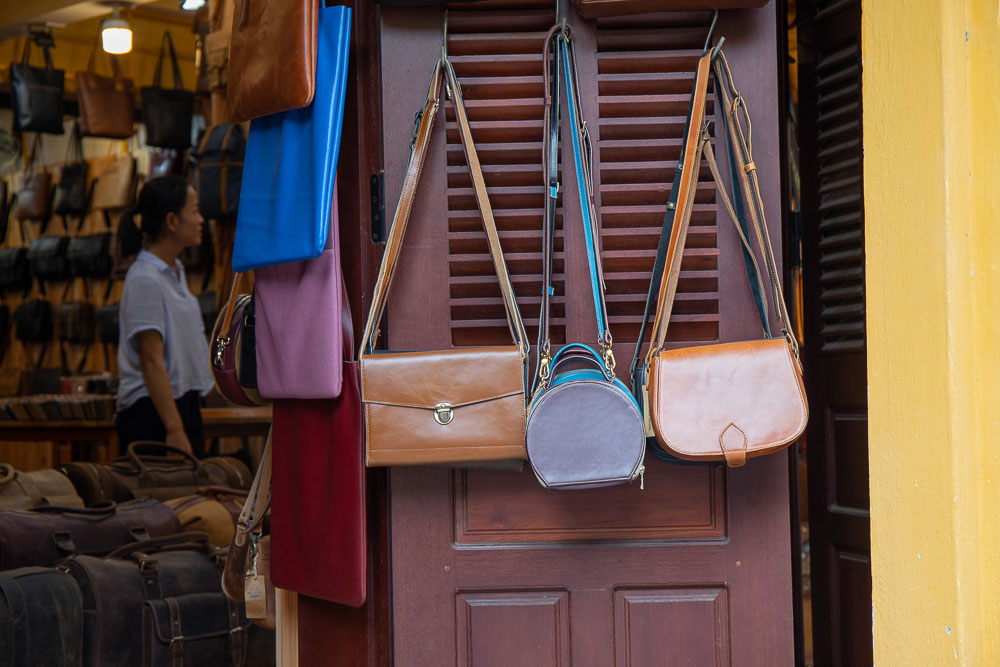
Around the market and nearby streets, there are many stalls selling clothing, handbags, leather wallets, belts, sandals, shoes, scarves, hats and accessories. These products are suitable for visitors looking for practical, easy-to-use items with diverse designs and flexible prices.
When buying non-food products, visitors can ask for prices, compare a few stalls and bargain politely. Shopping at the market is not only about choosing the right item, but also about enjoying a friendly exchange with local vendors.
Fabrics and Quick Tailoring Experiences
In addition to stalls selling specialties, household items and souvenirs, Hoi An Market also has areas offering fabrics in various materials, colours and patterns. This is an interesting stop for visitors who want to buy fabric, scarves, ready-to-wear clothing or choose materials for custom-made outfits.
Hoi An has long been known for its quick tailoring services, suitable for travellers who want to have ao dai, dresses, shirts, suits, trousers or travel outfits made to their personal measurements. After choosing the fabric, visitors can discuss the design, colour, pattern and completion time directly with the tailor.
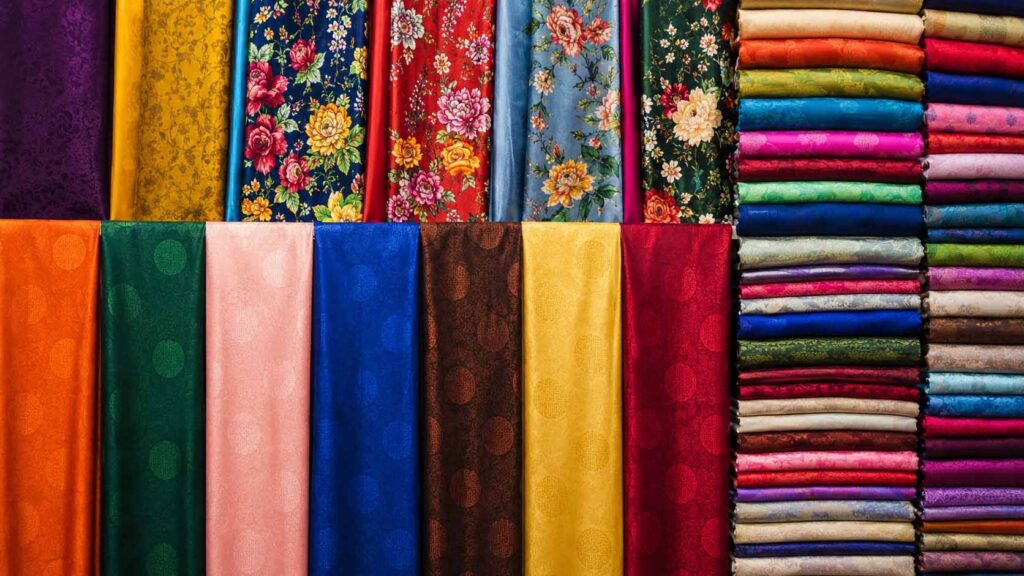
The tailoring experience in Hoi An is not only a shopping activity, but also a way to feel the craftsmanship, sophistication and aesthetic taste of the Ancient Town, once a trading point for fabrics, silk and handicrafts. With enough time, visitors should set aside part of a day to choose fabric, take measurements, schedule a fitting and receive the finished product before leaving Hoi An.
Tips for Shopping at Hoi An Market
Visitors are encouraged to go to the market in the morning to experience the liveliest trading atmosphere, with the freshest goods and most colourful scenes. This is also a suitable time to observe local life and choose food items, cakes, fruits or specialties to bring home.
It is useful to prepare small-denomination cash for easier shopping, especially when buying small gifts, traditional cakes, fruits, spices or souvenirs.
For food items, cakes and specialties to bring home, visitors should ask carefully about expiry dates, storage instructions and packaging options for long-distance travel. Priority should be given to products with clear packaging, producer information and specific usage instructions.

For souvenirs, clothing, leather goods, footwear, accessories and handicrafts, visitors can browse a few stalls before buying to compare designs, materials and prices.
When bargaining, it is best to keep a cheerful and polite attitude. This is also an enjoyable part of the traditional market experience, giving visitors more opportunities to communicate and feel the friendliness of local vendors.
For quick tailoring, visitors should go early in the day, prepare reference photos or clearly describe the desired design, ask about the completion time in advance and arrange a fitting before receiving the final product.
When buying fragile items such as ceramics, decorative pieces, paintings, lanterns or handicrafts, visitors should ask vendors to pack them carefully for convenient transport.
Around Hoi An Market and nearby streets, there are many travel agencies, tour information points and transport services. Visitors who wish to book sightseeing tours, craft village experiences, transfers to nearby attractions or onward transport can combine shopping with gathering information. Before confirming any service, they should check the itinerary, price, cancellation policy and contact details carefully.
Suggested Experiences Nearby
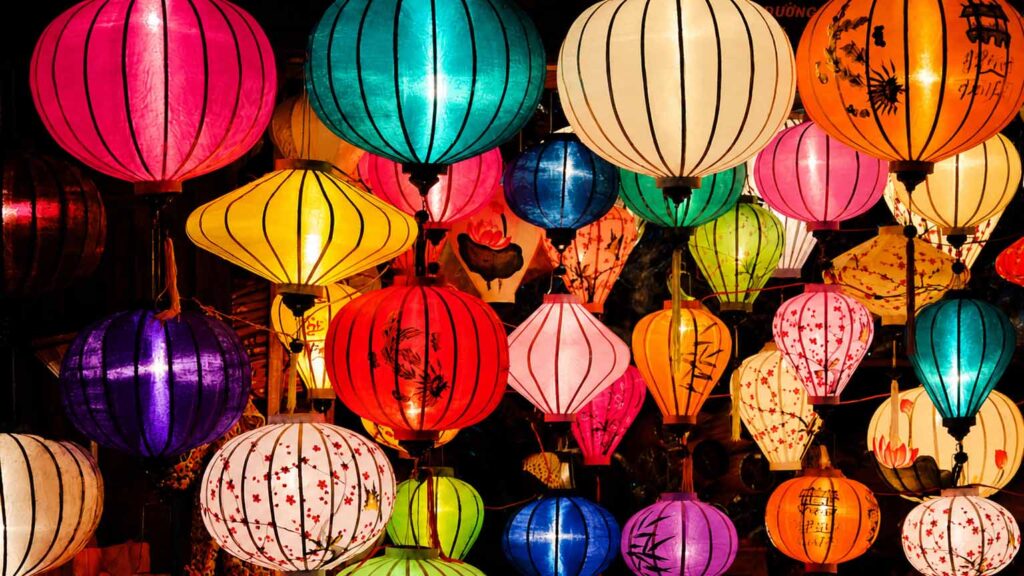
After shopping at Hoi An Market, visitors can continue walking along the Ancient Town streets, visit the Japanese Covered Bridge, assembly halls, old houses and the Hoai River bank, or combine the trip with a visit to the night market, floating lanterns and the evening atmosphere of Hoi An.
A walk through Hoi An Market is not only a journey to find specialties or souvenirs. It is also an opportunity to touch local life, where every stall, every bundle of vegetables, every piece of fabric and every lantern tells a small story about the Ancient Town.
DANANG TOURISM PROMOTION CENTER