














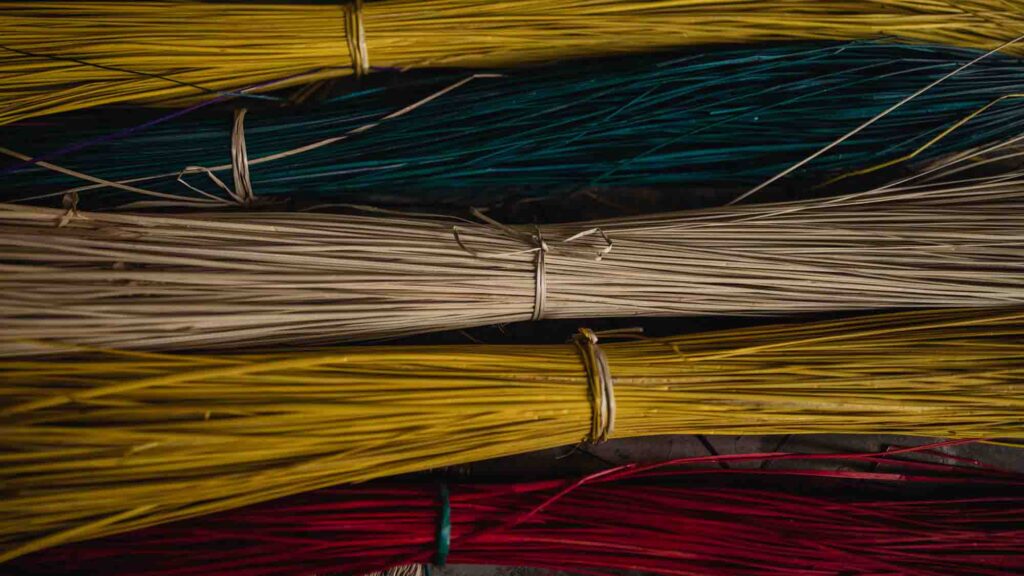
In the early morning sunlight of Da Nang’s riverside countryside, bundles of green, red, yellow and purple sedge are spread out in front of village homes. The breeze passes over the fields, carrying the earthy scent of freshly dried sedge, while the steady rhythm of a loom echoes from a small house: clack, thump, clack—unhurried yet persistent.
Amid the changing pace of life, this familiar sound continues to tell the story of a traditional craft that has accompanied local communities for generations. From sedge plants grown on riverside alluvial land, through the skilful hands that split, dye and weave each fibre, simple mats gradually take shape, carrying the colours of the countryside, family memories and the rhythms of everyday life in Quang Nam.
More than a familiar household item, the mat has long been part of the most intimate spaces in every home: a place to rest after a day of work, where families gather and where the daily routines that shape local culture are preserved.
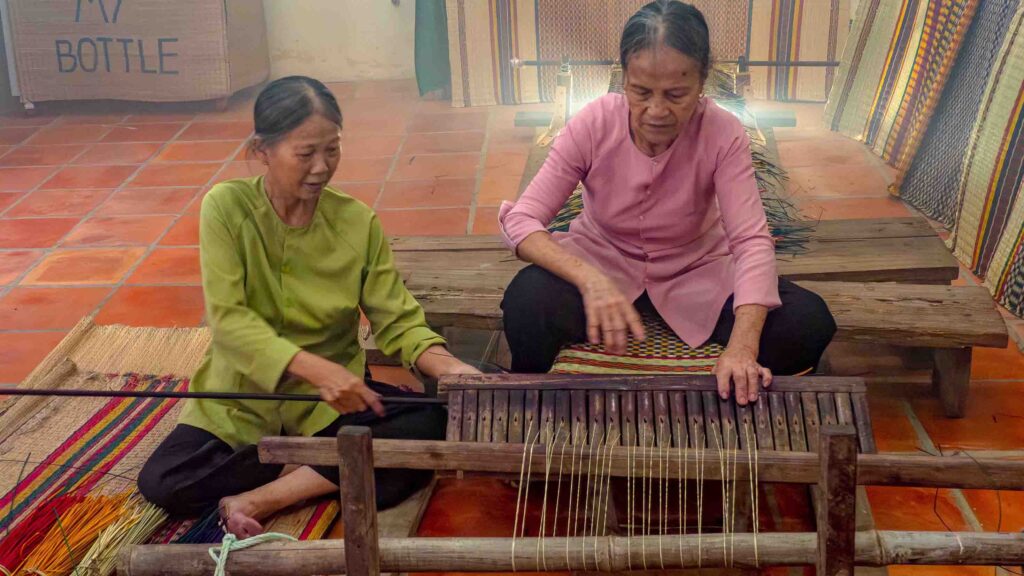
Photo: Huynh Van Truyen
From the Riverside Sedge Fields
The mat-weaving tradition found across present-day Da Nang developed and spread within a broad cultural landscape closely associated with land reclamation, village formation and the movement of communities along the Thu Bon River basin.
Historical records of mat weaving in Hoi An indicate that mats were already common household items in the Dang Trong region by the early 17th century. Long-established mat-weaving villages such as Ban Thach, An Phuoc and Triem Tay strongly influenced the formation of craft neighbourhoods in Hoi An. As women moved to their husbands’ villages or groups of residents settled in new areas, the craft continued to take root, creating specialised weaving communities beside riverside alluvial fields.
Each mat-weaving village has its own story, but all begin with materials drawn directly from nature.
The surface of the mat is made from lat, also known as sedge. Jute is split into thin strands and joined into long warp cords, forming the framework that holds the sedge fibres neatly together. Traditional weaving tools also carry simple local names, including the kho or wooden beater, the cay lui or shuttle rod, the con ngua or loom support, the crossbar and the tool used to join the warp cords. Most are made from mature bamboo, wood, areca-palm trunks and other materials readily available in rural life.
Looking at the smooth surface of a finished mat, few people would imagine the many days of sunshine, the seamless coordination between two weavers and the countless small techniques passed down through observation, practice and memory that lie behind it.
A Mat Shaped by Many Seasons of Sunlight
After harvesting, the sedge is brought to the family courtyard, where stems that are too young or too old are removed before the remaining plants are split lengthwise into narrow fibres. This stage requires strong, steady hands. Each strand must be fine enough to remain soft during weaving, yet sufficiently resilient to avoid breaking.
Freshly split sedge is still green and full of moisture and must be dried in the sun. Craftspeople carefully observe the weather, as a single clear day can determine the dryness, colour and durability of the material. The fibres must be turned regularly so that they dry evenly, remain free from mould and retain their straight form.
For plain white mats, the dried sedge can be placed directly on the loom. For coloured and patterned mats, bundles of sedge are dyed and then dried once again. Across the family courtyard, strips of red, green, yellow and purple sedge stretch out like vibrant brushstrokes against the brown earth and surrounding greenery.
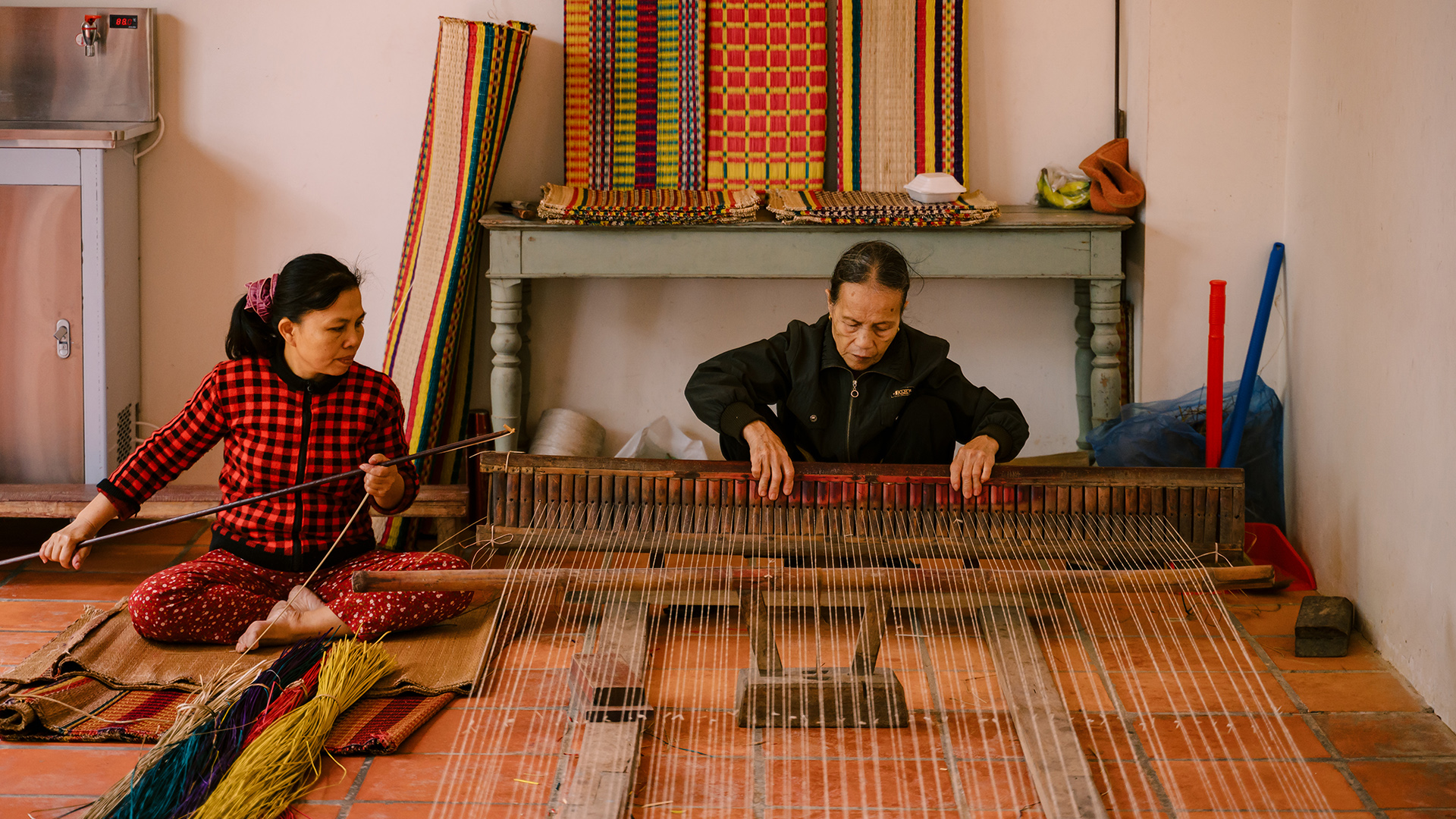
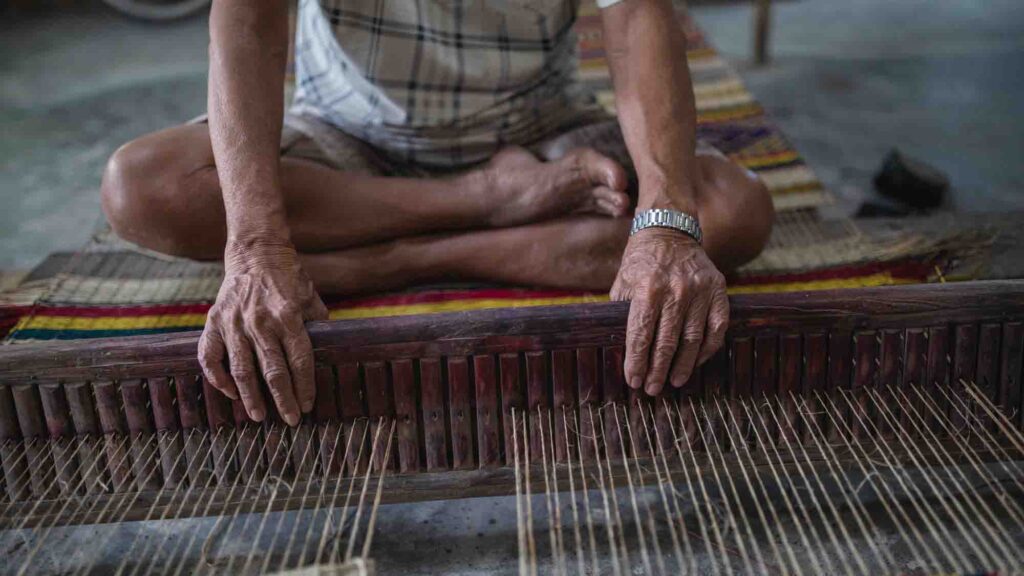
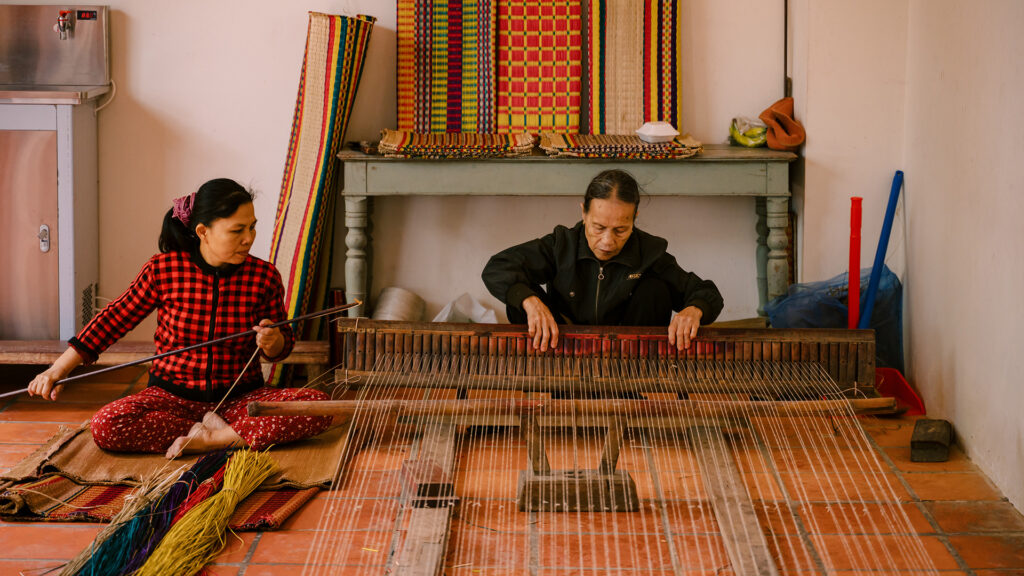
In Thach Tan, the traditional process still begins in the sedge fields before moving through the stages of splitting, drying and dyeing the fibres and finally placing them on the loom. Each loom generally requires two people working together: one passes the sedge fibres across the rows of warp cords, while the other operates the wooden beater to press each woven line firmly into place.
The shuttle rod carries a sedge fibre from one side of the loom to the other. The wooden beater is raised and then brought down. One fibre, then another, followed by hundreds more, gradually lie closely together to form the mat’s surface. The person feeding the sedge must quickly select the correct colour and position, while the weaver must maintain consistent pressure to prevent the mat from becoming unevenly thick or loose.
In this way, the loom creates its own distinctive rhythm. Neither loud nor hurried, the steady sound of bamboo and wood striking against each other resembles time itself being woven into form.
When Colours Emerge from the Loom
Traditional mats are not limited to the natural white colour of sun-dried sedge. Using dyed fibres, craftspeople can create floral, patterned, decorative and embossed mats featuring stripes, squares and repeating geometric motifs.
Ban Thach was once renowned for a wide variety of mats distinguished by their smooth surfaces, harmonious colours and durability. Transported from the village by boat and road, these mats reached many different regions and became familiar household products for generations of families.
The colours of the mats are not elaborate or ostentatious. Red, green, purple and yellow fibres are often placed alongside natural sedge tones, brightening a home, kitchen veranda or village courtyard. Every line of colour must be planned before the fibres are placed on the loom, as it is difficult for a weaver to return and correct individual details once the weaving rhythm has moved forward.
Today, alongside traditional sleeping mats, sedge fibres are being incorporated into smaller designs such as table mats, sitting mats, handbags, hats, decorative lamps and souvenirs. Some young people returning to their villages have experimented with new colour combinations, expanded the sedge colour palette and organised craft workshops for visitors. This creativity does not erase the traditions of the past. Instead, it gives sedge weaving a new life and allows the material to remain present in contemporary spaces.
A Few Square Metres, a Lifetime at the Loom
In many mat-weaving families, the craft is not passed down through lessons recorded in books. Children grow up beside the loom, watching their grandmothers split sedge and their mothers join the warp cords, gradually learning how to pass the fibres and maintain the rhythm themselves.
Women are often the principal craftspeople. Alongside caring for their families, farming and fishing on the rivers, they make use of quieter periods between agricultural seasons to work at the loom. In some parts of Hoi An in the past, more looms would become active during the rainy season or the final months of the year, when residents temporarily stepped away from farming and river-based livelihoods. Mat weaving generally took place within individual households, occasionally through an exchange-of-labour arrangement between two craftspeople.
The craft therefore produces more than a physical item. It is a way for family members to share their work, a supplementary source of income after the harvest and a thread connecting one generation to the next.
Traditional handicrafts move slowly, however, while the market is becoming increasingly fast-paced.
Shrinking sources of raw materials, demanding working conditions, modest incomes and competition from industrial products have caused many looms to gradually fall silent. In Ban Thach, most traditional looms now operate only during agricultural downtime or when orders are received. Local residents are seeking new directions by diversifying product sizes and designs and incorporating visitor tours and hands-on experiences into the craft-village setting.
When a craftsperson leaves the loom, the village loses more than a worker. It also risks losing an entire body of knowledge: how to read the weather, select sedge, combine colours, control the pressure of the hands and create patterns—skills that require many years to master.
Preserving the craft today is therefore not simply about maintaining an old means of livelihood. It is about protecting the memory of the village and its ability to tell the story of its homeland through materials that come directly from the land.
Mat-Weaving Villages Preserving the Colours of the Countryside
Along a journey through Da Nang’s rural landscapes, visitors can encounter the mat-weaving tradition in several areas, from the alluvial plains of the Thu Bon River to the sedge fields in the south of the city.
Cam Kim Mat-Weaving Village, Hoi An Tay Ward
Situated beside the Thu Bon River, Cam Kim embodies the peaceful character of a riverside countryside, with rice fields, village lanes and traditional homes. Mat weaving once attracted both farmers and fishing communities during periods of agricultural inactivity, particularly in the rainy months.
Visitors can discover a different side of Hoi An beyond the tiled roofs of the Ancient Town: slower, greener and more closely connected with the rhythms of everyday work. Beside the loom, the story of each sedge fibre is inseparable from the river, the agricultural seasons and the generations of families who have lived on the alluvial land.
Tra Nhieu and Ban Thach Mat-Weaving Villages, Nam Phuoc Commune
The Ban Thach mat-weaving area was enriched by the Thu Bon, Ly Ly and Truong Giang river systems and once possessed extensive sedge fields that supplied materials to the craft villages. The area became known for its plain white, floral, patterned, decorative and embossed mats.
At several workshops in Ban Thach and Tra Nhieu, visitors can observe or directly try the stages of splitting, drying and dyeing sedge and weaving small products. Tea mats, sitting mats and small hand-held woven pieces make lightweight gifts carrying the colours of the sunlight and the stories of the village.
Thach Tan Sedge Mat-Weaving Village, Ban Thach Ward
Thach Tan is one of the places where the relationship between the raw-material fields and the production space remains particularly visible. Sedge is locally cultivated, harvested, split, dried and dyed before being placed on the loom.
The sight of colourful bundles of sedge spread across village courtyards, women sitting opposite each other at the loom and newly completed floral mats offers a vivid glimpse into craft-village life. Mat-weaving experiences are also being connected with the historical and ecological values of the Thach Tan–Ky Anh–Dam River area.
Cam Ne Mat-Weaving Village, Hoa Tien Commune
Located southwest of the city centre, Cam Ne has been associated with traditional mat weaving for generations. Its mats are distinguished by vibrant colours, firmly woven surfaces and a meticulous preparation process.
According to local records, Cam Ne mats are made entirely by hand on traditional looms. Although fewer households continue to practise the craft today, memories of sun-filled courtyards covered with drying sedge and the sound of looms echoing through the village remain an important part of Hoa Tien’s cultural landscape.
Touching Heritage with Your Own Hands
A journey to a mat-weaving village becomes more meaningful when visitors do more than simply observe.
Try sitting beside a loom, holding a dyed sedge fibre and passing it through the rows of warp cords. This seemingly simple movement requires concentration, coordination and patience. Only by trying it themselves can visitors fully appreciate why a pair of handmade mats requires so much time and how even a minor deviation can become visible on the finished surface.
Visitors can also talk with artisans about selecting sedge, learn the rustic names of traditional tools, observe hands hardened by years of work or purchase a small woven product as a keepsake. Each item taken home not only contributes to the livelihoods of the people preserving the craft but also helps traditional handmade values maintain a place in contemporary life.
Weaving activities in the villages may vary according to the agricultural season, weather conditions and customer orders. Visitors should therefore contact local experience providers or tourism operators in advance to increase their chances of meeting artisans and participating in the full production process.
When leaving the village, visitors may carry only a small table mat or sedge bag. Yet the most enduring memories are often the colours of the fibres beneath the sunlight, the fragrance of dried sedge on a veranda and the steady rhythm of the loom in the stillness of a rural afternoon.
Here, heritage is not preserved behind a glass display case.
It continues to be split into fibres, dyed in vibrant colours, passed through the warp cords and woven each day by the hands of people who remain deeply devoted to their villages.
DA NANG TOURISM PROMOTION CENTER