













Thời TiếtE-MagazineE-NewsletterE-BookChương trình xúc tiếnTrải nghiệm VR360
Tiếng Việt
  • Main Logo
  • Về Đà Nẵng
    • Icon
      Thời tiết Đà Nẵng
    • Icon
      Tổng Quan Đà Nẵng
    • Icon
      Lịch sử Đà Nẵng
    • Icon
      Logo và slogan du lịch Đà Nẵng
  • Xem và làm gì
    • Icon
      Điểm du lịch
    • Icon
      Văn hóa
    • Icon
      Lịch sử
    • Icon
      Nghệ thuật
    • Icon
      Kiến trúc
    • Icon
      Giải trí & Thư giãn
    • Icon
      Du lịch Sinh thái & Cộng đồng
  • Lễ hội & sự kiện
  • Ăn uống
    • Icon
      Ẩm thực địa phương
    • Icon
      Ẩm thực Quốc tế
    • Icon
      Địa điểm ăn uống
    • Icon
      Giải trí đêm
    • Icon
      MICHELIN Guide
  • Mua sắm
  • Khám phá
  • Nơi ở
  • Ưu đãi
  • Tin tức
  • Thông tin cần thiết
VN
  • Trang chủ
  • Về Đà Nẵng
  • Xem và làm gì
  • Lễ hội & sự kiện
  • Ăn uống
  • Mua sắm
  • Khám phá
  • Nơi ở
  • Ưu đãi
  • Tin tức
  • Thông tin cần thiết
    • Danangfantasticity.com
    • Về Đà Nẵng
    • Xem và làm gì
    • Lễ hội & sự kiện
    • Ăn uống
    • Mua sắm
    • Khám phá
    • Nơi ở
    • Ưu đãi
    • Tin tức
    • Thông tin cần thiết
    • Các website liên quan
    • Tận hưởng Đà Nẵng
    • Cổng thông tin điện tử TP Đà Nẵng

    • Đường dây nóng cho du khách
    • Trung tâm Hỗ trợ Du khách Đà Nẵng

    • HOTLINE: (+84)236 3 550 111 | (+84)236 3 1022

    • Về chúng tôi
    • Bản quyền thuộc về UBND TP. Đà Nẵng Sở Văn hoá, Thể thao và Du lịch Đà Nẵng Quản lý bởi Trung Tâm Xúc Tiến Du Lịch Đà Nẵng

    • Tel: (84.236) 3.898.196

      Fax: (84.236) 3.812.029

    • Liên hệ với chúng tôi: media@danangfantasticity.com

    • Giấy phép: 705/GP-STTTT ngày 18/07/2024 của Sở Thông tin Truyền thông TP.Đà Nẵng

    • Kết nối với chúng tôi
Liên kết nhanh
  • Thông tin du lịch cần thiết
  • Lịch trình tham quan
  • Con đường đi bộ
  • Thông tin du lịch cần thiết
  • Kết nối với chúng tôi
Bản quyền © 2024 UBND TP. Đà Nẵng Sở Du lịch Đà Nẵng Quản lý bởi Trung Tâm Xúc Tiến Du Lịch Đà Nẵng.| Điều khoản Sử dụng | Cam kết bảo mật | Báo cáo lỗ hổng bảo mật
Bản đồ trang | Liên hệ với chúng tôi
DaNangFantasic.com
  • Về Đà Nẵng
  • Xem và làm gì
  • Lễ hội & sự kiện
  • Ăn uống
  • Mua sắm
  • Khám phá
  • Nơi ở
  • Ưu đãi
  • Tin tức
  • Thông tin cần thiết
Các website liên quan
  • Tận hưởng Đà Nẵng
  • Cổng thông tin điện tử TP Đà Nẵng
Bản quyền © 2024 UBND TP. Đà Nẵng Sở Du lịch Đà Nẵng Quản lý bởi Trung Tâm Xúc Tiến Du Lịch Đà Nẵng.
Giấy phép: 705/GP-STTTT ngày 18/07/2024 của Sở Thông tin Truyền thông TP.Đà Nẵng
  1. Danang Museum of Cham Sculpture
  2. >
  3. Tra Kieu Altar

Tra Kieu Altar

07/09/2020
Chia sẻ
Thêm vào mục yêu thích
In

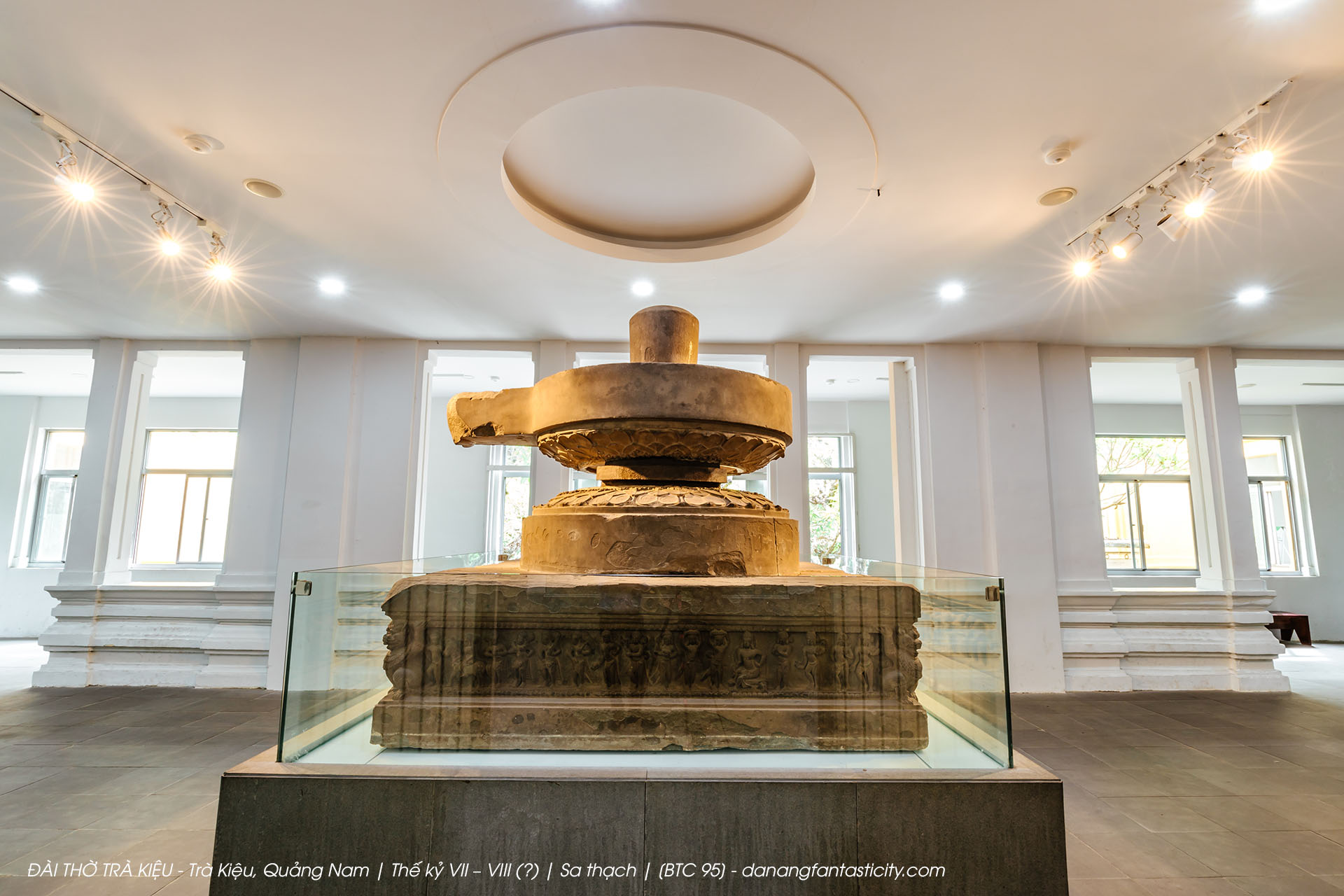
TRA KIEU ALTAR

Tra Kieu, Quang Nam | 7th – 8th centuries(?) | Sandstone | [BTC 95]
Dai Tho Tra Kieu Bao Tang Dieu Khac Cham Danang Fantasticity Com

For Champa residents, the altar is the place connecting gods and temples, heaven and earth. The altar is sited in the center of the main tower, above the altar is usually a set of Linga – Yoni statues or those related to the god of the tower. Each altar represents a unique style and implication.

As stated in Hindu mythology, the god Shiva first appeared as a pillar of fire shaped like a penis. Later, people symbolized the Linga and the Yoni to worship Shiva, considered Linga to be a manifestation of positive properties, Yoni was a manifestation of the negative nature of the god (Sakti), meaning that Shiva was considered a duality. The Linga associated with the Yoni is regarded as the creation of the god Shiva.

The Linga statues in Champa existed in many different types and designs. In some works of the Linga, there are three parts representing the three supreme deities of Hinduism called theTrimurti: the upper part is a cylindrical block symbolizing Shiva – God of Destruction, the middle part is the octagon representing Vishnu – the God of Conservation while the last part is the square symbolizing Brahma – the God of Creation. Shiva’s face was carved on the circular cylinder of some statues of the Linga, which are known as Mukhalinga. Some other Linga with carvings of flame or hair tufts upon the circular cylinder are called Jatalinga, which is relatively popular in Champa sculpture.
Dai Tho Tra Kieu Bao Tang Dieu Khac Cham Danang Fantasticity Com 02

Dai Tho Tra Kieu Bao Tang Dieu Khac Cham Danang Fantasticity Com 03
Dai Tho Tra Kieu Bao Tang Dieu Khac Cham Danang Fantasticity Com 04

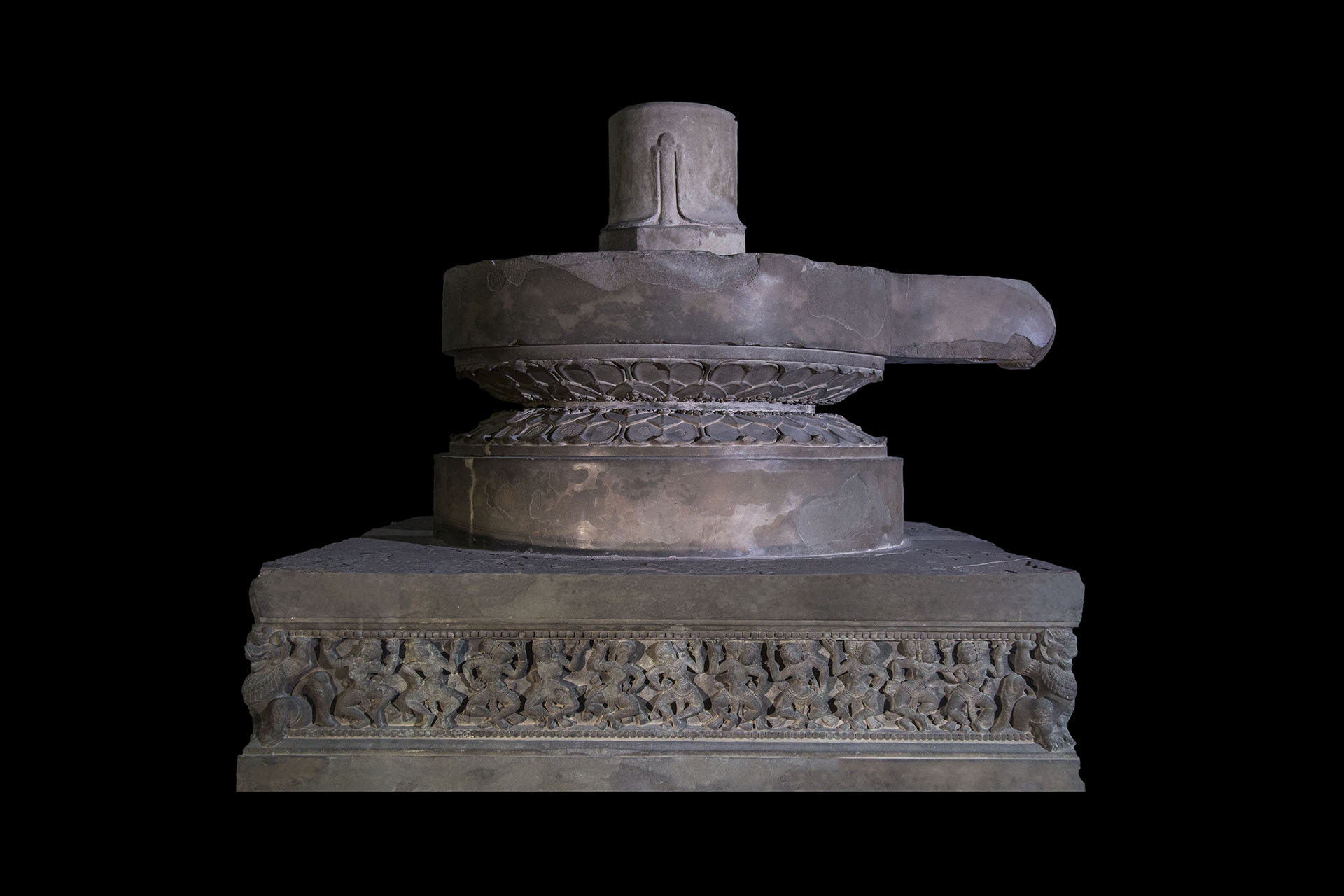
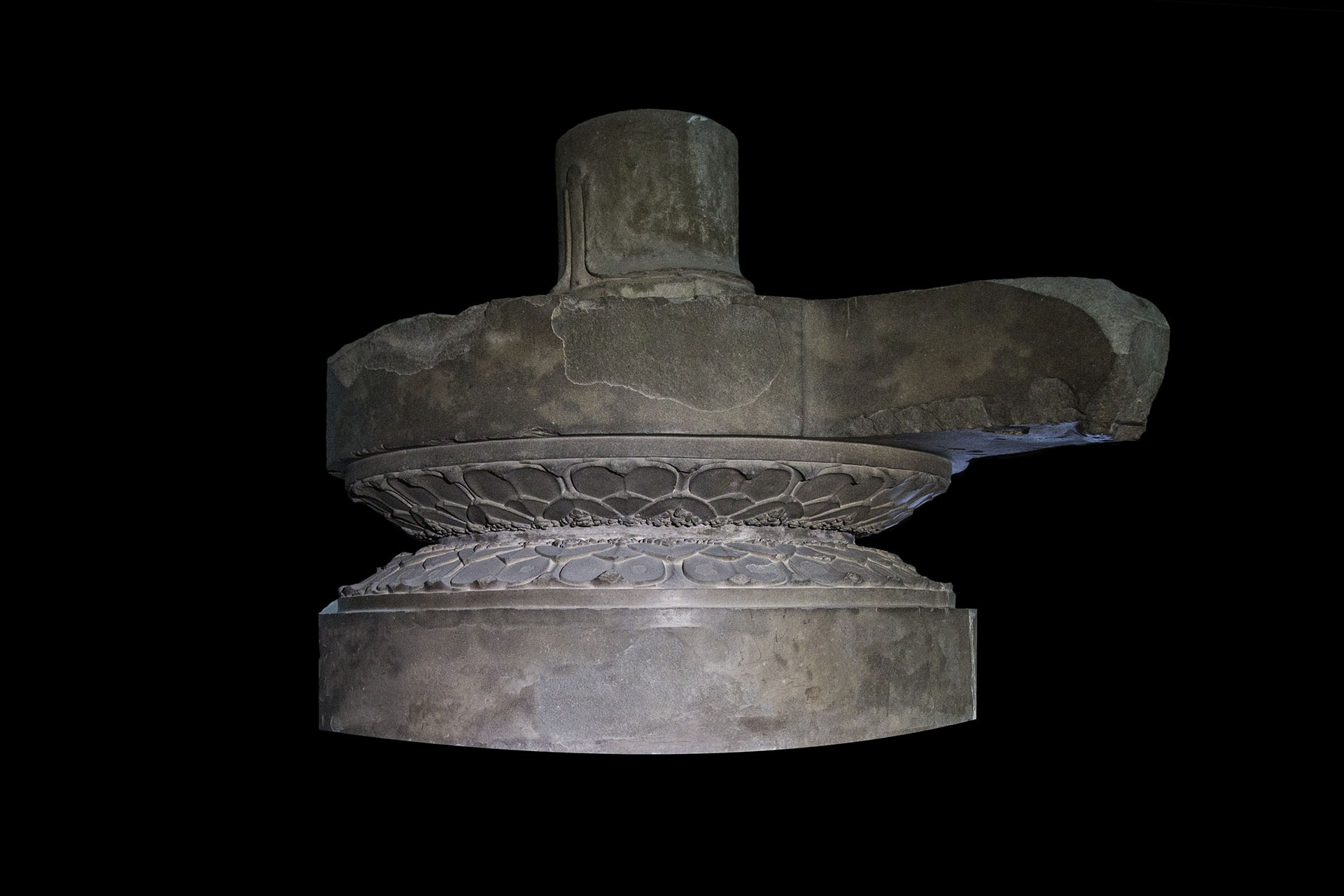
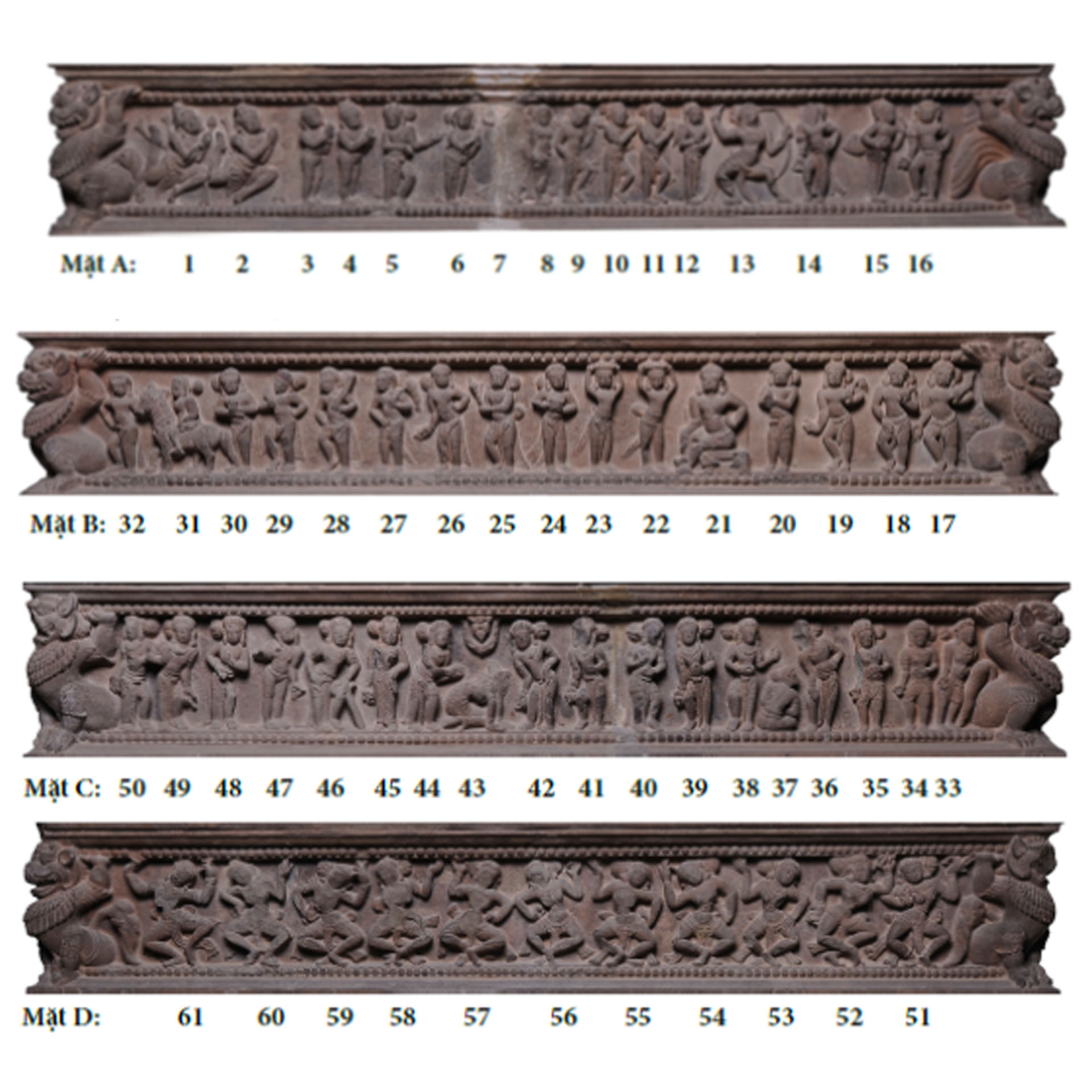
The Tra Kieu altar consists of the following parts: the top is a Linga, the middle is a Yoni pedestal with two round cutting boards skillfully decorated with symmetrical stylized lotus petals and the bottom is a square pedestal. The four sides around the block are sculptured with 61 characters with diverse poses, movements and costumes. The corners of the pedestals present a lion standing with their front legs to support the altar. Tra Kieu altar is recognized as one of the sculpture masterpieces as well as one of the four existing National Treasures of the Museum. Immediately after being discovered, the altar attracted many researchers to decipher the stories of the characters on the altar and analyze its dating.

According to Jean Przyluski, the four scenes on the altar interpreted the legend of the formation of the Funan Kingdom. Subsequently, George Cœdès asserted that the altar illustrated the legend of the god Krishna healing a hunchback named Trivaka and the rale of Krishna broke the great bow of Kamsa.

Later, researcher Tran Ky Phuong suggested that the four scenes on the altar relate to a successive series of events from the Ramayana.
Dai Tho Tra Kieu Bao Tang Dieu Khac Cham Danang Fantasticity Com 01

In particular, Scene A describes the steer Visvamitra, Prince Rama (son of King Dasaratha) and his younger brother Lakshman from Ayodhya city to Janak’s Mithila to bend the bow in response to the wedding challenge of King Janak, who promised to marry Princess Sita to anyone who could do that. There, Rama broke the divine bow in the amazement and admiration of King Janak and his court.

Side B illustrates King Janak sending an envoy to Ayodhya city to inform and invite King Dasaratha to the capital city Mithila to attend Rama and Sita’s wedding.

Scene C illustrates King Dasaratha coming to Mithila to attend Sita’s wedding. Rama came to welcome his father and then King Janak took Princess Sita to greet King Dasaratha at the wedding.

Scene D shows Apsarases celebrating Rama and Sita’s wedding.

References

  1. Official website of Da Nang Museum of Cham Sculpture: chammuseum.vn
  2. Information points and annotations of artifacts at Danang Museum of Cham Sculpture.
  3. “Vibrancy in Stone – Masterpieces of the Da Nang Museum of Cham Sculpture”
  4. Information guidebook introducing 20 characteristic artifacts at Da Nang Museum of Cham Sculpture.
  5. Presentation of tourist destinations in Da Nang.
  6. Web portal of Da Nang city

DANANG CENTER FOR TOURISM PROMOTION
Khám phá thêm
  • Ganesha
    Ganesha

    In the Hindu mythology, Ganesha, the son of Lord Shiva and Goddess Parvati is the God of Fortune, Knowledge and Literature and.

  • Gajasimha
    Gajasimha

    Gajasimha has an elephant's head and a lion's body. In Indian mythology, an elephant's head often symbolized the wisdom and power of a god and the lion body

  • Dragon
    Dragon

    Dragon is the symbol of kingship in many Oriental countries. The statue may be a combination of a dragon and Makara, a mythological Hindu sea creature. 

  • Thap Mam Altar
    Thap Mam Altar

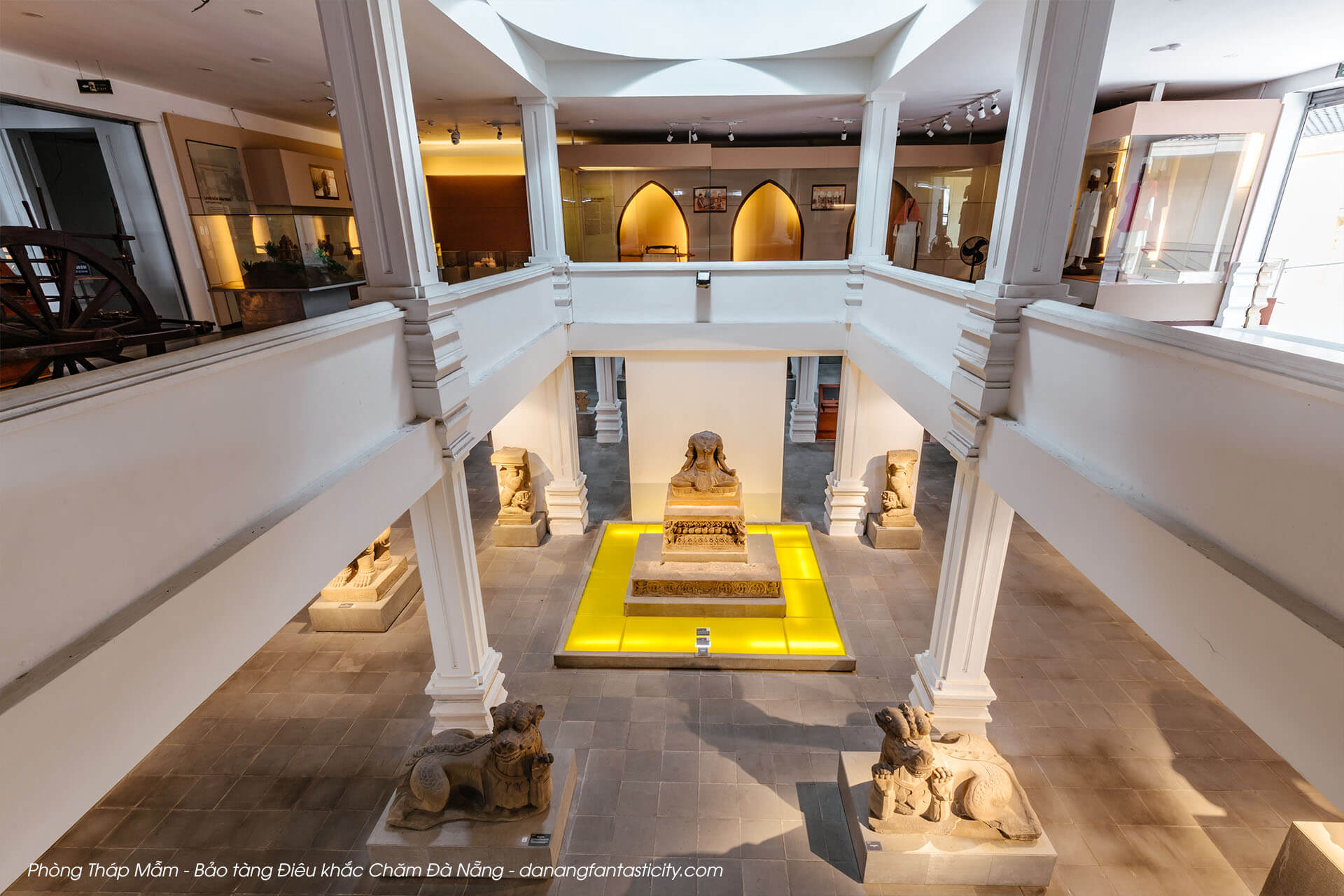
    The Altar was excavated in 1934. Two lions and two Garuda birds are represented in a four-corner support position.

  • Garuda
    Garuda

    Theo thần thoại Ấn Độ, Garuda là vật cưỡi của thần Visnu, đồng thời là biểu tượng của mặt trời, không khí và lửa. Naga tượng trưng cho đất và nước.

  • Thap Mam Gallery
    Thap Mam Gallery

    Khối lượng hiện vật thu thập được trong cuộc khai quật năm 1934 lên đến 58 tấn, bao gồm những tượng kích thước lớn và nhiều trang trí kiến trúc bằng đá

  • The Guardians
    The Guardians

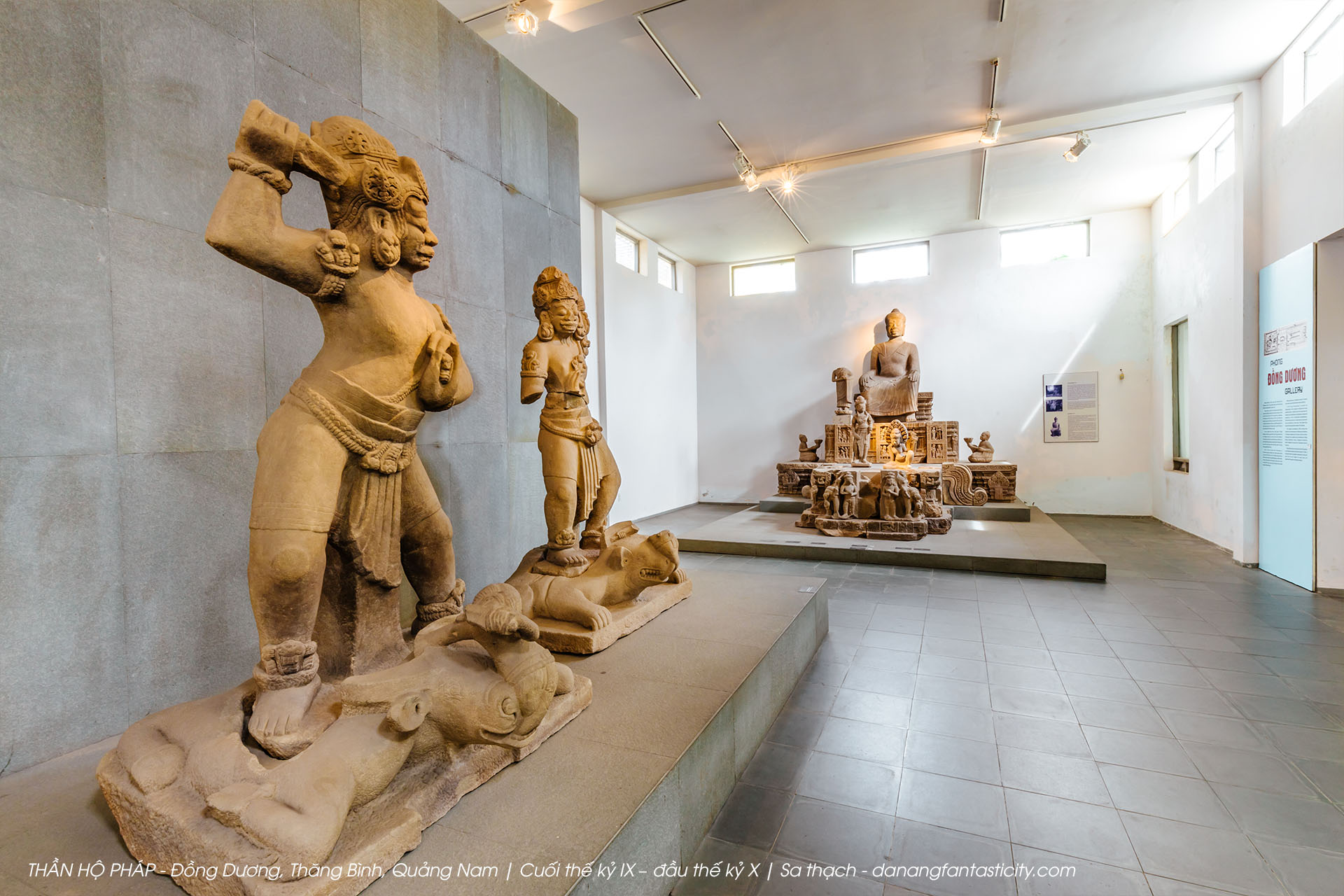
    The God stood with legs apart, stepped on the animals lying flat below, one hand held a weapon to reach the height of his head,

  • Statue of Bodhisattva Laskmindra-Lokeshvara/Tara
    Statue of Bodhisattva Laskmindra-Lokeshvara/Tara

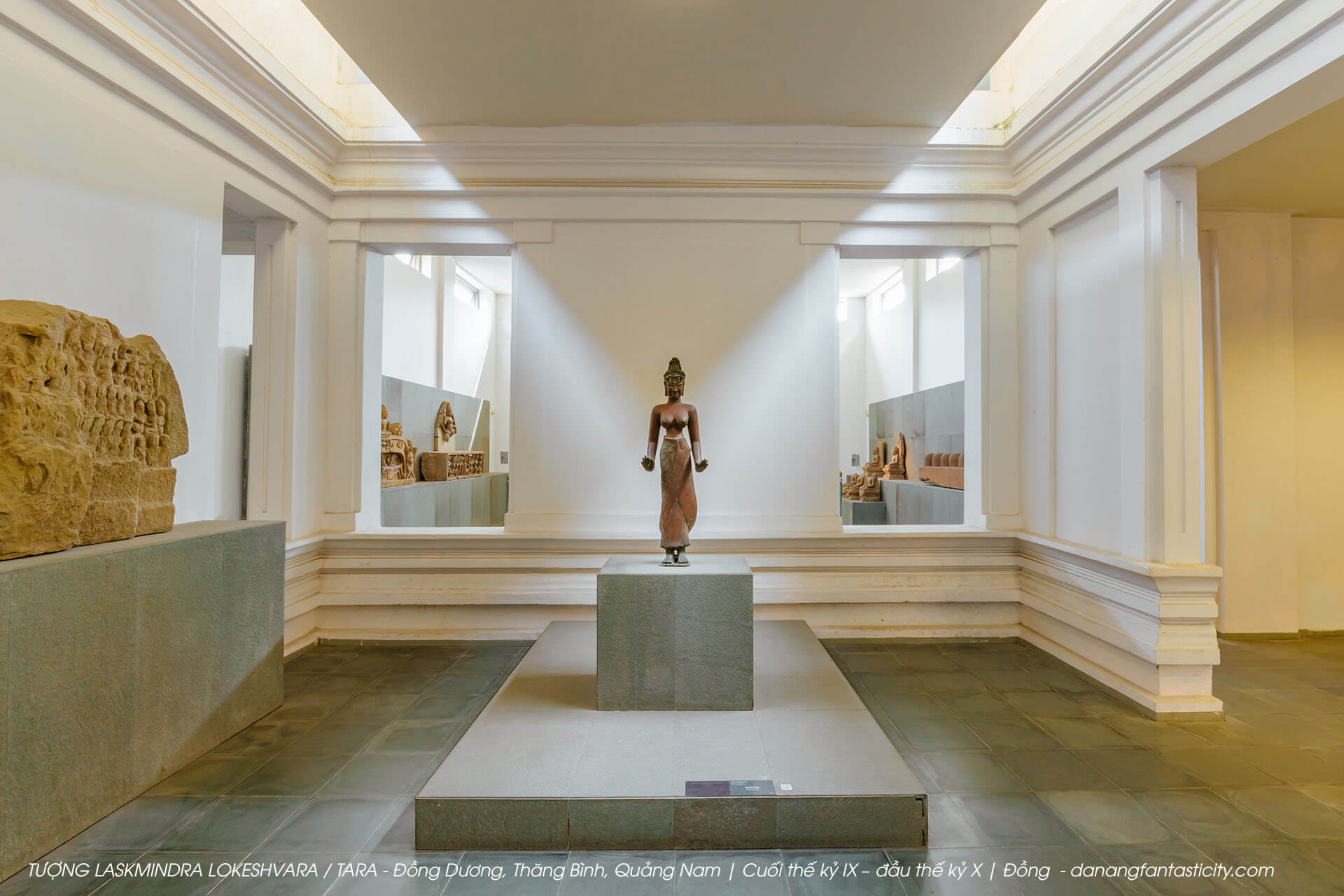
    while cultivating in the fields, happened to find a bronze goddess statue nearly 1.15m high buried near the relic of Dong Duong.

Ý kiến (0)
Vui lòng Đăng nhập để bình luận