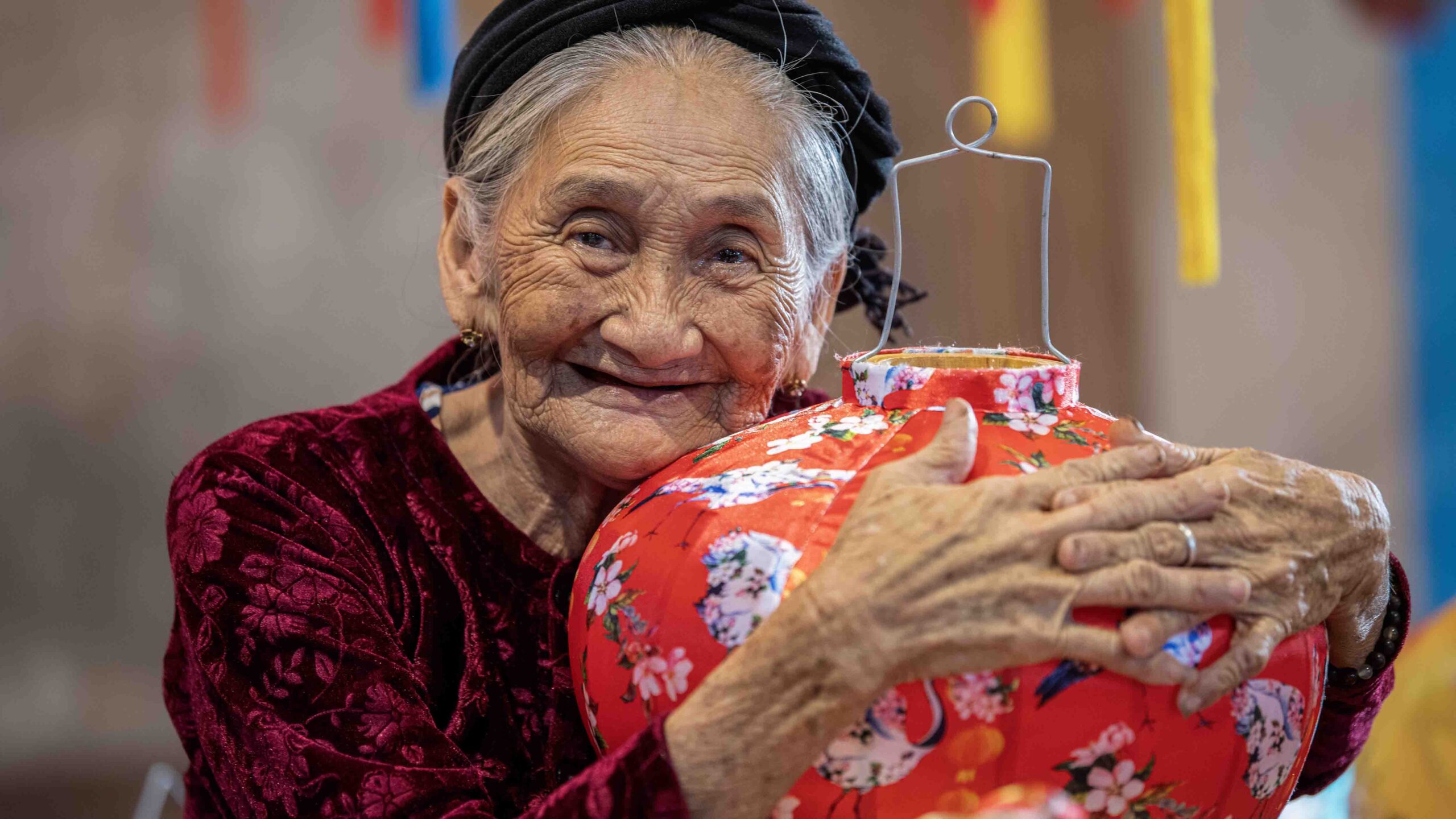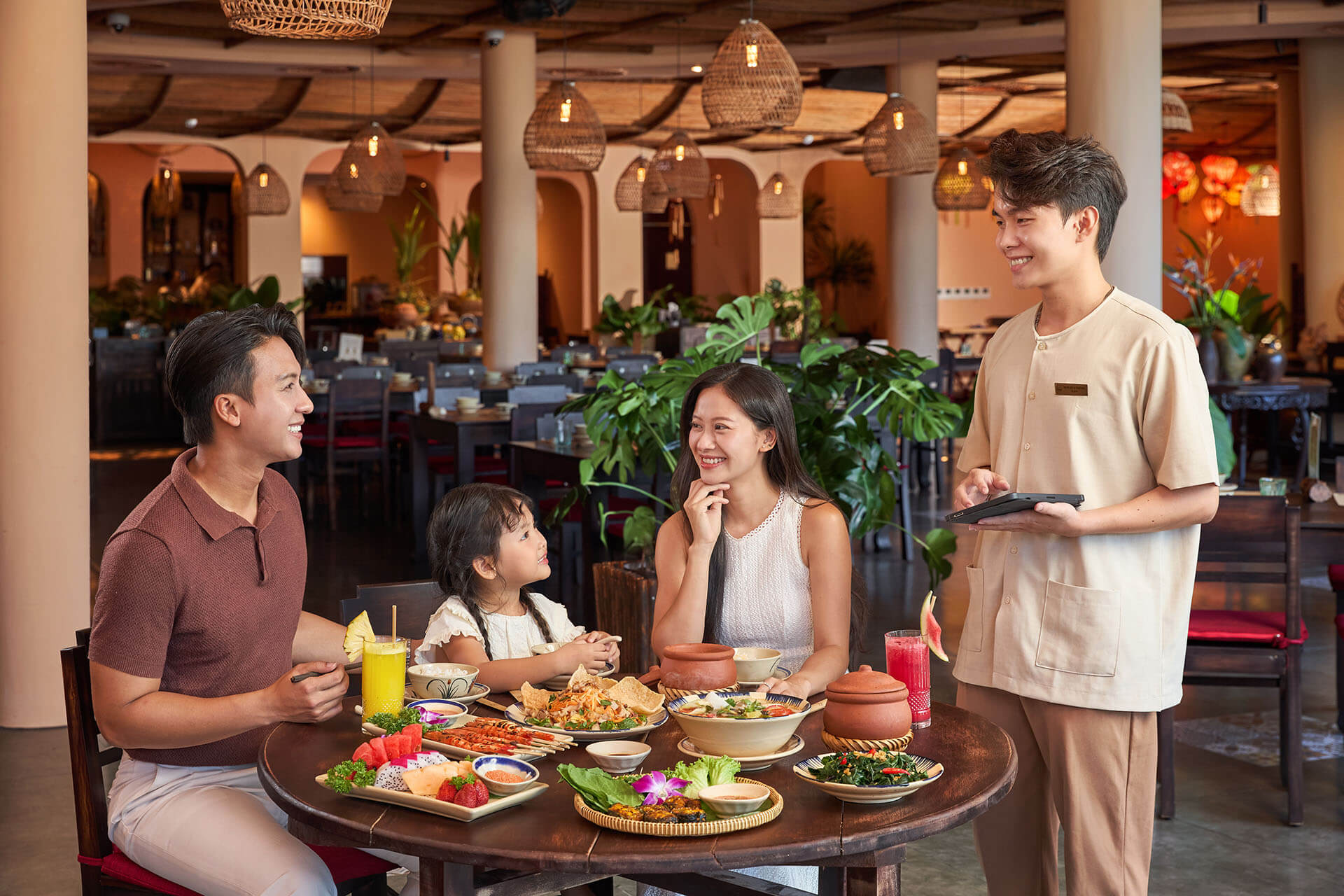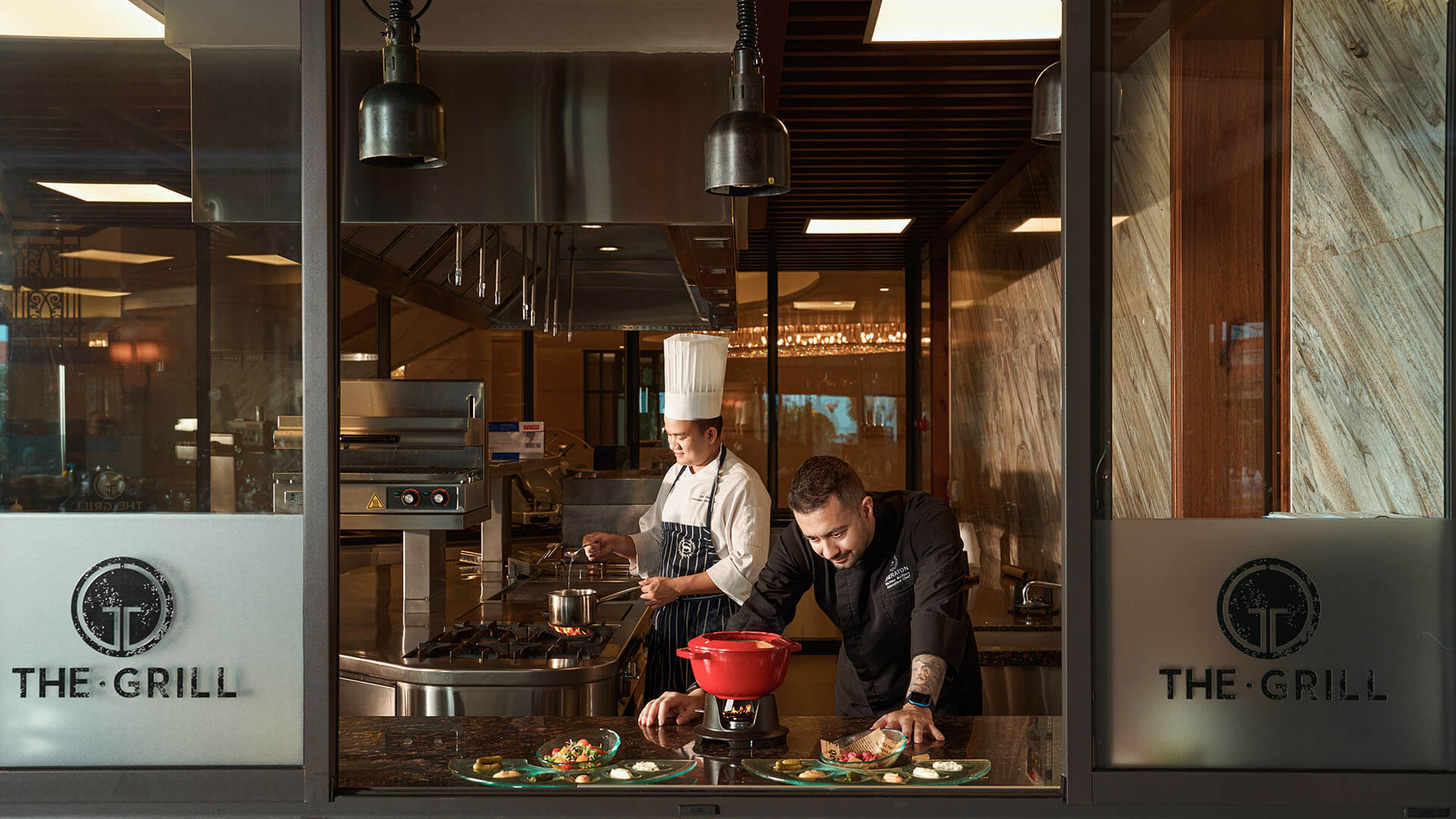






One conversation can bring you closer to Hoi An. Learning the name of the person rowing your boat, listening to an artisan recall their first lessons in the craft, or making something by hand together can become the start of your own memories of the town. Its culture gradually reveals itself in the way people work, welcome visitors and care for one another.
In Hidden Smile, a portrait by French photographer Réhahn, Madam Bui Thi Xong holds one hand over her mouth and the other across her forehead. Her eyes gleam with quiet humour. The shy gesture invites viewers to linger, curious about the woman beneath the brim of her hat.
Their encounter took place in the summer of 2011, when Réhahn noticed Madam Xong rowing visitors through Hoi An. He stepped into her boat and asked to take her portrait. According to the photographer, when she saw her picture, she began to laugh and covered her mouth with her hand. That spontaneous moment inspired another photograph, which later became known as Hidden Smile. From a single boat ride, the image of a woman from Hoi An went on to reach viewers around the world.
The story continued beyond the photograph. When Réhahn asked Madam Xong what she wished for, her answer was a new boat. He kept his promise, then stayed in touch, visited and offered support in her daily life. Over time, she became like a grandmother to the photographer and his team. A chance encounter grew into a lasting relationship through the care they showed one another.
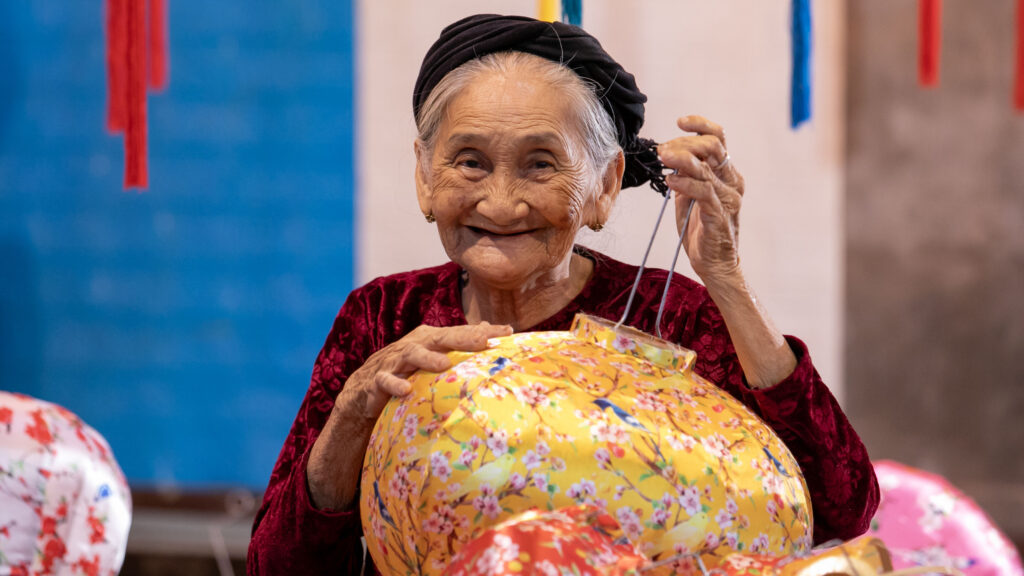
Madam Bui Thi Xong. Photo: Duc Thanh
Knowing this story brings another dimension to the smile in the photograph. Behind her gentle expression are years of rowing, caring for her family and enjoying encounters with visitors from far away. The new boat became part of her familiar working life, while also carrying the memory of a friendship. Hoi An’s warmth and kindness can be understood through such everyday gestures: a promise remembered, a visitor returning, a bond nurtured over the years.
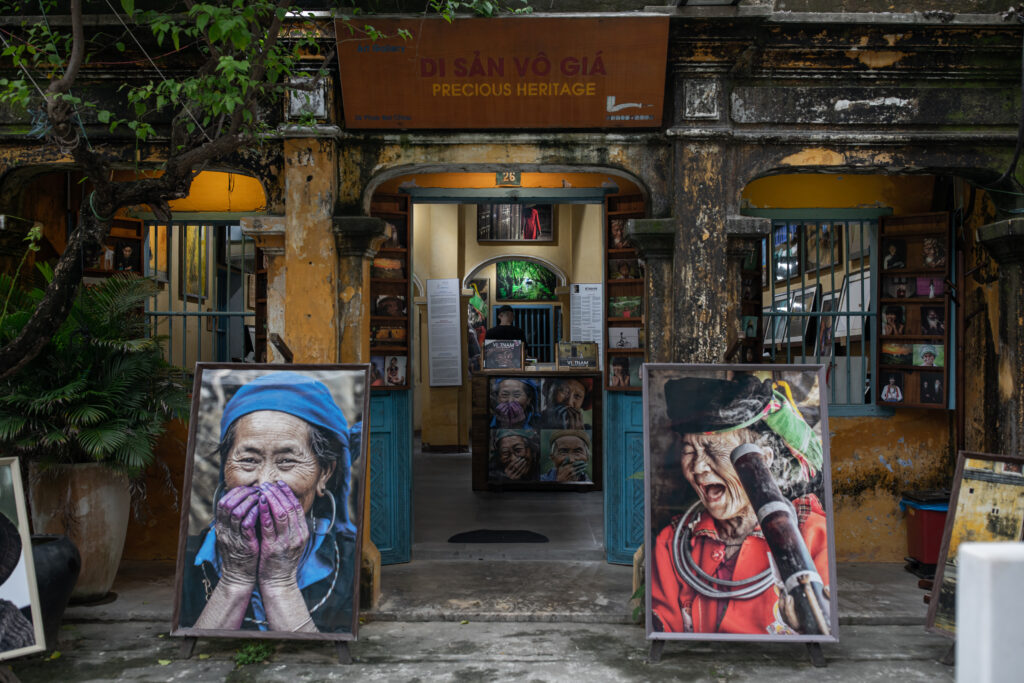
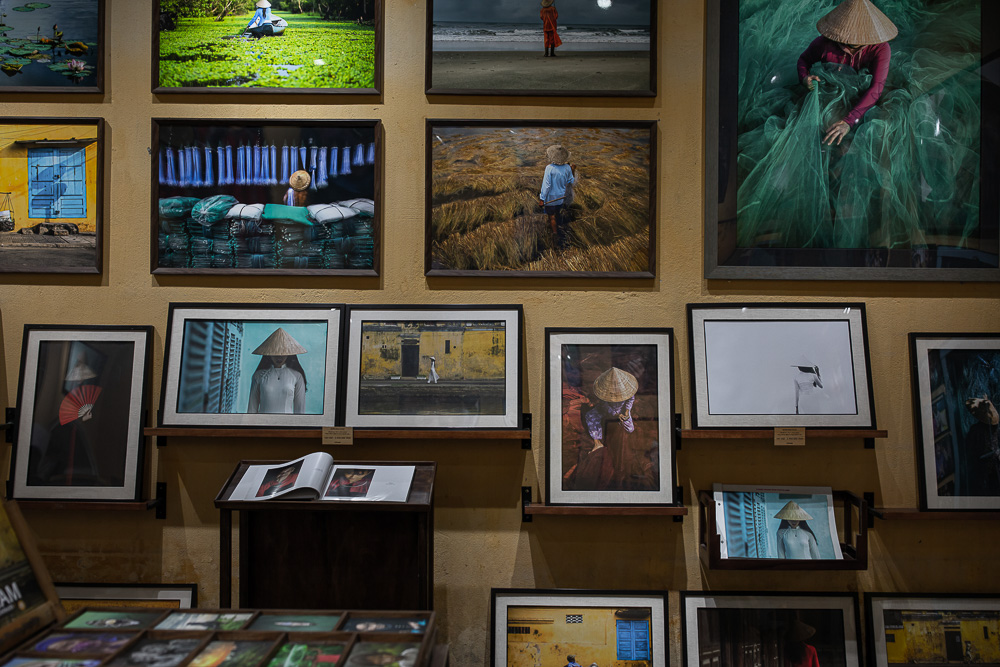
Réhahn’s Precious Heritage Museum, a popular destination in Hoi An
For visitors to Hoi An, a sense of connection can also begin by giving an encounter a little more time. A question after the first greeting may take a conversation further than expected, from today’s work back to the memories that inspired someone to make a life here.
For artisan Huynh Phuong Do, often known as Do Tre, that story centres on bamboo roots and his distinctive way of seeing them. Having studied woodcarving in Kim Bong carpentry village, he discovered a new creative direction in bamboo roots salvaged after the flood of 1999. Their unusual shapes inspired him to try carving them, beginning a pursuit that would continue for many years.
Watching him work, visitors can see how the material’s natural form helps shape each piece. A cluster of roots becomes a beard; a curved section suggests the contours of a face. Every decision calls for experience and patience. Since no two bamboo roots are alike, the artisan must find a different approach for each one.
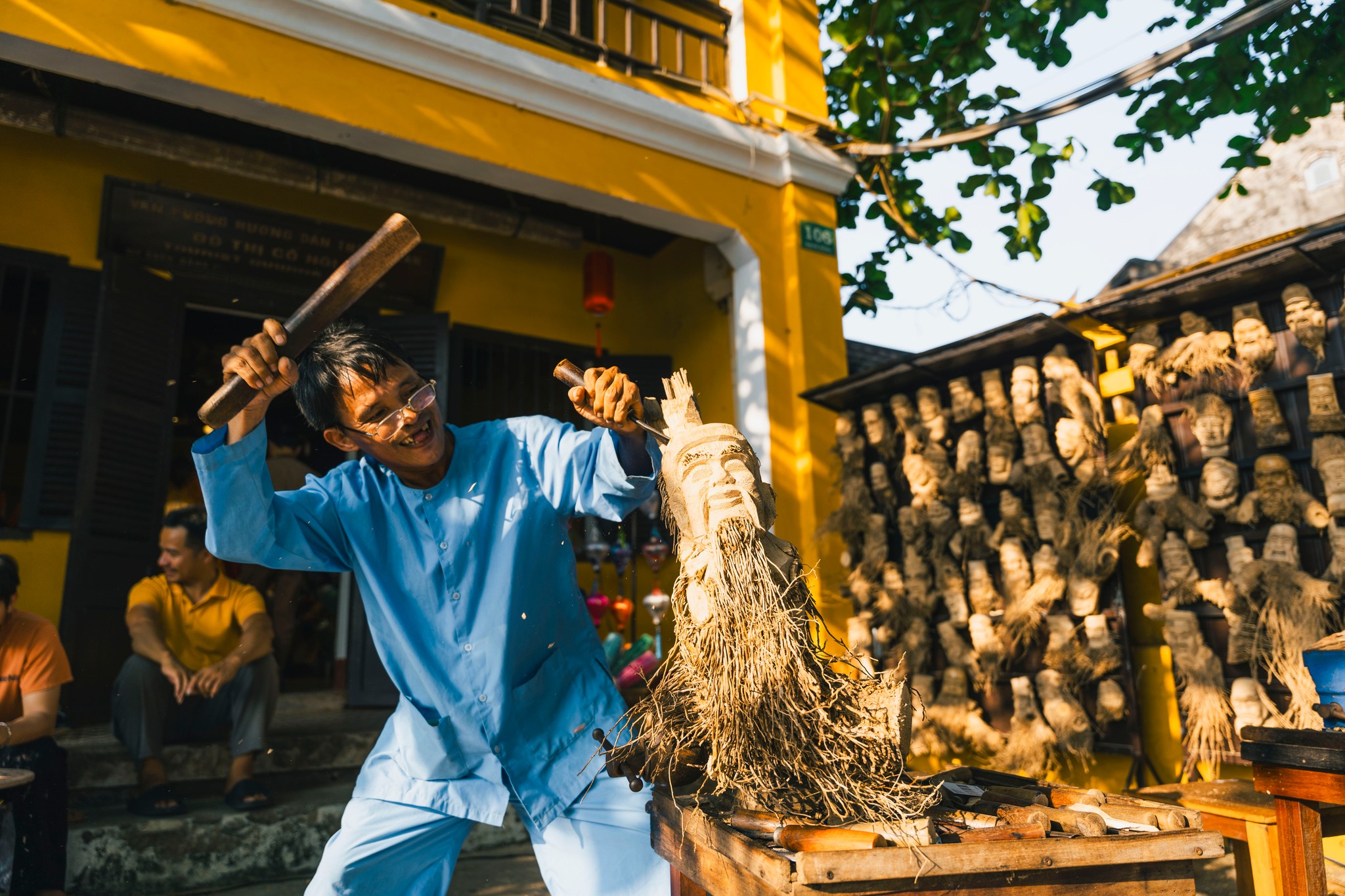
Artisan Huynh Phuong Do. Photo: Visit Hoi An
If you have the chance to speak with him, begin with a piece that catches your attention. Why did he choose that particular root? Which detail took the longest to complete? A question about its shape may lead to stories of his apprenticeship, his experiments and the satisfaction of discovering a new technique. The object before you gains the story of the person who made it.
He also helps the craft continue by sharing his experience with apprentices. For a craft to endure, those who practise it need opportunities to earn a living from their skills. These concerns help visitors understand that behind handmade objects are livelihoods, personal choices and the hopes their makers hold for the future.
In Cam Thanh, another story of bamboo begins with family memories. Vo Tan Tan grew up with the craft practised by his father, Vo Tan Muoi. From childhood, he became familiar with making objects from bamboo and coconut materials, in a village where both were closely woven into homes and everyday life. As ways of living changed, he began finding new uses for the skills he had learned.
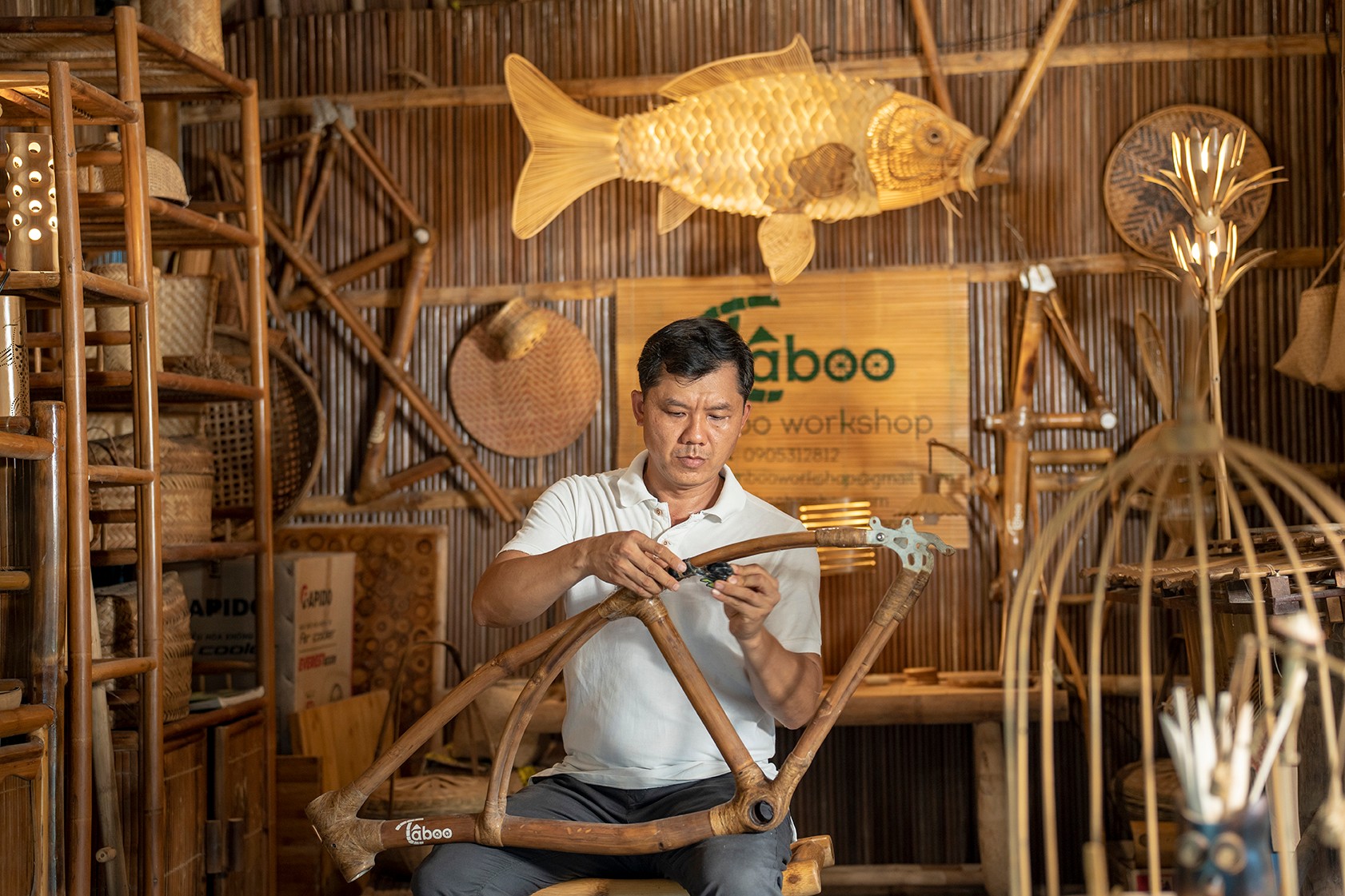
Artisan Vo Tan Tan. Photo: Visit Hoi An
At Taboo Bamboo Workshop, bamboo takes shape as lamps, household objects and imaginative animal sculptures. Skills passed down by a father find new expression in his son’s ideas. A familiar material gains a renewed place in contemporary living spaces.
Visitors to the workshop can also make their own handicrafts with guidance from local artisans. Sitting down alongside a maker gives you time to learn how materials are chosen, observe techniques and try finishing each detail yourself. A movement that looks effortless in experienced hands may take a beginner several attempts. In those moments, the value of years of practice becomes easier to appreciate.
As you work, there is room for conversation, too. A chosen piece of bamboo might prompt questions about the first object an artisan ever made, something learned from their father or an idea they still hope to try. Making something together offers common ground and allows the encounter to unfold naturally. Visitors have something to be curious about, while artisans have an opportunity to share what they know and love.
Once an object is associated with someone’s name, we may also want to understand what drew them to their work and kept them devoted to it over the years. In the ancient town, that curiosity can lead to a conversation with artisan Bui Quy Phong at The Timing Masks. Surrounded by colourful faces, he is happy to tell visitors he has just met about the paths that brought him to the work he does today.
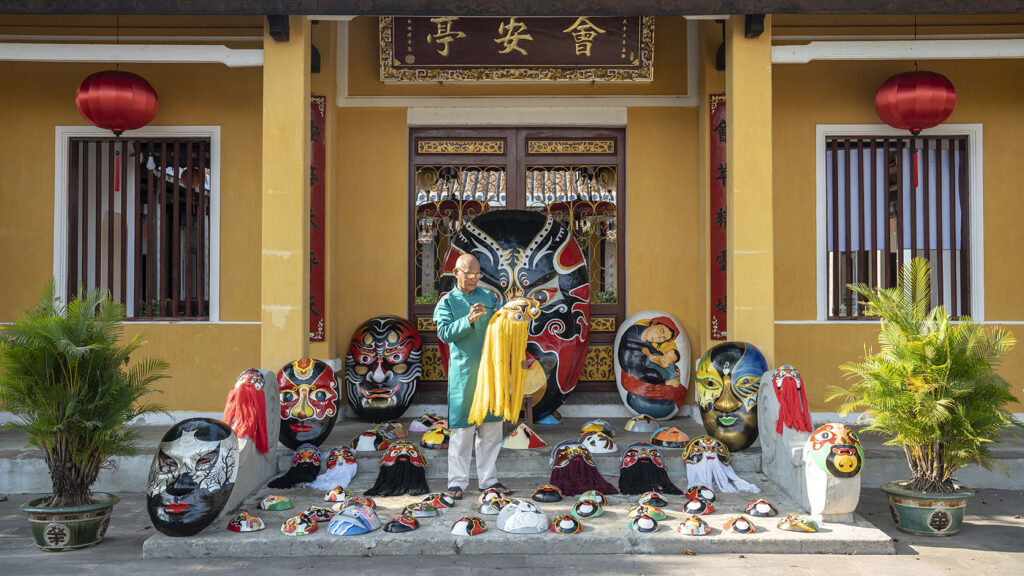
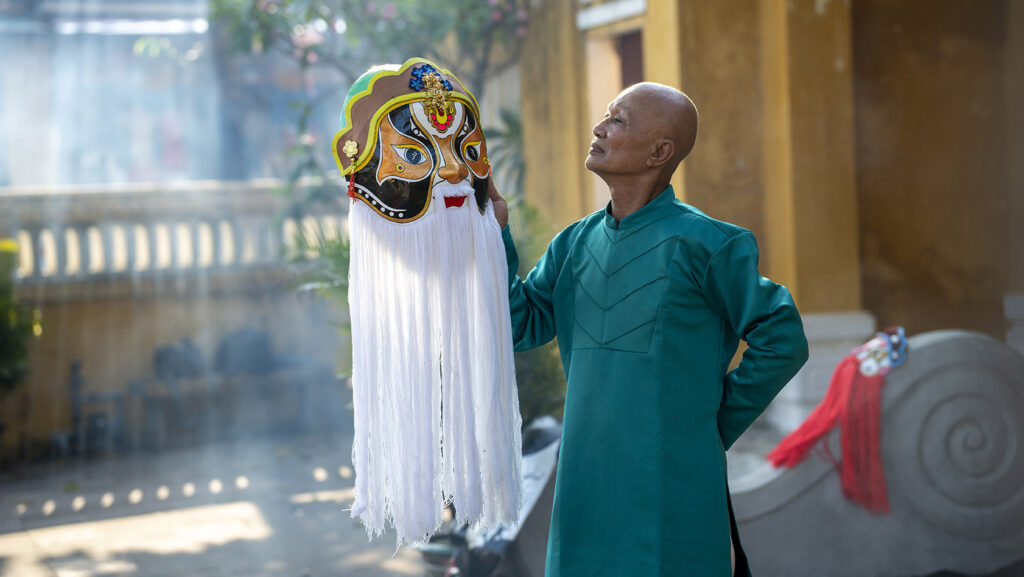
Artisan Bui Quy Phong. Photo: Visit Hoi An
Having made lion dance heads and worked in tuong, Vietnam’s classical theatre, Phong found in papier-mache masks a way to continue both passions. The influence of tuong stage makeup appears in the lines, composition and colours, while the ideas he wishes to convey are rooted in everyday life: love, compassion and good wishes. Listening to him explain a mask, visitors gradually gain an understanding of his outlook on life. Behind each face are thoughts, emotions and a desire to share something positive with the person who will take the piece home.
Sitting down with him to try painting a mask, you can choose your colours while listening to the stories behind its lines and details. A question about the eyes or the curve of a mouth can take the conversation further, from how an expression is created to what the painter wishes to convey. Through tentative first brushstrokes and his patient guidance, tuong gradually becomes more familiar. You also begin to understand Phong’s pleasure in meeting people who want to listen, try something new and take an interest in the art to which he has devoted so many years.
The finished piece you take home becomes a reminder of that time spent working together. A slightly uneven detail may bring back a moment of guidance, an explanation or the laughter that accompanied an awkward first attempt. Your memories of Hoi An now include someone’s name and a story to tell.
Similar encounters can unfold at a lantern maker’s worktable, during a pottery session in Thanh Ha or while tending vegetables with local people in Tra Que. Giving an experience enough time creates opportunities to understand what the work means to a family, why younger generations choose to continue it and how they are adapting the craft to life today.
From Madam Xong’s smile to the choices made by local artisans, Hoi An emerges through the openness, perseverance and creativity of its people. Their individual stories reveal how culture continues in everyday life, through what people learn, what they choose to preserve and what they are willing to share with others.
The next time you visit Hoi An, leave some time for a conversation you would like to continue. Afterwards, you may remember an artisan’s name, wonder about a piece they were still working on or wish to return somewhere you were warmly welcomed. Hoi An begins to feel familiar because there is now someone there you would like to see again.
DA NANG TOURISM PROMOTION CENTER