





Beneath old tiled roofs, along verandas and narrow streets, lanterns help define Hoi An’s distinctive beauty. Behind their colours lie stories of cultural life, skilled hands and the creative spirit of local craftspeople. From admiring the lanterns to making one themselves, visitors can explore this heritage through materials, traditional techniques and conversations with local people.
Lanterns in Hoi An’s Cultural Landscape
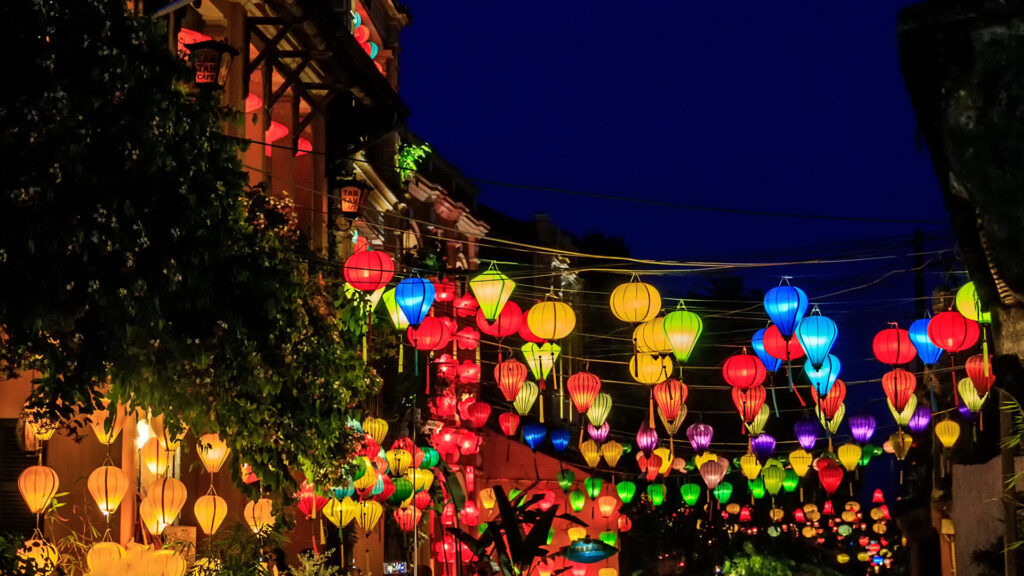
As evening falls, lanterns begin to glow beneath the eaves, outside shops and beside historic homes. Light filters through colourful fabric, softening the yellow walls and reflecting the unhurried pace of life in Hoi An. Lanterns are woven into the town’s landscape, daily routines and the memories of generations of residents.
The precise origins of lantern making in Hoi An remain uncertain. However, documents dating from the 18th century record the hanging of lanterns and festive decorations during traditional celebrations and official visits. Lanterns preserved in homes, ancestral houses, communal houses, temples, pagodas and assembly halls also reflect their longstanding place in local cultural life.

As a trading port that welcomed diverse communities and merchants, Hoi An absorbed different lantern-making techniques, materials and decorative styles. Local craftspeople selected and adapted these influences to suit the town’s needs and aesthetic tastes.
From paper-covered bamboo frames to wooden structures fitted with glass or covered in fabric, each lantern style has its own appeal. Some serve ceremonial purposes, others decorate homes, while others accompany the joyful lantern processions of the Mid-Autumn Festival. Their shapes, colours and motifs reflect the richness of the community’s cultural and spiritual life.
Today, lanterns remain part of everyday settings, from verandas to cafés, restaurants, hotels and resorts. Whether arranged in colourful rows or hung as a simple pair outside a doorway, they evoke the close relationship between architecture, craftsmanship and the Hoi An way of life.
Lantern Making – A Spirit of Creativity and Artistry
Behind a lantern’s delicate appearance lies a sequence of processes requiring patience and experience. Bamboo is selected, treated, split and shaved into even strips before being shaped and assembled into a frame. The frame is then secured with thread, covered in fabric and finished with decorative details.
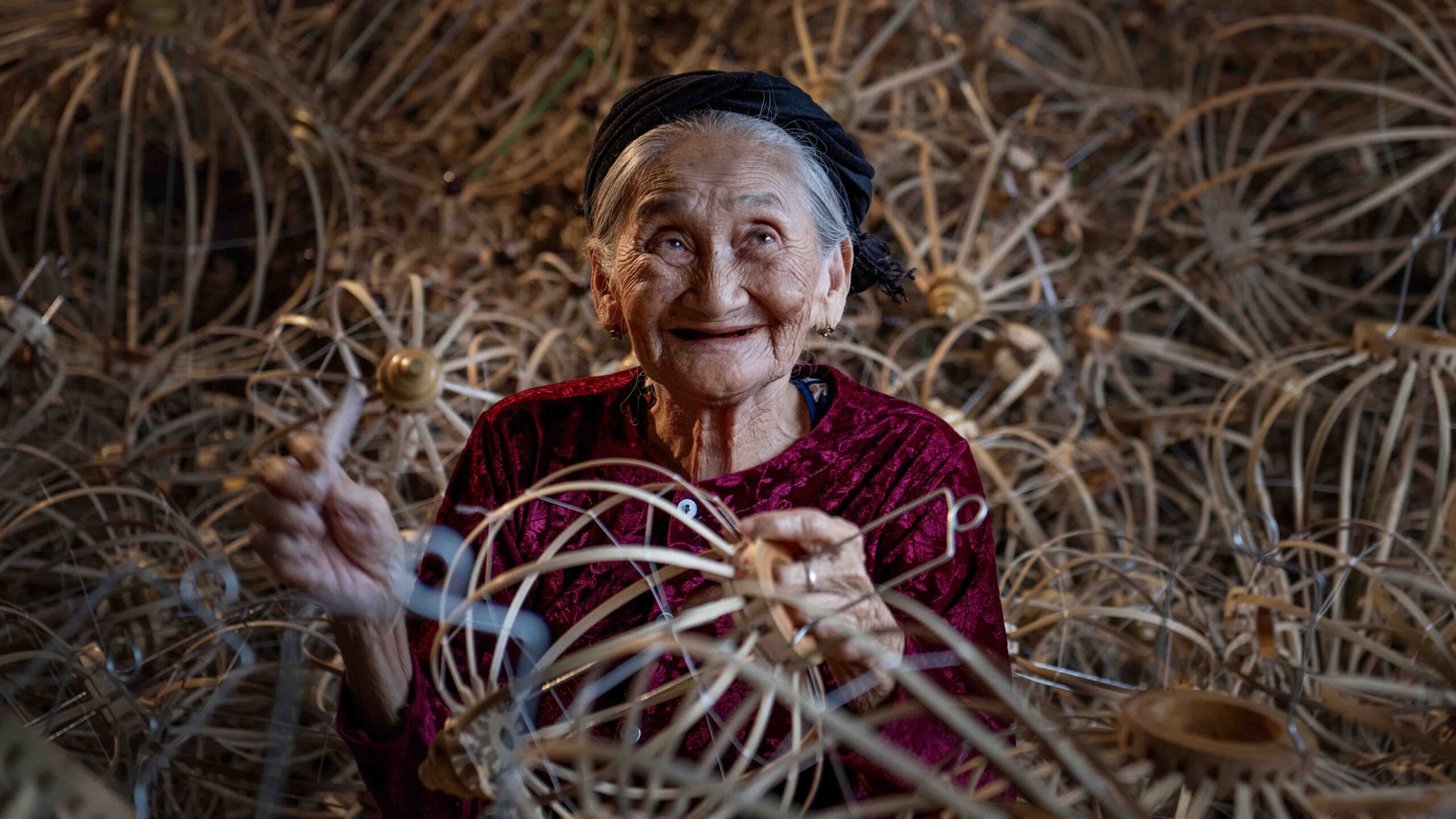
Photo: Huỳnh Nam Đông
A beautiful lantern begins with a balanced frame. The bamboo strips must be flexible enough to bend yet strong enough to hold their shape. Even spacing ensures harmonious proportions when the lantern is opened. When applying the fabric, the maker must carefully align and stretch it over the frame, minimising wrinkles while preserving the lantern’s soft contours.
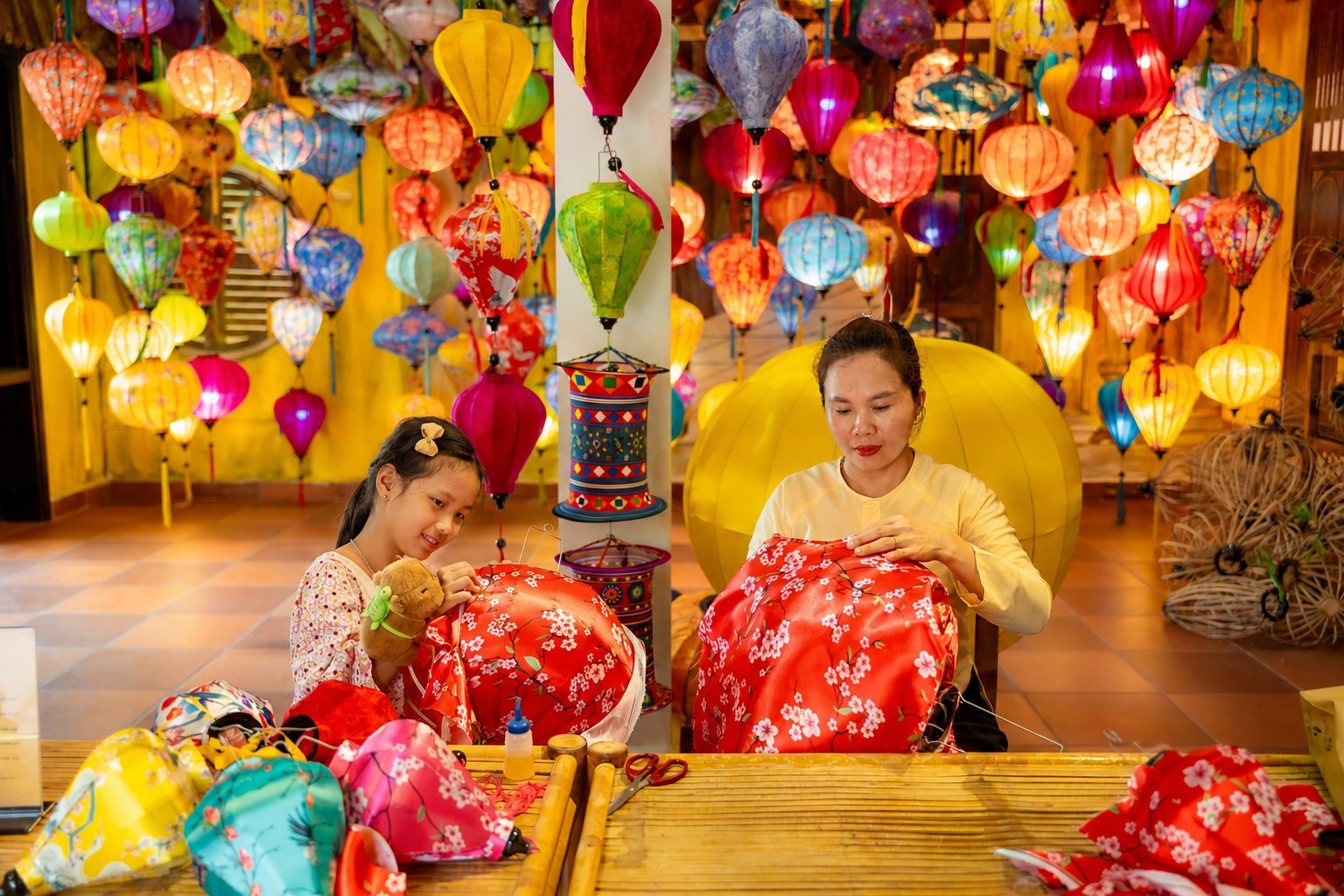
Building on these techniques, creativity emerges through every choice: round, garlic-shaped, diamond-shaped or elongated cylindrical forms; plain or patterned fabrics; colour combinations, painted decorations and finishing tassels. Even with the same frame, different materials and motifs can create very different effects.
An important milestone in the craft’s development was the introduction of a collapsible lantern frame. According to research on lantern making in Hoi An, many local craftspeople recognise Huynh Van Ba as the pioneer behind the folding design widely used today. Observing that visitors loved the lanterns but found them difficult to carry, he drew on the mechanisms of folding fans and umbrellas to improve the frame. His innovation made lanterns easier to pack and transport, allowing them to travel with visitors to destinations far beyond Hoi An.
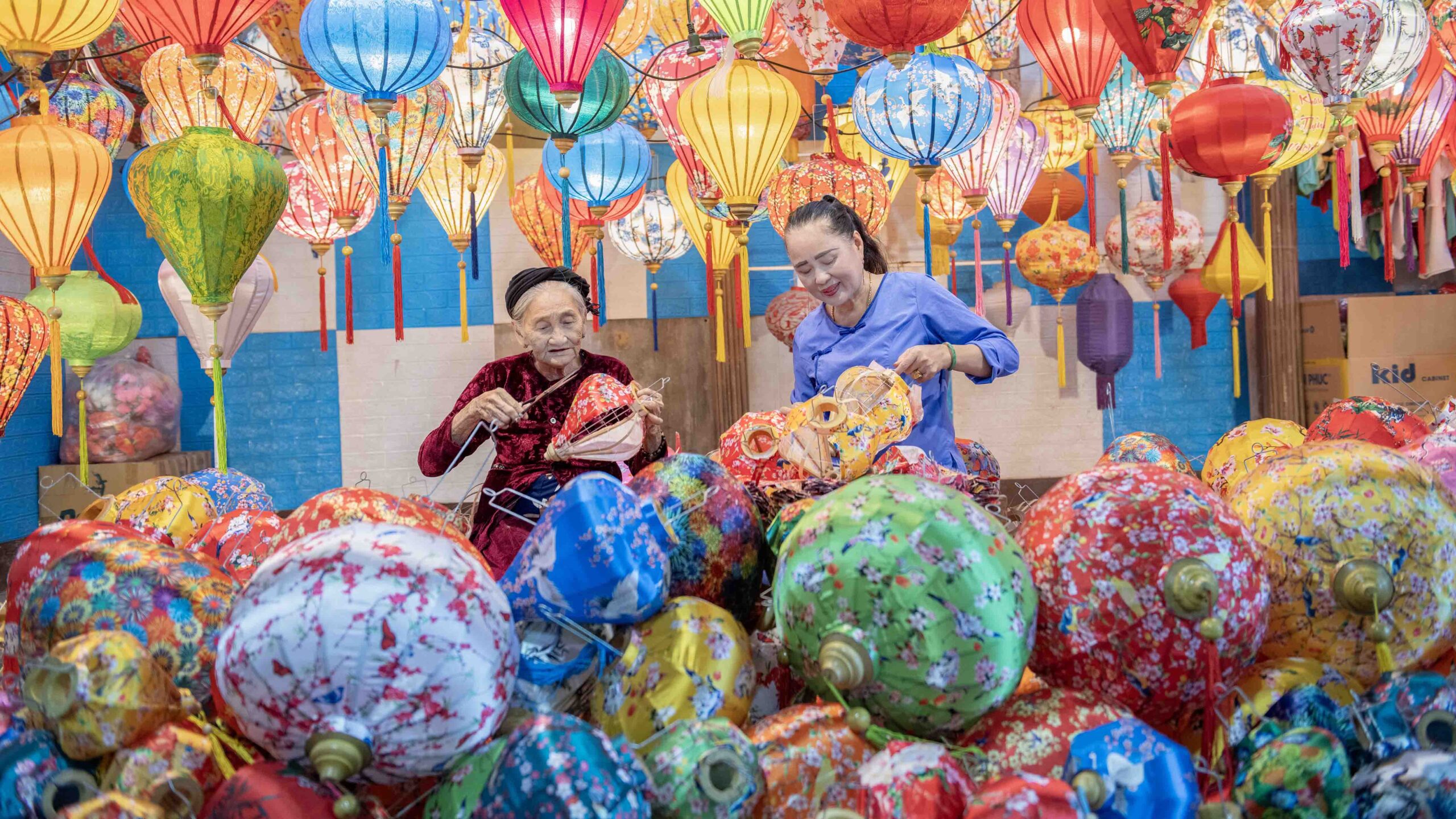
Photo: Huỳnh Nam Đông
Since the 1990s, tourism growth has created further opportunities for the craft to develop. The knowledge of older generations continues to be passed down, while new shapes and decorative approaches are explored. This creative spirit grows from practical questions: how to make lanterns more beautiful, durable and convenient while retaining the charm of Hoi An.

Photo: Huỳnh Nam Đông
Hands-on Workshops – Bringing a Piece of Hoi An Home
Taking time for a lantern-making workshop allows visitors to discover the craft through hands-on practice. From choosing a shape and fabric colour to attaching each piece of fabric to the bamboo frame, every step offers a closer understanding of the maker’s work.
Depending on the programme, participants may begin by assembling the frame or use a prepared frame to focus on fabric application, colour combinations and decoration. Aligning a fabric edge or adjusting its tension between two bamboo strips reveals how much care goes into a seemingly simple object.

At lantern-making establishments and craft spaces in and around the Ancient Town, the experience also offers opportunities to meet local makers. Hoi An Handicraft Tours on Hai Ba Trung Street offers classes that either begin with frame construction or use a prepared frame. Visitors can choose their lantern’s shape and silk colour, enjoy tea and learn how to open and fold their finished creation for the journey home. The workshop can be combined with a walk through the Ancient Town, a taste of local cuisine and time to watch the lanterns light up as evening approaches.
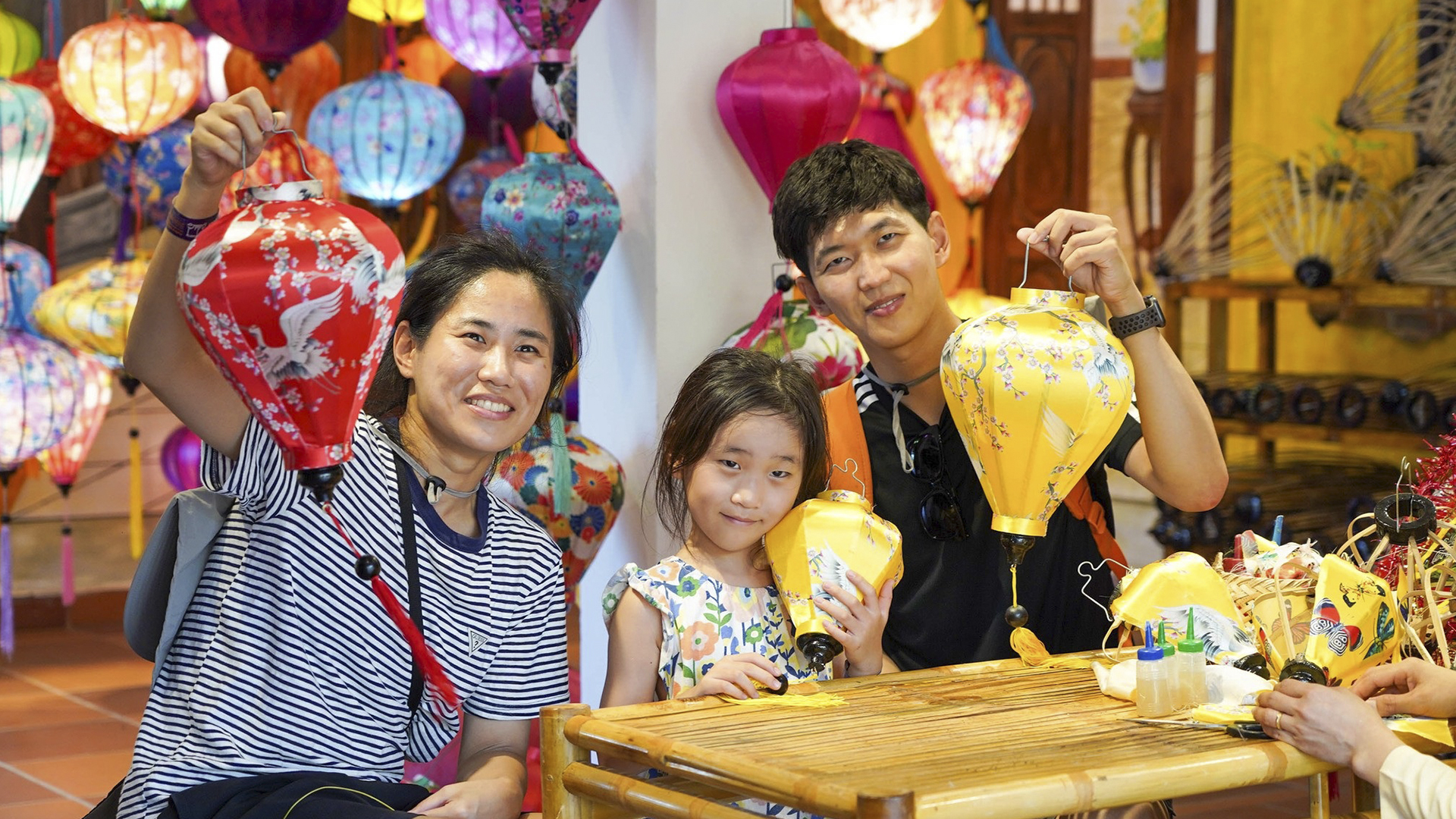
Interactive resort activities also bring local craftsmanship into the holiday experience. At Anantara Hoi An Resort, lantern-making classes are guided by a craftsperson, introducing visitors to the design, assembly and finishing process. During their stay, guests can also explore local culture through food with a Spice Spoons cooking class, which combines a market visit with hands-on instruction from a chef.
At Four Seasons Resort The Nam Hai, Hoi An, lantern making gives guests the opportunity to create their own holiday keepsake. Other experiences, including discovering Vietnamese coffee, embroidering conical hats and exploring agricultural life, offer further ways to engage with local culture through participation and exchange.

Part of a workshop’s appeal lies in the freedom to make something personal. A favourite colour, a combination of patterns or a small decorative detail can give each lantern its own character. For families, it is time spent choosing, creating and helping one another complete a shared activity. For craft enthusiasts, each step offers a chance to explore the qualities of bamboo and fabric, and how familiar materials can take on new forms.
At the end of the experience, the lantern can be folded neatly into a suitcase for the onward journey. Once opened and hung in a corner at home, it recalls the workshop, the maker who offered guidance and the streets explored along the way. A lasting impression of Hoi An lives on in an object visitors helped create with their own hands.
DA NANG TOURISM PROMOTION CENTER