













On the journey back to original values, some experiences do not arrive loudly, yet leave a profound emotional imprint — and Tâng Tung da dá is one of those moments. More than a National Intangible Cultural Heritage, this traditional dance of the Cơ Tu people opens a space where visitors can slow down, feel deeply, and reconnect with the most enduring values of all: nature, community, and themselves.
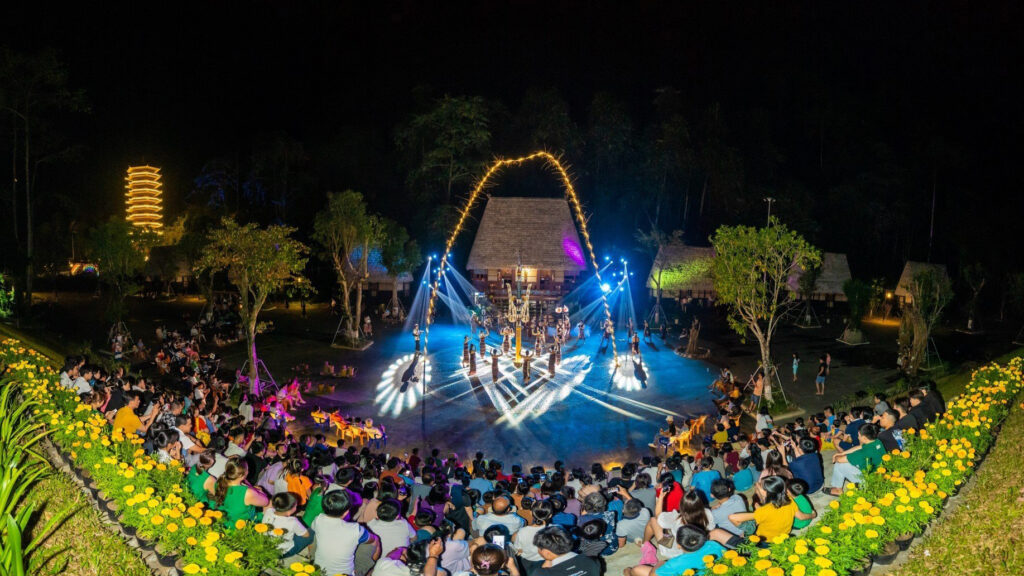
Amid the western highlands of Da Nang, as the echoes of gong and drum performances resonate through the mountains, time itself seems to slow. The steady drumbeats and unhurried circular movements create a gentle yet powerful flow of energy. Here, visitors are not merely observers standing outside the experience, but are gradually invited into the circle — a circle where every movement carries the spirit of connection and togetherness.
Born from daily life, spiritual beliefs, and the harmonious relationship between people and nature, Tâng Tung da dá is neither extravagant nor theatrical. Its beauty lies not in spectacle, but in the emotions it awakens — the moment when each step becomes slower, each breath deeper, and the mind gently returns to its most primal and authentic state.
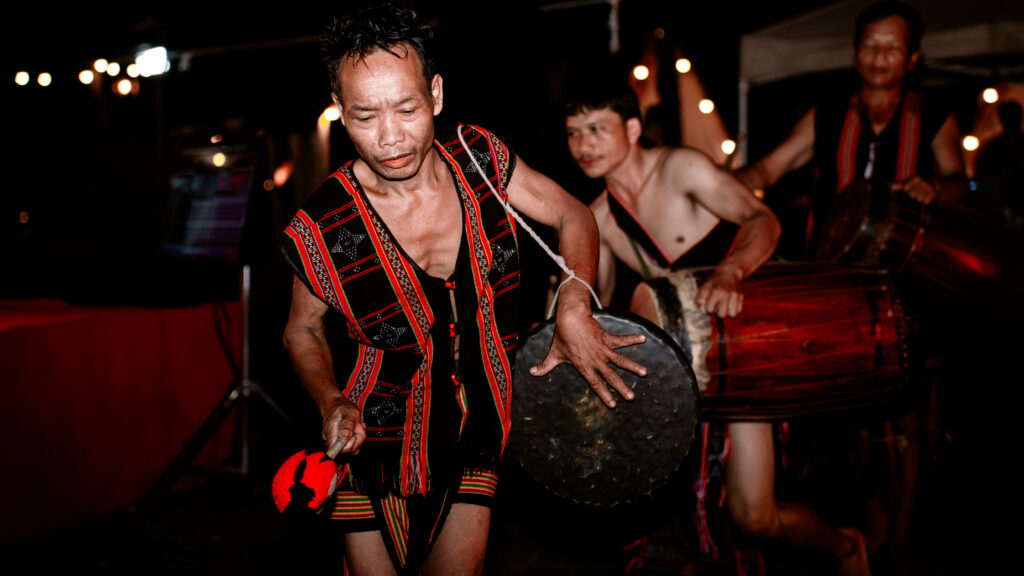
The Harmony of Strength and Grace – The Soul of Tâng Tung Da Dá
The dance is formed through the combination of two elements: Tung tung, performed by men, and da dá, performed by women. Together, they create a harmonious balance between seemingly opposite energies that complement one another perfectly.
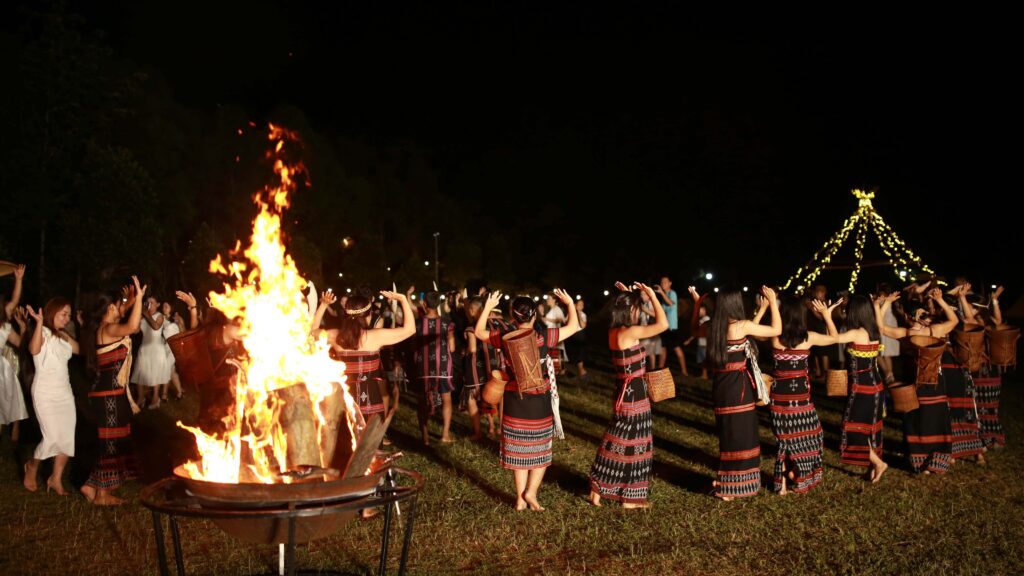
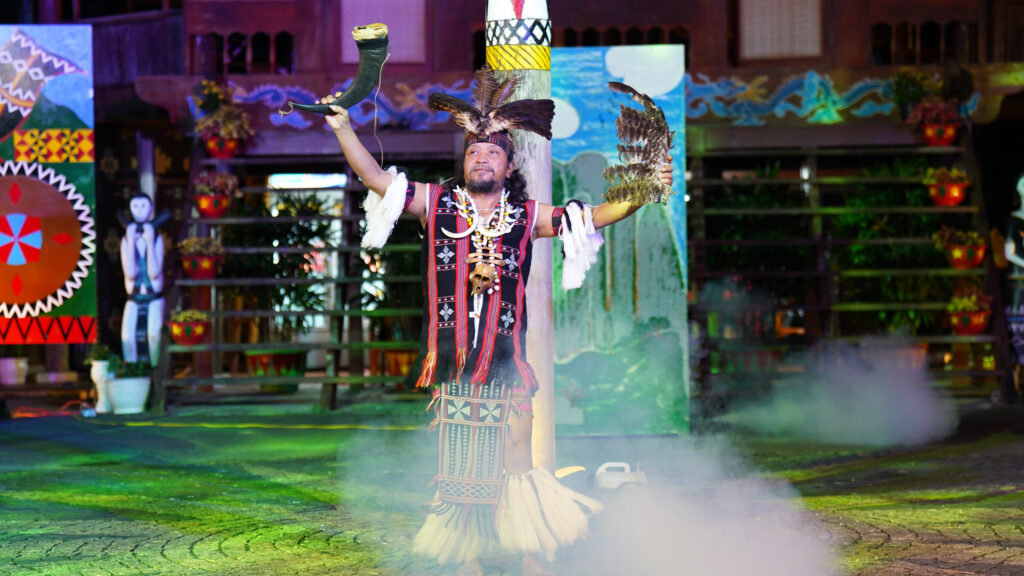
In the Tung tung performance, Cơ Tu men embody the vitality of the mountains and forests. Powerful jumps, decisive arm movements, and spirited chants recreate scenes of hunting, victory, and the protection of the village. Traditional loincloths, brocade capes, along with symbolic props such as shields, knives, and spears, contribute to an atmosphere filled with raw energy — bold, free-spirited, and deeply instinctive.
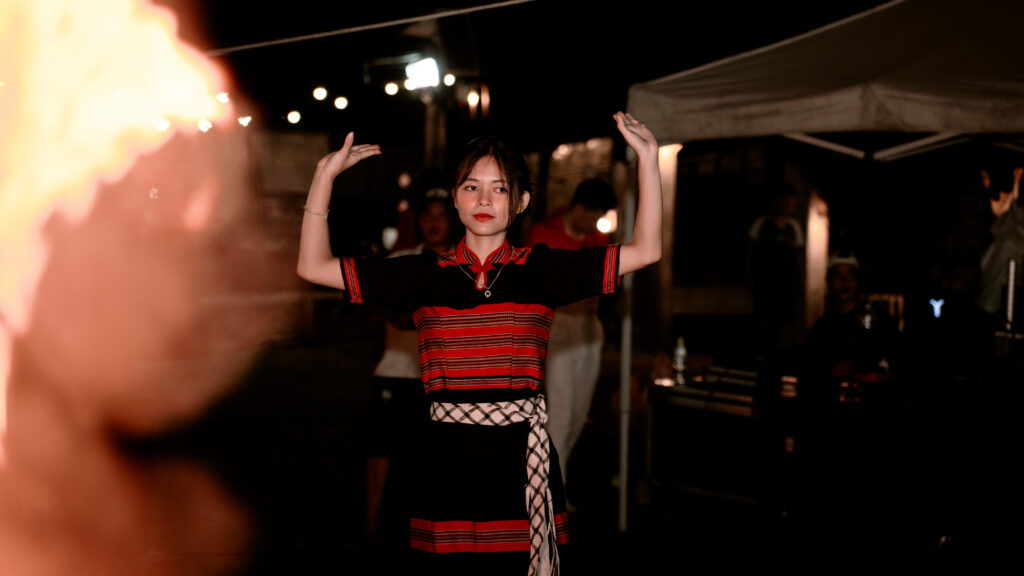
In contrast, yet inseparable from it, the da dá dance performed by women brings a completely different rhythm. Wearing vibrant brocade costumes, the dancers move with graceful and fluid gestures. Their uplifted hands, resembling offerings to the gods, symbolize a sacred connection with spirituality. Beyond physical beauty lies a deeper expression of gratitude, reverence for ancestors, and respect for nature.
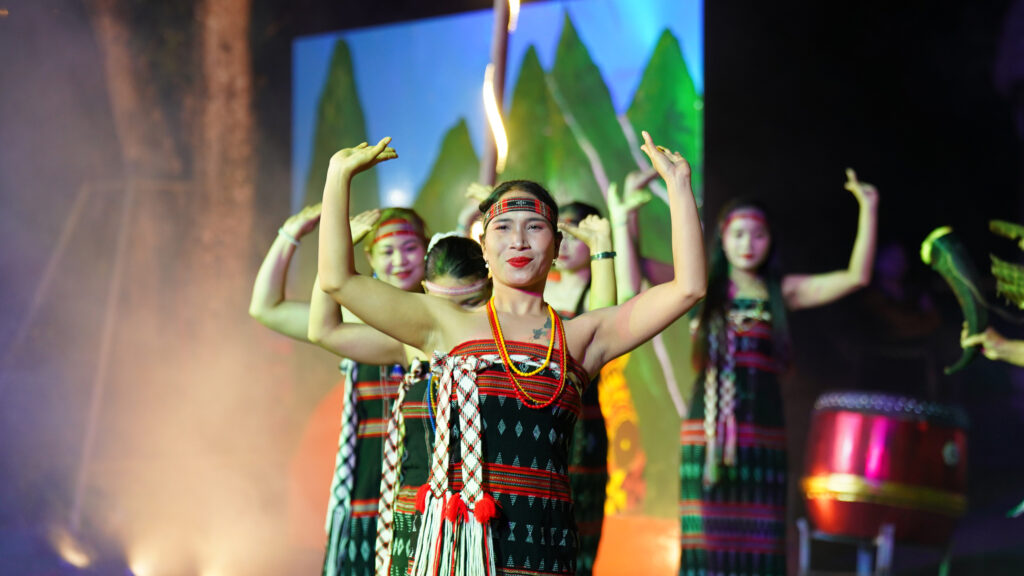
It is the interplay between these two streams of movement — strength and softness, power and elegance — that creates a perfect sense of balance. This is not only a reflection of universal yin and yang, but also a reminder of the inner balance within every individual. Standing within that dance circle, visitors no longer perceive this as an abstract concept, but as something tangible, emotional, and profoundly human.
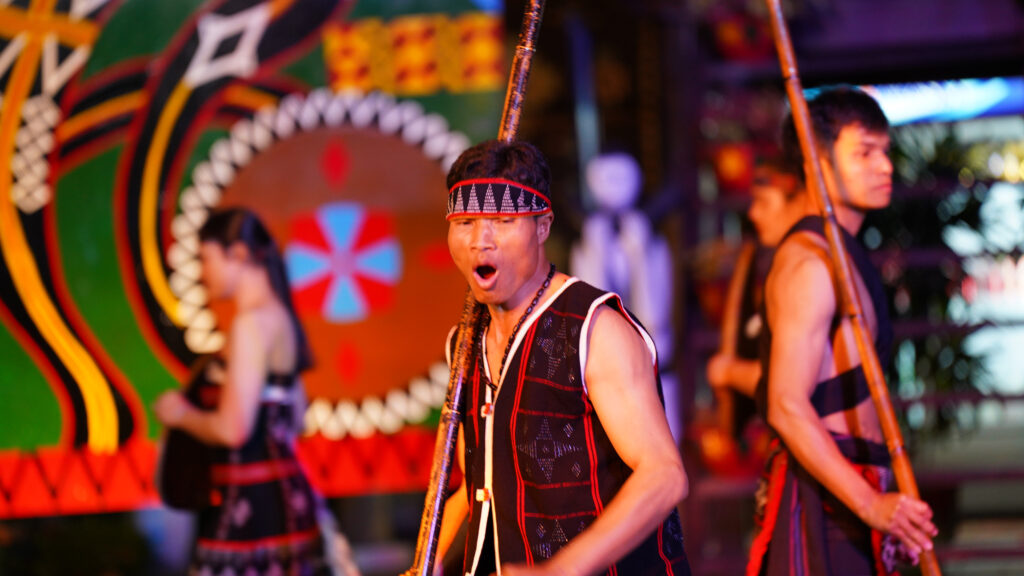
Festival Spaces – When Visitors Become Part of the Community
Tâng Tung da dá does not exist as a standalone stage performance. It is deeply woven into traditional Cơ Tu festivals such as the new rice celebration, forest thanksgiving rituals, ceremonies honoring the mountain and forest gods, and the Gươl communal house inauguration festival. Within these gatherings, the dance becomes the heartbeat of community life — a place where people come together to celebrate, share joy, and express hopes for prosperity and peace.
For visitors, the experience feels remarkably intimate. The boundary between “performer” and “audience” gradually disappears as guests are invited to join the circle, hold hands, follow the rhythm, and feel the connection spreading through every movement.
At that moment, travel transforms into something far deeper. As the drums resonate and footsteps begin to move in harmony with the community, emotions seem to unfold naturally — a sense of lightness, joy, and emotional release that requires no explanation. And perhaps that is when visitors realize they are no longer simply experiencing culture, but truly living within it.
A Journey Through Tâng Tung Da Dá – Touching the Mountains, Touching Yourself
To fully experience Tâng Tung da dá, go beyond watching a performance and step into the very spaces where the dance was born. In western Da Nang, journeys often begin at Tà Lang – Giàn Bí Village in Hải Vân or Toom Sara Village in Hòa Vang — villages where the rhythm of Cơ Tu life remains beautifully preserved, and where gong performances and traditional dances are not staged merely to be seen, but to be genuinely felt.
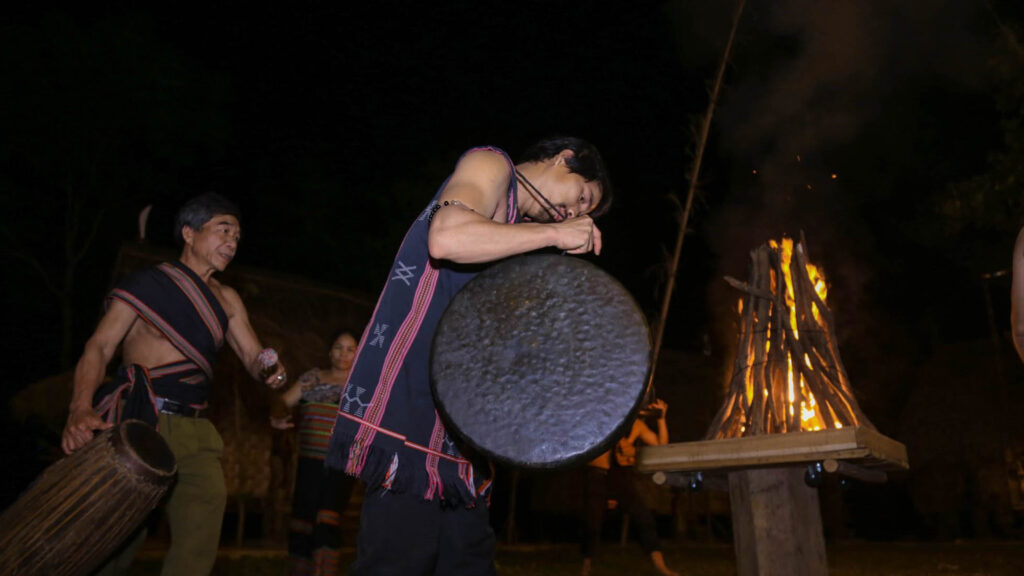
If you wish to fully immerse yourself in the spirit of the Tung tung da dá dance, go beyond simply watching a performance and step into the very spaces where the dance was born. In the western part of Da Nang, your journey can begin at Tà Lang – Giàn Bí (Hải Vân Ward) or Toom Sara (Hòa Vang Commune) — villages that continue to preserve the unique rhythm of Cơ Tu life, where the sounds of gongs and traditional dances are not merely meant to be “watched,” but deeply felt together.
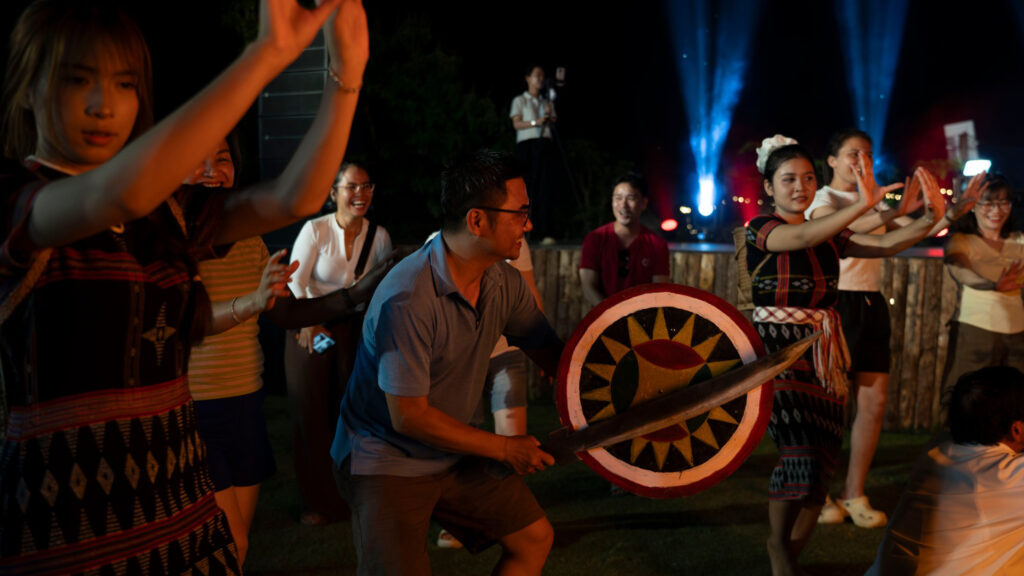
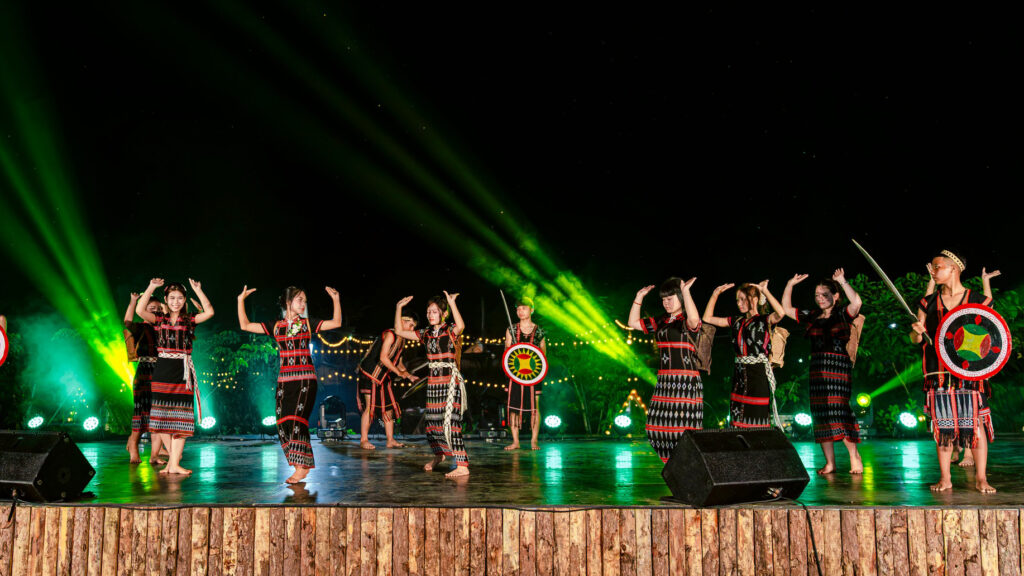
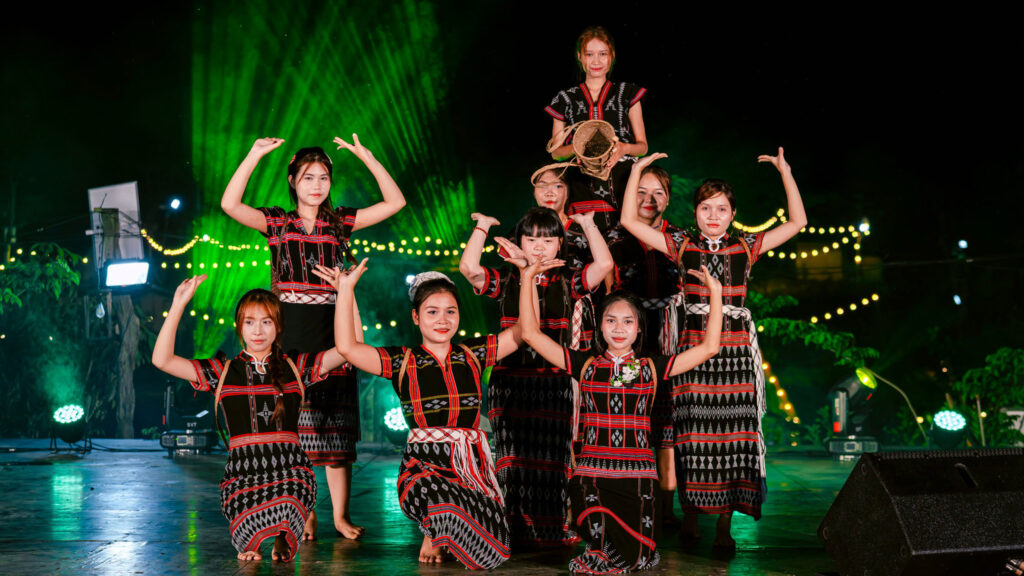
Here, the experience extends far beyond the dance itself. It may be an afternoon spent beside a Gươl communal house, listening to stories of the mountains and forests; a night around the campfire as the sound of gongs echoes through the stillness; cups of rượu cần shared among friends; mountain cuisine rich in local flavors; or hands-on experiences in brocade weaving and traditional bamboo craftsmanship.
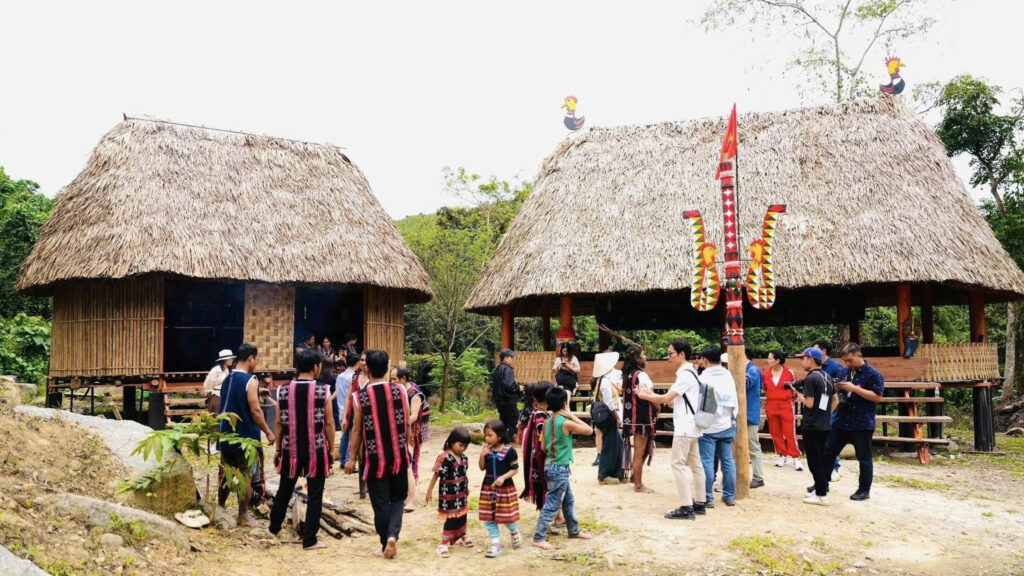
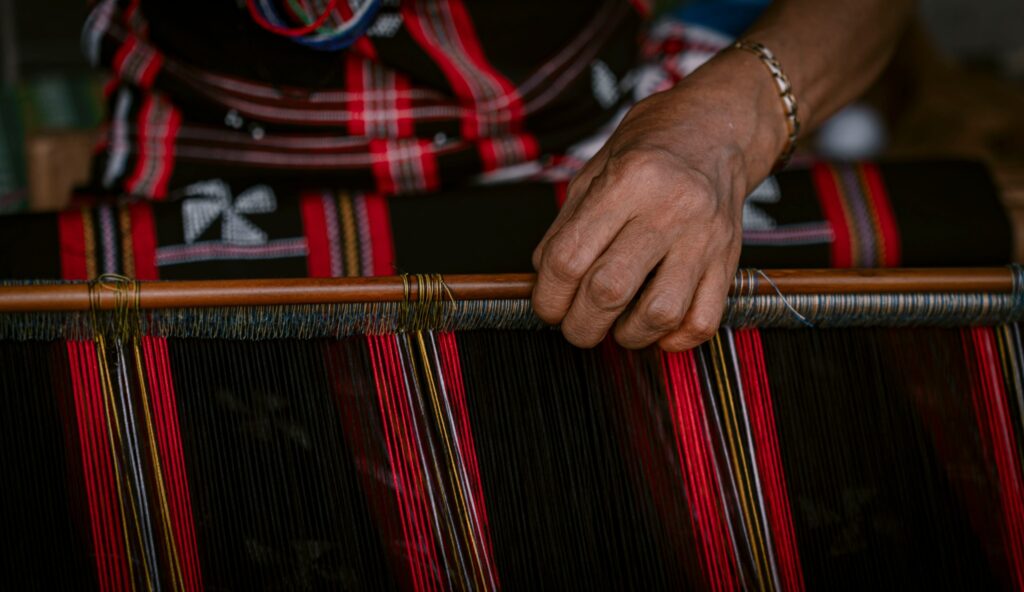
And then, when the dance finally begins, all of these experiences seem to converge into a single moment. You are no longer simply a visitor from somewhere else, but part of the rhythm of life itself.
Perhaps that is why Tâng Tung da dá is more than a dance. It is a cultural spirit — something capable of captivating visitors not through performance alone, but through the feeling of connection, belonging, and returning to the most original values within the soul.
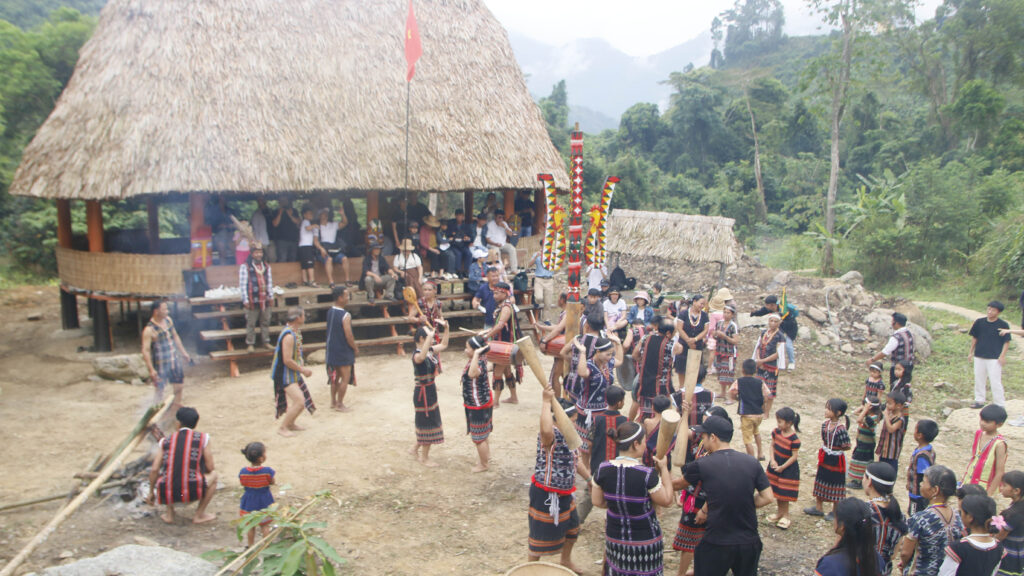
Amid the vast Trường Sơn mountains, within the swirling footsteps and resonant sounds of the dance circle, this journey not only brings visitors closer to the culture of the Cơ Tu people, but also opens a space to slow down, reflect, and discover a different version of themselves — deeper, gentler, and filled with emotion.
DA NANG TOURISM PROMOTION CENTER