
The journey might begin with a stroll along a village lane, a pause beneath a veranda or time spent talking with a local resident. By slowing down, visitors can discover stories seldom told during a visit to the Ancient Town: a family that has practised a craft for generations, the origins of a familiar household object, or the connections between gardens, rivers and everyday meals.
Thanh Ha and memories of a riverside pottery village
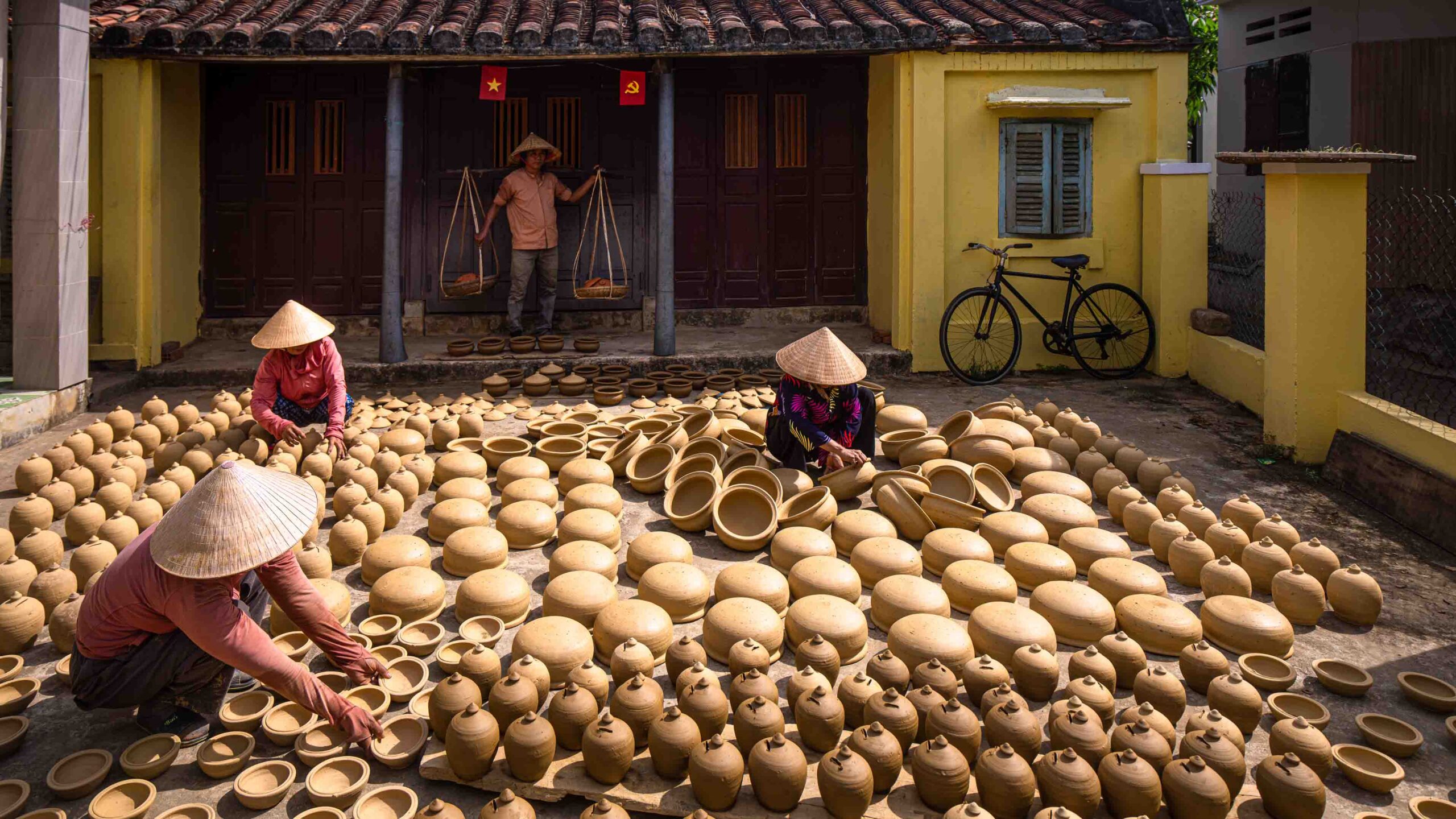
To the west of the Ancient Town, Thanh Ha has a pottery tradition stretching back more than five centuries beside the Thu Bon River. Along its narrow lanes, the colours of fired clay appear in pottery outside homes, beside kilns and throughout residents’ living spaces. The village remains a place where families live and work, carrying on the craft of earlier generations.
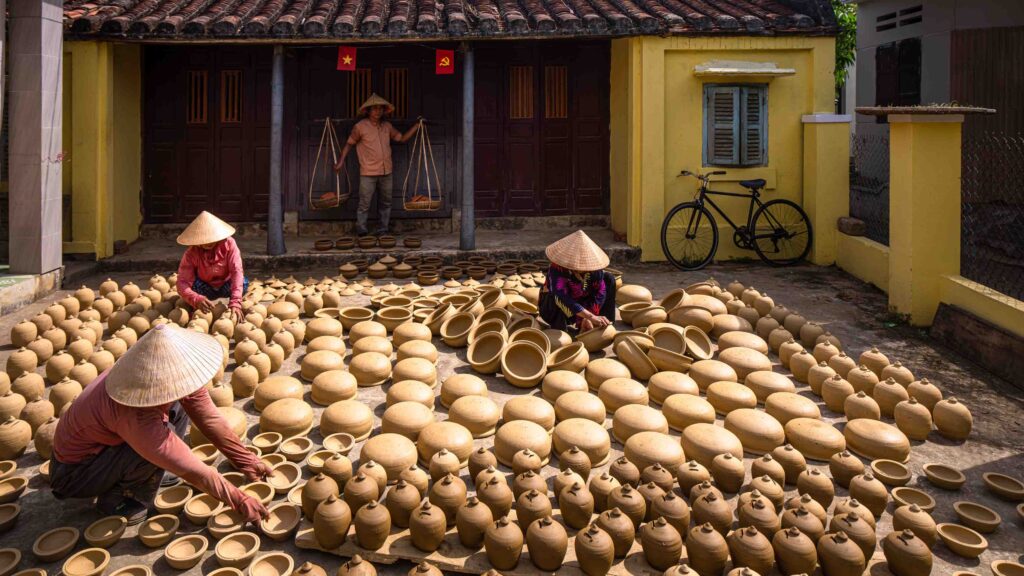
Photo: Huỳnh Văn Truyền
Thanh Ha pottery once served a wide range of everyday needs, from cooking pots and food storage jars to bricks, roof tiles and objects used in worship. The village also produced implements for weaving and sugar making in other areas. These objects offer a glimpse of the connections between the pottery village and daily life and production across the wider region.
Today’s potters carry on the craft passed down through the village’s longstanding artisan families. Knowledge of clay and the ability to assess pottery as it fires in the kiln are acquired through experience and handed down to children and grandchildren. In conversations with potters, visitors can learn why an object has a particular shape and what it was once used for. Such details bring the story of the craft village closer to everyday life.
Kim Bong and the craftspeople who helped build Hoi An
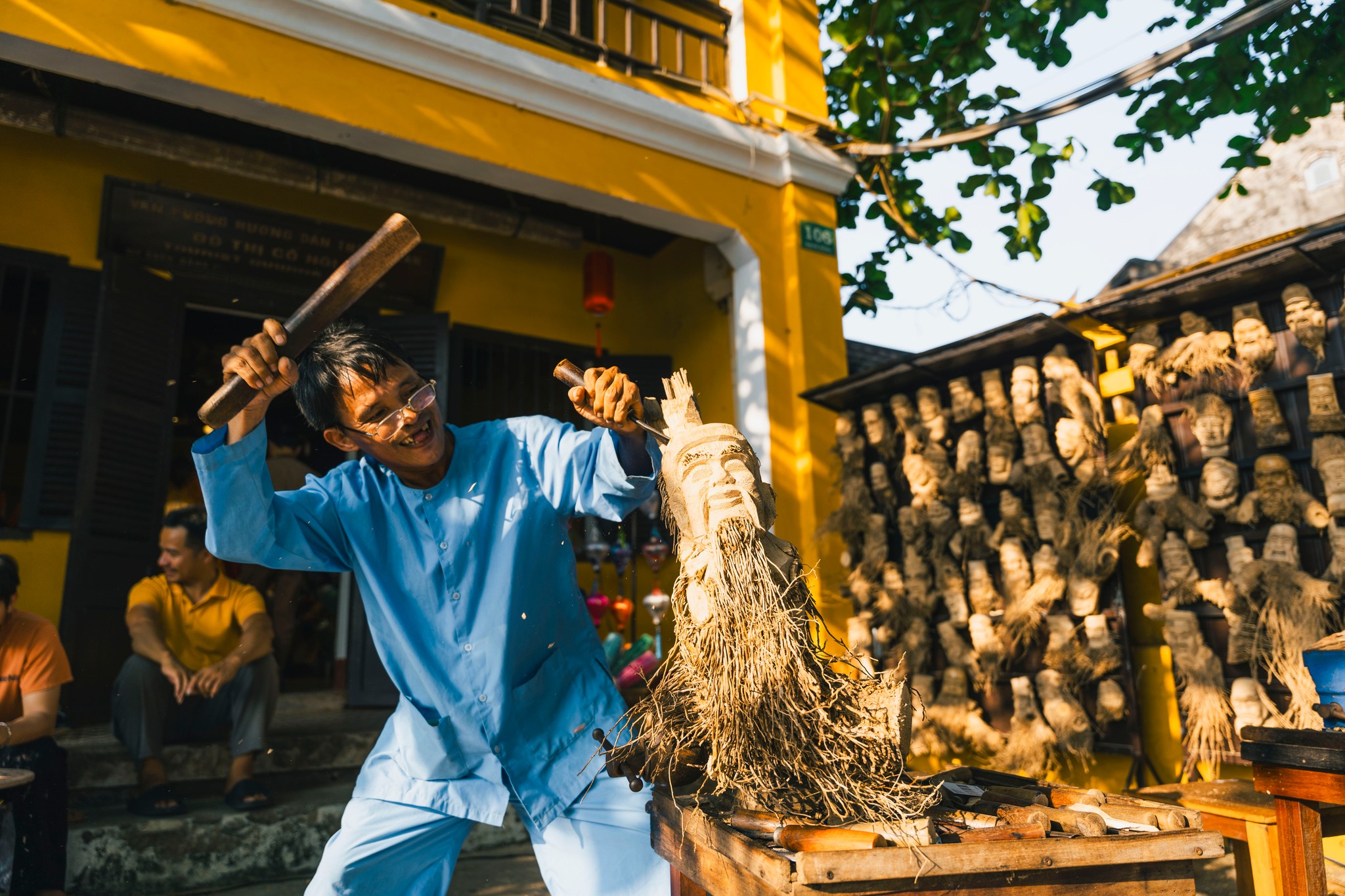
Across the Thu Bon River lies Cam Kim, where Kim Bong carpentry village took shape and developed. According to stories passed down within local clans, the village’s forebears came from Thanh Hoa to settle here around the 16th century. Its riverside location, close to the trading port of Hoi An, supported the development of carpentry to meet the demand for houses, household items and boats.
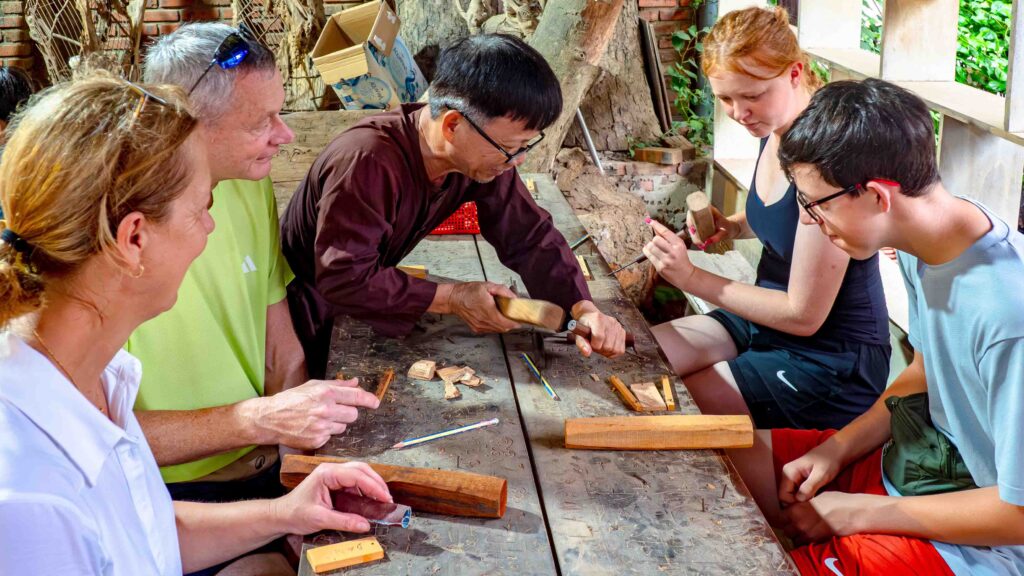
Photo: Huỳnh Văn Truyền
Traces of Kim Bong craftsmanship can be found in the Ancient Town itself. At Tan Ky Old House, artisans from the village contributed to its construction and the carving of its wooden details. From a historic townhouse to the craft village across the river, visitors have further opportunities to learn about the people and skills that helped shape Hoi An’s architectural character.
The village’s spiritual life is closely connected to its communal house honouring early settlers, clan ancestral halls and the custom of worshipping the founding masters of the craft. These places express gratitude to those who established the village and passed on their skills. In Kim Bong, learning about a local worship tradition or hearing stories of generations of carpenters also helps visitors understand how residents maintain their connection to their roots while passing on their craft.
Tra Que and the culture of a vegetable village
Tra Que opens onto a landscape of vegetable gardens, lagoons and village lanes. Vegetable cultivation has long been part of life here; the name Tra Que appears in the Thanh Ha land register compiled in 1818. From these gardens, aromatic herbs find their way into family meals and many of Hoi An’s dishes, connecting agricultural life with the town’s culinary culture.
The flavour of the vegetables reflects both local soil conditions and residents’ farming experience. Over generations, the community has maintained local vegetable varieties and used aquatic plants from Tra Que Lagoon and the De Vong River as green manure. Each vegetable bed therefore embodies an understanding of the local environment and the care of those who tend it. Stopping to talk beside a garden offers visitors a chance to discover knowledge passed down within families and across the community.
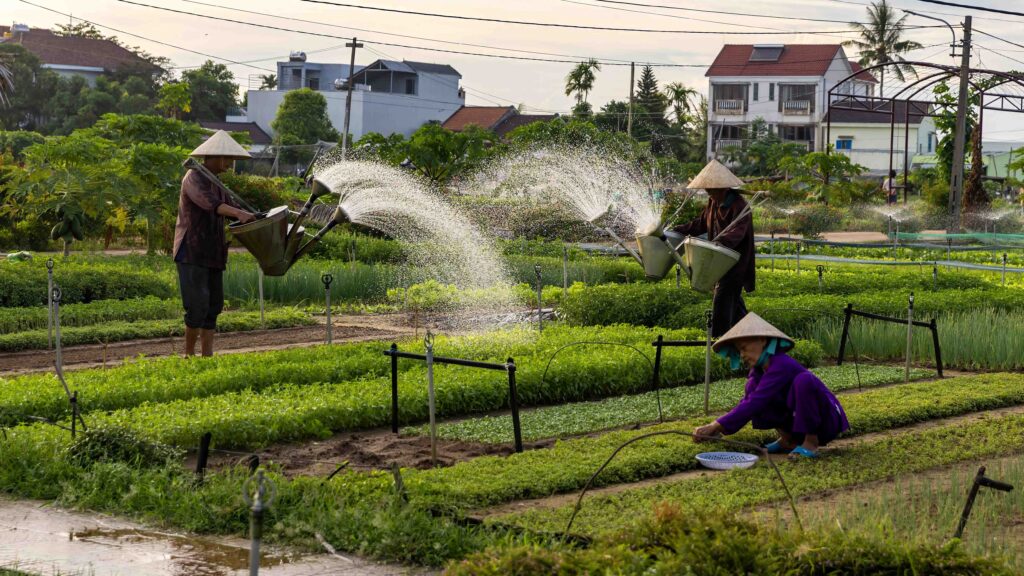
Photo: Đức Thành
The village is also home to a Cham stone well, a shrine to the Earth Deity and a shrine to the Five Elements, offering glimpses of different layers of history and local spiritual life. Held early in the year, the Cau Bong Festival expresses gratitude to nature and hopes for favourable harvests. Through these traces of the past and enduring customs, Tra Que emerges as a rural cultural landscape, where farming is closely woven into the way residents organise their lives and preserve their traditions.
Cam Thanh and life on the waterways
Further downstream, Cam Thanh reflects the character of a landscape shaped by waterways near the sea. Creeks and the Bay Mau nipa palm forest form the village’s distinctive scenery. The name Bay Mau recalls the forest’s original area. During the resistance wars, the area served as a base, its network of waterways and palm canopy providing shelter for revolutionary activities.
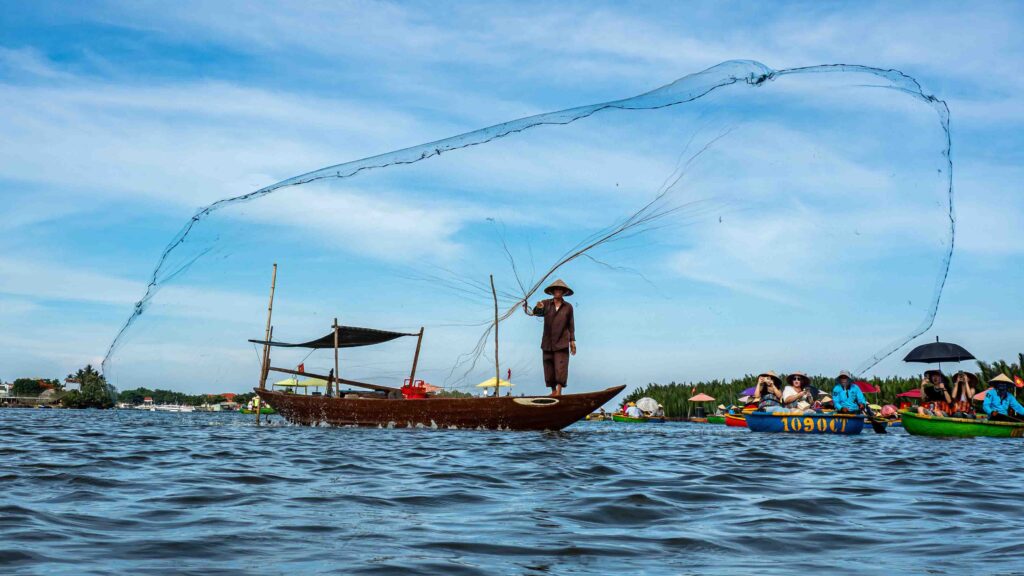
Photo: Huỳnh Văn Truyền
Local life is closely tied to fishing, fish and shrimp farming, and the weaving of bamboo basket boats. The basket boat, now a familiar image of tourism in Cam Thanh, originated from the practical needs of travel and work in these waterside communities. These occupations show how residents have adapted to their environment and used the materials around them to sustain livelihoods over generations.
A conversation with a basket boat rower can bring the journey closer to the village’s story, from fishing seasons and changing tides to shifts in everyday life. Taking time to hear local people talk about the place they call home gives visitors another way to understand the landscape before them. The palm forest, waterside landings and small boats become parts of a story about the lives of Cam Thanh’s people.
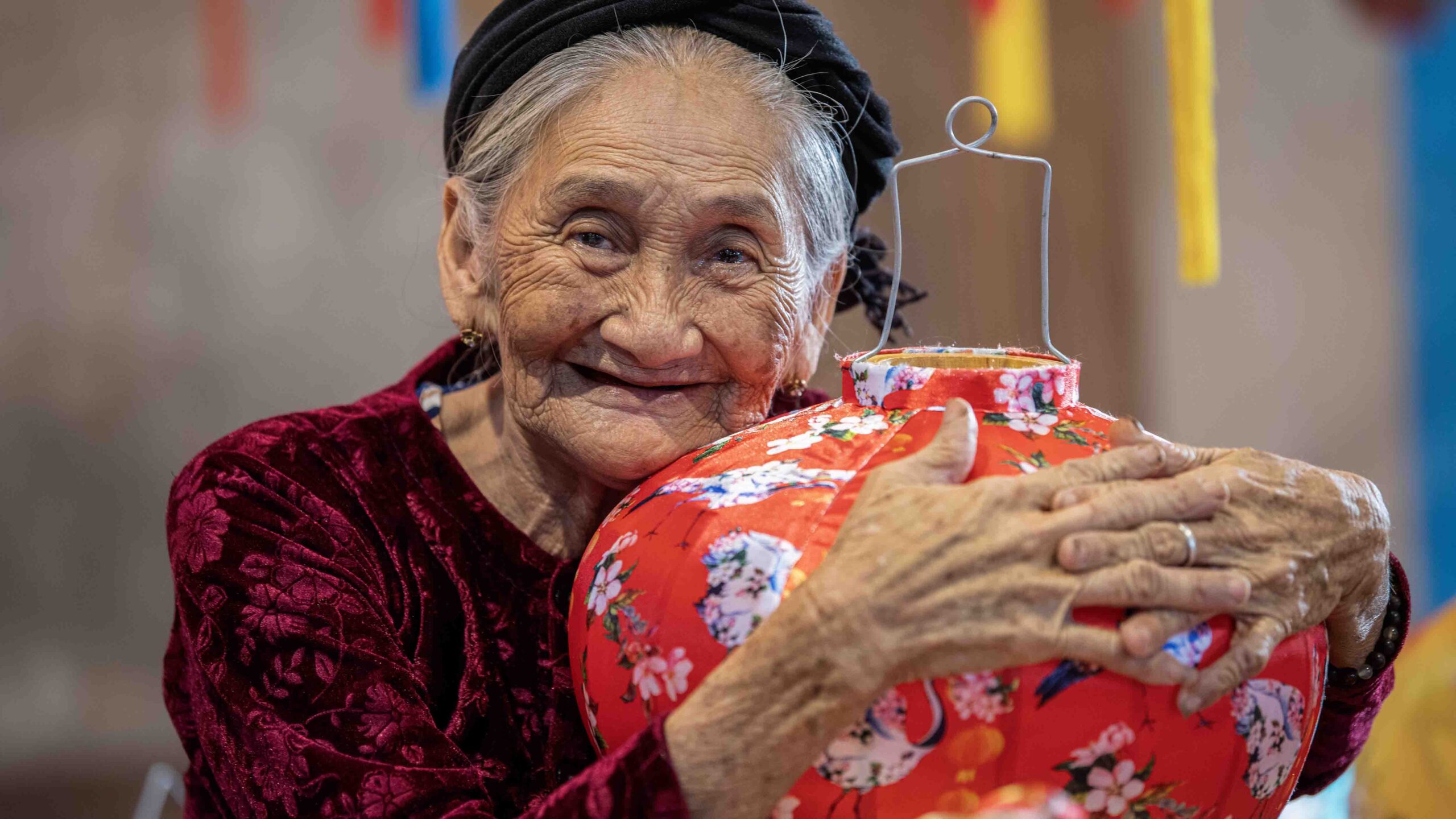
Village lanes bring visitors closer to local residents and the work that has sustained Hoi An for generations. A pottery jar, a wooden detail in an old house or the fragrance of herbs at the dining table can each call to mind its place of origin and the hands behind it.
Returning to the Ancient Town after visiting the villages, visitors may see familiar things with a new understanding. Hoi An has many more stories to discover with each return, through simple encounters and the everyday rhythms of community life.
DA NANG TOURISM PROMOTION CENTER